Points clés à retenir
- OEM signifie que la spécification est la vôtre. La marque apporte un tech pack ou un échantillon de référence approuvé ; l’usine réalise une revue de fabricabilité et produit selon cette spécification. Si l’usine conçoit le produit, vous êtes en ODM — une voie différente avec des droits d’approbation différents.
- La voie détermine ce qui est approuvé. En OEM, vous approuvez les composants, le prototype et l’échantillon étalon par rapport à votre propre spécification. En ODM, vous approuvez les options de l’usine par rapport à votre orientation marché. En marque privée, vous approuvez les styles sélectionnés et votre image de marque sur ceux-ci.
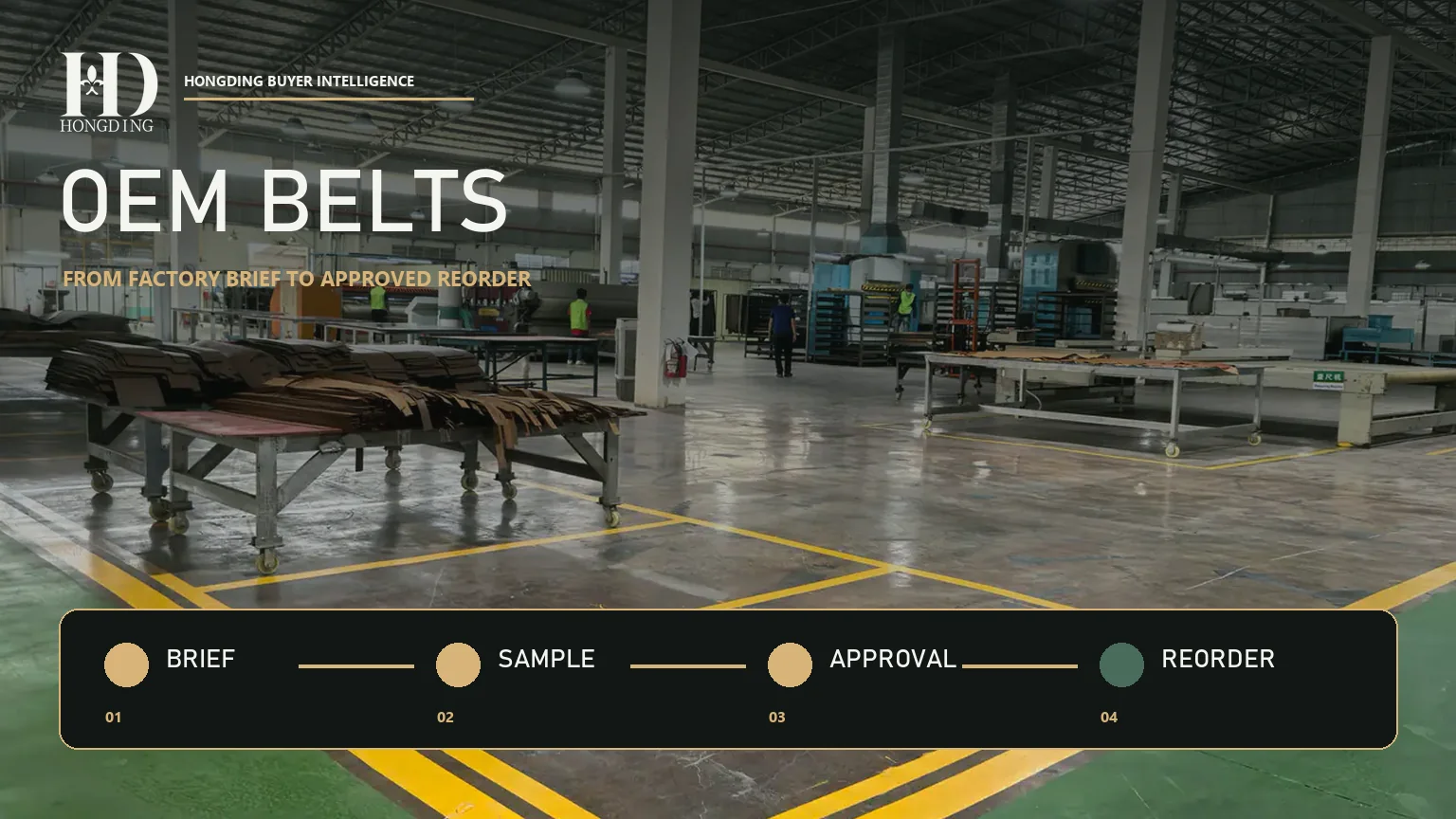
- Huit étapes, huit décisions. Brief, faisabilité, devis, composants, prototype, échantillon étalon, production en série, réassort. Sauter une étape ne supprime pas la décision — elle déplace le coût de cette décision vers la production en série.
- L’échantillon étalon est le contrat. Une référence scellée et approuvée par SKU est ce sur quoi la production en série est réalisée, ce par rapport à quoi l’inspection mesure et ce sur quoi un litige est réglé.
- La quantité minimale de commande (MOQ), les frais et les délais sont confirmés par programme. Les frais d’échantillonnage, l’outillage et la quantité minimale dépendent du matériau, de la construction, de l’assortiment de SKU et de l’emballage. Des références typiques existent — 2 à 3 semaines pour les échantillons physiques, 60 à 90 jours pour la planification de la production en série — mais les délais confirmés doivent figurer dans vos documents de commande, pas dans une brochure.
Ce que couvre ce guide
Demandez à une salle de propriétaires de marques de définir l’OEM et vous obtiendrez trois réponses assurées et incompatibles. L’un dira qu’il s’agit de private label avec des étapes supplémentaires. Un autre décrira un développement produit complet. Un troisième l’utilisera pour désigner n’importe quelle usine qui appose votre logo sur quelque chose. Tous les trois s’appuieront sur leur expérience vécue — et au moins deux décriront une voie de coopération qui produit un programme différent, selon un calendrier différent, avec des droits d’approbation différents de celui qu’ils pensent avoir signé.
En bref : un programme de ceintures OEM est un programme où la marque possède la définition du produit et l’usine l’exécute. Vous apportez un tech pack ou un échantillon de référence approuvé ; l’usine réalise une revue de fabricabilité, établit un devis, échantillonne et produit selon cette spécification. La séquence en huit étapes, du brief au réassort, est prévisible, et les programmes échouent rarement parce qu’une usine a été négligente — ils échouent parce qu’une étape a été sautée, ou parce que l’acheteur et l’usine suivaient discrètement deux voies différentes sous le même nom.
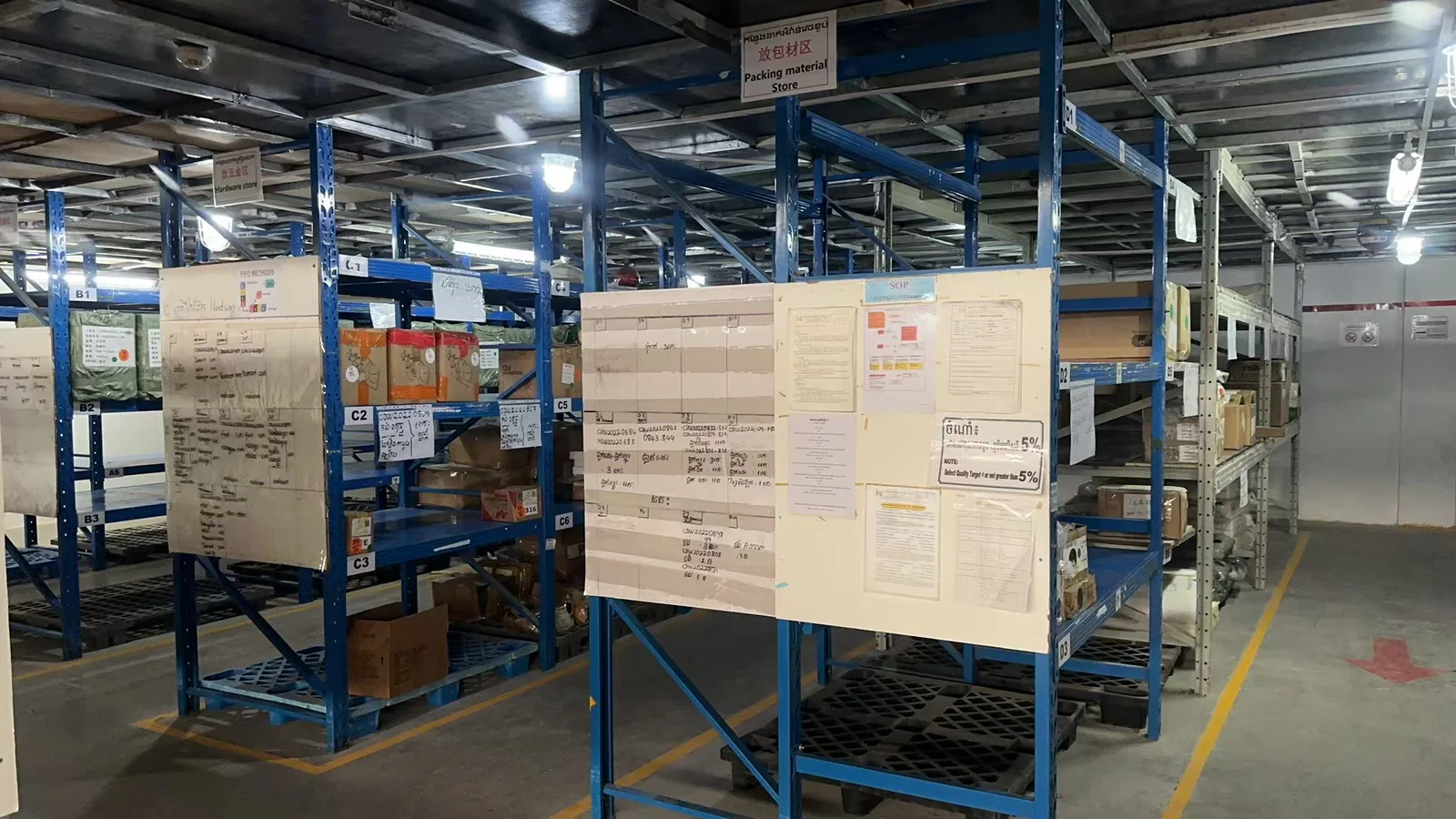
HongDing mène le développement et la fabrication de ceintures personnalisées pour des marques, des détaillants, des grossistes et des équipes de sourcing selon les voies OEM, ODM et private label, avec le développement et l’échantillonnage coordonnés à Dongguan et un accompagnement de production sur des sites au Cambodge et en Suède. Ce guide présente la voie OEM telle que nous la menons — y compris les étapes où une usine est censée émettre des réserves avant de poursuivre.
OEM, ODM et Private Label : qui apporte quoi
Trois voies de coopération sont mélangées sous l’expression “ ceintures personnalisées ”, et ce mélange coûte cher. Les voies diffèrent sur un seul axe qui change tout en aval : qui définit le produit. Lisez d’abord le tableau — c’est le survol rapide — puis les paragraphes en dessous, car les compromis ne tiennent pas dans des cellules.
| OEM | ODM | Marque de distributeur | |
|---|---|---|---|
| Vous apportez | Tech pack/BOM ou un échantillon de référence approuvé — construction, matière, quincaillerie définies | Orientation marché : client, fourchette de prix, images de tendance ou de concept | Sélection de styles et brief de marque — logo, étiquettes, packaging |
| L’usine fournit | Revue de fabricabilité, devis, échantillonnage, production selon votre spécification | Options produit, accompagnement au développement, révisions jusqu’à votre sélection | Production des styles sélectionnés avec votre branding appliqué |
| Ce que vous approuvez | Composants, prototype, golden sample — mesurés par rapport à vos spécifications | Les options proposées par l’usine, évaluées par rapport à votre direction | Styles sélectionnés et comment votre image de marque est appliquée |
| Convient lorsque | Le produit est défini, détenu par la marque, et la cohérence entre les saisons compte | La direction est claire, mais le produit ne l’est pas, et la rapidité d’obtention d’options compte | L’étendue de l’assortiment compte plus que l’exclusivité du design |
La conclusion implacable : si un fournisseur choisit pour vous la largeur de votre sangle, la qualité du cuir et la boucle, vous n’êtes pas dans un programme OEM, quoi que dise l’en-tête du devis. Cette distinction n’est pas académique. Elle détermine qui approuve les modifications, qui assume une erreur sur un lot en série et ce qu’une commande de réassort reproduit réellement. Une marque qui croit avoir acheté des droits d’approbation OEM alors que l’usine a mené un processus ODM découvrira la différence au pire moment possible — lorsque le cuir de la deuxième saison ne correspond pas à celui de la première.
Aucune des trois voies n’est supérieure ; elles résolvent des problèmes différents. Notre page de service OEM/ODM couvre la manière dont nous cadrons les deux voies de développement par rapport à un brief, et la page de marque privée couvre la voie de sélection et d’image de marque pour les acheteurs qui ont besoin de largeur de gamme rapidement.
Où commence un programme OEM : cinq points d’entrée
Les usines reçoivent des programmes de ceintures par cinq portes, et la porte par laquelle vous entrez détermine la quantité de travail de développement qui vous sépare de la première revue de fabricabilité :
- Fiche technique / nomenclature — l’entrée OEM la plus nette. La construction, les dimensions, les matériaux et la quincaillerie sont spécifiés ; l’examen par l’usine commence immédiatement.
- Échantillon de référence approuvé — une ceinture physique que vous avez approuvée, qu’il s’agisse de votre propre produit antérieur ou d’un style de référence. L’usine la décortique en une spécification et vous confirme cette spécification par écrit.
- Images ou direction des tendances — une ambiance, un ensemble concurrentiel, une silhouette. Un apport utile, mais pas encore un produit ; cela passe par le soutien au développement avant qu’une quelconque déclaration de fabricabilité ne signifie quoi que ce soit.
- Product concept — a written idea of customer, use case and price band. Same as above: development first, OEM execution second.
- A sample that needs modification — an existing product with defined changes (new hardware, new width, new finish). Technically the fastest OEM entry after the tech pack, because the base spec already exists and only the deltas need review.
A program that enters through an image is not behind an OEM program that enters through a tech pack — it is on a different route with one more stage in front of it. Pretending otherwise is how brands end up comparing a development-stage quotation against a production-stage quotation and choosing the wrong factory on price. Our design and development route covers the concept-to-specification path, including material and hardware sourcing and 3D/CAD buckle development when the concept calls for custom components.
The Eight Stages, From Brief to Reorder
An OEM belt program moves through eight stages, and every stage has the same anatomy: an input you bring, a decision you make, an output that becomes the next stage’s input. Factories may rename the stages or merge two of them on a small program, but the decisions underneath them never disappear. The table is the map; the notes under it are where programs are actually won or lost — read both.
| Stage | Vous apportez | You get back |
|---|---|---|
| 1. Brief | Tech pack/BOM, approved reference, concept, or sample to modify | A written scope, a list of open questions, and route confirmation |
| 2. Feasibility | The brief plus target market, quantities and price band | The manufacturability review: what works as specified, what needs adjustment, material and hardware options |
| 3. Quotation | The confirmed scope from feasibility | Per-style pricing with MOQ, sample fees and any tooling fees — all confirmed per program |
| 4. Components | Your approved material and hardware direction | Component confirmation: leather article and finish, buckle and plating, sourced versus custom parts |
| 5. Prototype | Component confirmations | The first physical sample, with revision notes agreed in writing |
| 6. Golden sample | The approved prototype | A sealed, signed reference per SKU — the standard for production and inspection |
| 7. Bulk | Golden sample, frozen packaging artwork, written QC limits | Production and inspection against the golden sample, with confirmed timing in your order documents |
| 8. Reorder | The golden sample and version records | Repeat production to the same standard, with changes re-approved in writing |
Stages 1-3: brief, feasibility, quotation. The manufacturability review at stage 2 is where a factory earns its fee before a single belt exists. Your specification is checked against what leather, hardware and construction can actually do at your target price — a specified edge finish that will not hold at the requested strap width gets flagged here with an alternative, not discovered on the first prototype.
The quotation at stage 3 is only as good as that review: a price built on a confirmed scope holds, and a price built on a vague brief moves. MOQ, sample fees and any tooling or mold fees for custom hardware are confirmed per program — they depend on material, construction, SKU mix and packaging. A factory that quotes one fixed MOQ in its first reply, before knowing your product, is quoting a stock product that is not yours.
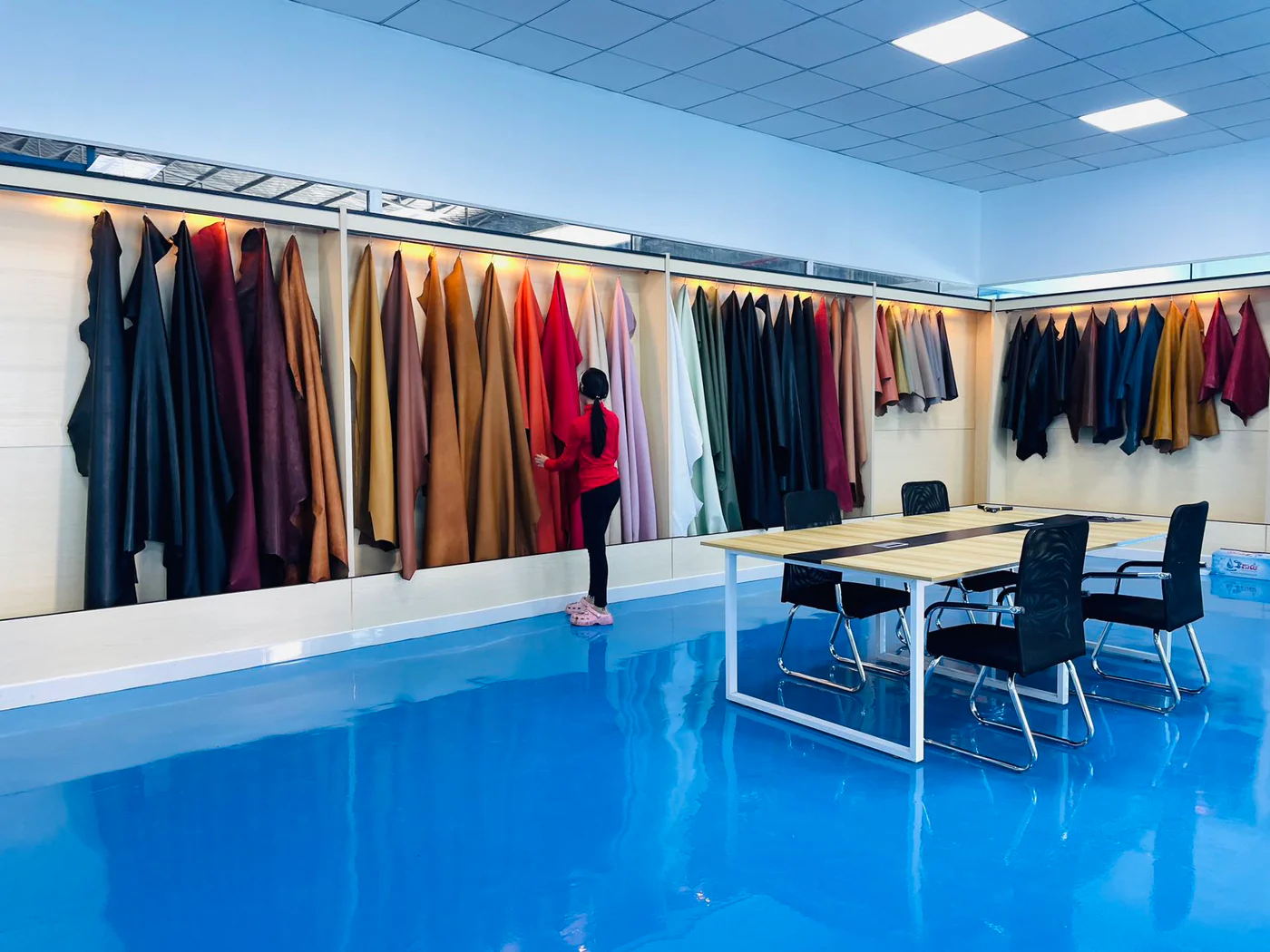
Stages 4-6: components, prototype, golden sample. Components are confirmed before the first prototype is cut: the leather article and finish, the buckle type and plating, the logo method, and which parts are sourced versus custom-made. Each prototype round ends with written revision notes — verbal feedback is how two people end up remembering two different belts.
When the revisions land, the approved prototype is sealed as the golden sample, one per SKU. That sealed sample is the most important physical object in the program: production is measured against it, inspection is judged against it, and a quality dispute is settled against it. Our sampling page covers how the approval workflow and revision rules run.

Stages 7-8: bulk and reorder. Bulk production is commonly planned at 60-90 days once materials and approvals are in place — a typical planning reference, not a commitment. Testing, custom hardware or molds, special washing and the current production schedule all move the date, and the confirmed timing belongs in your order documents. What protects the date is everything upstream: an approved golden sample, frozen packaging artwork and written QC acceptance limits agreed before production starts.
A reorder, done right, is a confirmation rather than a re-development — golden samples retained, material lots and version changes recorded, every deviation since the last order written and re-approved. Our manufacturing page describes how production is coordinated across our facilities.
Have a belt spec ready — or close to it?
Bring your tech pack, approved reference sample, or a concept with images and target market, and HongDing answers with a route recommendation, a manufacturability review, and a quotation with per-style pricing and a sampling plan — or an honest redirect if your program fits a different route.
What Actually Gets Approved
Across eight stages, a brand owner signs five things. Not eight — most stages produce work product, but only five gates need your explicit approval, and each one locks a different layer of the program. Every gate is physical or documented; none of them is a phone call.
| Approval gate | What you sign off | What it locks |
|---|---|---|
| Devis | Per-style price, MOQ, sample and tooling fees, terms as written | The commercial scope — nothing proceeds on a verbal price |
| Composants | Leather article and finish, buckle, plating, logo method, sourced vs custom | What the product is physically made of |
| Prototype | First physical sample plus written revision notes | Design intent realized; the revision history that prevents confusion later |
| échantillon étalon | Sealed reference, one per SKU | The standard bulk production and inspection are judged against |
| Packaging artwork | Labels, hangtags, barcodes, carton marks | Compliance labeling and retail readiness |
Two disciplines protect these gates. First, changes after any approval should be written and re-approved — a supplier who accepts a verbal change during bulk is creating the dispute you will have sixty days later, and the golden sample is what settles it, in one direction or the other. Second, compliance evidence attaches to specific gates, not to the factory as a whole.
Chemical and product-safety frameworks apply by market — REACH (EC) 1907/2006 governs substances placed on the EU market, CPSIA covers children’s products sold in the US — and the evidence is product-, facility- and market-specific. A factory that answers a compliance question with a blanket “all certified,” without naming the framework and its scope, has not answered the question.
A Worked Scenario: From Concept to First Order
Take a common case: a growing accessories brand launching its first belt — one dress silhouette sketched by their designer, a buckle pulled from their bag line as a hardware reference, a target price band and a US specialty-retail market. No tech pack.
The brief enters through the concept door, so the first stage is development, not quotation. The factory returns a specification proposal — strap width and thickness, leather grade options at the price band, construction and edge treatment, hardware options — which is the missing tech-pack content, written by the people who will have to produce it.
Feasibility review then flags two things: the requested sheen on the leather needs a specific finish route to hold, and the logo on the borrowed buckle requires custom tooling, with the tooling fee confirmed per program. The quotation follows per style, with MOQ and sample fees confirmed for this program’s material, construction and SKU mix — not read off a rate card, because none exists.
Physical prototypes arrive in about 2-3 weeks — a typical reference, not a commitment. The first round is close: the strap reads stiffer than the brand’s drape standard, so the leather article is swapped for another option from the confirmed option sheet, and the revision is written into the record. The second prototype is approved and sealed as the golden sample.
Bulk is planned at 60-90 days from materials and approvals ready, with packaging artwork frozen and QC limits on edge paint, stitching and hardware agreed in writing before cutting starts. When the reorder comes the following season, it is a confirmation against a retained golden sample and a version record — an illustrative arc: a week of administration instead of the two months of development the first order took.
That is what running the right route, in the right order, buys.
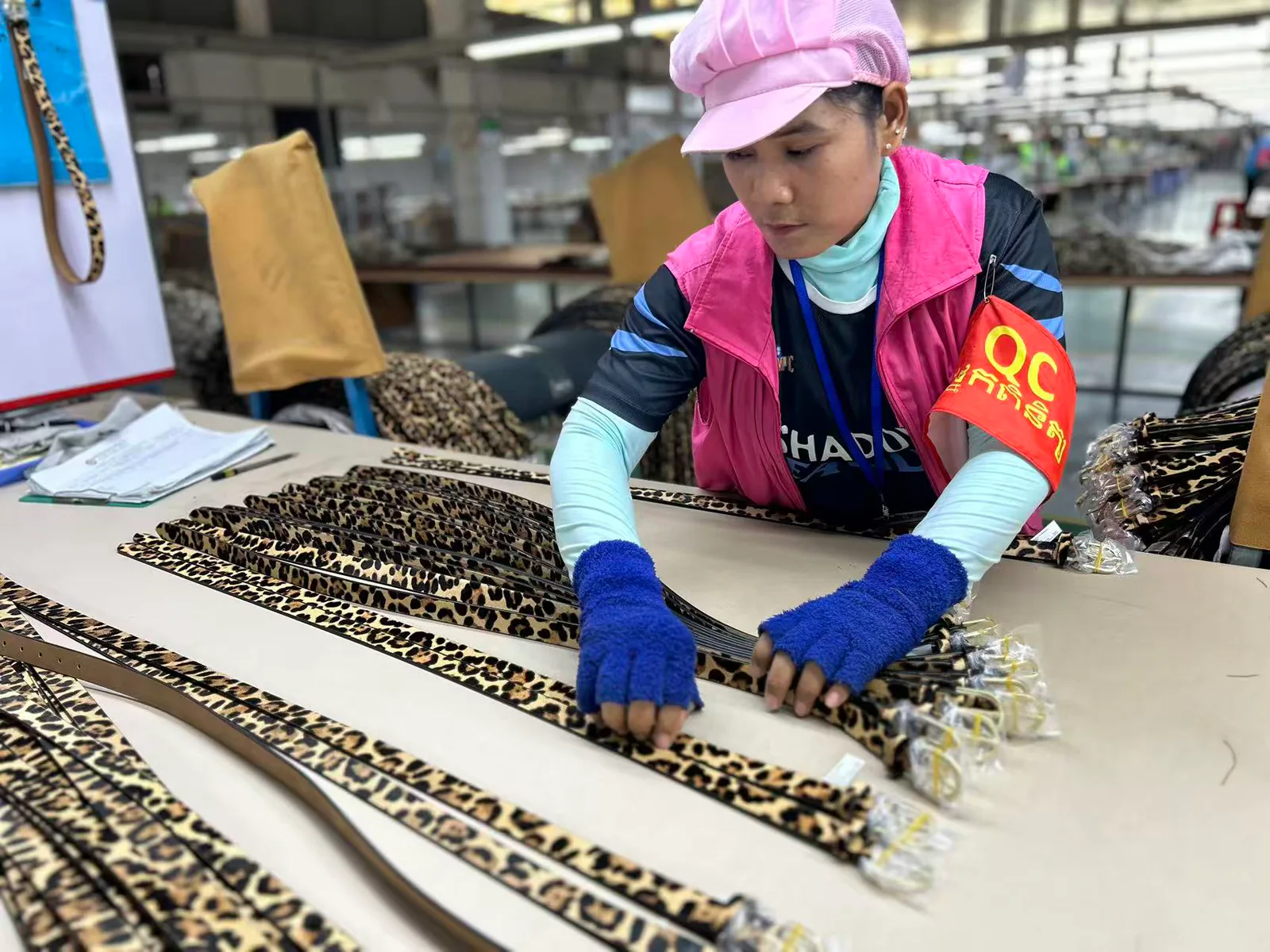
An OEM approval pack should keep four decisions separate: production-site evidence in the SMETA review workflow, precise substrate disclosure in the bonded leather guide, entry data in the HS classification workflow, and finished-lot acceptance in the AQL inspection plan.
Questions fréquentes
What is the difference between OEM and ODM belts?
In an OEM program the brand brings the product definition — a tech pack or an approved reference sample — and the factory runs a manufacturability review and produces to that specification. In an ODM program the brand brings market direction and the factory proposes product options with development support until the brand selects one. In private label the brand selects existing styles and supplies a branding brief. The route decides who approves changes, who owns mistakes in bulk, and what a reorder reproduces.
Do I need a tech pack to start an OEM belt project?
No, but the entry point decides the route. A tech pack or an approved reference sample enters OEM execution directly. Images, trend direction or a written concept route through development support first, which adds a stage — the factory builds the specification with you before any manufacturability review or quotation means anything. A brand entering through a concept is not behind; it is on a different route, and pretending otherwise leads to comparing development-stage quotations against production-stage ones.
How long do OEM belt samples and bulk production take?
A typical reference: physical samples usually take 2-3 weeks, and bulk production is commonly planned at 60-90 days once materials and approvals are in place. Those are planning references, not commitments — testing, custom hardware or molds, special washing and the current production schedule all move the date, and the confirmed timing for your program belongs in your order documents.
What are the MOQ and sample fees for OEM belts?
There is no standard number. Minimum quantity, sample fees and any tooling or mold fees for custom hardware are confirmed per program, because they depend on the material route, construction, SKU and color mix, packaging and testing scope. A supplier quoting one fixed MOQ for OEM belts in a first reply, before knowing your product, is quoting a stock product — not your program.
What is a golden sample and why does it matter?
A golden sample is the final approved physical reference for a SKU — sealed and signed after the prototype rounds are complete. Bulk production is produced against it, inspection is judged against it, and a quality dispute is settled against it. It is also what makes a reorder a confirmation rather than a re-development: with the golden sample retained and version changes recorded, the second season matches the first without re-litigating the specification.
Why We Write This
We run all three routes — OEM, ODM and private label — and we would rather lose a program to the right route than win it on the wrong one, because the wrong route fails in bulk, where it is most expensive. The stages, gates and disciplines in this guide are the ones we hold ourselves to: the manufacturability review we run before quoting, the written revision notes we keep, the golden samples we seal and retain. A supplier who resents being asked to follow this sequence is telling you something, whoever they are.
References and Sources
- HongDing OEM and ODM service scope — hdbelt.com/oem-odm; private label route — hdbelt.com/private-label
- Design and development capabilities, including material and hardware sourcing and 3D/CAD buckle development — hdbelt.com/design-development
- Sampling and approval workflow — hdbelt.com/sampling; manufacturing coordination — hdbelt.com/manufacturing
- EU REACH Regulation (EC) No 1907/2006 on Registration, Evaluation, Authorisation and Restriction of Chemicals — EUR-Lex
- Company facts and process descriptions stated on this page follow the HongDing company knowledge base, version 1.0, 2026-09-01
Bringing a belt program from concept to first order? Send us your brief — tech pack, reference sample or concept images — and you will get back a route recommendation, a manufacturability review and a sampling plan with per-style pricing, or an honest no if your program fits a different kind of partner.