By Kevin · Updated September 5, 2026
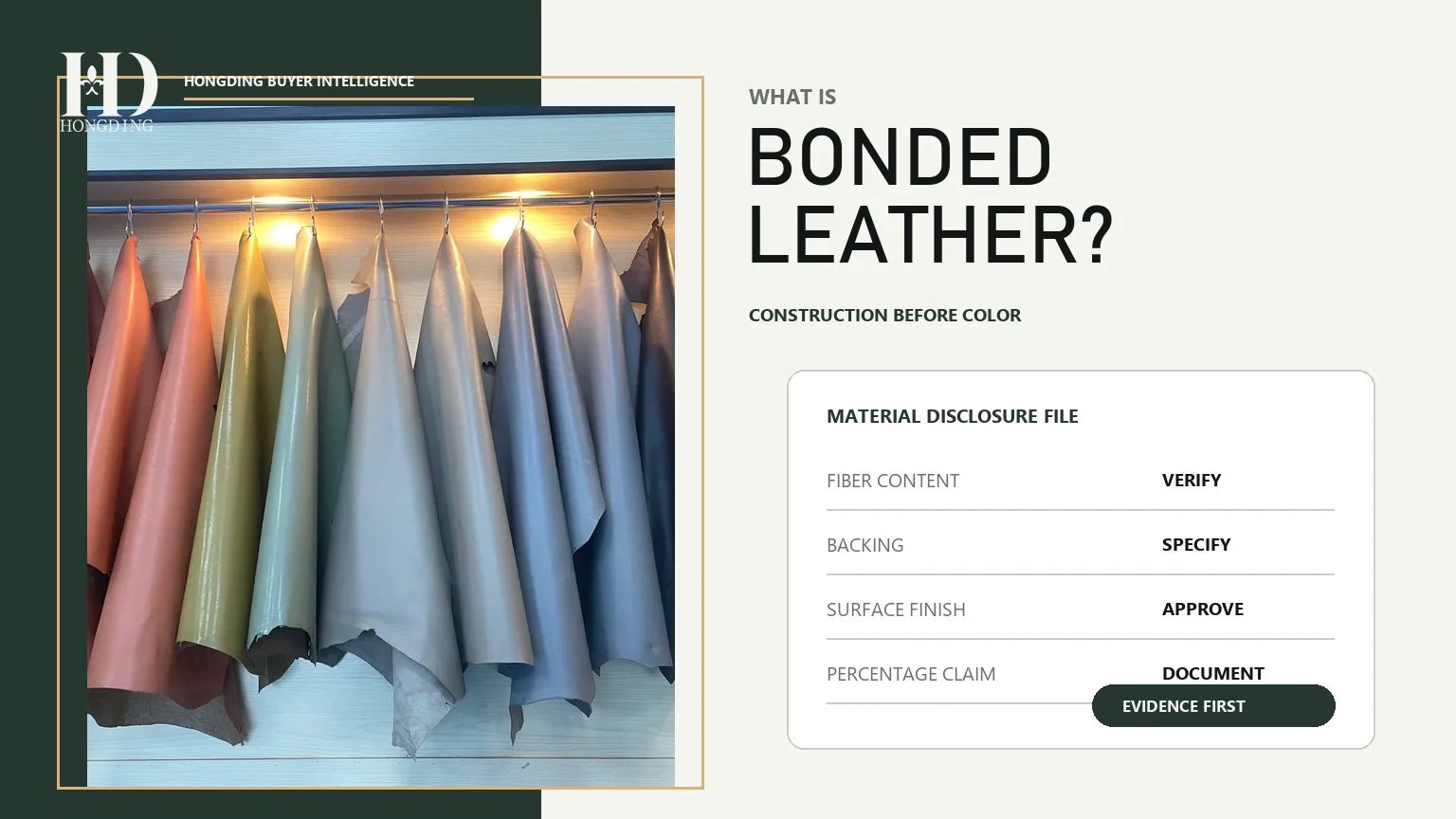
Le cuir aggloméré n'est pas un matériau de ceinture standardisé unique. C'est une famille de matériaux fabriqués à partir de fibres de cuir ou de composants dérivés du cuir combinés à des liants et à d'autres substances, souvent formés en feuille et finis avec une couche de surface. Sa valeur commerciale dépend de la formulation réelle, du support, du revêtement et de l'application—et non du seul mot “ bonded ”.
- Ne traitez pas le cuir aggloméré, le cuir refendu et le cuir pleine fleur comme des appellations interchangeables.
- Aux États-Unis, une mention de cuir aggloméré exige la divulgation du pourcentage de fibres de cuir et du pourcentage de substances non-cuir.
- Une spécification utile identifie la construction des couches, la teneur en fibres de cuir, le support, le revêtement et les méthodes d'essai.
- Validez le matériau pour l'usage de ceinture prévu au moyen d'échantillons et d'essais définis ; aucune valeur de durabilité universelle ne s'applique à tous les cuirs agglomérés.
Le cuir aggloméré, sans le brouillard marketing
Le cuir aggloméré—aussi appelé cuir reconstitué ou cuir de fibres sur certains marchés—est fabriqué en combinant des particules ou des fibres de cuir avec des liants et d'autres substances non-cuir. Le mélange est formé en une feuille ou un substrat et peut recevoir un revêtement, un gaufrage, un support ou un renforcement supplémentaire. Ce processus peut créer une surface régulière et utiliser des sous-produits du cuir, mais il signifie aussi que le comportement du matériau dépend de la formulation et de la conception des couches.
Il n’existe pas de recette globale unique permettant à un acheteur de prévoir la qualité à partir du nom. Le grade d’un fournisseur peut différer sensiblement de celui d’un autre en termes de teneur en fibres de cuir, de chimie du liant, de comportement en traction, de support et de revêtement. Les achats doivent considérer le “ cuir aggloméré ” comme une catégorie nécessitant une spécification, et non comme une description technique finale.
Comment le cuir aggloméré est fabriqué
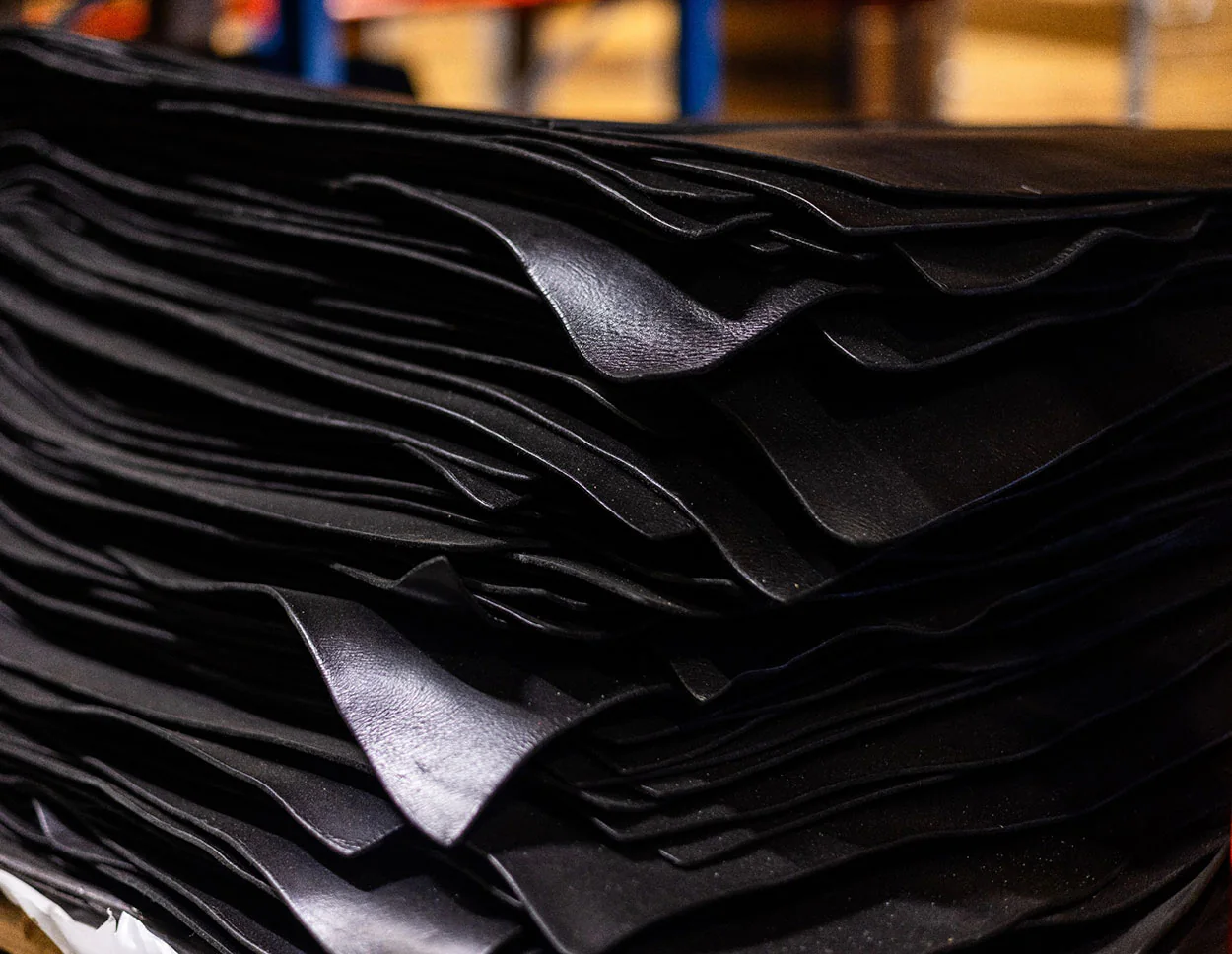
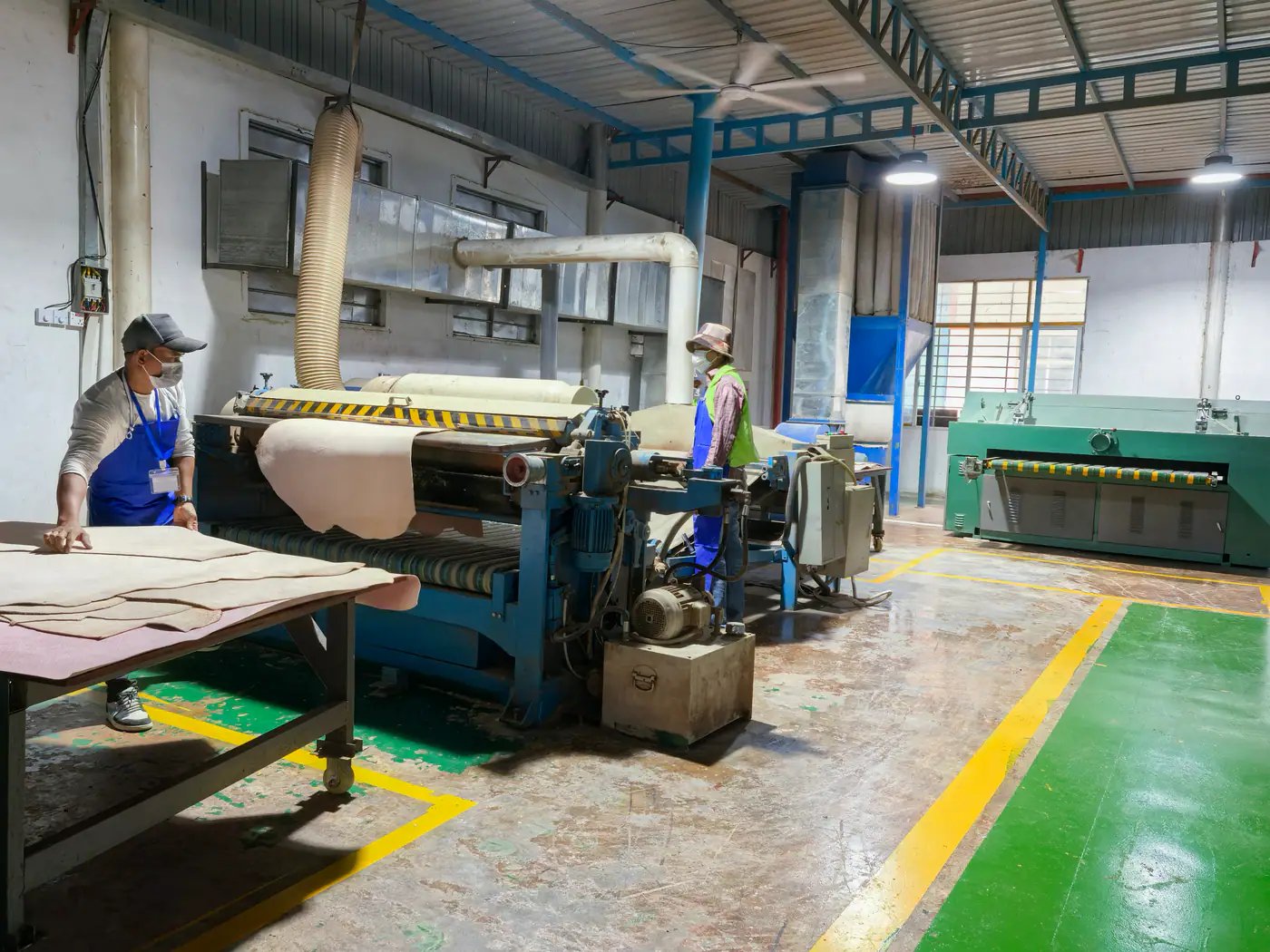
La fabrication commence couramment par des restes ou des fibres de cuir qui sont réduits, mélangés à des agents liants et formés en une feuille continue. Une finition de surface peut ajouter de la couleur, une texture de grain et des propriétés de résistance. Un support textile ou polymère peut contribuer à la stabilité dimensionnelle. Le rouleau fini peut ensuite être laminé dans une construction de lanière de ceinture.
La surface peut imiter le cuir grainé de manière convaincante, de sorte que de simples photographies ne permettent pas d’identifier le matériau. Demandez une coupe transversale, une déclaration de matériau et le code de grade du fournisseur. Si la ceinture utilise une face en cuir avec du matériau aggloméré uniquement comme charge, décrivez chaque couche au lieu de nommer toute la ceinture d’après un seul composant.
Cuir aggloméré versus cuir refendu et cuir pleine fleur
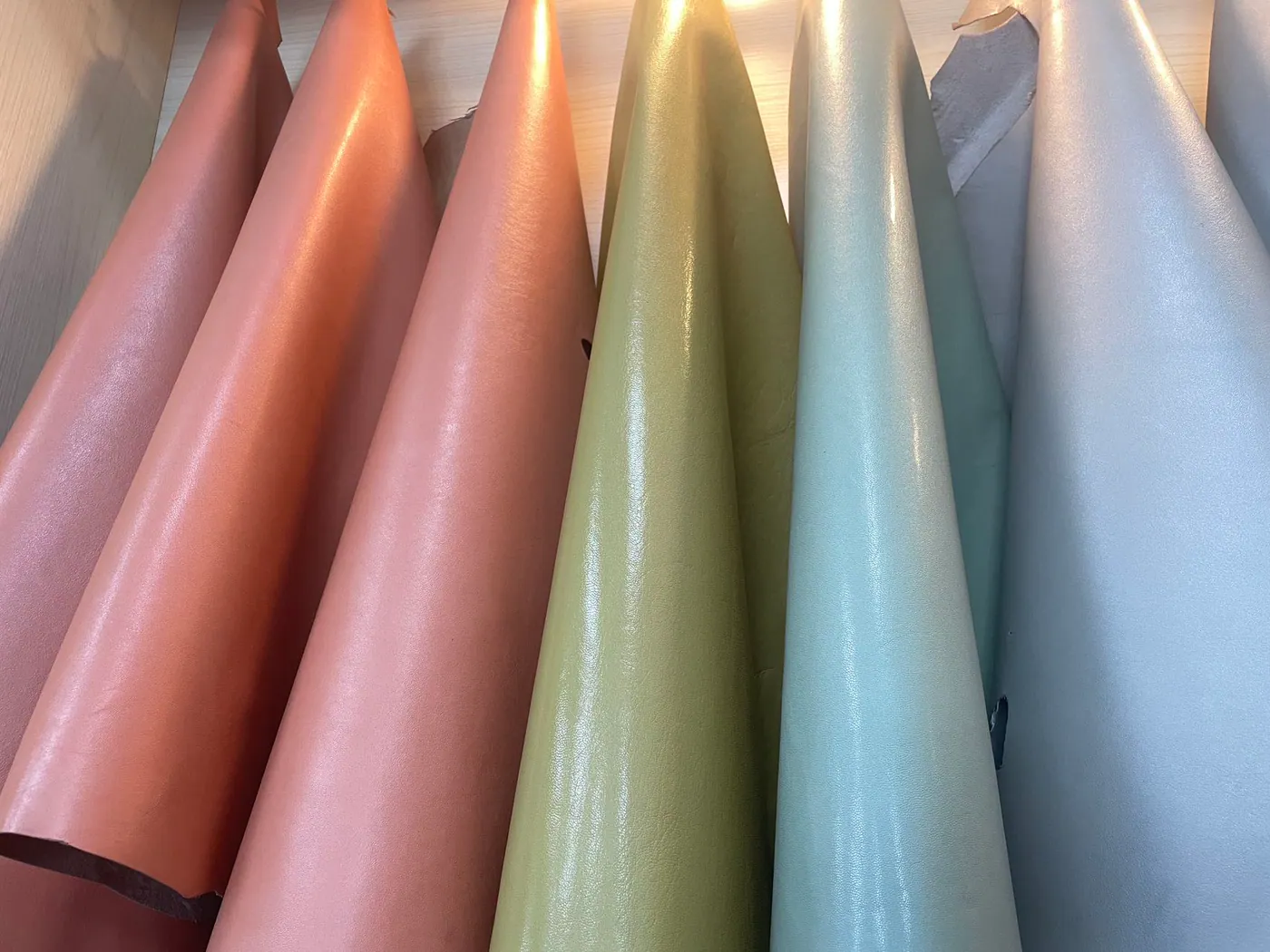
La différence la plus importante est structurelle. Le cuir pleine fleur et le cuir refendu sont des couches issues d’une peau ; le cuir aggloméré reconstitue des fibres de cuir avec d’autres substances. Un revêtement épais peut donner au cuir refendu et au matériau aggloméré un aspect similaire en surface, tandis qu’un bord apparent ou une analyse en laboratoire peut révéler des structures différentes.
| Terme du matériau | Structure de base | Ce que l’acheteur doit vérifier | Risque d’appellation |
|---|---|---|---|
| Cuir pleine fleur | Surface de grain extérieure conservée | Espèce, tannage, substance, finition et qualité utilisable | Ne pas déduire l’origine ou le tannage de “ pleine fleur ” |
| Cuir de fleur | Couche supérieure de la peau ; la surface peut être corrigée | Correction, finition, épaisseur et souplesse | “ Fleur ” n’est pas une seule qualité visuelle ou de performance |
| Cuir refendu | Couche inférieure refendue à partir de la peau | Revêtement, renfort, épaisseur et usage prévu | Peut être confondu avec du cuir de grain fini |
| Cuir aggloméré/reconstitué | Fibres ou particules de cuir liées par des substances non-cuir | Pourcentage de fibres, liant, support, revêtement et adhérence des couches | Un nom à consonance cuir peut masquer la composition |
| Cuir PU/synthétique | Surface en polymère sur textile ou autre support | Type de polymère, support, exigences d’hydrolyse et d’abrasion | Ne doit pas être présenté comme du cuir |
Le prix ne doit pas être la seule variable de sélection. Tenez compte de la promesse de la marque, de la durée de vie attendue, du prix de détail cible, de la régularité du gaufrage, de la gamme de couleurs, de la tolérance d’épaisseur et des allégations de fin de vie. Si la collection est commercialisée autour du caractère naturel de la peau et d’une longue usure, le cuir reconstitué peut entrer en conflit avec la promesse, même s’il réussit un test d’usine minimal.
Bonded leather versus “genuine leather”
“Genuine leather” does not identify a single hide layer or quality grade. It is too broad for a technical purchase specification. Bonded leather has a different reconstituted structure and, in US representations, carries a specific percentage-disclosure expectation. Ask the supplier to replace both loose labels with the exact material and layer description.
US Labeling: Name the Material and Disclose the Percentages
The US Federal Trade Commission’s Guides for Select Leather and Imitation Leather Products apply to products including belts. Under 16 CFR Part 24, it may be deceptive to use terms such as bonded leather, reconstituted leather or similar representations unless the percentage of leather fibres and the percentage of non-leather substances are disclosed.
This is a marketing and disclosure issue as well as a sourcing issue. The material claim can appear on packaging, product pages, catalogues and advertising, so the approved wording must travel from the material file into every consumer-facing channel. A supplier declaration helps, but the brand remains responsible for the claim it publishes.
Authoritative reference: 16 CFR Part 24 — Guides for Select Leather and Imitation Leather Products.
Performance Questions That Matter in a Belt
A belt repeatedly bends around the waist and at the buckle fold. The tongue passes through holes, the keeper rubs the face and the edge receives handling abrasion. These stresses concentrate at locations that a flat swatch may not represent. Test a finished, production-equivalent belt or a construction panel that reproduces the same layers, adhesives and edge system.
| Mode de défaillance | Where it appears | Control to consider |
|---|---|---|
| Surface cracking | Buckle fold and frequently used holes | Flex test on production-equivalent construction |
| Layer separation | Cut edge or folded areas | Peel/adhesion method and cross-section inspection |
| Abrasion or colour loss | Belt face and keeper contact | Abrasion and colourfastness criteria |
| Edge breakdown | Tip, holes and strap perimeter | Edge-system approval and repeated flexing |
| Pressure marking | Coiled belts, buckle contact and compressed cartons | Pack-out trial, separators and defined stacking pressure |
| Odour or chemical nonconformity | Packed goods | Market-specific restricted-substance test plan |
How long will it last? No responsible category-wide answer can be given. The same name can cover different formulations and backings, and belt life also depends on hole use, buckle geometry, humidity, storage and packing. Replace a lifetime claim with reproducible evidence for the exact approved grade.
Test names without conditions are not reproducible. State the method, conditioning, number of cycles or load, measurement location and acceptance criterion. When a regulatory or customer standard applies, use its required method. For novel constructions, run development comparisons before setting the production threshold. Include a pack-out trial: coil belts as shipped, apply the proposed separators and carton load, then check for buckle impressions, blocking and permanent pressure marks.
The Supplier Evidence and Specification to Request
A B2B specification should connect identity, construction, performance and change control. The goal is to prevent an approved swatch from being substituted with a visually similar roll whose fibre ratio, backing or coating is different.
| Specification field | Minimum useful answer | Weak answer |
|---|---|---|
| Identification des matières | Bonded/reconstituted leather plus supplier grade code | Cuir |
| Composition | Leather-fibre percentage and non-leather percentage; binder identified where material | Contains leather |
| Layer map | Face finish, bonded sheet, reinforcement/backing and lining | Three-layer belt |
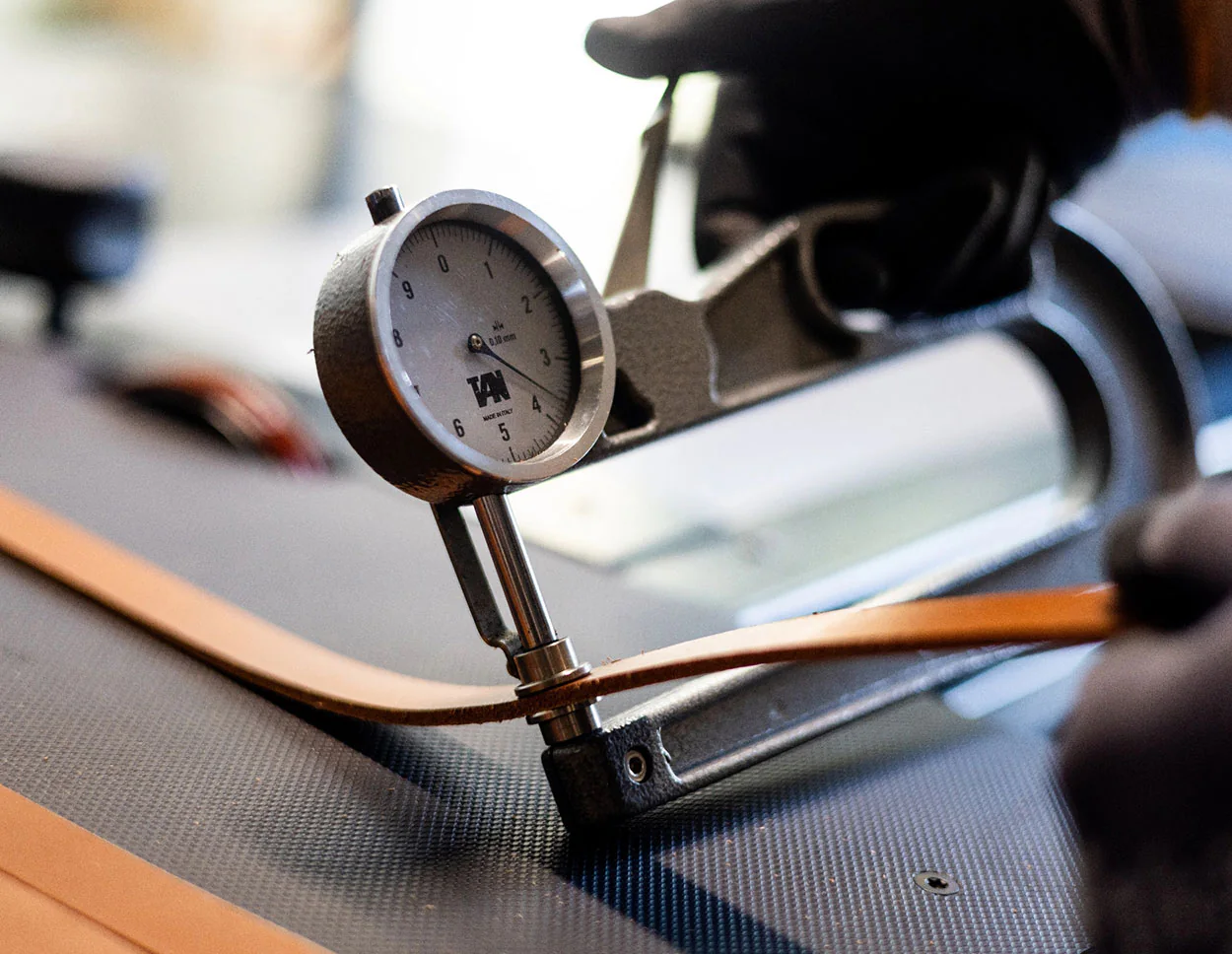
| Épaisseur | Nominal and tolerance by layer and finished strap | About 3 mm |
| Performance | Named test method, conditioning and acceptance value | Good flex resistance |
| Change control | No formulation, backing or coating change without approval | Same appearance guaranteed |
Reference a sealed approval sample and retain shade and embossing limits, but do not ask a physical sample to carry the entire technical burden. Material documentation and test results should identify the supplier grade and lot or report linkage. Your inspection plan can then verify that production corresponds to the approved construction.
When Bonded Leather Can—and Cannot—Fit
Bonded material may be considered for price-sensitive fashion, uniform or promotional programs when the brand language is accurate and the tested construction meets the use case. Ask whether the exact grade provides acceptable colour and embossing consistency, and verify the answer on production-equivalent samples; the category name does not prove either result.
It is a poor fit when the brief requires an unqualified “genuine,” full-grain or natural-hide story; when repairability and patina are core brand claims; or when the expected service conditions exceed the evidence available for the chosen formulation. If the buyer needs predictable synthetic performance, a clearly specified PU construction may be more honest than forcing a leather-adjacent name.
Review the broader belt material options and the dedicated full-grain leather belt guide before choosing. Material selection should follow the collection promise and test plan.
A Practical Material Approval Workflow
- Define the selling-market claim and target use.
- Request the exact grade declaration, composition and layer map.
- Screen disclosure language with the brand’s legal or compliance owner.
- Develop production-equivalent samples.
- Test the risks created by the belt construction.
- Seal the approved sample and lock the material code.
- Inspect incoming material and finished goods against the controlled record.
- Require written approval for formulation, backing, coating or supplier changes.
Choosing a belt material for a defined price and performance target?
Send the market, proposed construction, desired claim and test requirements so the sourcing discussion starts with a scoped material brief rather than the word “bonded” alone.
A disciplined buyer does not ask whether bonded leather is universally “good” or “bad.” The answer depends on what the material is, how the belt is built, what the brand promises and which results the approved grade can demonstrate.
Questions fréquentes
Is bonded leather real leather?
It contains leather fibres or leather-derived material, but it is not wholly the hide of an animal. Buyers should use a precise construction description and the disclosures required in the selling market.
Le cuir aggloméré est-il identique au cuir refendu ?
No. Split leather is a layer split from a hide. Bonded leather is reconstituted from leather particles or fibres combined with other substances. Coatings can make the surfaces look similar, so verify the cross-section and material declaration.
What percentage of bonded leather is leather?
There is no single universal percentage for every product called bonded leather. In US marketing, the FTC guides say the percentage of leather fibres and the percentage of non-leather substances should be disclosed when terms such as bonded or reconstituted leather are used.
Is bonded leather suitable for belts?
It can fit some price-led or promotional constructions when the formulation, backing, edge system and tests meet the program’s needs. It should not be specified as a substitute for full-grain performance without evidence.
How durable is bonded leather?
No universal service-life number applies. Durability depends on the exact fibre-and-binder formulation, backing, coating, adhesives, edge construction and use. Buyers should judge the approved grade through named finished-belt tests and production controls, not a category-wide promise.
Is bonded leather the same as genuine leather?
No. “Genuine leather” is a broad consumer phrase, not a precise technical grade. Bonded leather is a reconstituted fibre-based material and should be identified with the composition disclosures required in the selling market.
How should a buyer test bonded leather?
Set methods and acceptance criteria for the intended risk, such as flexing at holes, buckle-zone cracking, layer adhesion, abrasion, colour transfer, hydrolysis where relevant and edge durability. Use a qualified laboratory when compliance or technical interpretation is required.