
By Kevin · Updated September 5, 2026
De nombreuses ceintures de taille en cuir sont classées dans la position 4203, mais un importateur ne devrait jamais copier le code d’un concurrent sans vérifier la matière et la construction du produit. Une récente décision de la douane américaine a classé une ceinture en cuir refendu avec une boucle amovible en alliage de zinc sous 4203.30.0000, tandis qu’une ceinture en textile et caoutchouc dans la même décision relevait d’un autre chapitre. La leçon est un flux de travail, pas un code universel.
- Classez le produit physique présenté à l’importation, et non le nom commercial utilisé en ligne.
- Pour les déclarations américaines, distinguez le niveau international à six chiffres du SH du numéro de déclaration HTSUS à dix chiffres.
- Consignez la composition, la construction de la ceinture, la relation avec la boucle et le pays d’origine avant de choisir un code.
- Vérifiez les exigences actuelles du HTSUS et du chapitre 99 au moment de la déclaration ; ne figez pas un taux de droit dans une fiche d’approvisionnement.
La réponse courte : commencez par 4203, puis démontrez-le
Pour de nombreuses ceintures de taille en cuir ou en cuir reconstitué, la position 4203 est le point de départ logique, car elle couvre les vêtements et accessoires du vêtement en cuir ou en cuir reconstitué. Dans la structure tarifaire américaine actuelle, 4203.30.0000 est la disposition pour les ceintures et baudriers avec ou sans boucles. Il s’agit d’une piste de recherche, et non d’une autorisation de passer outre les caractéristiques du produit.
Une sangle en plastique, une construction élastique textile ou une ceinture fonctionnelle spécialisée peuvent ne pas y appartenir. Le texte juridique, les notes de section et de chapitre, les décisions pertinentes et l’état des marchandises telles que déclarées déterminent le résultat. Si la dénomination commerciale du produit est en contradiction avec la construction, la classification douanière suit le produit.

Référence tarifaire principale : Tarif harmonisé de l’USITC.
Code SH par rapport au HTSUS : ne mélangez pas les niveaux
Le Système harmonisé crée une nomenclature internationale au niveau des six chiffres. Les juridictions importatrices étendent ces chiffres pour leurs propres besoins tarifaires et statistiques. Aux États-Unis, les importateurs déclarent un numéro HTSUS à dix chiffres. Le “ code SH ” à six chiffres d’un fournisseur peut être utile pour l’orientation, tout en restant incomplet pour une déclaration en douane.
Lorsque vous vous approvisionnez pour plusieurs marchés, tenez un dossier de classification produit unique avec les résultats propres à chaque pays en dessous. Ne remplacez pas un code américain par un code de la Nomenclature combinée de l’UE et ne supposez pas que les derniers chiffres circulent entre les pays. Les faits physiques du produit peuvent être partagés ; les numéros de déclaration nationaux, les taux et les mesures de défense commerciale ne peuvent pas l’être.
Détails de construction pouvant modifier la classification d’une ceinture
Une spécification d’achat de ceinture se concentre souvent sur l’esthétique : couleur, largeur, bord, logo et emballage. La douane a besoin d’un autre niveau de détail. Le dossier de classification doit décrire la matière réelle de la sangle, si un revêtement masque le support, comment le renfort est utilisé et comment la boucle est fournie.
| Fait produit | Pourquoi la douane en a besoin | Éléments de preuve à conserver |
|---|---|---|
| Matière de la sangle | Le cuir, le cuir reconstitué, les matières plastiques et les articles textiles peuvent relever de positions différentes | Nomenclature (BOM), déclaration des matières, photo de section |
| Part de matière | Une construction mélangée ou composite peut nécessiter une analyse du caractère essentiel | Pourcentage en poids/valeur et description des couches |
| Boucle | Les composants attachés, amovibles ou importés séparément peuvent modifier l'article présenté | Dessin d'assemblage et photo de l'ensemble emballé |
| Fonction | Une ceinture diffère d'un dispositif de retenue de sécurité, d'une courroie de machine ou d'un bracelet de montre | Déclaration d'utilisation du produit et dimensions |
| Origine | L'origine peut entraîner des mesures de marquage et des mesures tarifaires supplémentaires | Étapes de fabrication par pays |
| Destination | Les nomenclatures nationales étendent le SH au-delà des six chiffres. | Pays et édition tarifaire en vigueur. |
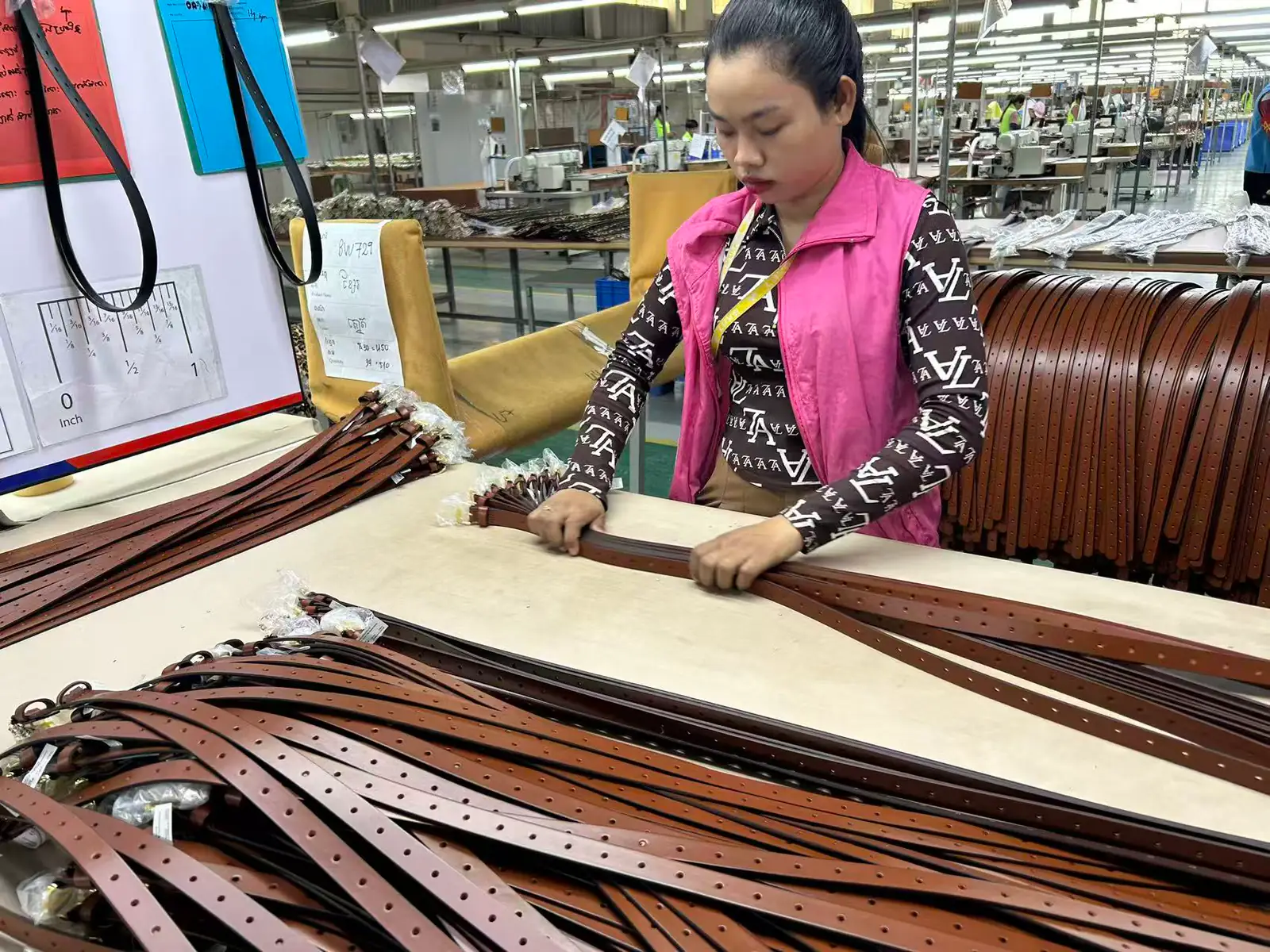
“ Ceinture en cuir véritable ” n’est pas une description douanière suffisante. Elle peut désigner une sangle en cuir refendu, un substrat en cuir reconstitué, une sangle multicouche à parement en cuir ou une catégorie marketing qui n’est pas techniquement précise. Alignez la description de la facture sur la nomenclature approuvée et conservez les preuves à l’appui de cette description.
Routez les ceintures en cuir, en PU et en textile avant de rechercher les derniers chiffres.
Begin with the strap’s material identity. Leather and composition-leather clothing accessories point the researcher toward heading 4203. A PU-coated textile construction is not converted into leather by a grain print, and a textile-and-rubber belt can route outside Chapter 42, as CBP ruling N347492 demonstrates. Plastic-sheet constructions need their own legal-note review. Do not select a heading from appearance alone.
For coated or multilayer straps, document the visible surface, substrate, layer thickness, composition and role of each layer. Then read the relevant section and chapter notes in the destination tariff. This guide intentionally does not assign one universal code to “PU belts”: the same retail phrase can describe materially different goods. Escalate uncertain essential-character or coating questions to a customs professional or binding-ruling process.
What a 2025 CBP Ruling Shows
US Customs and Border Protection ruling N347492, dated April 18, 2025, considered two waist belts from China. One used split leather and a removable zinc-alloy buckle. The other used a woven strip of 85% polyester and 15% rubber with a buckle. CBP classified the leather belt under 4203.30.0000 and the textile/rubber belt under 6217.10.9530.
| Item in CBP N347492 | Material/construction | Classification stated by CBP | Practical implication |
|---|---|---|---|
| Style PN06018G | Split leather; removable zinc-alloy buckle | HTSUS 4203.30.0000 | A leather waist belt remained in the belt provision with the removable buckle. |
| Style PN06017G | Woven 85% polyester and 15% rubber strip; zinc-alloy buckle | HTSUS 6217.10.9530 | A visually similar belt entered a different chapter because its strap construction differed. |
The ruling is valuable because the two goods shared the everyday name “belt” while material construction drove different outcomes. It does not authorize every split-leather or textile belt to use those numbers. Customs rulings depend on the submitted facts; even a small difference in coating, component presentation or function may require new analysis.
Product-specific evidence: CBP ruling N347492.
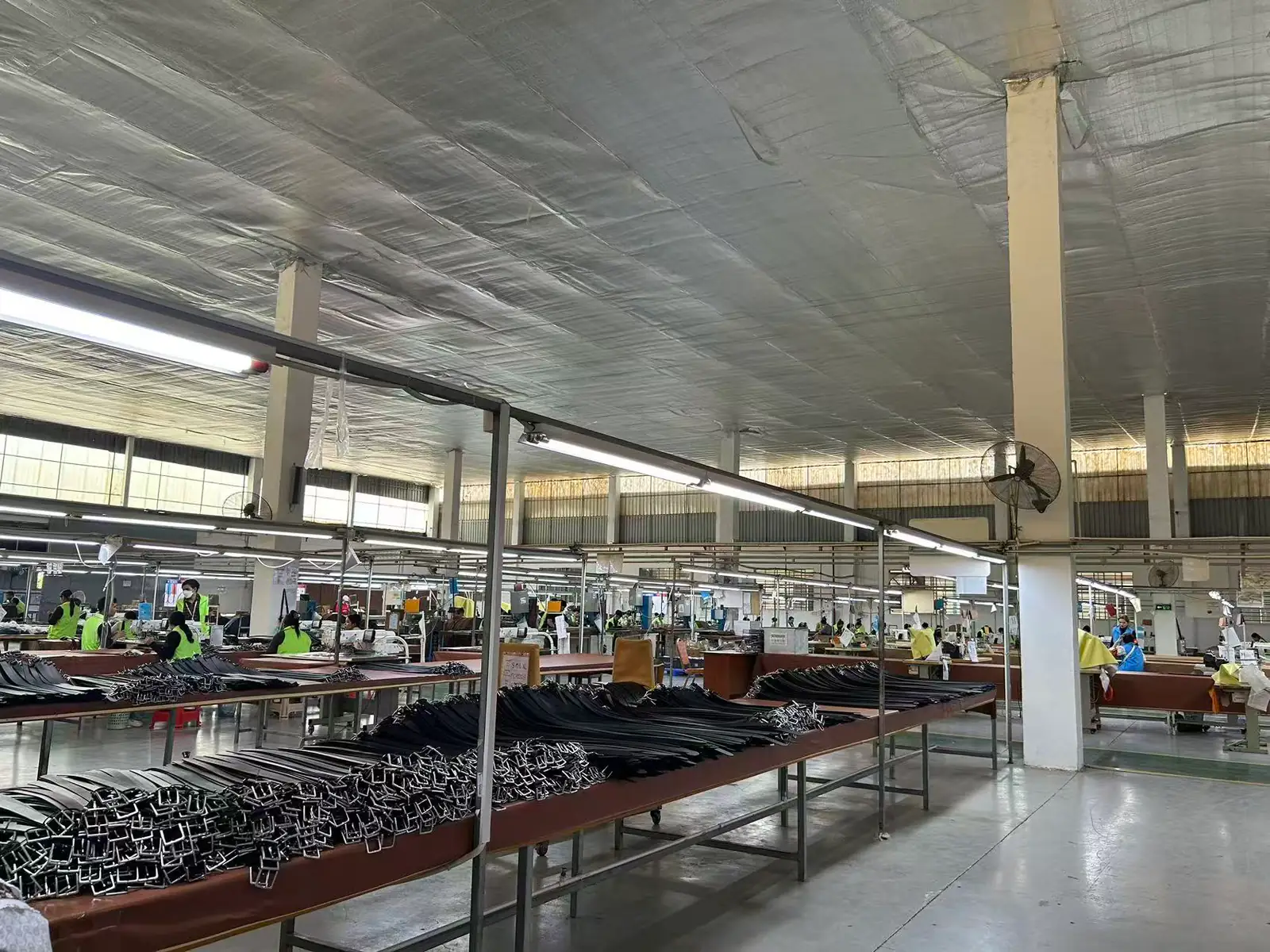
Complete Belts Versus Separately Imported Components
Classification follows the goods as presented. A buckle attached to a strap, a removable buckle packed with that strap, a carton of buckles and a shipment of unfinished blanks are not automatically the same article. Record the pack configuration and do not extend a complete-belt ruling to separately entered hardware.
| Goods presented at import | Safe research action | Why copying 4203.30 is unsafe |
|---|---|---|
| Assembled leather waist belt | Test heading 4203 against the legal text and product facts | The provision covers the complete belt, not every related component |
| Removable buckle packed with its belt | Compare the exact presentation with product-specific rulings such as N347492 | A ruling applies only when the submitted facts are materially alike |
| Metal buckles imported separately | Restart classification for the hardware article and review the applicable metal/hardware provisions | The separately entered item is not an assembled leather belt |
| Straps, blanks or mixed component kits | Document each item and ask whether set, unfinished-goods or separate-entry rules apply | Packaging components together does not automatically create the complete-belt outcome |
When a program deliberately splits strap and buckle shipments, show the broker the invoices, packing configuration and intended assembly. Ask for a written conclusion or a binding ruling when the decision is material. The supplier can describe the parts; the importer controls the declaration.
A Seven-Step Classification Workflow for Importers
Classification should happen before the first shipment, ideally while the final sample and BOM are being approved. That timing lets the supplier answer construction questions and allows landed-cost assumptions to be corrected before a retail price is locked.
| Step | Importer action | Résultat |
|---|---|---|
| 1. Freeze the SKU | Identify the exact style, size range and pack configuration | Classification unit |
| 2. Describe the article | State ordinary use without sales adjectives | Plain-language description |
| 3. Map materials | List strap layers, coating, reinforcement and buckle | Construction sheet |
| 4. Search the tariff | Read heading, subheading and legal notes | Candidate code set |
| 5. Compare rulings | Use materially similar rulings; record differences | Reasoning memo |
| 6. Resolve uncertainty | Ask a broker or request a binding ruling | Defensible decision |
| 7. Recheck at entry | Verify current tariff edition and Chapter 99 | Entry-ready record |
Read General Rules of Interpretation and legal notes in sequence; a keyword search result is only an index. When uncertainty is commercially material, a customs broker can help prepare the analysis. US importers may also request a binding ruling from CBP. Supply complete, accurate samples and construction data because the ruling will be tied to those facts.
Keep Base Classification Separate From Country of Origin
The product’s base classification and its country of origin answer different legal questions. First determine what the imported article is. Then document where the relevant manufacturing operations occurred and apply the destination market’s origin rules. Finally, check whether that origin triggers marking, preference rules or additional measures such as US Chapter 99 provisions.
A China-made strap assembled with hardware in Cambodia—or the reverse—does not receive an origin conclusion from the purchase order label. Provide the actual manufacturing sequence to the importer’s trade-compliance adviser. This guide makes no preferential-origin or tariff promise for either country.
Date every tariff lookup
A classification memo should name the tariff edition used. The grounding for this guide recorded USITC’s 2026 HTS Revision 18, published September 2, 2026, as the edition reviewed during drafting. That reference will age. Reopen the current HTSUS near entry and record the new retrieval date rather than assuming the old revision is still operative.
Build a Classification File, Not a Spreadsheet Guess
For each SKU family, retain the approved specification, BOM, material declarations, photos of the finished belt and packaging, buckle relationship, country-of-origin analysis, candidate codes, rulings reviewed and the reason for the final choice. Add the tariff edition and retrieval date. If several colours share construction, record the family logic; if materials change, issue a new classification review.
A redacted-style classification record
For a hypothetical Style LB-01, the file might state: “men’s waist belt; split-leather strap; removable zinc-alloy buckle packed with the strap; country of origin to be determined from the documented production sequence; candidate HTSUS 4203.30.0000; compared with CBP N347492; current schedule checked on [entry review date].” This is an example of record structure, not a HongDing shipment or a binding conclusion. Its value is that every assumption can be verified or challenged.
The description used on the commercial invoice should be specific enough to support the decision without embedding uncertain legal conclusions. “Men’s waist belt, split-leather strap, zinc-alloy buckle” is more useful than “fashion accessory.” Coordinate invoice wording, entry data and the product file before shipping.
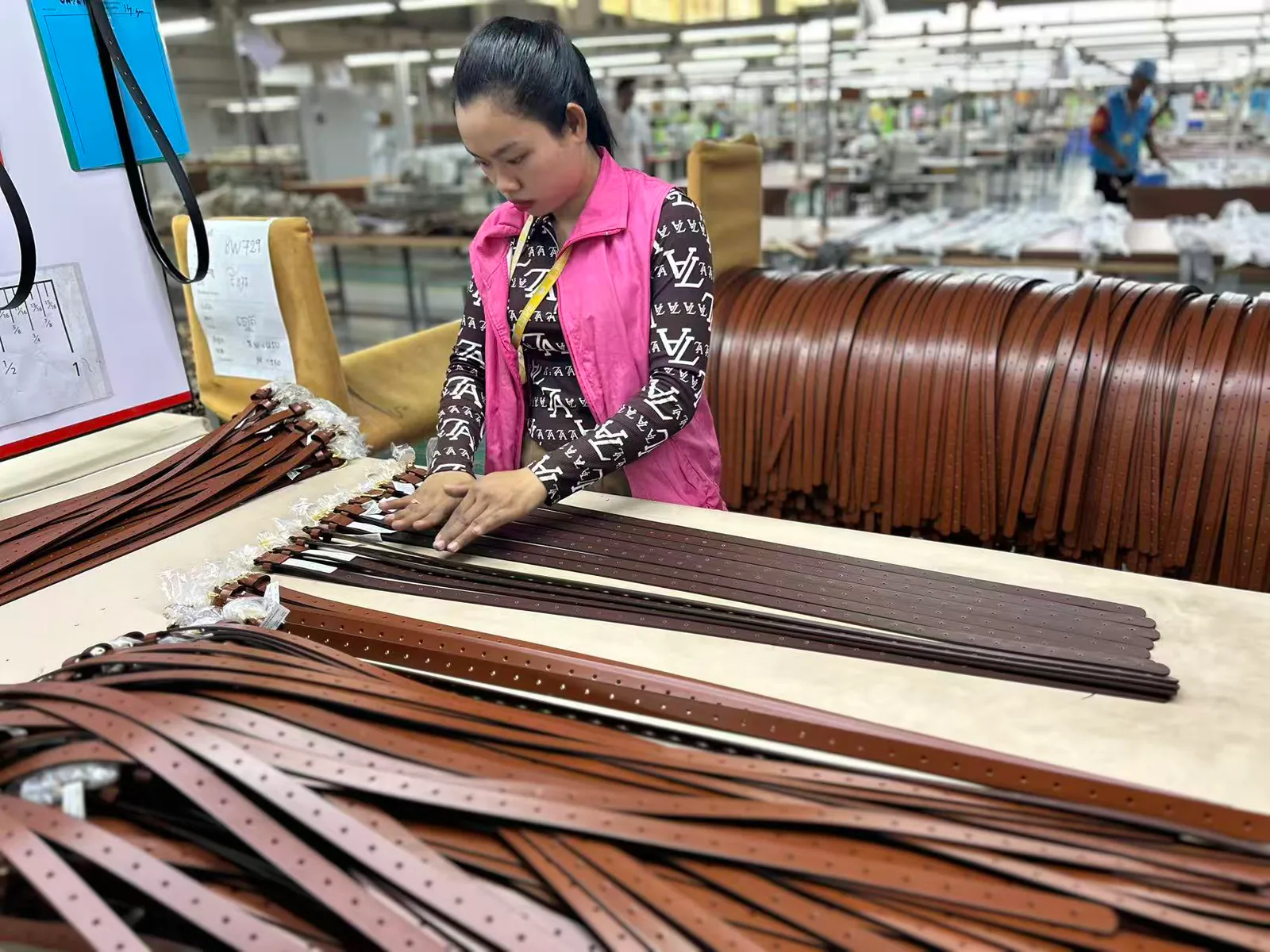
Five Common HS-Code Mistakes
- Copying the code from a marketplace listing or another supplier’s invoice.
- Classifying from the buckle material while ignoring the strap construction.
- Using “leather” without distinguishing leather, split leather and composition leather.
- Applying one country’s full tariff number to another destination.
- Quoting a duty rate without checking current Chapter 99 or trade-remedy measures.
Rates are intentionally not presented as a permanent buying promise in this guide. The HTSUS and additional measures change, and origin-specific rules may apply. Verify current requirements for the exact entry date with the official tariff and your customs adviser.
Add Classification Data to the Belt RFQ
Ask the manufacturer for a layered material description, composition declaration, buckle material and assembly method, product photos, expected country of origin and any prior classification references. Make this a controlled deliverable before shipment, not an email request raised when the goods reach the port.
HongDing develops leather, PU and woven belt programs, so the same merchandising category can contain products with different customs facts. Our guide des matériaux de ceinture helps teams specify the substrate and construction before classification. For freight responsibility and landed-cost ownership, use the separate FOB versus DDP guide.
Need a construction pack for classification review?
Send the belt drawing, target market and material brief. We can organize the product facts your broker or trade-compliance team needs, while leaving the legal classification decision with the importer and relevant authority.
Questions fréquentes
What is the HS code for a leather belt?
Heading 4203 commonly covers leather or composition-leather clothing accessories, and US subheading 4203.30.0000 covers belts and bandoliers with or without buckles. Final classification still depends on the actual article and destination tariff schedule.
Does a removable metal buckle change the US code?
Not necessarily. CBP ruling N347492 classified a split-leather waist belt with a removable zinc-alloy buckle under 4203.30.0000. A ruling is product-specific, so use it as reasoning evidence rather than a blanket answer.
Is the HS code the same in every country?
The first six digits are internationally harmonized for participating customs systems, but national tariff schedules add digits and may apply different reporting or trade-measure requirements.
Can my manufacturer decide the final HS code?
A manufacturer can provide essential construction and origin data, but the importer of record remains responsible for the entry in the United States. A customs broker can assist, and CBP can issue a binding ruling for a specific product.
Should I put the duty rate in the purchase order?
Record the classification basis and retrieval date, but verify the current tariff and any Chapter 99 measures near entry. Rates and special measures can change independently of the product specification.