By Kevin · Updated September 5, 2026
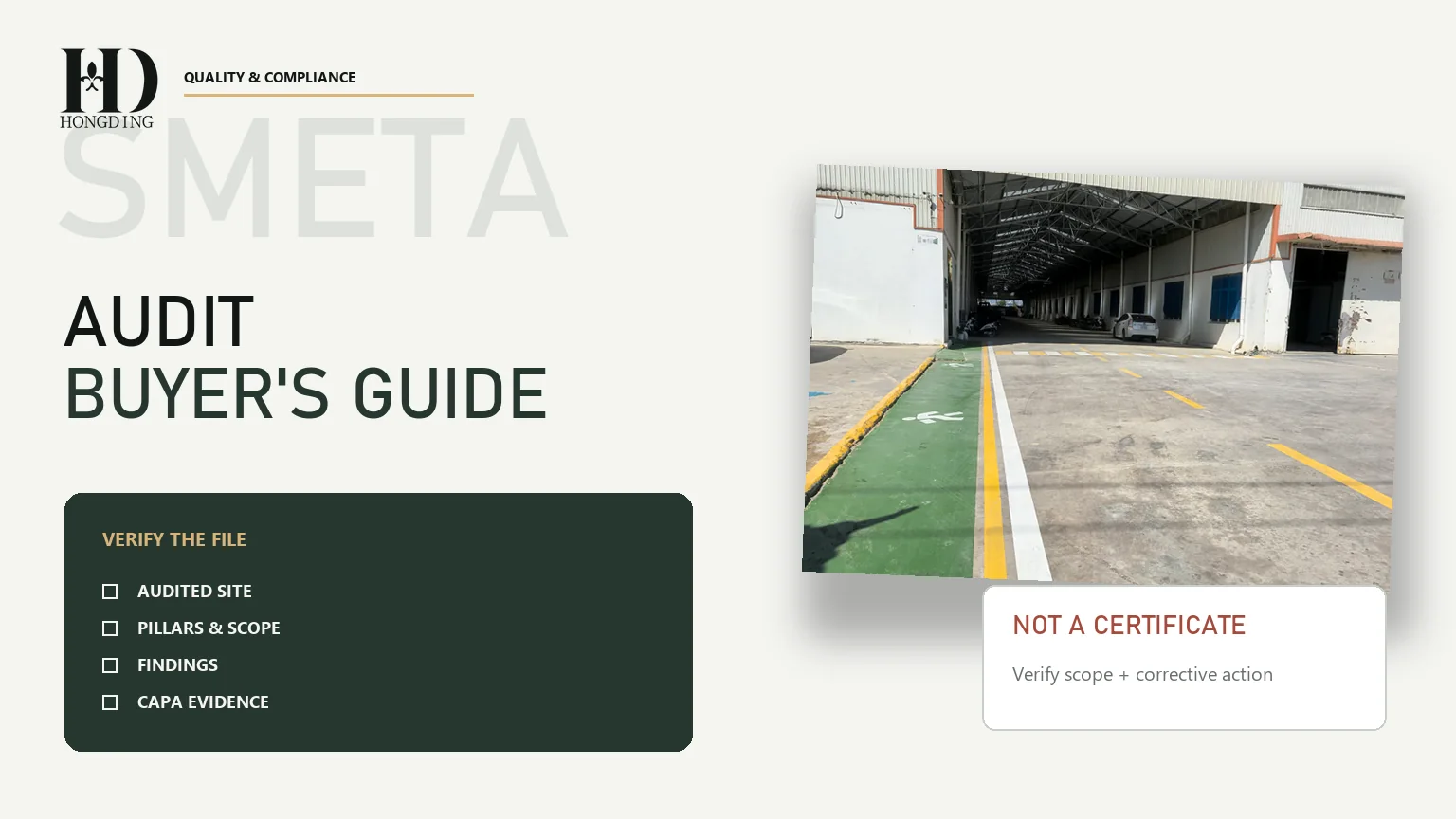
Un audit SMETA peut constituer une preuve utile lors de la qualification d’un fournisseur de ceintures, mais il ne s’agit pas d’un certificat universel et il ne prouve pas que chaque usine, ligne de production ou action corrective est couverte. La question d’achat est plus précise : le rapport correspond-il au site légal qui réalisera votre commande, son périmètre est-il approprié, et les constats ouverts sont-ils maîtrisés ?
- Considérez SMETA comme un compte rendu d’évaluation propre à un site, et non comme un label couvrant l’ensemble du fournisseur.
- Vérifiez l’entité juridique auditée, l’adresse, la date, l’auditeur, le périmètre et le type de planification avant de vous appuyer sur le rapport.
- Lisez l’état des actions correctives, et pas seulement la date d’achèvement de l’audit.
- Conservez les preuves de commerce éthique séparément des spécifications produit, des tests et du contrôle AQL.
SMETA n’est pas un certificat
SMETA signifie Sedex Members Ethical Trade Audit. Sedex le définit comme une méthodologie d’audit bâtie autour du Code de base de l’ETI, des conventions de l’Organisation internationale du Travail et du droit local applicable. La méthodologie actuelle est SMETA 7. Une société d’audit affiliée approuvée réalise l’évaluation ; Sedex fournit la méthodologie et la plateforme plutôt que d’auditer le site lui-même. Ces rôles et cadres de référence sont indiqués dans les documents de Sedex Aperçu officiel de SMETA.
Cette distinction compte dans l’approvisionnement. Un certificat suggère un simple statut valide ou expiré. Un rapport SMETA est un ensemble de preuves daté concernant un lieu de travail particulier. Il consigne le périmètre, les observations, les constats et les actions correctives. Il peut appuyer la diligence raisonnable, mais il ne peut pas remplacer les propres critères d’approbation de l’acheteur ni créer une garantie générale pour un groupe de fournisseurs.
Référence principale : Sedex — Audit SMETA.
Deux piliers ou quatre piliers ?
Les deux versions examinent les normes du travail ainsi que la santé et la sécurité. La voie à quatre piliers ajoute une évaluation environnementale étendue et l’éthique des affaires. “ Plus de piliers ” n’est pas automatiquement la bonne réponse ; la politique d’approvisionnement responsable de l’acheteur, les engagements clients et le profil de risque devraient définir le périmètre requis. La comparaison utile ne porte pas uniquement sur le prix, mais sur la question de savoir si le périmètre choisi répond aux questions que votre comité d’approbation doit valider.
| Domaine | 2 piliers | 4 piliers | Question de l’acheteur |
|---|---|---|---|
| Normes du travail | Incluses | Incluses | Les dossiers des travailleurs et les entretiens couvrent-ils le site visé ? |
| Santé et sécurité | Incluses | Incluses | Les risques observés, les actions et les dates sont-ils visibles ? |
| Environnement | Exigences environnementales limitées dans le périmètre de base | Évaluation environnementale étendue | Votre politique exige-t-elle le module étendu ? |
| Éthique des affaires | Pas un pilier distinct | Incluses | Le programme exige-t-il un examen éthique formel ? |
Officiel de Sedex Aperçu d’une page de SMETA 7 distingue les audits annoncés, semi-annoncés et inopinés et décrit les parcours à 2 et 4 piliers. Un libellé de planification n’est pas un score de qualité. Il décrit le préavis reçu par le site ; conservez-le donc comme partie du dossier de preuves au lieu de le retirer d’un résumé fournisseur.
Vérifiez l’identité de l’audit avant de lire la fiche de score
Commencez par les informations de couverture. Faites correspondre l’entité juridique et l’adresse à l’usine déclarée dans le devis, le bon de commande et les documents d’expédition. Un fournisseur peut coordonner plusieurs sites d’exploitation, et un audit d’un site ne doit pas être associé silencieusement à un travail confié à un autre site.
Ensuite, validez la date de l’audit, la version de la méthodologie, la société d’audit, la référence du rapport et le périmètre. Demandez un accès autorisé via Sedex lorsque votre organisation utilise la plateforme. Les captures d’écran, les logos et une déclaration d’une page peuvent être pratiques pour un premier filtrage, mais ils constituent des preuves faibles car ils retirent les constatations et la piste d’audit de leur contexte.
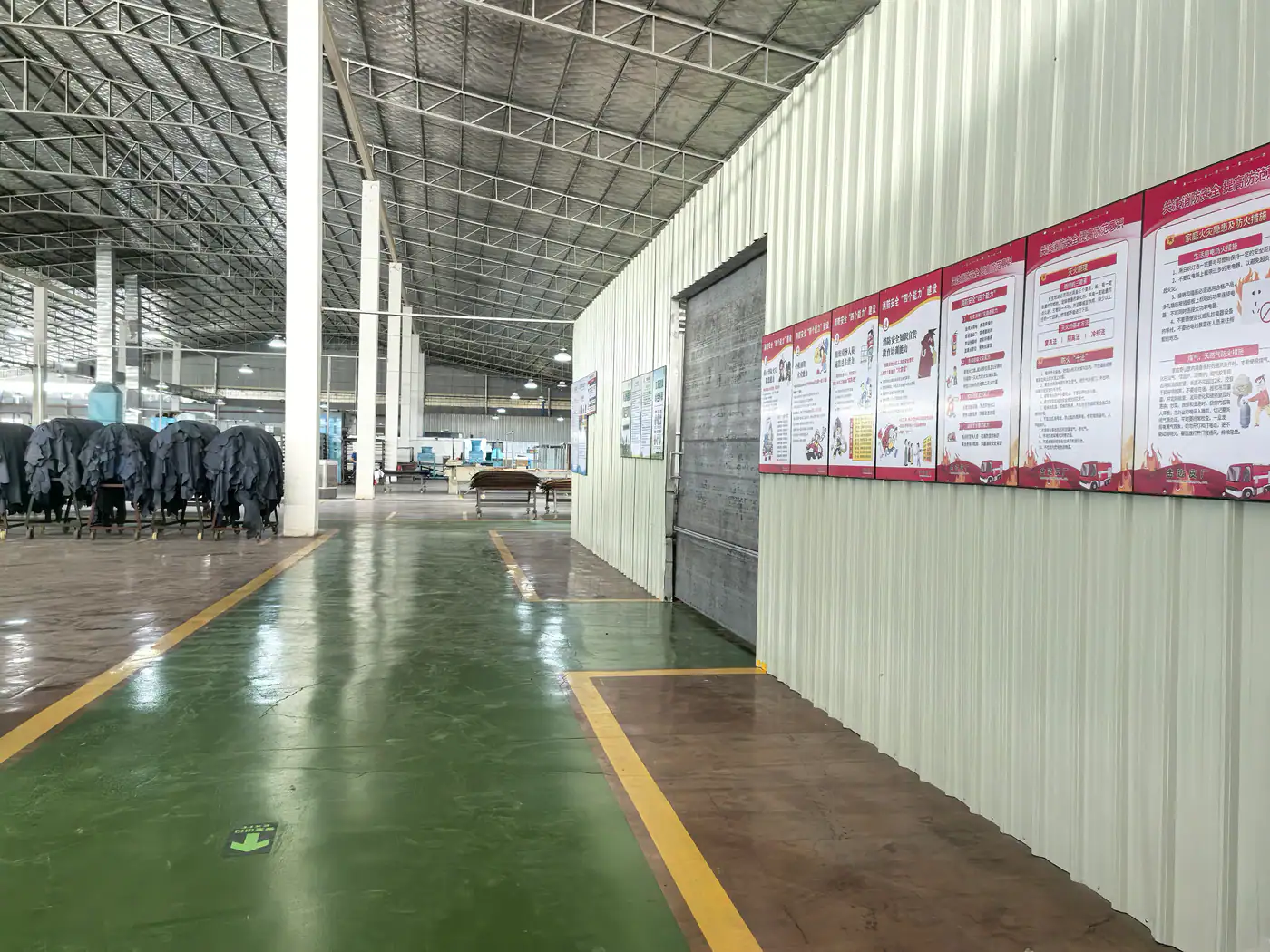
Pour un partenaire de fabrication multi-sites tel que HongDing, la question à se poser n’est pas “ Le groupe fait-il l’objet d’un audit ? ” C’est “ Quel site et quels processus serviront ce programme de courroie, et quelles preuves s’appliquent à ce site ? ” Notre aperçu de la fabrication aide les acheteurs à identifier les étapes de production qui doivent être cartographiées lors de la qualification.
Lisez les constats et les actions correctives comme deux enregistrements distincts.
Un constat d’audit identifie un écart observé au moment de l’évaluation. Un plan d’actions correctives attribue des mesures correctives ; il ne prouve pas que les mesures correctives ont été vérifiées. Structurez votre revue autour de quatre états : constat enregistré, action proposée, preuve soumise et clôture vérifiée. Si le rapport utilise une terminologie différente, faites-la correspondre à ces états afin que les équipes commerciales et de conformité partagent une même interprétation.
Severity labels deserve attention, but so do ownership and dates. A lower-severity item with no owner can persist indefinitely, while a serious finding with an immediate containment action and independently verified closure may be better controlled. Buyers should define which findings block onboarding, which permit conditional approval and which can be monitored after launch.
Build an Importer Evidence Pack That Can Survive Handover
A reliable evidence pack is compact enough to maintain but complete enough for another buyer to reconstruct the decision. Save the original report or controlled link, not just a PDF excerpt. Record the site mapping and the buyer’s review date in a cover sheet. This avoids the common failure in which the employee who qualified the supplier leaves and the next team cannot tell why an approval was granted.
| Champ | What to capture | Why it changes the decision |
|---|---|---|
| Legal entity and address | Exact name, full address and any site identifier | Prevents one facility’s report being used for another facility. |
| Audit record | Date, announced/semi-announced/unannounced status and methodology version | Shows when and under what visit conditions the evidence was gathered. |
| Audit provider | Affiliate Audit Company and report reference | Lets the buyer validate provenance. |
| Portée | 2-pillar or 4-pillar, plus exclusions | Confirms whether the buyer’s required modules were assessed. |
| Constatations et plan d’action correctif (CAP) | Issue, owner, due date, evidence and verification status | Separates a completed visit from a controlled issue. |
| Order mapping | Factory named on PO, production step and subcontractors | Ties compliance evidence to the actual supply route. |
Version control is essential. Keep the original document name and date, and issue your own short review record rather than overwriting the source file. When new evidence arrives, append the change and identify which decision it altered. This approach works equally well for a new vendor, a factory transfer or a repeat program reviewed after a policy update.
Keep Ethical-Trade Evidence Separate From Product Quality
SMETA does not approve leather grade, buckle performance, restricted substances, workmanship or carton labelling. Those belong in the product specification, compliance test plan and inspection standard. A socially audited site can still ship the wrong leather or an off-shade edge; a technically capable factory can still have labour or safety findings. Conflating the two creates a blind spot.
For belt programs, pair the supplier review with a signed specification, approved sample, testing matrix and an attributes inspection plan. The HongDing quality-control process explains the production controls a buyer can map separately. If you need a sampling framework, the companion Guide d’inspection AQL pour les ceintures shows how to define defect classes and acceptance rules without pretending AQL is a product standard.
Apply the Check to a Hypothetical Belt Program
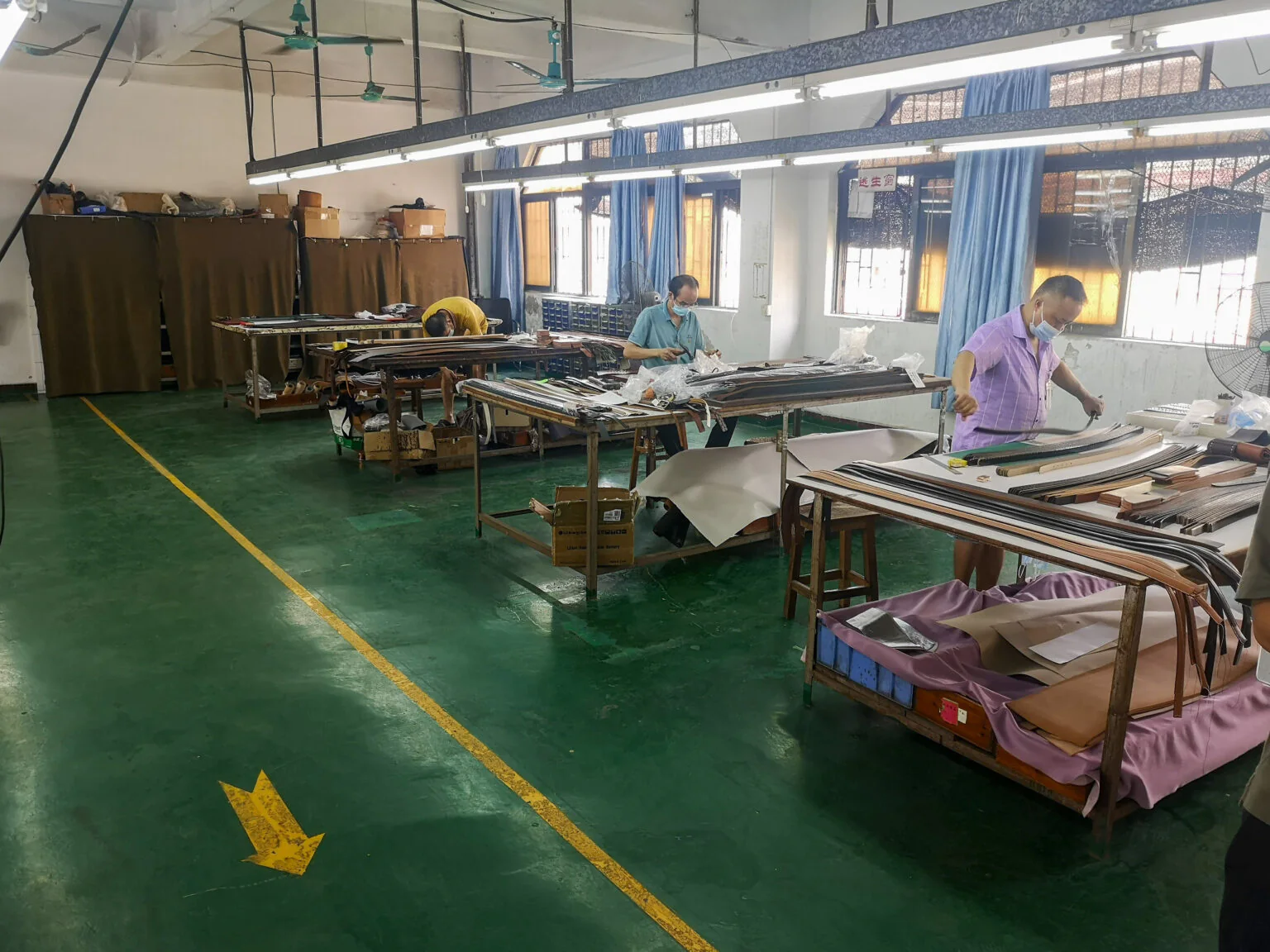
Start the RFQ with the target market, product construction, intended manufacturing site and required social-compliance evidence. If leather cutting, assembly, finishing or packing may move between sites, document the proposed flow. Then ask which locations are included in each audit and whether any material operation is subcontracted.
HongDing coordinates custom belt programs across operating locations with distinct roles. The correct evidence depends on the project-specific production route. This is a method for evaluating a proposed program, not a claim that any HongDing location holds a particular SMETA record. Buyers should confirm the location before relying on an audit presented during quotation.
Separate social, product and legal-market gates
Record three decisions independently: social-compliance approval for the production site; product-quality approval against the sealed sample and inspection plan; and legal-market approval for materials, claims and test evidence. A green result in one column cannot override a red result in another. Name the owner and evidence link for every gate.
Need to map compliance evidence to a belt program?
Send the target market, intended production location and evidence requirements. Use the response to build a site-to-order request list covering report identity, scope, findings and closure evidence.
SMETA Supplier Review Checklist
Use this as a pre-approval record, then add your organization’s thresholds. The purpose is not to produce a universal pass/fail formula. It is to make assumptions visible and prevent an incomplete audit statement from becoming a purchasing fact.
| Decision point | Acceptable evidence | Red flag |
|---|---|---|
| Identité | Site name and address match the production plan | Report belongs to a trading company or another factory |
| Currency | Date and version fit the buyer’s policy | Undated badge or cropped first page |
| Portée | Required pillars and activities are visible | Scope is described only as “passed” |
| Corrective action | Open and closed items are distinguishable | All findings are claimed closed without verification evidence |
| Product controls | Separate specification, test and inspection plan exists | SMETA is offered as proof of product conformity |
Set decision thresholds before the report arrives
Approuver when identity and scope match, required evidence is current and no buyer-defined blocking finding remains. Conditionally approve only when the buyer has named the limitation, owner, due date and release controls. Escalate when evidence is incomplete or interpretation is disputed. Reject or pause onboarding when the site is mismatched, evidence cannot be authenticated or a buyer-defined zero-tolerance condition is open. These are governance categories; each company must define its own thresholds.
Finally, set both an owner and a review trigger. A new production site, material subcontractor, serious finding, expired buyer-policy window or material change in the order should prompt reassessment. Log the reviewer, decision date, next review date and event triggers. A calendar reminder alone is not enough when the supply route changes first.
Questions fréquentes
Is SMETA a certification?
No. Sedex describes SMETA as an audit methodology. Buyers should assess the report, its scope and the status of findings rather than asking only whether a supplier is “SMETA certified.”
What is the difference between Sedex and SMETA?
Sedex provides the responsible-sourcing platform and owns the SMETA methodology. A SMETA audit is conducted by an approved Affiliate Audit Company; Sedex itself does not conduct the factory audit.
What does a four-pillar SMETA audit cover?
It includes the labour standards and health-and-safety pillars plus environmental assessment and business ethics. Exact evidence and findings remain specific to the audited site and audit record.
Does a completed audit mean every finding is closed?
No. Completion records that an audit occurred. Review the corrective action plan and the current verification status of each finding.
Does Sedex membership prove a supplier has passed SMETA?
No. Sedex membership and a SMETA audit are related but different. Verify the specific site audit, scope, date, findings and corrective-action status rather than treating platform membership as a pass mark.
What should an importer request?
Request the report or authorized platform access, site identity, scope, date, audit company, findings, corrective action evidence and confirmation that the audited site is the intended production site.