By Kevin · Published 2026-09-06 · Updated 2026-09-06
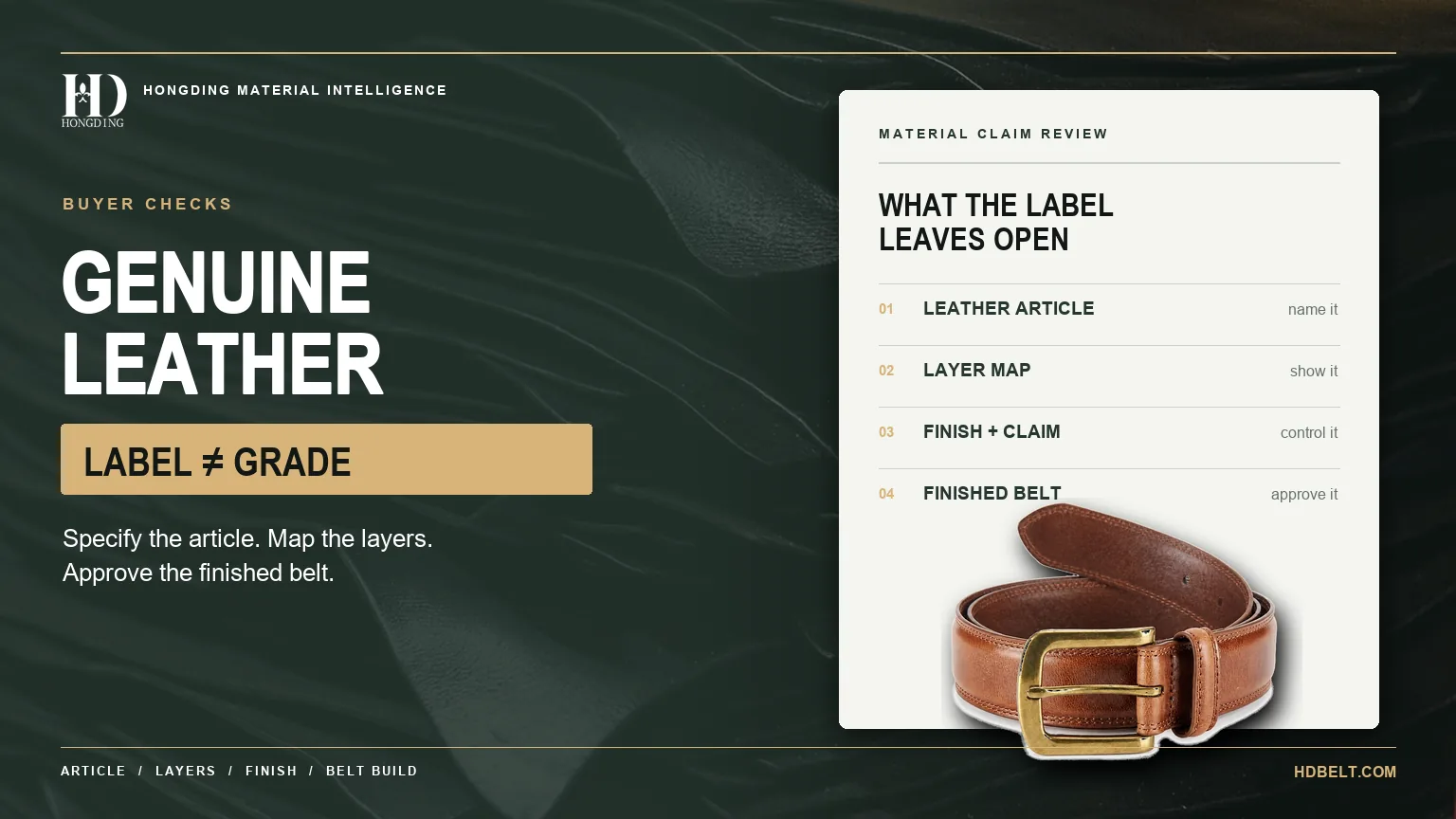
Une estampille “ cuir véritable ” peut être exacte et pourtant ne presque rien dire à un acheteur sur la qualité d’une ceinture en cuir véritable. Elle n’identifie ni la couche de peau, ni la correction de surface, ni le tannage, ni le support, ni le renfort, ni le système de bords, ni la performance de la ceinture finie. Considérez-la comme le début d’une question sur le matériau, pas comme la réponse.
- “ Cuir véritable ” n’est pas une catégorie de qualité définie par les FTC Leather Guides ou l’ISO 15115:2019.
- Pour les ventes aux États-Unis, 16 CFR Part 24 couvre les ceintures non vendues comme partie d’un vêtement et traite des allégations trompeuses sur le matériau, la catégorie, la qualité et la construction.
- Spécifiez l’article en cuir et chaque couche cachée au lieu d’approuver une formule matérielle générale.
- Inspectez le pli de boucle, la zone des trous, le contact du passant, la pointe, le bord et les interfaces contrecollées sur une ceinture finie.
- Consignez l’identité du matériau, la construction approuvée, les critères d’essai et les mentions destinées au consommateur dans un même enregistrement maîtrisé.
En bref : les ceintures en cuir véritable ne constituent pas une seule classe de construction ou de performance. Un bon de commande défendable nomme le cuir réel, cartographie la sangle complète, définit l’allégation et lie la production à des preuves approuvées.
Ce que « cuir véritable » dit à un acheteur
La signification utile est étroite : le vendeur présente le matériau comme du cuir plutôt que comme une imitation. Cette déclaration laisse encore ouvertes la plupart des variables d’achat. Elle n’établit pas s’il s’agit de pleine fleur, de fleur corrigée, de cuir refendu, de l’espèce animale, du tannage, de la finition, de l’épaisseur ou de la construction de la ceinture.
Les Guides de la Federal Trade Commission des États-Unis pour certains produits en cuir et en imitation de cuir s’appliquent aux ceintures lorsqu’elles ne sont pas vendues comme partie d’un vêtement. La partie 24 porte sur la question de savoir si les descriptions présentent de manière trompeuse la composition et d’autres caractéristiques du matériau. Elle ne publie pas une échelle de qualité en quatre étapes avec “ cuir véritable ” comme catégorie fixe.
Cette distinction compte dans une demande de prix. Deux fournisseurs peuvent proposer des “ ceintures en cuir véritable ” tout en chiffrant différentes couches de peau, enductions, doublures et assemblages. Leurs devis ne sont pas comparables tant que ces champs ne correspondent pas.

Pourquoi l’échelle de qualité échoue
De nombreux guides de vente au détail répètent un ordre simple : pleine fleur, fleur supérieure, cuir véritable et cuir aggloméré. Il est facile à retenir et peu fiable comme spécification. Les deux premiers termes décrivent la conservation de la fleur ou une région supérieure de la peau, tandis que “ véritable ” est large et que le matériau aggloméré a une structure reconstituée.
ISO 15115:2019 est la norme de vocabulaire du cuir publiée en vigueur après examen et confirmation en 2025. Elle définit le cuir pleine fleur comme conservant toute la fleur sans enlèvement mécanique correctif de la surface. Elle définit séparément le cuir refendu comme une couche refendue côté chair ou refendue médiane, tannée, sans structure de fleur.
La norme ne répertorie pas “ cuir véritable ” comme une catégorie de matériau nommée. Cette absence est importante. Un spécialiste du marketing peut utiliser l’expression comme signal d’authenticité, mais un acheteur ne peut pas en déduire la couche de peau ni le mode de transformation.
Une décision qualité nécessite plus qu’un mot de classement. Un article en fleur corrigée avec une finition maîtrisée peut mieux convenir à une collection habillée homogène qu’un article très variable choisi uniquement pour une appellation plus valorisante. Un renfort faible ou un pli de boucle peut aussi faire défaillir une ceinture même lorsque le cuir de dessus est correctement décrit.
| Allégation proposée | Ce qu’elle peut indiquer | Ce que cela ne prouve pas | Preuves pour l’acheteur |
|---|---|---|---|
| Cuir véritable | Une représentation en cuir | Couche de peau, finition ou performance | Déclaration de l’article et cartographie des couches |
| Pleine fleur | Fleur intégralement conservée | Espèce, tannage ou construction de ceinture | Spécification d’article et échantillon approuvé |
| Fleur corrigée | Surface de la fleur corrigée mécaniquement | Niveau de correction ou performance du revêtement | Déclaration de procédé autorisé |
| Cuir refendu | Refente de chair ou refente intermédiaire | Enduction, support ou renfort | Dossiers de coupes transversales et de composants |
| Cuir aggloméré | Teneur en cuir reconstitué | Construction en cuir pleine peau | Composition percentages and claim review |
Cartographier d’abord l’article en cuir
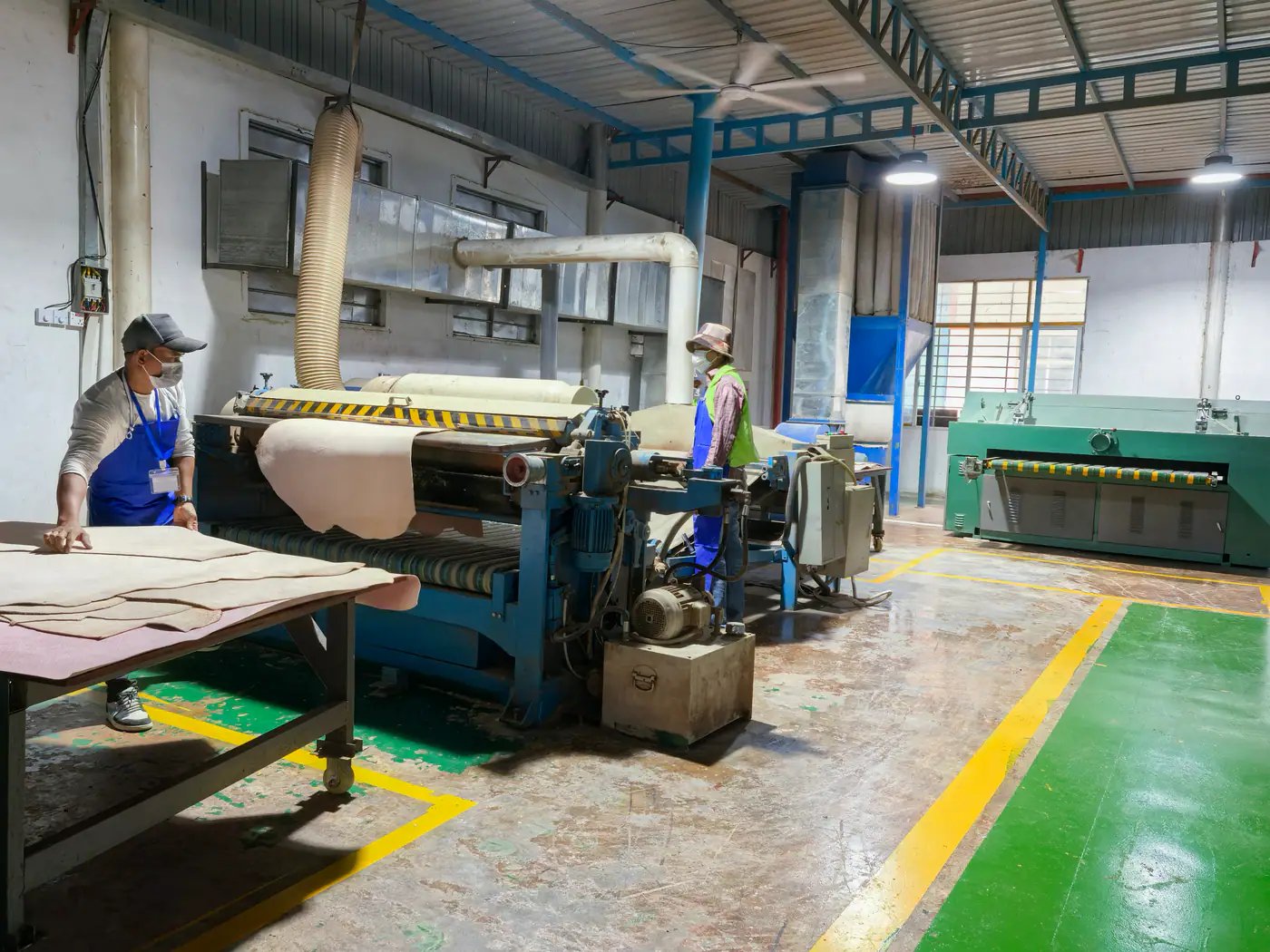
A leather article is the specific material grade controlled by the supplier or finishing route. HongDing’s buyer record starts with that identity, not a generic swatch name. The file should connect the supplier, article code, source layer or composition, finish and applicable lot or report.
Name the material structure
State whether the article is full grain, corrected grain, split or another defined construction. Record animal species only when documented and relevant to the claim. Add tannage, color, grain treatment, temper and finished substance when those fields affect appearance or assembly.
Do not infer the structure from surface grain. Embossing and pigmented finishes can create a consistent appearance across very different substrates. A cross-section and supplier declaration answer questions that a face photograph cannot.
Separate finishing from tanning
Finishing changes color, hand, gloss, texture and surface behavior after tanning. It does not rewrite the original hide layer. HongDing can coordinate leather finishing through the relevant project route, while Pro Pelli is documented as a leather-finishing facility rather than a blanket tannery claim.
The distinction protects the sourcing file. It prevents a finish sample from being treated as proof of origin, tannage, species or certification. Each claim needs its own evidence.

Inspecter la construction complète de la ceinture
A belt is a system, not a strip of face leather. The face can be leather while the core, backing, lining, reinforcement or edge contains another material. FTC guidance calls for backing disclosure when an unseen backing would otherwise mislead a purchaser about composition.
Map the stack from front to back. Record the face article, core or reinforcement, lining or backing, adhesive, stitch route and edge treatment. Then document local constructions at the buckle fold, keeper, holes, tip, rivets, screws and logo zones.
Follow the stress path
The buckle fold bends repeatedly and also carries the hardware connection. The hole field combines tensile load with cut edges, while the keeper rubs the face during use. These zones deserve separate acceptance checks because a flat swatch does not reproduce them.
Edge quality also depends on preparation and geometry. A painted edge needs a controlled substrate, radius, coating sequence and cure. A folded or burnished edge uses a different route, so “clean edge” is not a reproducible requirement.
| Belt zone | Main uncertainty | Useful buyer check |
|---|---|---|
| Buckle fold | Skive, bend and attachment | Production-intent assembly sample |
| Hole field | Stretch, cracking and layer exposure | Repeated-use inspection with defined method |
| Keeper contact | Surface rub and color transfer | Contact-area appearance criteria |
| Tip and edge | Peeling, overflow or roughness | Finished edge master and defect limits |
| Strap body | Layer adhesion and shape stability | Cross-section plus finished-belt review |
| Interface de quincaillerie | Clamp, screw, rivet or stitch security | Approved attachment construction |
Comparer les descriptions courantes des matériaux en cuir
Full grain and corrected grain describe what happened to the grain surface. Split leather identifies a lower hide layer without grain structure. Bonded material is made from leather particles or fibres combined with other substances, while synthetic material does not become leather because its surface looks similar.
These are structural differences, not automatic verdicts for every retail program. A specified split article with a validated coating can be a deliberate choice. An unspecified full-grain article can still arrive with unacceptable shade, temper, thickness or cut yield.
The bonded-leather boundary deserves special care. Section 24.2(f) of the FTC Guides says material containing ground, shredded, reconstituted or bonded leather should not be represented as wholly leather. When bonded-leather terms are used, the guidance calls for leather-fibre and non-leather percentages.
That topic is covered in the dedicated bonded leather buyer guide. For broader sourcing decisions, use the guide des matériaux pour ceintures en cuir to compare the available routes without collapsing them into one grade ladder.
Turn the label into a producible belt brief
Send the intended market, use, material claim, face article, layer construction, hardware and packaging requirements. HongDing can then scope the material and sample route around the actual program.
Article definition | Construction map | Approval evidence
Contrôler les étiquettes sur tous les canaux
The material claim begins in development and ends in front of the customer. Product descriptions, swing tags, packaging, line sheets and digital advertising should describe the same approved construction. A late marketing rewrite can create a claim that the supplier’s documents do not support.
Under 16 CFR 24.1, it is unfair or deceptive to misrepresent a covered product’s kind, grade, quality, material content, thickness, finish, serviceability, durability or construction. This is why “genuine leather” cannot safely carry implied promises about long life, premium grade or a particular hide layer. Those statements need separate support.
Section 24.2 also says a representation about one product part should identify the part to which it applies. If only the face is leather, do not let a whole-product statement conceal a non-leather backing that affects the buyer’s understanding. Name the components clearly and review the wording for the destination market.
Freeze the approved claim
Put the final consumer-facing phrase in the same approval pack as the bill of materials and sample. Record who approved it, which market it serves and which material evidence supports it. A supplier substitution should trigger a claim review, not just a color check.
Approuver le système de ceinture fini
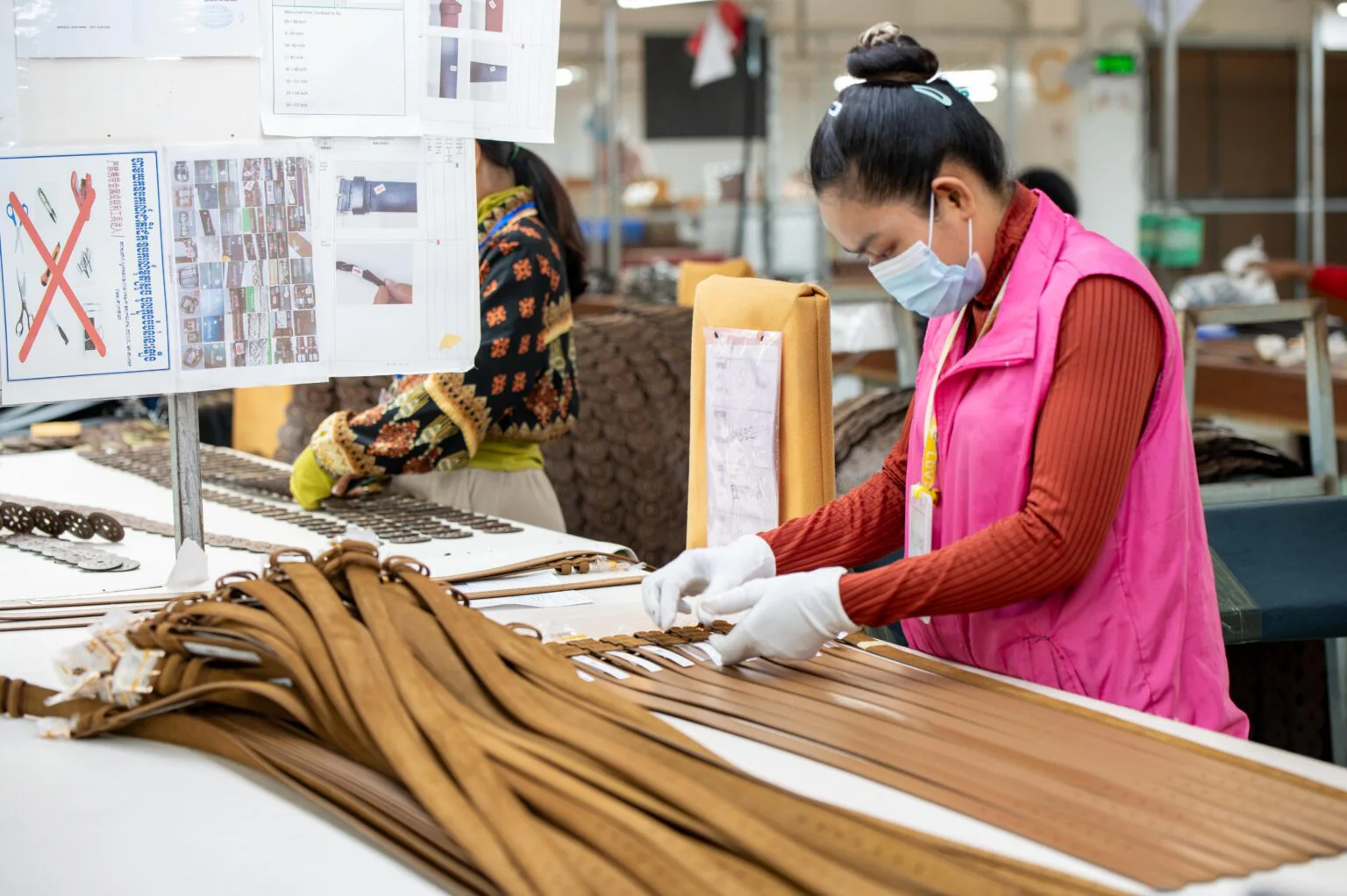
Material approval should begin with documents and end with a production-intent belt. First confirm the article and layer map. Then build a sample using the intended backing, reinforcement, adhesive, edge, stitch, buckle and packaging.
Choose tests from the product risk. Flexing may matter at the buckle fold and holes; adhesion matters at laminated interfaces; abrasion and color transfer matter at contact areas. The method, conditioning, sample location and acceptance limit must be named for the project.
Do not copy an attractive threshold from another belt. A lined dress belt and a double-layer work-style belt create different loads and failure modes. Project-specific criteria are more useful than a universal number with no traceable method.
Check the packed product
A finished belt can pass open-table inspection and still show pressure marks after coiling. Review the approved fold or coil, separators, buckle contact and carton arrangement. Packaging is part of the construction outcome when it changes the face or edge.
Close the loop with change control. No supplier, article, backing, finish, adhesive or hardware change should move into production without an impact review. Appearance matching alone is not proof of equivalence.
Faire correspondre la construction à l’usage en vente au détail
A dress program may value controlled color, a refined edge and a low-profile buckle. A casual collection may accept more natural variation or a more expressive surface. A work-style program can place greater demand on reinforcement and hardware attachment, but the exact load still belongs in the brief.
“Genuine leather” does not choose among these routes. The intended garment, wearing position, consumer expectation, retail channel and packaging determine the useful construction. Start with the use case and work backward to the article.
Natural markings are not automatically desirable or defective. The buyer should define the approved range by product position and cutting plan. A uniform retail presentation may require a more controlled finish, while a natural-look collection may preserve more variation.
If the brand story depends on full grain, vegetable tanning or a named species, request direct evidence for that claim. If the program needs a stable fashion surface at a different price position, evaluate another route honestly. The best material is the one that matches the claim and survives the approved use.
de HongDing full-grain leather belt page et leather belt program page show how material choice connects to the finished article. The quality control process then defines how the approved record moves into inspection.
Élaborer une demande de prix fournisseur utile
A useful RFQ lets every supplier price the same object. Give the intended market, belt type, target use, size basis, packaging and claim language. Add drawings or a reference sample, but state which characteristics the reference controls.
For the leather, request the supplier and article code, material structure, tannage, finish, color, substance and approved variation. For the belt, map every layer and local construction. For the commercial review, separate price options only after those fields are aligned.
| RFQ field | Useful input | Weak input |
|---|---|---|
| Identification des matières | Supplier, article and defined leather structure | Cuir véritable |
| Finish | Color, grain treatment, gloss and hand reference | Premium brown |
| Layer map | Face, core, backing, reinforcement and adhesive | Leather belt |
| Local construction | Fold, holes, keeper, tip, edge and hardware | Same as photo |
| Quality plan | Named methods, locations and acceptance criteria | High quality |
| Claim control | Approved wording and supporting evidence | Real leather label |
| Change control | Written approval before material or process change | Equivalent allowed |
Ask the supplier to identify every assumption in the quote. One vendor may include a leather lining while another uses a textile backing. A visible difference can be corrected in sampling; a hidden commercial assumption can survive until production.
The same discipline supports wholesale belt sourcing. A buyer can compare material routes, hardware and packaging only after the baseline specification is shared. That is the point where a quotation becomes decision-ready.
Questions fréquentes
Is genuine leather real leather?
It is a representation that the material is leather, but the phrase does not identify the hide layer, finish or complete belt construction. Buyers should request the exact leather article and supporting records.
Is genuine leather an official leather grade?
No fixed “genuine leather” quality grade appears in the FTC Leather Guides or ISO 15115:2019 vocabulary. Treat the phrase as broad marketing language, then specify the actual material structure.
Is genuine leather the same as full-grain leather?
No. ISO defines full grain by retention of the entire grain without corrective mechanical surface removal. “Genuine leather” does not provide that structural detail.
Is genuine leather the same as bonded leather?
No. Bonded leather is a reconstituted material containing leather fibres and non-leather substances. US guidance calls for percentage disclosures when bonded-leather terminology is used.
How can a buyer verify genuine leather belt quality?
Verify the article, layer map, finish, local construction, approved sample, test criteria and claim wording. Inspect the finished belt at folds, holes, edges and hardware interfaces.
How long should a genuine leather belt last?
The phrase genuine leather cannot predict a service life. Durability depends on the named leather article, complete layer construction, finish, hardware, use conditions and the project-specific tests and acceptance evidence agreed for the finished belt.
Conclusion
A genuine leather belt should never be approved from the stamp alone. The phrase can indicate a leather representation, but it does not define the article, surface treatment, backing, reinforcement or expected result. Buyers gain control by replacing the label with a documented material and finished-belt system.
- Name the leather structure and supplier article before sampling.
- Map face, core, backing, reinforcement, edge and hardware interfaces.
- Set project-specific checks at the buckle fold, holes, keeper, tip and packed-product contact points.
- Lock consumer wording to the same evidence and change-control record.
Send HongDing the intended use, selling market, target claim and construction brief when you are ready to compare routes. The next useful step is not choosing a better adjective; it is building a specification that the supplier can quote, sample and reproduce.