By Kevin · Updated September 5, 2026
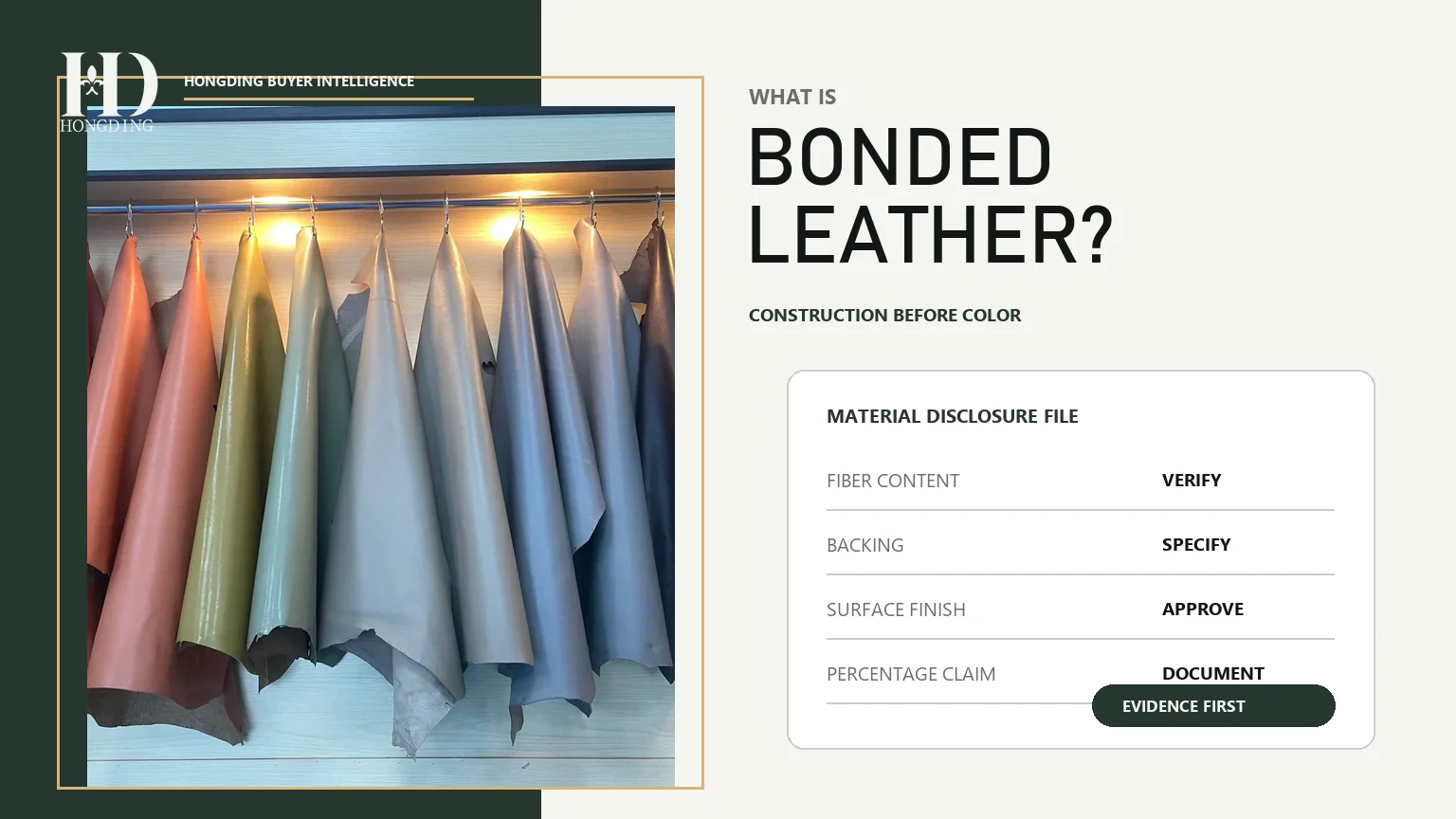
Bonded leather is not one standardized belt material. It is a family of materials made with leather fibres or leather-derived content combined with binders and other substances, often formed into a sheet and finished with a surface layer. Its commercial value depends on the actual formulation, backing, coating and application—not on the word “bonded” alone.
- Do not treat bonded leather, split leather and full-grain leather as interchangeable names.
- In the United States, a bonded-leather representation requires disclosure of the percentage of leather fibres and the percentage of non-leather substances.
- A useful specification identifies layer construction, leather-fibre content, backing, coating and test methods.
- Approve the material for the intended belt use through samples and defined tests; no universal durability number applies to every bonded leather.
Bonded Leather, Without the Marketing Fog
Bonded leather—also called reconstituted or fibre leather in some markets—is made by combining leather particles or fibres with binders and other non-leather substances. The mixture is formed into a sheet or substrate and may receive a coating, embossing, backing or additional reinforcement. That process can create a consistent surface and use leather by-products, but it also means the material’s behaviour depends on formulation and layer design.
There is no single global recipe that lets a buyer predict quality from the name. One supplier’s grade can differ materially from another in leather-fibre content, binder chemistry, tensile behaviour, backing and coating. Procurement should treat “bonded leather” as a category requiring a specification, not as a finished technical description.
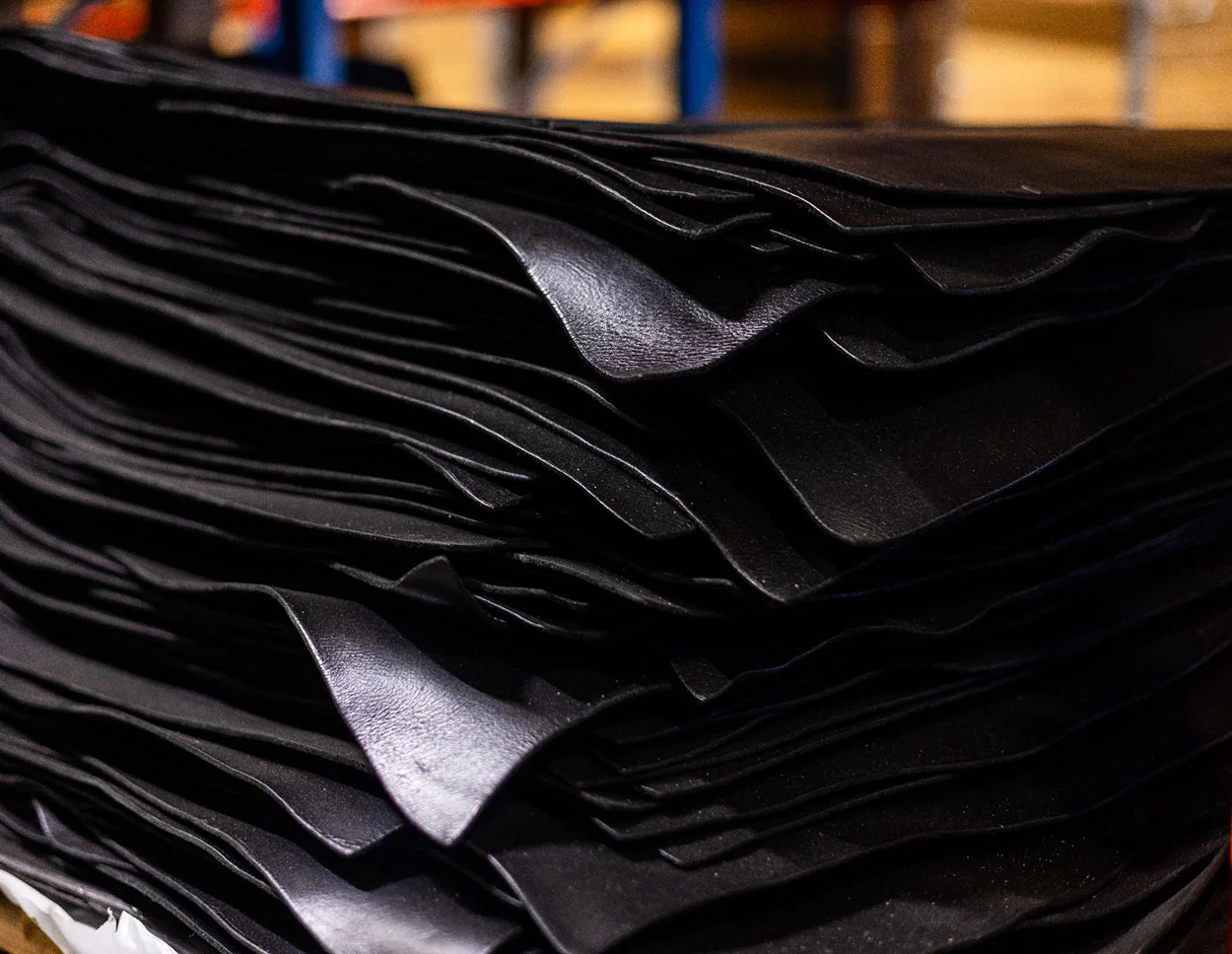
How Bonded Leather Is Constructed
Manufacturing commonly begins with leather remnants or fibres that are reduced, mixed with bonding agents and formed into a continuous sheet. A surface finish can add colour, grain texture and resistance properties. A textile or polymer backing may contribute dimensional stability. The finished roll may then be laminated into a belt strap construction.
The surface can imitate grain leather convincingly, so photographs alone do not identify the material. Ask for a cross-section, material declaration and supplier grade code. If the belt uses a leather face with bonded material only as a filler, describe each layer instead of naming the entire belt after one component.
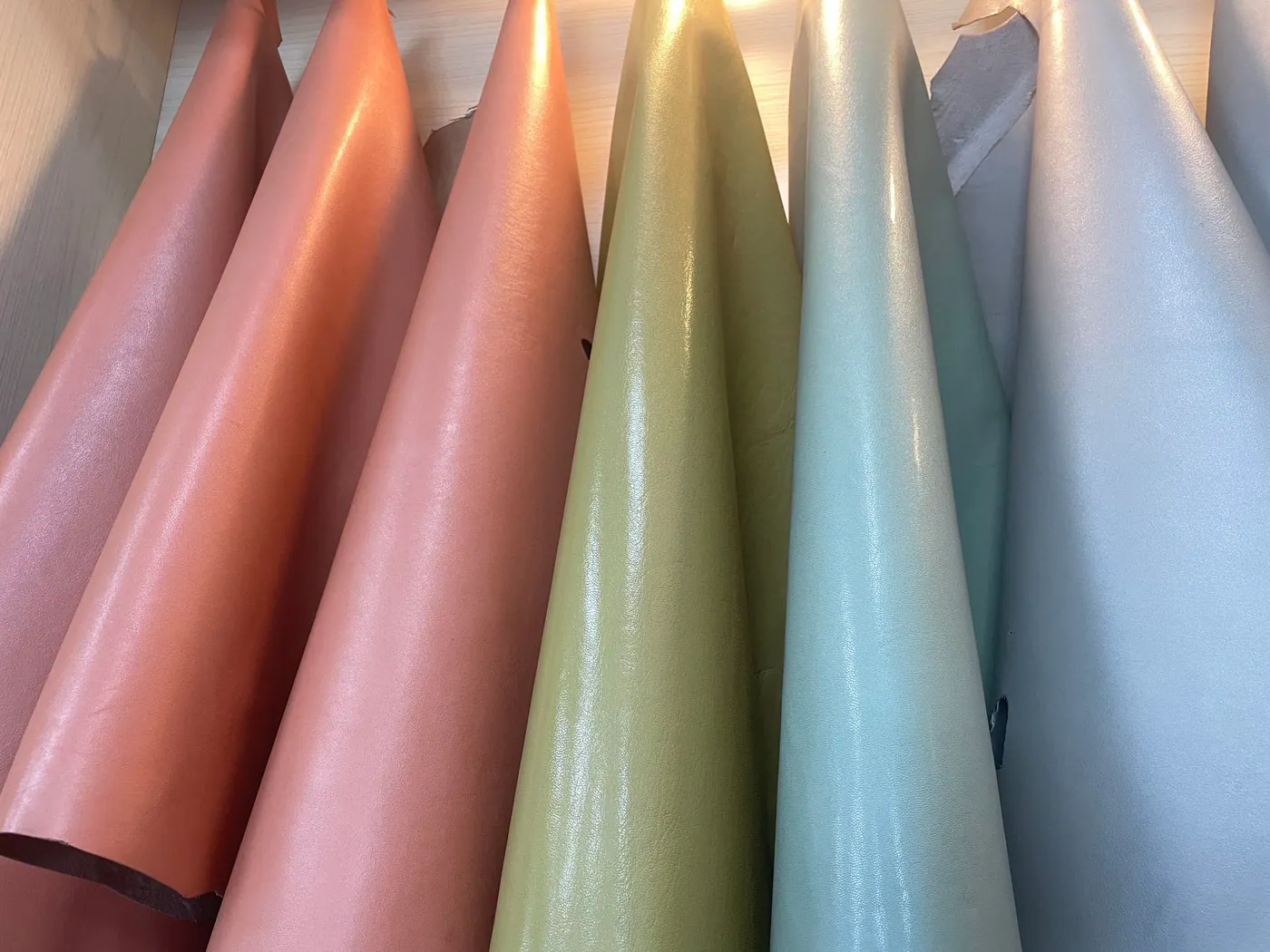
Bonded Leather Versus Split and Full-Grain Leather
The most important difference is structural. Full-grain and split leather are layers derived from a hide; bonded leather reconstructs leather fibres with other substances. A heavy coating can make split leather and bonded material look alike from the face, while an exposed edge or laboratory analysis may reveal different structures.
| Material term | Basic structure | What the buyer should verify | Naming risk |
|---|---|---|---|
| Full-grain leather | Outer grain surface retained | Species, tannage, substance, finish and usable grade | Do not infer origin or tannage from “full grain” |
| Top-grain leather | Upper hide layer; surface may be corrected | Correction, finish, thickness and temper | “Top grain” is not one visual or performance grade |
| Split leather | Lower layer split from the hide | Coating, reinforcement, thickness and intended use | Can be confused with finished grain leather |
| Bonded/reconstituted leather | Leather fibres or particles bound with non-leather substances | Fibre percentage, binder, backing, coating and layer adhesion | Leather-sounding name can conceal composition |
| PU/synthetic leather | Polymer surface on textile or other backing | Polymer type, backing, hydrolysis and abrasion requirements | Should not be represented as leather |
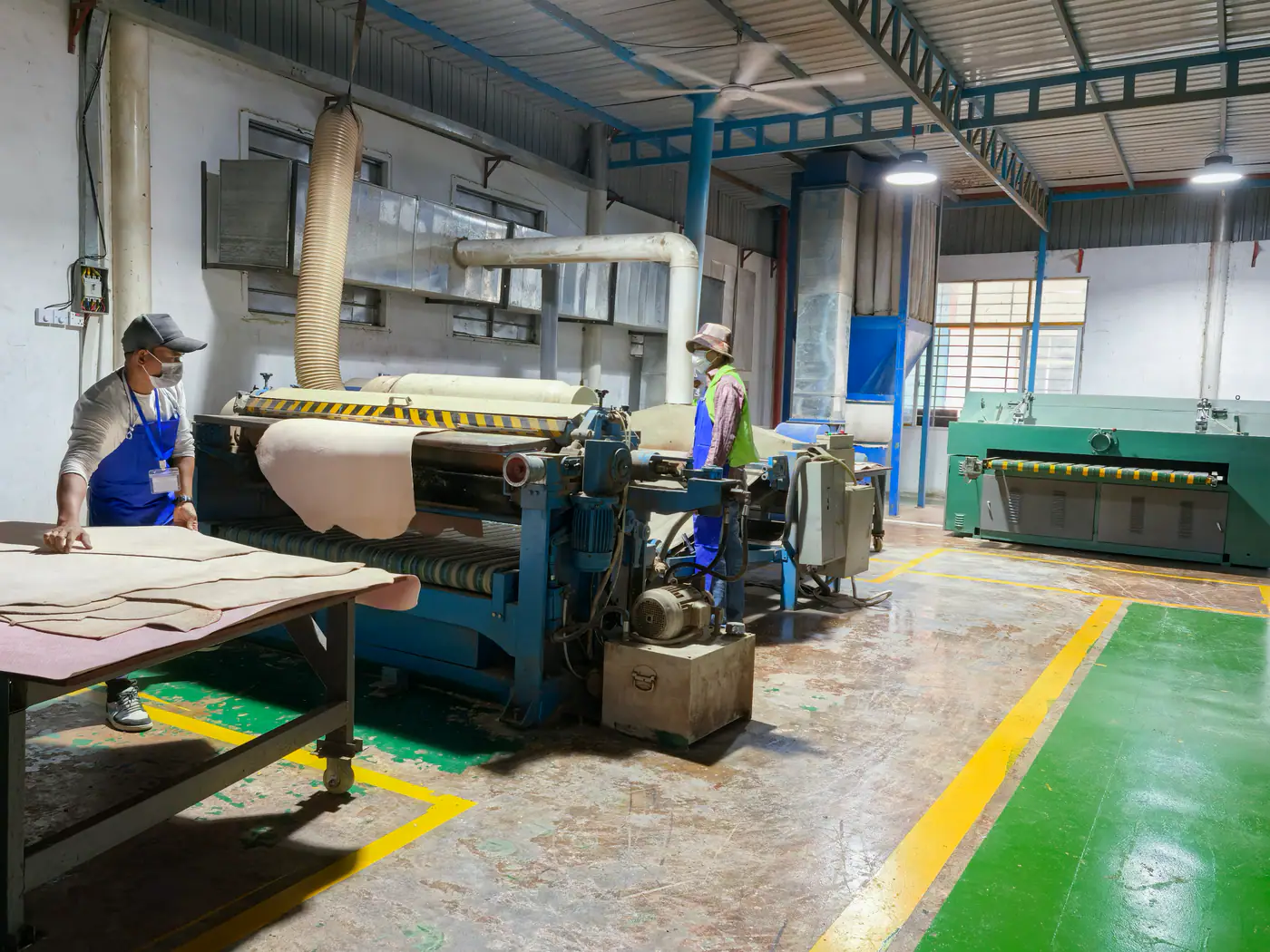
Price should not be the only selection variable. Consider the brand promise, expected life, target retail price, embossing consistency, colour range, thickness tolerance and end-of-life claims. If the collection is marketed around natural hide character and long wear, bonded leather may conflict with the promise even if it passes a minimum factory test.
Bonded leather versus “genuine leather”
“Genuine leather” does not identify a single hide layer or quality grade. It is too broad for a technical purchase specification. Bonded leather has a different reconstituted structure and, in US representations, carries a specific percentage-disclosure expectation. Ask the supplier to replace both loose labels with the exact material and layer description.
US Labeling: Name the Material and Disclose the Percentages
The US Federal Trade Commission’s Guides for Select Leather and Imitation Leather Products apply to products including belts. Under 16 CFR Part 24, it may be deceptive to use terms such as bonded leather, reconstituted leather or similar representations unless the percentage of leather fibres and the percentage of non-leather substances are disclosed.
This is a marketing and disclosure issue as well as a sourcing issue. The material claim can appear on packaging, product pages, catalogues and advertising, so the approved wording must travel from the material file into every consumer-facing channel. A supplier declaration helps, but the brand remains responsible for the claim it publishes.
Authoritative reference: 16 CFR Part 24 — Guides for Select Leather and Imitation Leather Products.
Performance Questions That Matter in a Belt
A belt repeatedly bends around the waist and at the buckle fold. The tongue passes through holes, the keeper rubs the face and the edge receives handling abrasion. These stresses concentrate at locations that a flat swatch may not represent. Test a finished, production-equivalent belt or a construction panel that reproduces the same layers, adhesives and edge system.
| Failure mode | Where it appears | Control to consider |
|---|---|---|
| Surface cracking | Buckle fold and frequently used holes | Flex test on production-equivalent construction |
| Layer separation | Cut edge or folded areas | Peel/adhesion method and cross-section inspection |
| Abrasion or colour loss | Belt face and keeper contact | Abrasion and colourfastness criteria |
| Edge breakdown | Tip, holes and strap perimeter | Edge-system approval and repeated flexing |
| Pressure marking | Coiled belts, buckle contact and compressed cartons | Pack-out trial, separators and defined stacking pressure |
| Odour or chemical nonconformity | Packed goods | Market-specific restricted-substance test plan |
How long will it last? No responsible category-wide answer can be given. The same name can cover different formulations and backings, and belt life also depends on hole use, buckle geometry, humidity, storage and packing. Replace a lifetime claim with reproducible evidence for the exact approved grade.
Test names without conditions are not reproducible. State the method, conditioning, number of cycles or load, measurement location and acceptance criterion. When a regulatory or customer standard applies, use its required method. For novel constructions, run development comparisons before setting the production threshold. Include a pack-out trial: coil belts as shipped, apply the proposed separators and carton load, then check for buckle impressions, blocking and permanent pressure marks.
The Supplier Evidence and Specification to Request
A B2B specification should connect identity, construction, performance and change control. The goal is to prevent an approved swatch from being substituted with a visually similar roll whose fibre ratio, backing or coating is different.
| Specification field | Minimum useful answer | Weak answer |
|---|---|---|
| Material identity | Bonded/reconstituted leather plus supplier grade code | Leather |
| Composition | Leather-fibre percentage and non-leather percentage; binder identified where material | Contains leather |
| Layer map | Face finish, bonded sheet, reinforcement/backing and lining | Three-layer belt |
| Thickness | Nominal and tolerance by layer and finished strap | About 3 mm |
| Performance | Named test method, conditioning and acceptance value | Good flex resistance |
| Change control | No formulation, backing or coating change without approval | Same appearance guaranteed |
Reference a sealed approval sample and retain shade and embossing limits, but do not ask a physical sample to carry the entire technical burden. Material documentation and test results should identify the supplier grade and lot or report linkage. Your inspection plan can then verify that production corresponds to the approved construction.
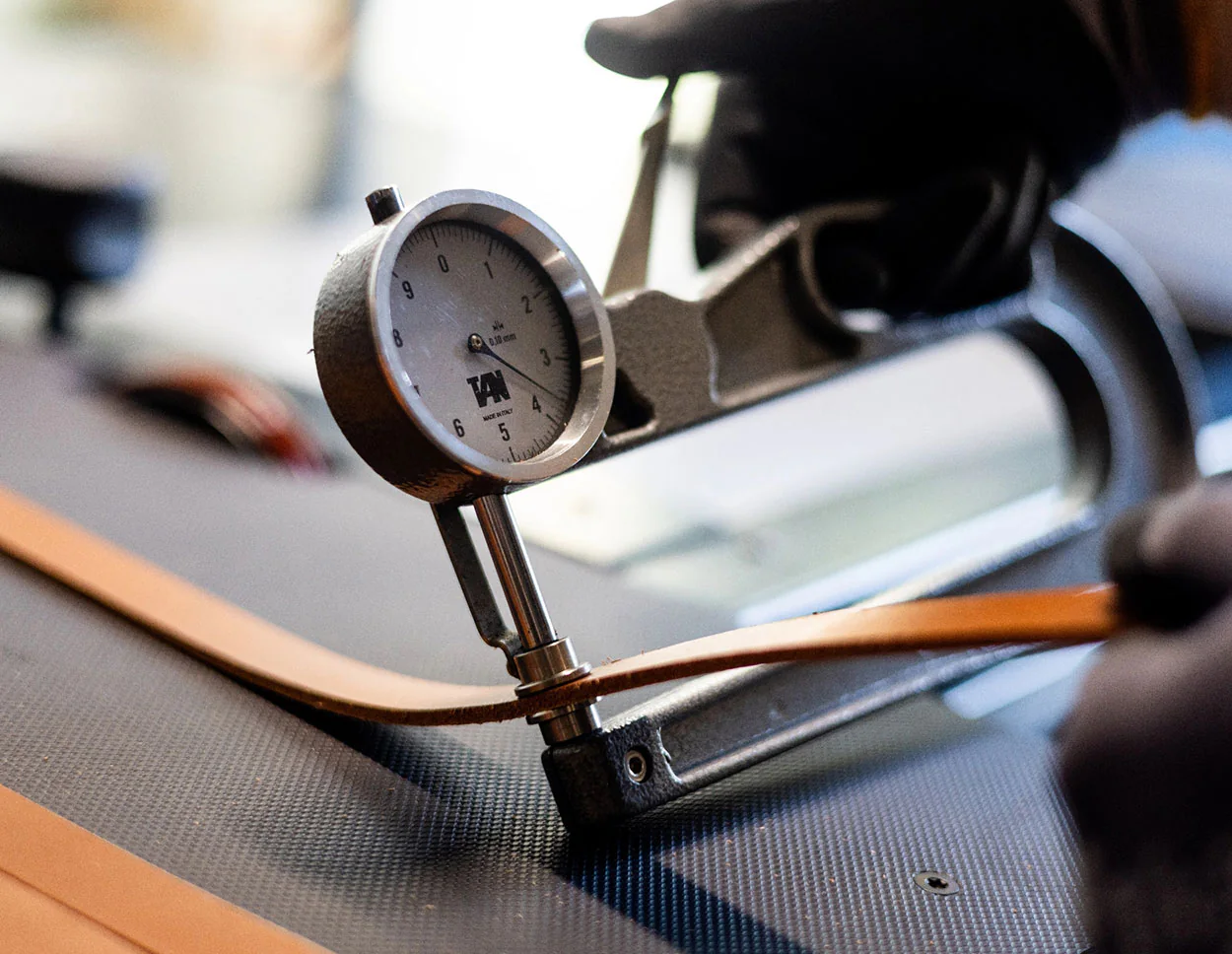
When Bonded Leather Can—and Cannot—Fit
Bonded material may be considered for price-sensitive fashion, uniform or promotional programs when the brand language is accurate and the tested construction meets the use case. Ask whether the exact grade provides acceptable colour and embossing consistency, and verify the answer on production-equivalent samples; the category name does not prove either result.
It is a poor fit when the brief requires an unqualified “genuine,” full-grain or natural-hide story; when repairability and patina are core brand claims; or when the expected service conditions exceed the evidence available for the chosen formulation. If the buyer needs predictable synthetic performance, a clearly specified PU construction may be more honest than forcing a leather-adjacent name.
Review the broader belt material options and the dedicated full-grain leather belt guide before choosing. Material selection should follow the collection promise and test plan.
A Practical Material Approval Workflow
- Define the selling-market claim and target use.
- Request the exact grade declaration, composition and layer map.
- Screen disclosure language with the brand’s legal or compliance owner.
- Develop production-equivalent samples.
- Test the risks created by the belt construction.
- Seal the approved sample and lock the material code.
- Inspect incoming material and finished goods against the controlled record.
- Require written approval for formulation, backing, coating or supplier changes.
Choosing a belt material for a defined price and performance target?
Send the market, proposed construction, desired claim and test requirements so the sourcing discussion starts with a scoped material brief rather than the word “bonded” alone.
A disciplined buyer does not ask whether bonded leather is universally “good” or “bad.” The answer depends on what the material is, how the belt is built, what the brand promises and which results the approved grade can demonstrate.
Frequently Asked Questions
Is bonded leather real leather?
It contains leather fibres or leather-derived material, but it is not wholly the hide of an animal. Buyers should use a precise construction description and the disclosures required in the selling market.
Is bonded leather the same as split leather?
No. Split leather is a layer split from a hide. Bonded leather is reconstituted from leather particles or fibres combined with other substances. Coatings can make the surfaces look similar, so verify the cross-section and material declaration.
What percentage of bonded leather is leather?
There is no single universal percentage for every product called bonded leather. In US marketing, the FTC guides say the percentage of leather fibres and the percentage of non-leather substances should be disclosed when terms such as bonded or reconstituted leather are used.
Is bonded leather suitable for belts?
It can fit some price-led or promotional constructions when the formulation, backing, edge system and tests meet the program’s needs. It should not be specified as a substitute for full-grain performance without evidence.
How durable is bonded leather?
No universal service-life number applies. Durability depends on the exact fibre-and-binder formulation, backing, coating, adhesives, edge construction and use. Buyers should judge the approved grade through named finished-belt tests and production controls, not a category-wide promise.
Is bonded leather the same as genuine leather?
No. “Genuine leather” is a broad consumer phrase, not a precise technical grade. Bonded leather is a reconstituted fibre-based material and should be identified with the composition disclosures required in the selling market.
How should a buyer test bonded leather?
Set methods and acceptance criteria for the intended risk, such as flexing at holes, buckle-zone cracking, layer adhesion, abrasion, colour transfer, hydrolysis where relevant and edge durability. Use a qualified laboratory when compliance or technical interpretation is required.