Points clés
- Choose the finished belt behavior first, then the tanning route.
- Do not confuse chromium(III) tanning with restricted chromium(VI).
- Compare tannery and finishing evidence, not environmental slogans.
The practical buyer decision
A rigid dress strap with a clean burnished edge asks different things from leather than a soft casual belt folded around hardware. Vegetable-tanned leather can support firm temper, tooling and edge development. Chrome-tanned leather can support pliability, drape and a wide range of colors and finishes. These are useful tendencies, not guarantees.
The process distinction is chemical and operational: chrome tanning stabilizes collagen with chromium salts, normally chromium(III), while vegetable tanning uses plant-derived tannins. The retannage, fatliquoring, drying, staking, finish, hide section and splitting route can change the result inside either family. Approve a named article from a named tannery or supplier, not “veg tan” or “chrome tan” as a complete specification.
Compare temper in the finished strap
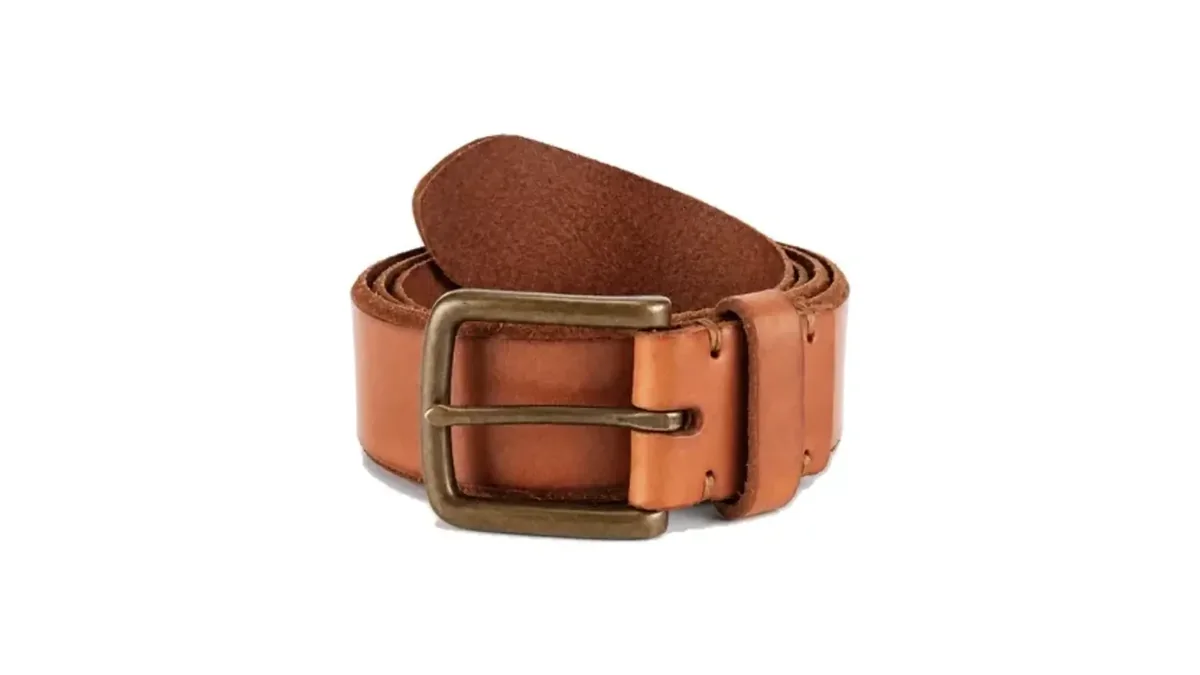
For belts, temper affects hole shape, fold behavior, keeper performance and how the strap sits on the body. A firmer strap may hold edge geometry and tooling well but feel less forgiving. A softer strap may conform quickly but need reinforcement or a different buckle attachment.
Evaluate full strap samples at production-intent thickness and construction. A hand sample cut from another hide area cannot prove consistency across a batch. ISO 17235:2015 provides a non-destructive softness method for non-rigid leather; where applicable, record the method and project-set acceptance field beside thickness, bend appearance, recovery and the signed physical reference. The standard supplies a method, not a universal belt target.
Edge design can decide the tanning route
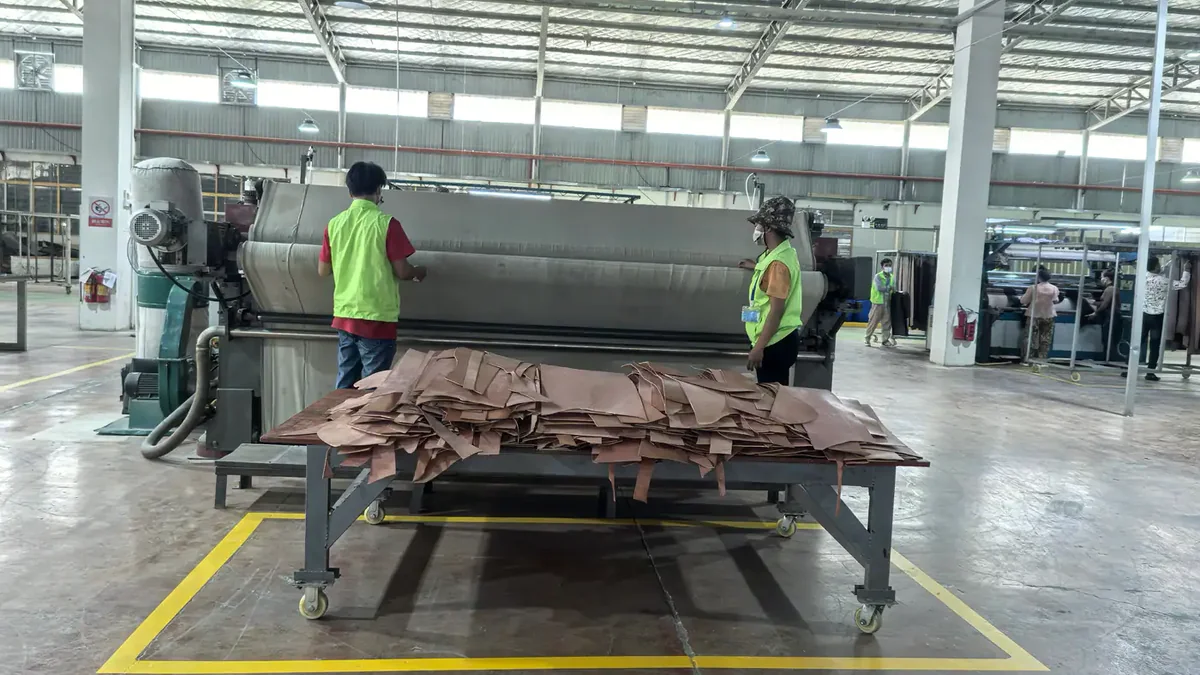
Vegetable-tanned leather is frequently selected when the design depends on sanding, beveling, burnishing or a natural edge that develops character. Chrome-tanned leather often uses edge paint, folding or layered construction when the leather is softer or the cross-section needs coverage.
Neither route excuses weak preparation. Edge performance also depends on fiber tightness, splitting, adhesive, sanding sequence, coating system and cure. For a smooth continuous finish, ISO 11644:2022 can measure adhesion of the finish or between adjacent finish layers; it is not applicable to every unpigmented or discontinuously coated article. Pair any applicable result with a documented belt-edge handling/flex comparison and a signed visual reference rather than inventing a universal edge threshold.
Color breadth is not the same as color control
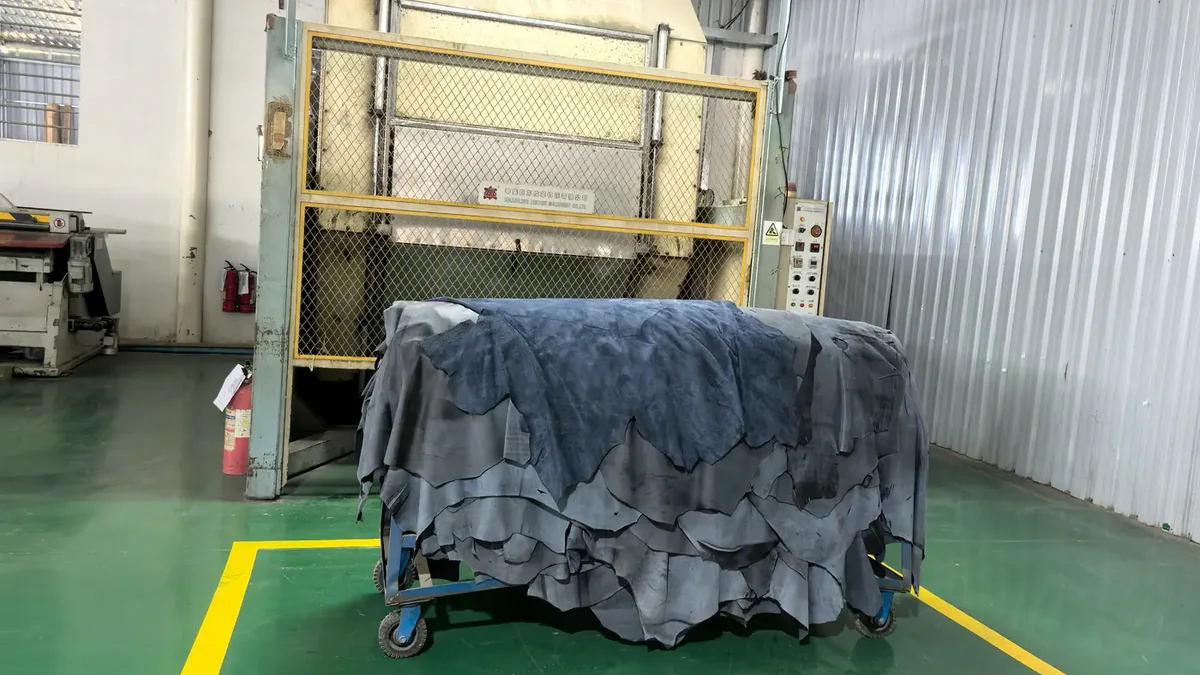
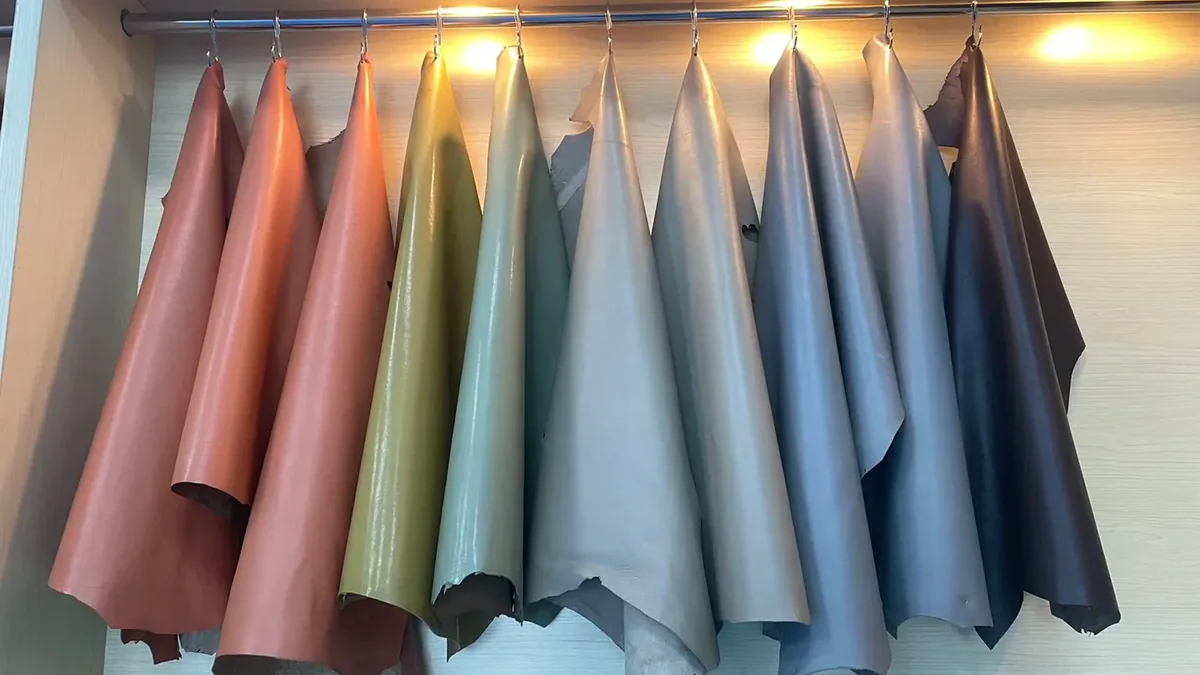
Chrome-tanned articles often offer broad color and finish flexibility, while vegetable-tanned articles are strongly associated with natural shades, transparent finishes and patina. Both routes can vary. The buyer still needs an approved color standard, lighting condition, finish level and acceptable hide-to-hide range.
Test rubbing or transfer risk when the belt contacts light garments. ISO 11640:2018 determines leather-surface behavior under cycles of to-and-fro rubbing with wool felt; ISO 20433:2024 measures color transferred by dry and wet rubbing cloth. Select the method that matches the claim and contact risk, then put the project-set grade or transfer limit in the approval record. A color name such as cognac or black is not a measurable standard and should not replace a signed swatch.
Separate chromium(III) tanning from chromium(VI) risk
Chrome tanning commonly uses chromium in the trivalent state. Chromium(VI) can form under unsuitable process or ageing conditions and is the restricted, sensitising concern. ISO 17075-1 specifies a method for determining chromium(VI) content in leather and states that it can quantify down to 3 mg/kg.
ISO 10195 specifies thermal pre-ageing before chromium(VI) determination, but ISO states that the procedure does not simulate real leather production or use conditions. For EU market review, ECHA’s restriction scope prohibits placing skin-contact leather articles or parts on the market at chromium(VI) concentrations equal to or greater than 3 mg/kg; the material must remain below that level. Keep the market rule separate from the ISO method’s quantification capability. Request the report, specimen identity, method and date; the result applies to the tested material under stated conditions.
Do not award sustainability by tanning name alone
The EU Joint Research Centre’s footwear-specific technical work warns against assuming vegetable tanning is automatically more sustainable than chrome tanning. It is contextual evidence from footwear, not a belt life-cycle result. Impacts depend on process control, chemistry, energy, water, wastewater, yield, durability and the evidence boundary. A marketing label cannot replace a tannery-level record.
Ask for traceable material identity, tannery information, applicable audit or certification scope, restricted-substance evidence and the claim methodology. If a claim is comparative, define what is compared and which life-cycle stages are included.
Use a program-specific approval matrix
| Decision factor | Candidate tendency | Verified method / procedure | Project-set acceptance field | Reopen when |
|---|---|---|---|---|
| Soft or firm hand | Article dependent | ISO 17235 where applicable + full strap bend reference | Softness result ___; signed sample ___ | Tannery, recipe, thickness or finish changes |
| Edge/finish system | Burnish, paint, fold or layer by article | Documented edge flex/handling; ISO 11644 for applicable smooth continuous finishes | Visual reference ___; adhesion value ___ | Leather, adhesive or coating system changes |
| Color and transfer | Both routes require control | ISO 11640 or ISO 20433 as claim/risk requires | Condition/cycles ___; grade or transfer ___ | Color, topcoat or care route changes |
| Chromium VI | Relevant to EU skin-contact scope | ISO 17075-1; ISO 10195 pre-ageing when specified | Below applicable market threshold; report ID ___ | Material/finish/process changes |
| Sustainability claim | Neither route passes by name | Defined boundary, traceability and tannery evidence | Approved claim wording/file ___ | Supplier, scope or claim changes |
Mark every cell “candidate,” not “pass,” until the finished belt is sampled. The matrix narrows sourcing; it does not approve the product.
Approve material, finish and assembly together
Request a representative swatch, then a full belt sample with final thickness, lining, edge, stitching and buckle. Review surface, flesh side, cut edge, hole quality, bend, transfer and hardware interaction. Retain the approved sample and material reference for bulk comparison.
Add the intended packing and storage condition to the review. Heat, humidity, pressure and contact with metal or light-colored materials can expose transfer, blocking, oxidation or shape problems that a loose swatch will not show. The purpose is not to invent a universal accelerated-aging claim; it is to recreate the program’s credible distribution risks and record the acceptance decision.
HongDing’s documented workflow coordinates material and hardware sourcing, physical sampling, manufacturing and QC. In this article’s approval record, that means the material reference and tannery/supplier identity feed the full-belt sample; the signed sample and selected test reports feed the production specification; QC compares production to those approved references. This is a process boundary, not a claim that HongDing has published comparative test results for every leather article.
A supplier change, tannery change, finish change or major color change can alter the evidence set. Reopen relevant checks instead of assuming the tanning category carries approval forward.
A short selection rule
Select vegetable-tanned leather when structured geometry, tooling, burnished edges or patina are central and the approved article delivers them. Select chrome-tanned leather when pliability, soft hand or finish/color flexibility are central and the approved article delivers them. For both, verify the product-specific quality and compliance record.
Use HongDing’s belt leather materials route to discuss a program-specific article. The guides on leather grades, LWG evidence et colorfastness testing add the related approval detail.
Verified source notes
- ECHA skin-sensitising chemicals
- ECHA restriction scope and 3 mg/kg threshold
- ISO 17075-1 chromium VI
- ISO 10195 thermal ageing
- ISO 17235 leather softness
- ISO 11640 rubbing fastness
- ISO 11644 finish adhesion
- ISO 20433 crocking
- EU JRC Footwear Technical Report
Questions fréquentes
Is vegetable-tanned leather always better for belts?
No. It is often useful for firm straps, tooling and burnished edges, while chrome-tanned articles often suit softer and more flexible constructions. Approve the actual article.
Does chrome-tanned leather contain chromium VI?
Chrome tanning commonly uses chromium(III). Chromium(VI) is a separate restricted concern that can be tested using methods such as ISO 17075-1.
Is vegetable tanning automatically more sustainable?
No. Environmental performance depends on the tannery process, resource use, wastewater, yield, durability and the boundary of the claim.
Which leather is easier to edge finish?
Vegetable-tanned leather commonly supports natural burnishing; softer chrome-tanned leather often uses edge paint, folding or layered construction. The exact article and edge system decide performance.