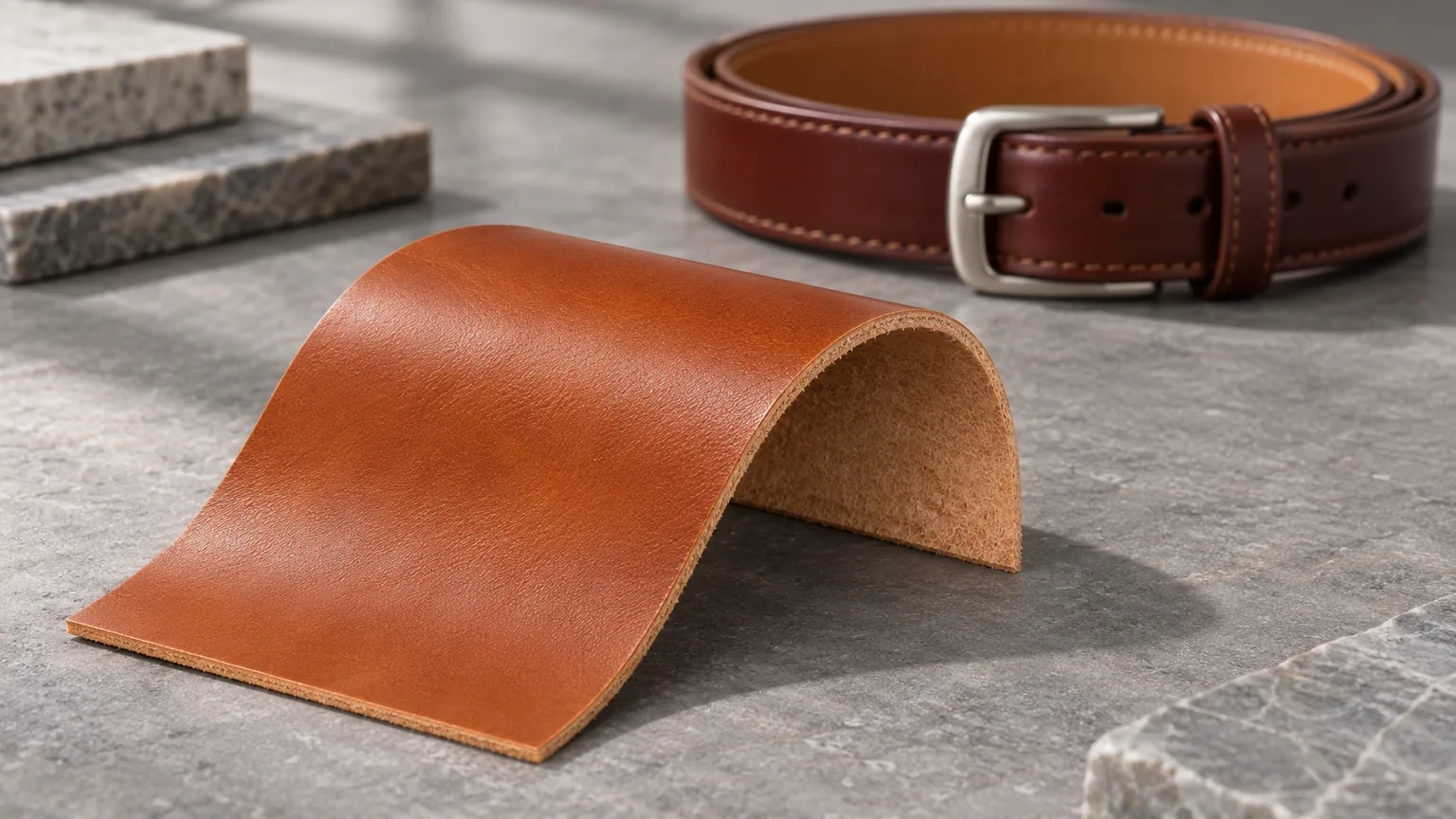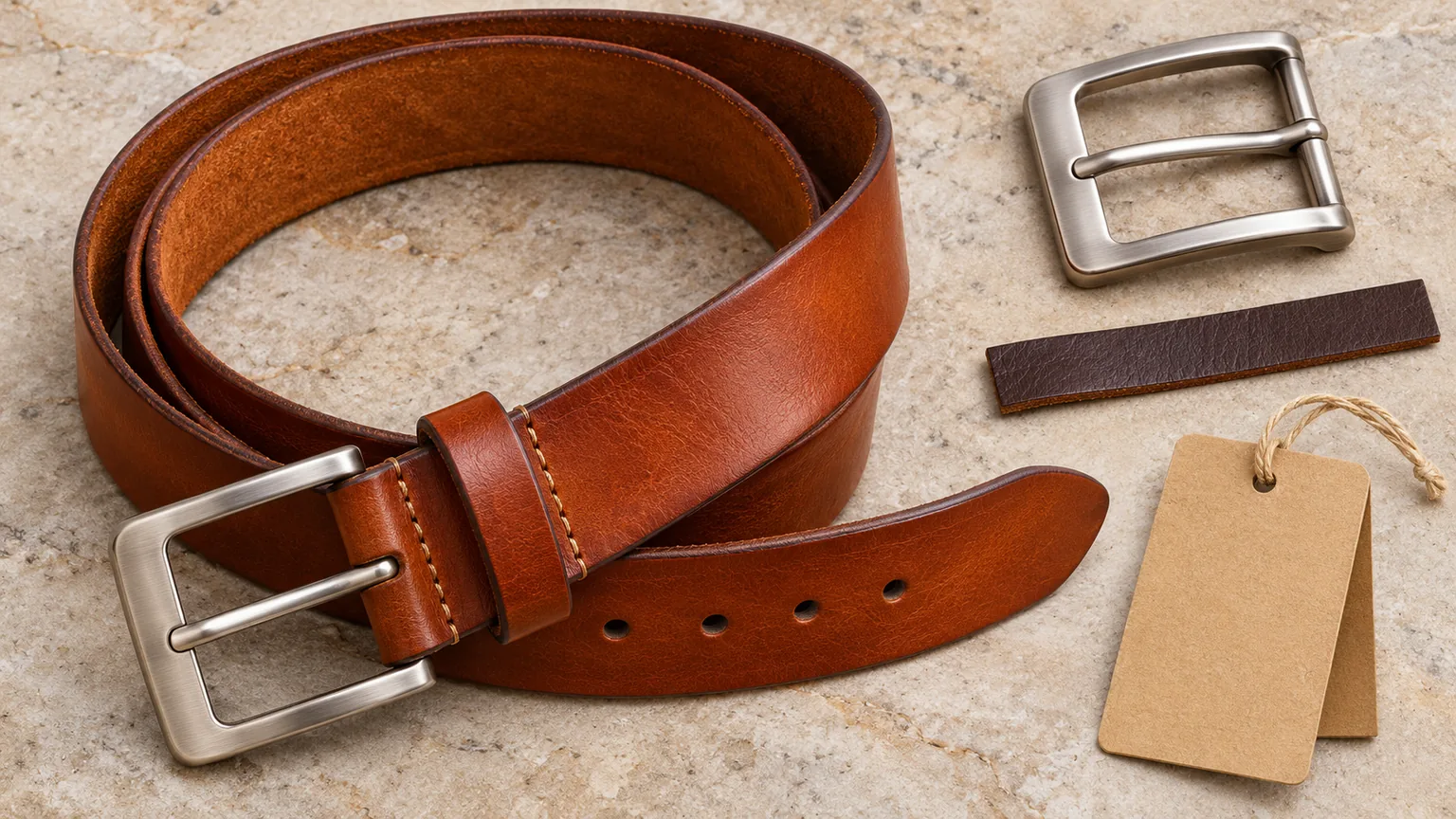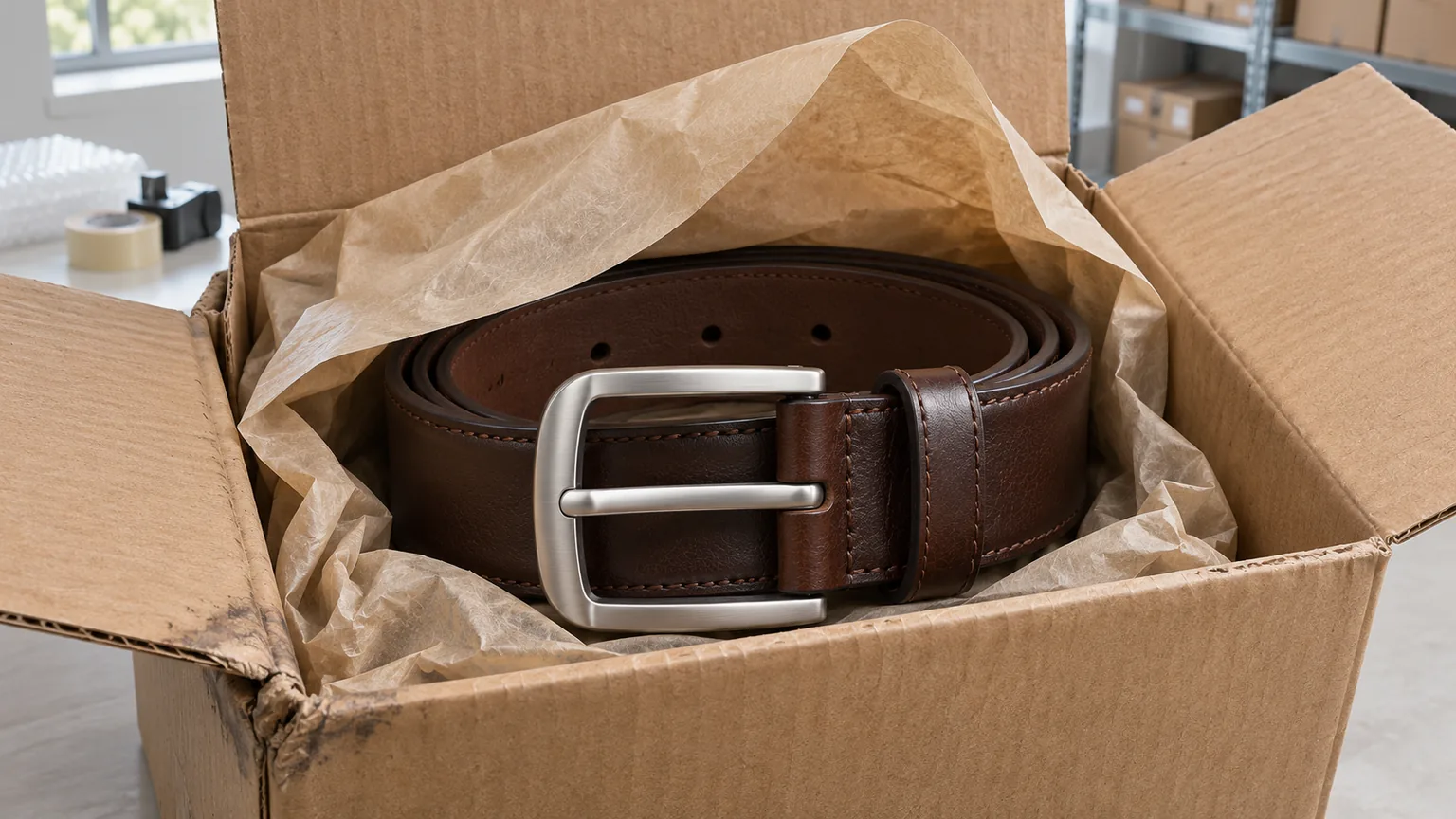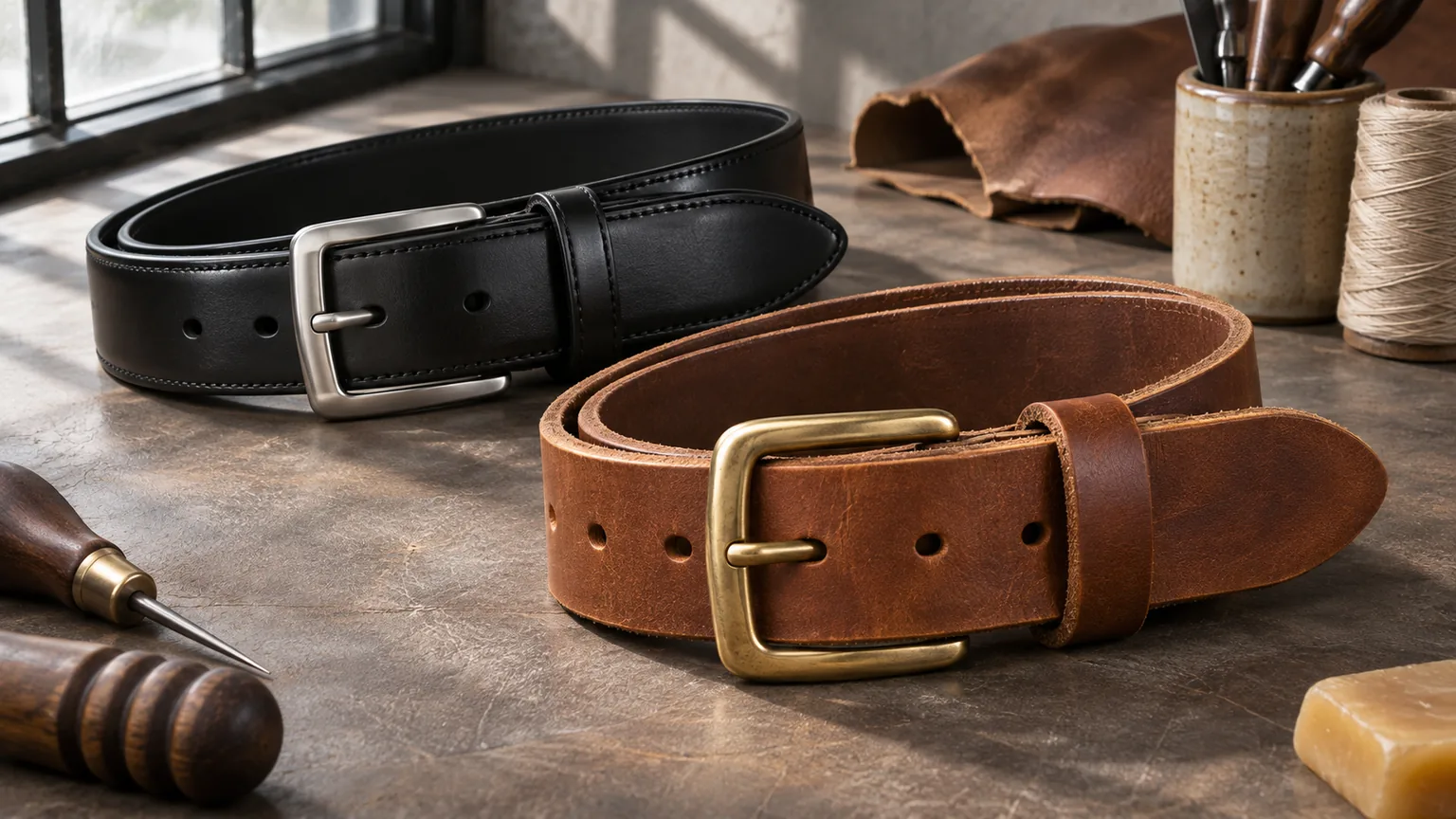
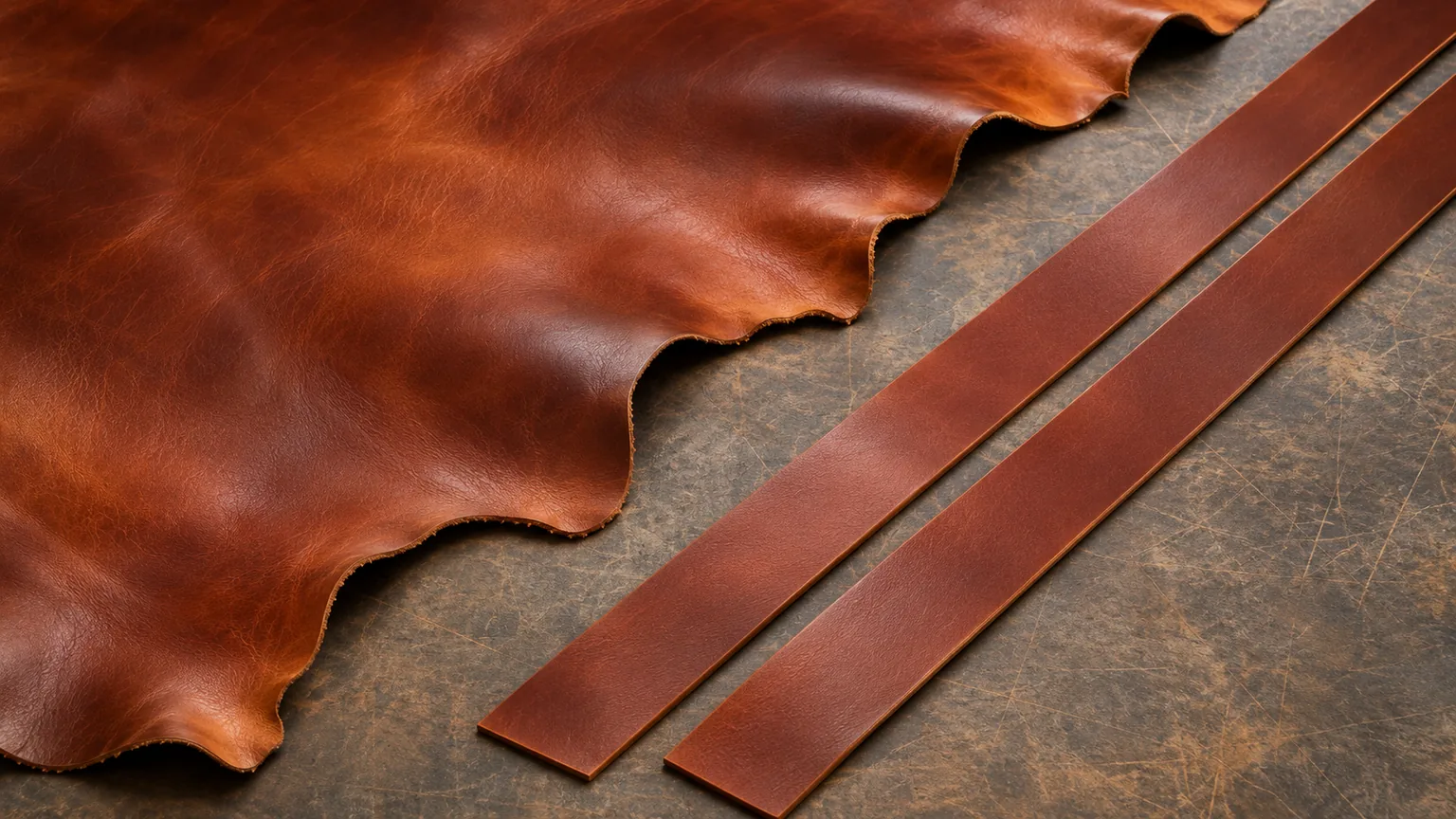
If your brand supplies the leather for a belt order, ask the factory to approve a representative sample and agree how it will release the actual delivery for cutting. Give the tannery a shipping reference, give the cutting room the blank lengths for every size, and name the person who can authorize an extra hide or a change of shade. Receiving a parcel, accepting its contents and giving permission to cut are three different decisions. Put a name and a date against each one.
Sending leather can make sense when a belt must match a handbag collection, when a brand controls an exclusive finish, or when it already owns a limited lot. The attraction is easy to see on a swatch. The difficult part is establishing how many continuous straps that particular stock will yield and what happens to the collection if it falls short halfway through production.
Choose what the factory actually receives
Start with the form of supply. Whole hides or sides leave the factory to select cutting directions and place patterns around visible defects. Precut strips transfer much of that decision to the tannery or another cutter. Finished belt blanks remove another operation, but they lock in dimensions and can narrow the choice of buckles, folds and edge treatment. List the operations included in the conversion quote. Two factories quoting the same number of belts can be pricing quite different starting points.
For a single-layer belt, ask for the leather thickness, the planned strap width and the folded thickness that the buckle will accept. For a lined belt, identify the face leather and who provides the lining, reinforcement, adhesive, thread and edge materials. A maker can offer a reasonable sewing price on the assumption that the face arrives already split. If splitting is still required, you need to know who checks the remaining substance and who pays for that operation before authorizing it.
A sample of the finished product, a photograph with dimensions, or a sketch of how the buckle attaches is enough to open this conversation. Give the maker a reason for retaining the specified leather. For a color match to another accessory, the master may be a finished bag panel. For an exclusive tannery finish, the material code and production lot may also matter. Those priorities guide what alternatives you can consider when suitable stock is scarce.
There is a practical precedent for splitting material supply from manufacturing. A contract manufacturer’s offer on the Enterprise Europe Network describes cutting and sewing with customer-supplied materials and assessing feasibility before agreeing on production. Confirm the arrangement for your own belt style with the maker that will take delivery. Receiving addresses, scope of work and acceptance terms belong on the particular order.
Tell receiving what to record before opening the lot
Ask the tannery to identify the purchase order, leather article, finish, color, lot, piece count, stated area and unit on the delivery paperwork. If it ships directly to the factory, the brand should receive the same packing list. Label development leather separately from bulk leather even when both are nominally the same color. It should be possible to trace a retained offcut back to the package that supplied it after the original wrapping has gone.
At receipt, match the parcel count and labels to the packing list. Record broken packaging, visible wetting or compression while the material is still identifiable. Unwrap representative pieces so the team can see the face, reverse, usable length and shade variation. Keep questionable pieces physically separate, label the reason, and tell the buyer which other pieces can proceed. If the buyer and tannery use different area units, reconcile the numbers before discussing a supposed shortage. The guide to leather area measurement explains how to compare receiving and invoicing records.
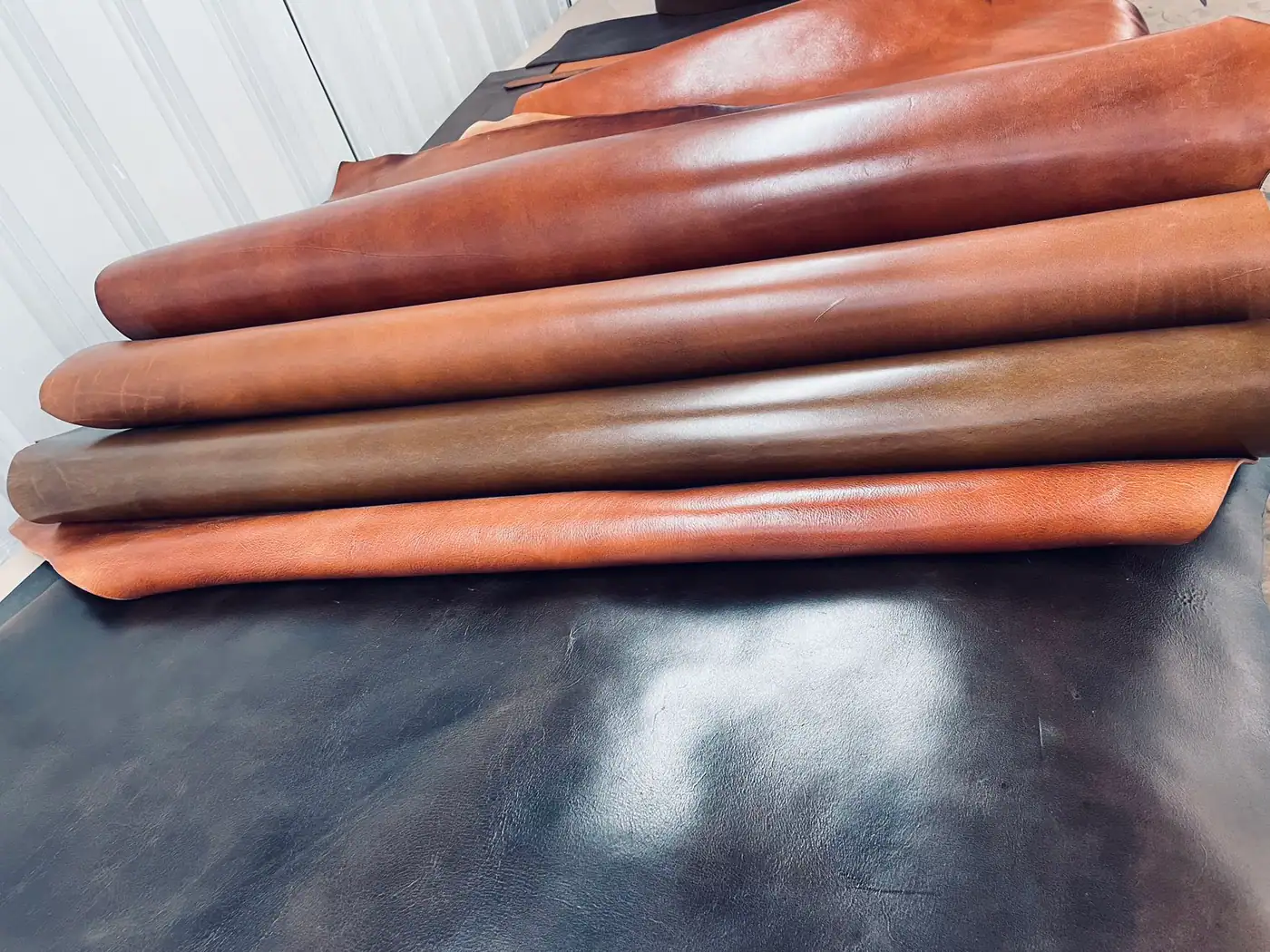
A small, carefully selected approval swatch can conceal variation that is obvious across a full side. If you expect a clean top face from buckle to tip, agree which natural markings can appear on that path and which can be used on a keeper, underside or concealed fold. Use representative pieces to illustrate the boundary. Describing everything as premium leaves the cutter to decide whether to discard a usable strap or send a prominent mark into production.
Reserve long, usable runs against the order’s size mix
A purchasing unit such as square feet describes area. A cutter needs an uninterrupted path of the required width and length. Obtain the cutting pattern for each ordered size, including the buckle return, tip and trim allowances. Confirm how the retail size is measured. A finished size measured to the center hole is only one dimension of the belt. Using that number as the cut length can leave the last sizes in the run short even when the invoice area looks generous.
Ask for a trial layout on material representative of the shipment, with the longest blanks visible. Check what happens when the cutter avoids a scar, a soft zone with excessive stretch or a marked change in shade. Turning a pattern to make it fit can change how the finished belt behaves along its length. If the available stock supports the shorter sizes readily, reserve the best continuous runs for the longer sizes before making keepers or sample pieces. Record whether the proposed quantity includes spare strips for setup or replacement.
Consider a hypothetical trial layout for 60 belts. The order calls for 20 long and 40 short blanks. The usable areas yield 16 long blanks and 48 short blanks after defects are marked. Sixty-four blanks in total still leave four long belts unfilled. Before cutting the short blanks, see whether some can move to a second side. That can free a continuous path on the first side for a long blank. Ask for the layout by size before approving the cut. The buyer can then obtain four compatible long blanks, authorize a size change with the retailer, or release a clearly identified partial shipment.
If another lot supplies the missing lengths, compare its shade and surface with the first lot on finished belts under the same viewing conditions. The buyer may prefer to allocate each lot to a different store shipment or delay the short quantity until a closer match arrives. Record which option merchandising accepts. A substitute that looks reasonable to the production team can still produce an obvious mismatch on a single retail rail.
Approve the leather after the belt operations that change it
Give the sample room enough representative stock to build the critical sections. A face swatch can show grain and color, but the double thickness at the buckle fold is where a stiff finish may wrinkle or crack when bent. Ask for that fold with the actual buckle and fastener. Compare the face immediately beside the hardware with the undisturbed strap. If the return is bulky, evaluate a controlled change in skiving or fold geometry on another piece before processing the lot.
On a lined style, inspect the bond on a curved section as well as on a flat strip. Look at how the lining and face move around the fold and at the tip, where several layers may converge. A clean-looking edge on a loose offcut gives limited information about an assembled edge after sanding and finishing. Have the maker produce a section using the intended process and retain a dated reference that the finishing operator can actually handle. Agree any performance testing separately against the product specification and selling market.
For precut blanks, establish two measurement points that can expose a downstream problem. Width at the buckle end affects clearance through the frame. Width through the keeper affects threading once edge paint or folded edges have added bulk. Check a representative range against the selected hardware before paying for decoration across the order. Record an agreed tolerance with the pattern revision and measuring method so the next delivery can be compared on the same basis.
Keep a small unused reference from the same lot alongside the assembled sample. If a pale mark later appears at a fold, the unused reference helps the team compare how the original surface responds under bending. Save the rejected trial piece as well when it illustrates a useful limit. A labeled sample, a photograph and a note about the operation that produced the result give the buyer and the factory a practical starting point for investigating a recurrence.
Price the conversion and authorize the first bulk cut
Request a quote covering the exact starting material, size distribution, approved construction and expected output. Break out the development sample and any material-consuming setup. Ask who supplies ordinary production replacements and who can approve purchasing a new color lot. If the buyer supplies the leather free of charge to the maker, its replacement cost still matters to the buyer. An attractive conversion price can become expensive when the only remaining matching side has to be shipped separately by air.
Suggested handoffs for a client-owned lot
On a small screen, scroll the table to see the release decision.
| When | Evidence to exchange | Decision to name in the order |
|---|---|---|
| Before shipping | Tannery article, lot and sample reference | Buyer and maker confirm the parcel and receiving address. |
| Before cutting | Receipt, condition notes and layout by blank length | Named buyer contact releases the lot or requests another layout. |
| When output changes | Remaining pieces, affected sizes and estimated recovery | Buyer and maker agree on rework, replacement or partial delivery. |
| When the order closes | Good belts by size, unused stock and remnant list | Stock owner selects return, retention or disposal under the agreed terms. |
Make the release specific enough that production can act on it during a shift. Name the lot, the sample revision, the quantities by size, the shade group and any quarantined pieces. Identify the first checkpoint after cutting and who may release the balance if actual output differs. That record can be a dated email with the marked layout attached. The important detail is whether it authorizes a few trial blanks or the entire consignment.
Investigate a shortage while the pieces still tell the story
Suppose a cutter reports that a bundle released for fifty blanks produced forty-six acceptable pieces. Ask where the difference first appeared. A discrepancy between the receiving count and the packing list belongs in one inquiry. A marked defect excluded during layout, an out-of-tolerance blank at cutting, and an assembly rejection after a fastener was set each call for different evidence. Collect the cutter’s layout, unused pieces, first rejected blank and operation record before the worktable is cleared.
Separate loss of material from the decision about who pays. A surface mark may have been visible on delivery, or it may have emerged during a process that exposed the underlying material. Compare incoming photographs, the retained sample and adjacent material from the same side. Ask the tannery for its view when the evidence points to the lot, and ask the production team to review tool settings or handling when the defect follows an operation. Several causes may be plausible until the team reproduces the issue on an authorized test piece.
Agree on a hold limited to the affected lot, operation or size when the rest can be identified and safely released to the next stage. Record the proposed correction, who authorizes another cut and who will pay the associated freight while the commercial question is resolved. If the collection deadline drives the decision, put the revised ship quantity and replacement date into the order record. A verbal instruction to keep going gives the next shift too little information about which pieces are acceptable.
Close the order in units both parties can verify
Return the stock statement in the units appropriate to each stage. List unused sides or pieces with their measured or declared area, usable strips by width and uninterrupted length, finished belts by size, and samples or rejects by count. Keep the quantities distinct. Adding finished belts to square feet can hide an unrecorded transfer. If the buyer needs a financial reconciliation, agree a conversion method and attach the underlying physical inventory so the calculation can be reviewed later.
Mark remnants that can realistically support repairs, keepers or a later small run. A narrow offcut with a good color match might be valuable for after-sales work while being useless for another full-length strap. Specify whether the buyer wants it returned, held until a named date or discarded after written approval. For leather reserved for a matching collection, agree who may access the stored lot and how it will be identified when the next purchase order arrives.
Reordering is easier when the approved construction and the leather availability can be reviewed together. Send the updated size mix, check what usable lengths remain and compare any new delivery with the retained reference. An unchanged tannery article number can still arrive in a different dye lot. Review the first new belt alongside the previous approved piece before authorizing a mixed shipment. The stock report then supports a decision about next season’s assortment as well as closing the current invoice.
Bring the leather reference into the sample discussion
To discuss a belt sample with HongDing, share the tannery reference or a clear face-and-back photograph, the intended buckle, size range and approximate quantity. Say whether you have whole sides, strips or finished blanks, and which details must match another product. These inputs let the team discuss feasibility and the material needed for a trial before you dispatch valuable stock.