Points clés
- Normalize the bill of materials and process route before comparing unit prices.
- Purchased material price and usable yield are separate cost drivers.
- Separate recurring unit cost from one-time development, sample and tooling charges.
- A low quote with open assumptions is not yet a comparable quote.
- Track changes against the approved specification so savings do not become silent substitutions.
Build a cost stack before asking for a target
Use separate quote lines for material, hardware, conversion operations, development, tooling, testing, packaging and logistics scope. The supplier may protect proprietary rates, but it can still identify which cost buckets are included. That structure lets the buyer test assumptions without demanding a factory’s internal payroll.
Start with the same specification for every bidder. A quote for a lined stitched leather belt cannot be compared with an unlined bonded construction simply because both use the same width and color. Freeze the comparison basis and ask each supplier to list deviations.
| Cost bucket | What changes it | Preuves pour l’acheteur |
|---|---|---|
| Matériau | Article, thickness, finish, usable yield | Costed BOM and material reference |
| Quincaillerie | Stock/custom route, finish, mechanism | Drawing and finish reference |
| Process | Number and difficulty of operations | Process route |
| Non-recurring | Development, sample, tooling | Separate charge list |
| Pack/logistics | Pack-out and commercial scope | Packaging spec and Incoterm |
Separate material price from usable yield
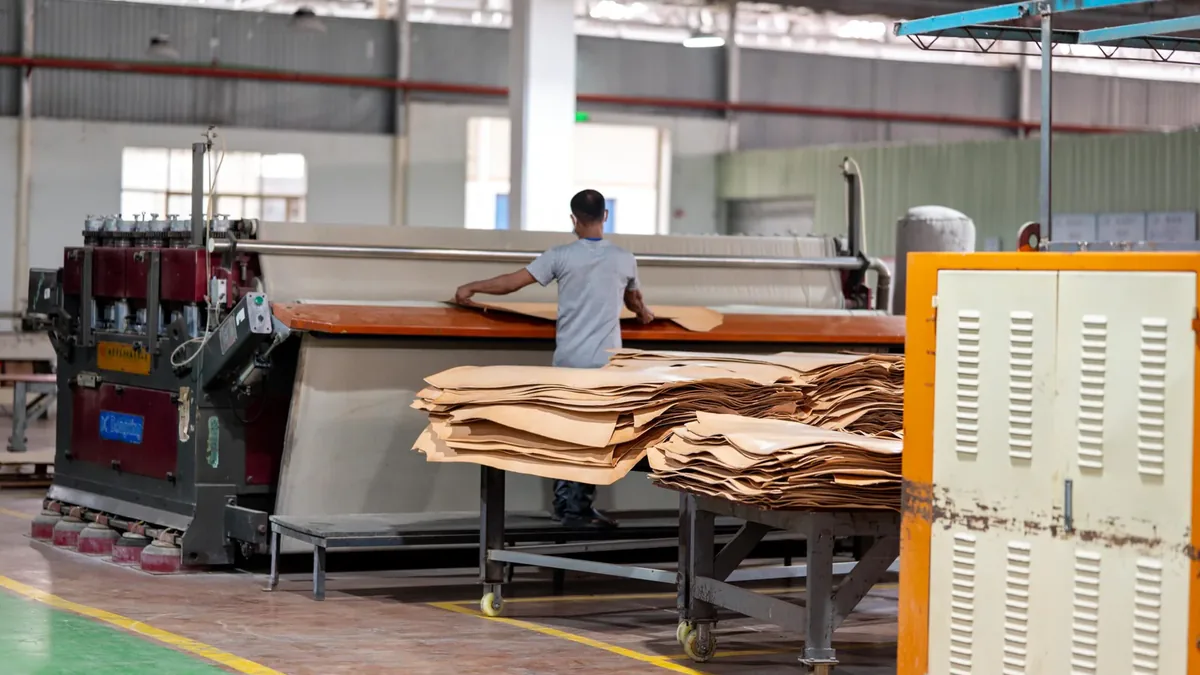
A lower-priced hide or sheet can produce a higher finished-belt cost if defect exclusions, directional cutting or long uninterrupted straps reduce usable output. Compare accepted parts from the purchased material, not only price per area. Record whether the quote assumes full-grain, split, bonded, PU, woven or another material route.
Use the same denominator across suppliers. The leather cutting yield method separates purchased area, usable area and accepted cut output. That distinction prevents one supplier from reporting only favorable nesting inside a selected clean zone while another reports against the full purchased hide.
Treat hardware as a product system
A stock frame buckle, custom rotating mechanism and logo-cast buckle carry different development, tooling, finish and inspection work. Add prongs, bars, screws, keepers, rivets and protective packaging to the hardware bill. Small components can create assembly or cosmetic risk out of proportion to their unit value.
Ask whether the quotation uses existing tooling or a new tool, whether the finish is standard or developed, and what sample evidence closes approval. Plating color, adhesion and corrosion checks belong to the approved finish plan. Do not assume the word “brass” describes both base metal and visible color.
Count operations and handoffs
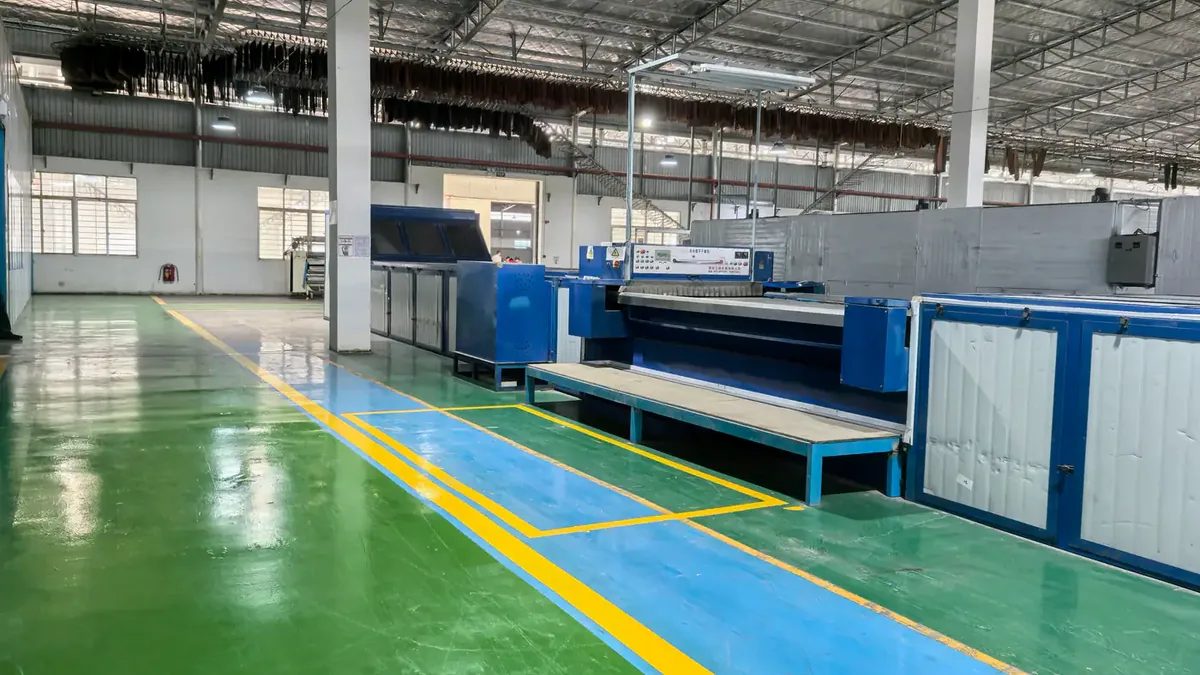
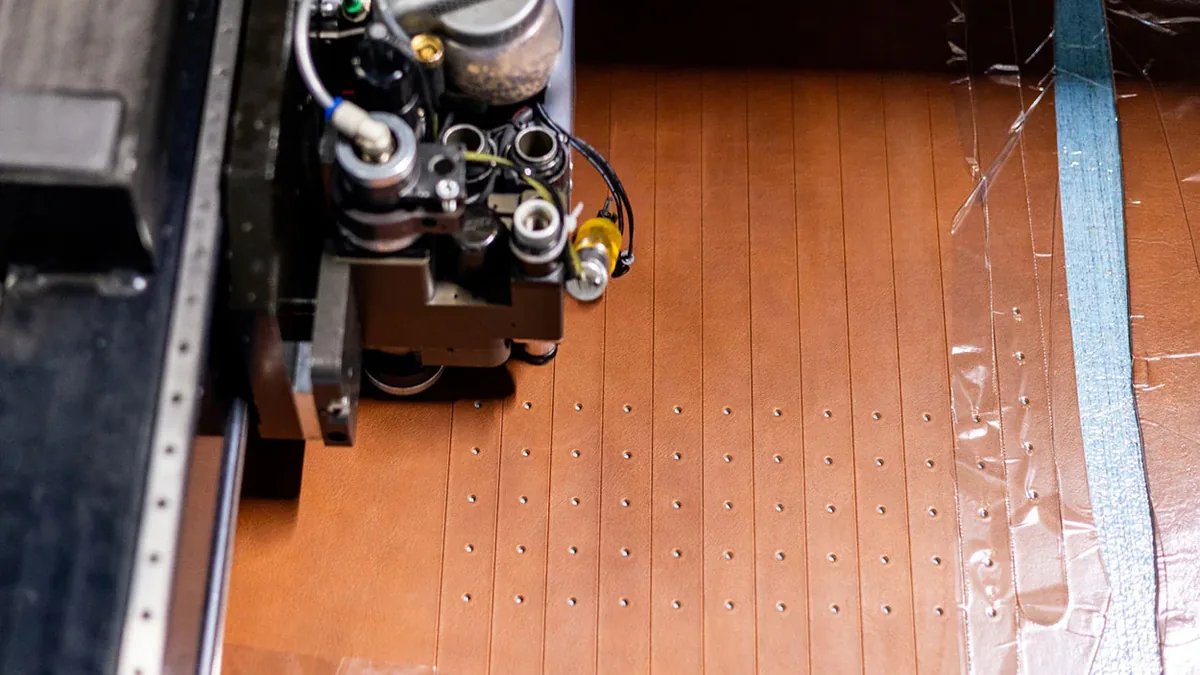
Cutting, splitting, skiving, bonding, stitching, edge work, hole punching, buckle attachment, cleaning, inspection and packing can all sit in the route. Their cost depends on the exact construction and the number of controlled handoffs. A decorative feature also creates alignment and rework risk, not only extra machine time.
Ask for a process map at the operation level needed to explain the quote. The goal is not to audit every motion. It is to identify which requested feature adds a setup, specialist operation, cure or inspection gate and which feature can be removed without changing the product promise.
Split recurring and non-recurring charges
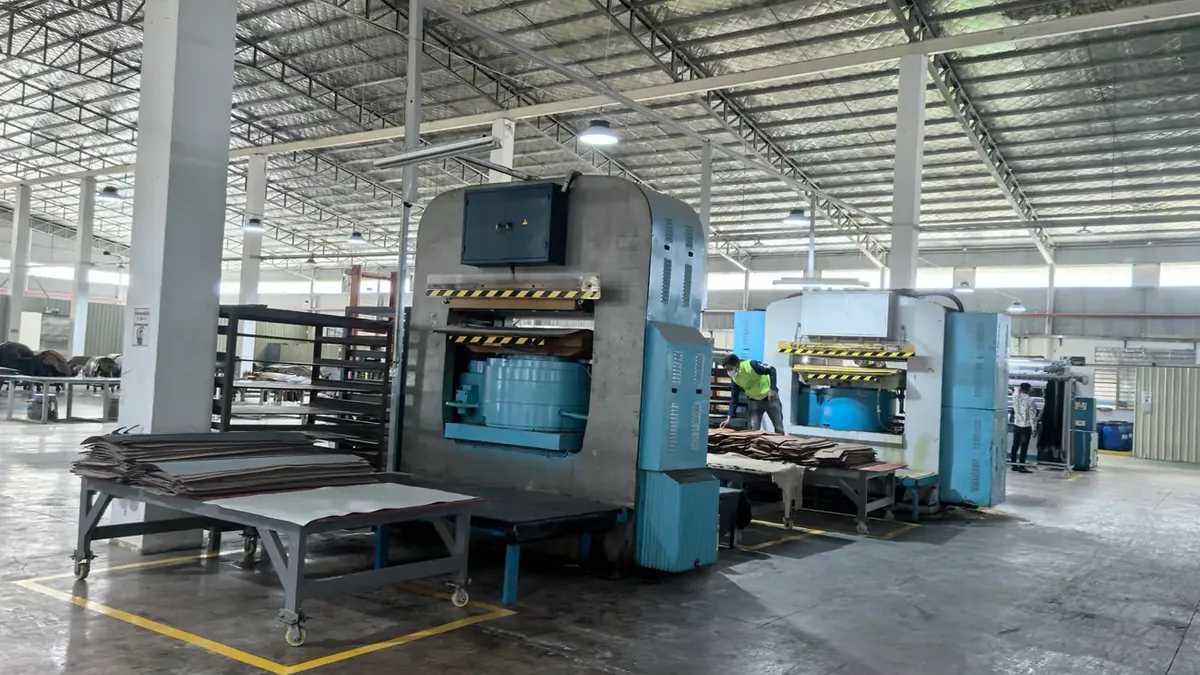
Samples, buckle molds, cutting dies, embossing plates, fixtures and artwork setup should not disappear inside an unexplained unit price. Separate them and state whether they apply once, by design, by size, by color or by revision. The commercial agreement should also state ownership and permitted use.
Order quantity affects how setup cost is spread, but HDBelt’s Product Bible provides no universal MOQ. Treat MOQ and price breaks as project-specific outputs after the bill of materials, construction, packaging and approval route are known.
Price evidence that prevents rework
Inspection and testing are not interchangeable overhead labels. Identify incoming checks, in-process controls, final inspection, laboratory tests and approval samples required by the program. Then state who supplies the specimen, who pays the test and what happens after a failure.
ISO 2859-1 provides an indexed sampling system for lot-by-lot inspection by attributes. Citing it does not select an AQL or inspection level for the buyer. The purchase specification must name the chosen plan and defect classes if that method is used.
Define packaging and commercial scope
Retail cards, barcodes, labels, tissue, bags, buckle protection, cartons and assortment rules can add materials, labor and approval cycles. Count pack-out at SKU level. A master carton price is not enough when stores require color-size assortments or individual compliance labels.
State the Incoterm, named place, shipment mode and included documents before comparing landed scope. A factory-gate quote and delivered quote carry different obligations. Keep freight and duty assumptions outside product unit cost when they are not quoted on the same basis.
Use a quote-normalization worksheet
| Controlled field | Assumption owner | Evidence / status | Deviation | Cost class | Approval gate / revision |
|---|---|---|---|---|---|
| BOM and hardware | Buyer + supplier | Released revision or open | List every substitution | Recurring | Material sample / BOM rev |
| Process route | Supplier | Operation map | Omitted or added step | Recurring | Construction sample |
| Development / tooling | Named payer and owner | Charge list and tool record | Geometry or revision trigger | One-time | Drawing release |
| Quantity / assortment | Acheteur | Units, colors and sizes | Different mix or break | Recurring basis | Commercial approval |
| Testing / inspection | Buyer + supplier | Method, specimen and stage | Excluded or different plan | Unique ou récurrent | Test-plan revision |
| Packaging / logistics | Buyer + supplier | Pack-out, Incoterm, named place | Different scope | Recurring | Pack sample / quote rev |
Mark every open field instead of forcing a false total. When a supplier proposes a saving, require a before-and-after specification and a sample gate. The savings decision should show what changed, what evidence was repeated and who approved it.
The following normalization is an authored example using cost-index units, not currency and not HDBelt market pricing. Both suppliers quote the same 1,200-unit BOM and assortment. Supplier A reports a unit index of 100, plus 4 for packaging, 1 for the specified test plan and 3 for tooling amortization: normalized index 108 before logistics. Supplier B reports 96, but its comparable packaging adds 7, the excluded test plan adds 2 and tooling amortization adds 5: normalized index 110 before logistics. The buyer does not declare A universally cheaper; it selects A only after confirming identical Incoterm scope and evidence, or asks B to revise the open assumptions.
| Illustrative line | Fournisseur A | Fournisseur B | Normalization action |
|---|---|---|---|
| Unit product index | 100 | 96 | Same released BOM and 1,200-unit mix |
| Comparable packaging | 4 | 7 | Add required pack-out |
| Specified testing | 1 | 2 (excluded from headline) | Add same plan |
| Tooling amortization | 3 | 5 | Align program treatment |
| Normalized before logistics | 108 | 110 | Do not compare until Incoterm and named place match |
Run the worksheet again for a reorder when leather article, hardware supplier, color mix, size mix, packaging or shipment term changes. A historic unit price is evidence for the historic configuration, not a promise for a different cost stack. Preserve the old and new assumptions side by side so the buyer can see which driver moved.
Use a change log for every negotiated cost action. Record the original field, proposed field, price effect, sample or test repeated, approver and effective purchase order. That log stops the same saving from being counted twice and gives quality teams the correct basis for incoming and final inspection.
Negotiate the driver, not the headline price
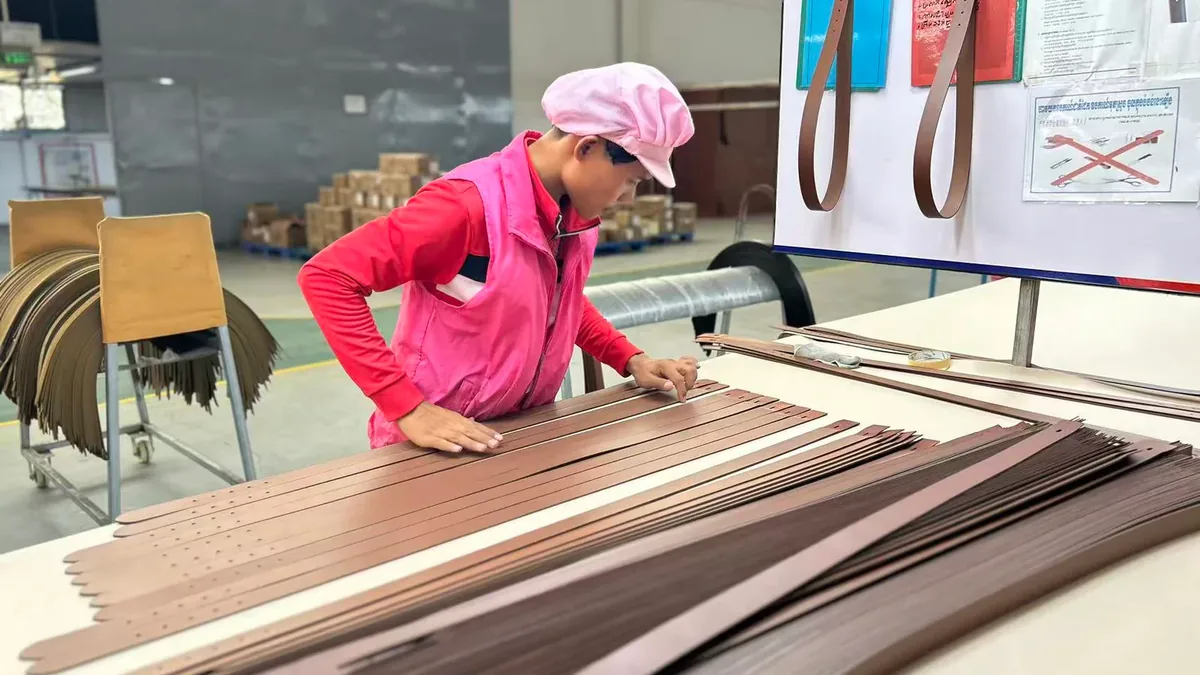
A buyer can remove cost by simplifying hardware, consolidating colors, reducing setup changes, choosing an efficient material route or adjusting packaging. Each move changes a named specification field. Pressure on an unexplained total invites hidden substitutions and makes later quality disputes harder to resolve.
Utilisez celui de HongDing belt manufacturing capabilities to review a program-specific route. The supplier quote comparison guide, supplier scorecard et packaging specification guide support the same evidence trail.
Verified source notes
Questions fréquentes
What is usually the biggest belt cost driver?
There is no universal answer. Material route and usable yield often matter, while custom hardware, complex operations or packaging can dominate a specific program.
Does a higher order quantity always reduce unit cost?
Not always. It can spread setup charges, but material, hardware, process and quality requirements still drive the recurring cost.
Should tooling be included in unit price?
Ask suppliers to separate non-recurring tooling and development charges so ownership, revision triggers and amortization assumptions remain visible.
How should buyers compare two belt quotes?
Use the same BOM, construction, quantity and pack-out scenario, then itemize deviations, one-time charges, tests, commercial terms and exclusions.