Written by HongDing Editorial Team · Technical review by HongDing Quality Control Team · Published 2026-09-09 · Updated 2026-09-09
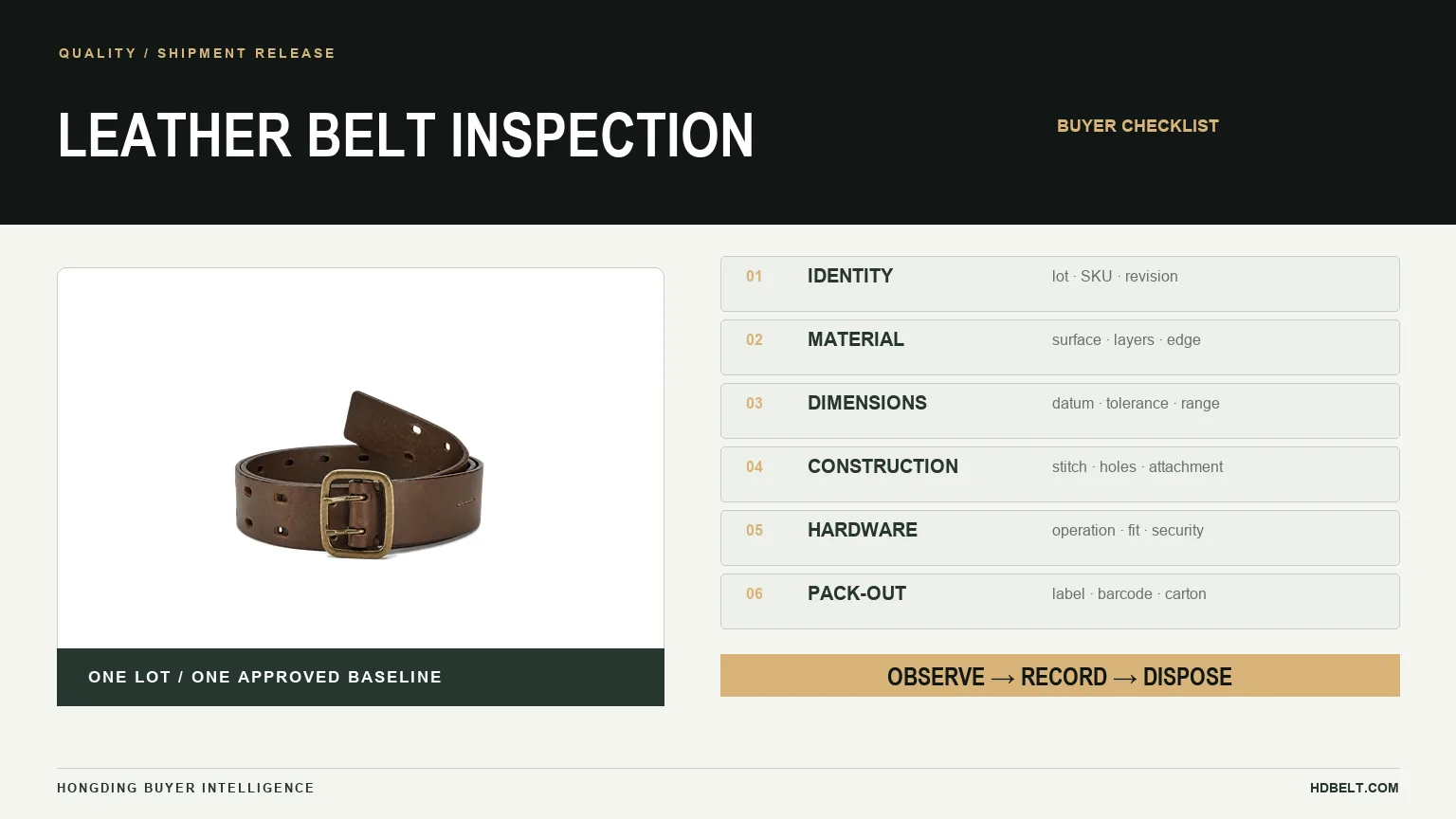
A leather belt quality inspection should not begin with a generic defect list. It begins by identifying the lot and the exact files that govern it. Without that baseline, an inspector can take accurate measurements and still release the wrong product revision.
The inspection has to answer several different questions: does the lot match the approved product, are sampled units within the agreed limits, do mechanisms operate as specified, is required evidence traceable, and is the shipment packed in the approved condition? One photograph or one AQL result cannot answer all five.
In short: a useful belt QC checklist connects product identity to an authorized shipment decision. It does not merely collect close-up photos of defects.
Lock the Inspection Baseline
Start with the purchase order or shipment reference, supplier, production site, style, revision, colors, sizes and intended destination. Then list the governing product files. These can include the approved pre-production sample, technical specification, bill of materials, measurement schedule, buckle drawing, color standard, artwork, labels, packaging file and inspection plan.
The physical sample and written specification have different jobs. The sample shows one accepted result. The files define measurements, hidden layers, variants and evidence that the sample cannot prove. If they conflict, stop and identify which reference has authority. Do not let an inspector choose between them from memory.
The belt pre-production sample guide explains how to freeze a production-intent reference. At final inspection, verify that the named sample and files are still current. A late buckle, color or pack change may make an earlier approval obsolete.
| Control File | What It Governs | Hold Signal |
|---|---|---|
| Approved sample | Accepted physical appearance and assembly | Unit is unnumbered or revision is unclear |
| Product specification | Construction, materials, workmanship and functions | Bulk uses a substitute not recorded |
| Measurement schedule | Datums, nominal values and tolerances | Inspector and supplier measure from different points |
| Artwork and pack files | Logo, label, barcode, unit pack and carton | Old artwork remains at the packing line |
| Inspection plan | Lot, sample, defect classes and disposition | AQL is named without project choices |

Define the Lot and Sample
Define which goods belong to the lot before drawing a sample. Style, construction, color, hardware, size or production timing may create meaningful subgroups. Combining unlike variants into one total can hide a concentrated defect. Splitting one coherent lot into many tiny lots can also distort the decision.
Where the buyer uses acceptance sampling by attributes, apply the agreed scheme rather than copying a sample size from a previous order. The current ISO 2859-1:2026 provides AQL-indexed sampling schemes for lot-by-lot inspection. It does not choose the buyer’s defect definitions or commercial risk tolerance.
HongDing’s AQL inspection guide for belts explains code letters, sample plans and acceptance numbers. Use that layer after the lot, inspection level, defect classes and selected AQL values are agreed. Keep critical-safety or regulatory holds separate when the buyer’s requirements demand zero tolerance.
Inspect Material and Surface
Confirm the declared material route before judging appearance. A full-grain, corrected-grain, split, bonded or synthetic construction can show different natural or engineered variation. The inspector needs the approved article, layer map and grading rule, not a broad label such as “real leather.”
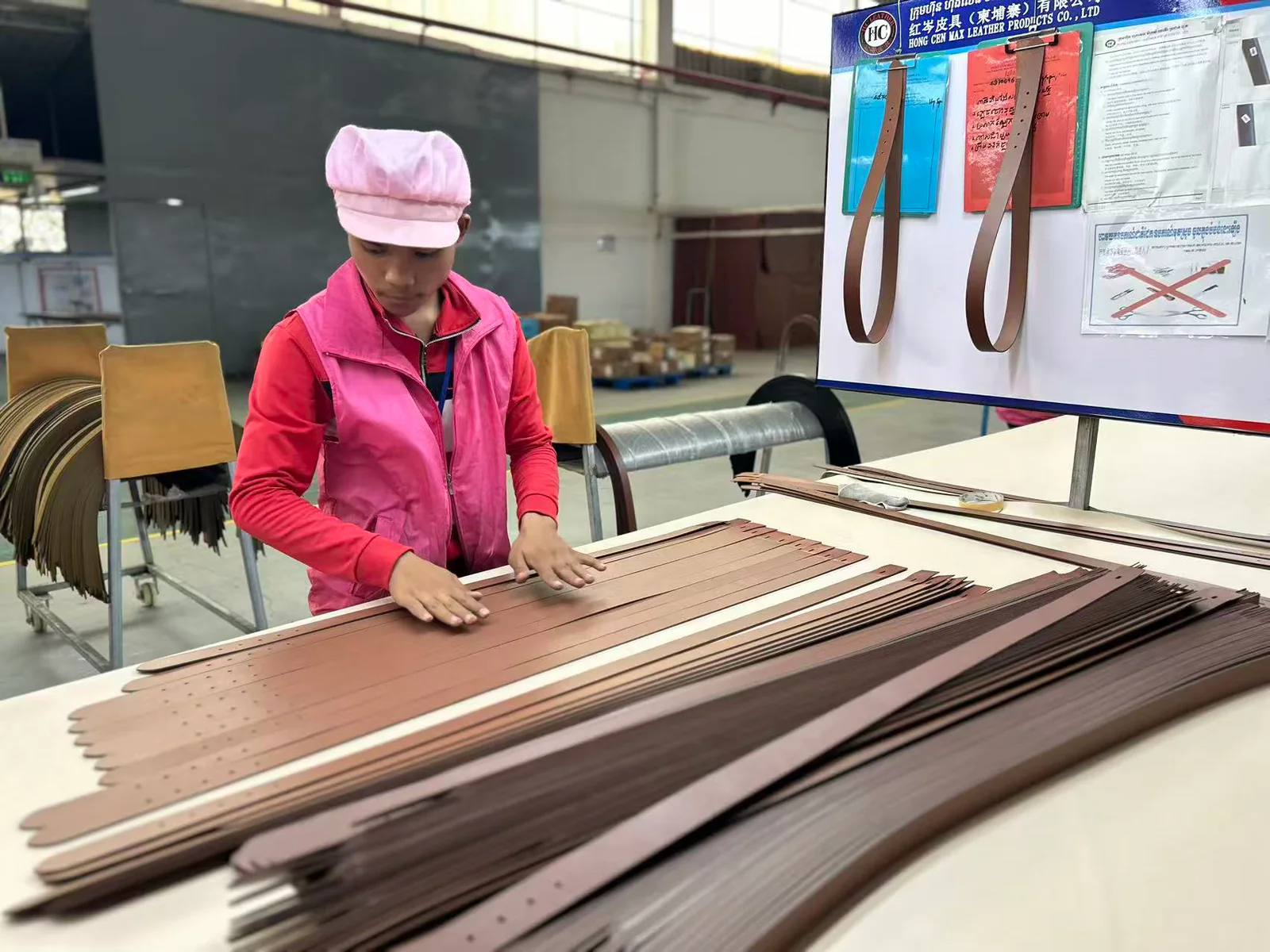
Inspect both sides and the complete strap length where the plan requires it. Look for cuts, open damage, loose grain, delamination, stains, color drift, finish build-up, transfer, exposed backing and edge defects. Separate natural characteristics that fall inside the approved grading boundary from damage or processing defects that do not.
Use consistent viewing conditions and a physical color or finish reference when color is critical. A screen photograph is useful for location and communication; it is not a stable master. If a rub, adhesion or other performance result is required, treat it as a named test rather than improvising a bend or scratch challenge during visual inspection.
Verify Dimensions and Sizing
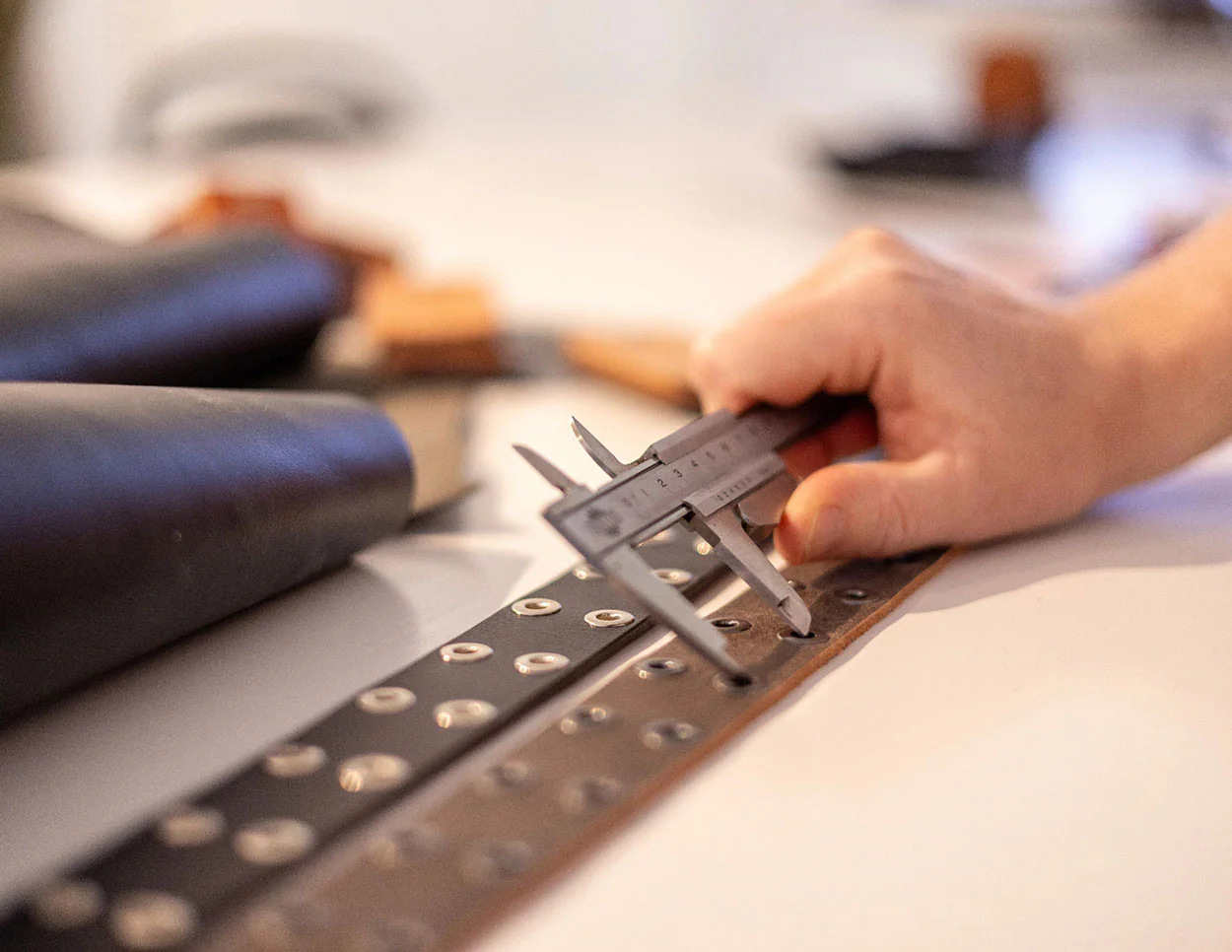
A measurement result is defensible only when the datum, product condition, instrument and unit are defined. For a prong belt, the buyer may control total strap length, buckle reference to selected hole, tip length, hole spacing, width, thickness and keeper position. A ratchet or cut-to-fit belt uses different functional endpoints.
Lay the belt in the specified condition and avoid stretching it during measurement unless the method says otherwise. Record actual values, not only pass/fail marks, for critical dimensions. Check the instrument status and resolution against the required tolerance; a rough tape cannot support a fine component decision.
Leather thickness deserves specific method control when it is a material test. ISO 2589:2016 specifies a method for determining leather thickness and applies to whole leather and test samples. A finished belt measurement may include several layers and answers a different question. Label those results correctly.
| Measurement | Define Before Inspection | Common Error |
|---|---|---|
| Finished size | Start point, selected hole or range, buckle condition | Measuring strap-only length against wearer size |
| Width | Locations and whether edge finish is included | Checking only one point on a tapered or variable strap |
| Thickness | Layer stack, locations, pressure and method | Confusing leather thickness with finished-belt build |
| Hole or track | Datum, spacing, count and usable range | Correct total length but incorrect adjustment geometry |
| Hardware fit | Frame, bar, clamp or screw interface | Component fits alone but binds on the finished strap |
Inspect Construction and Workmanship
Translate “good workmanship” into observable conditions. Check cut alignment, skiving and folds, layer bonding, stitch path, thread condition, backtacking or lock-off, rivet or screw placement, hole finish, keeper construction, tip shape and edge treatment. Use defect photographs or boundary samples for recurring visual judgments.
Stitching should follow the approved construction. Inspect skipped or broken stitches, loose loops, thread damage, inconsistent tension, missed layers and unsecured ends. Decorative stitching and load-carrying stitching may have different consequences when they fail, so classify defects according to function and location.
Edge inspection should include coverage, smoothness, adhesion, color, contamination and cracking under the agreed review. Do not assume one finishing route is always superior. Burnished, painted, folded and raw-cut designs create different intended appearances and different failure modes.

Test Hardware and Function
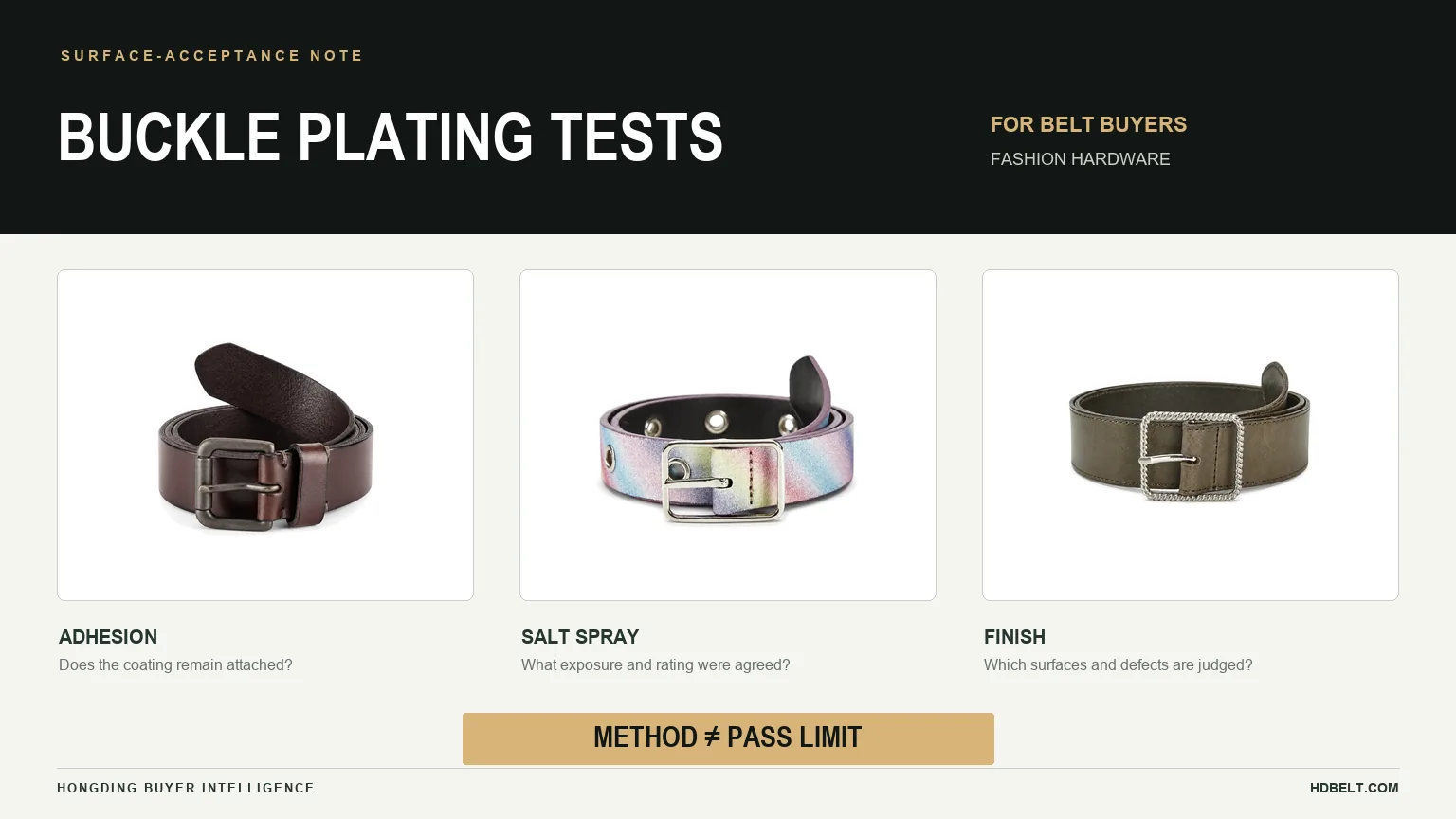
Inspect the buckle as part of the belt system. Confirm component identity, orientation, finish, logo, moving parts, prong alignment and attachment. Look for burrs, sharp unintended edges, plating damage, distortion, loose fasteners and contact marks. Then operate the assembled belt through the functional sequence named in the specification.
For a prong buckle, check that the prong enters the approved holes and the frame clears the strap. For a ratchet mechanism, check track engagement, release and the usable adjustment range. For a reversible buckle, check rotation and retention in both positions. A component can pass a visual check and still fail at its interface with the actual strap.
Attachment security may require a project-defined pull or cycle test. Visual inspection cannot replace that test. If the buyer requires measurable performance, the instruction should identify specimen, conditioning, apparatus, procedure, limit and failure definition. Do not invent a universal force or cycle count from another product.
Turn the Product Specification Into a Release Plan
Send the belt reference, material and layer construction, size schedule, hardware, branding, packaging, target market and required evidence. HongDing can help connect those inputs to project-specific inspection and release controls.
Check Branding, Packaging and Quantity
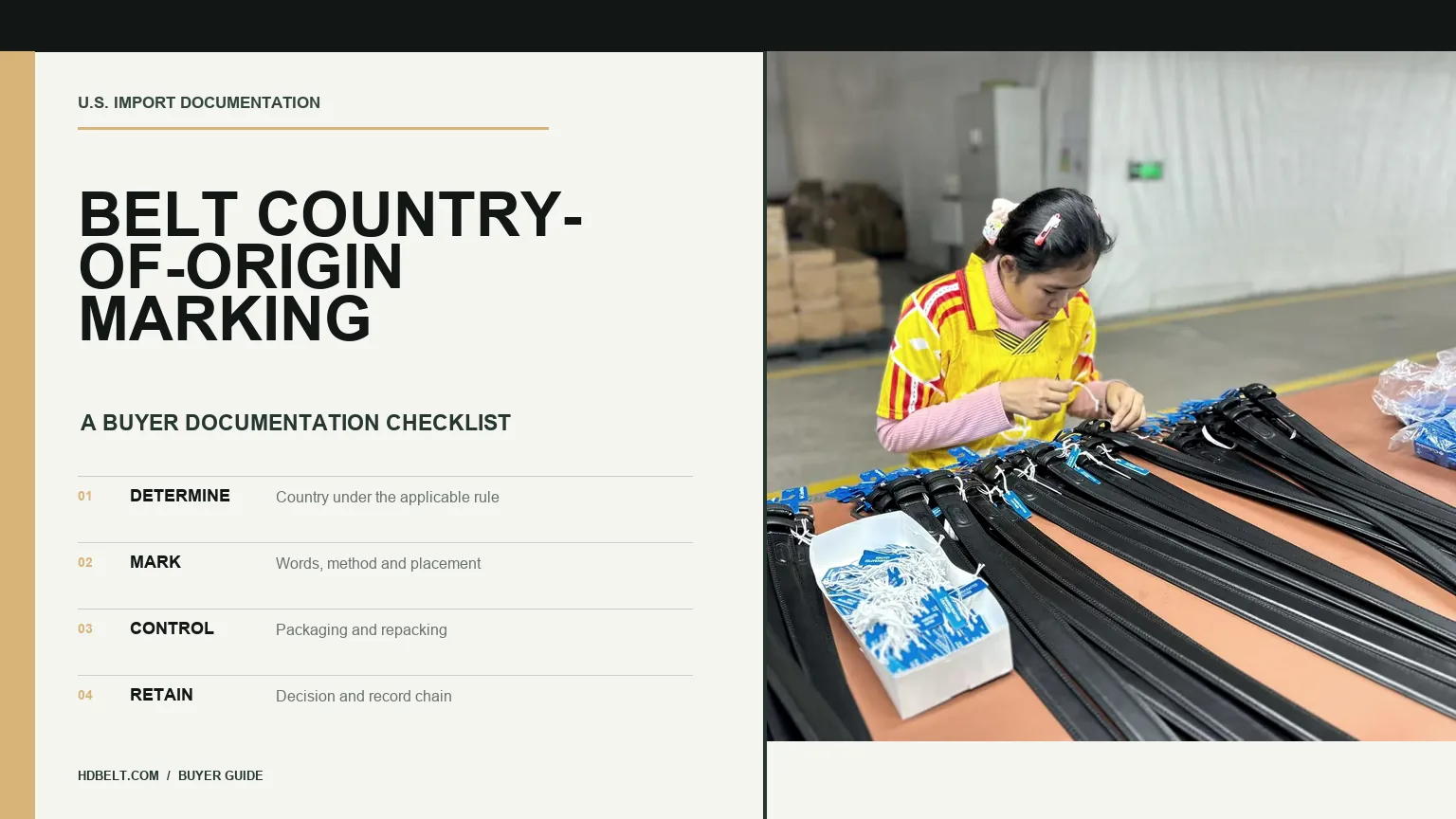
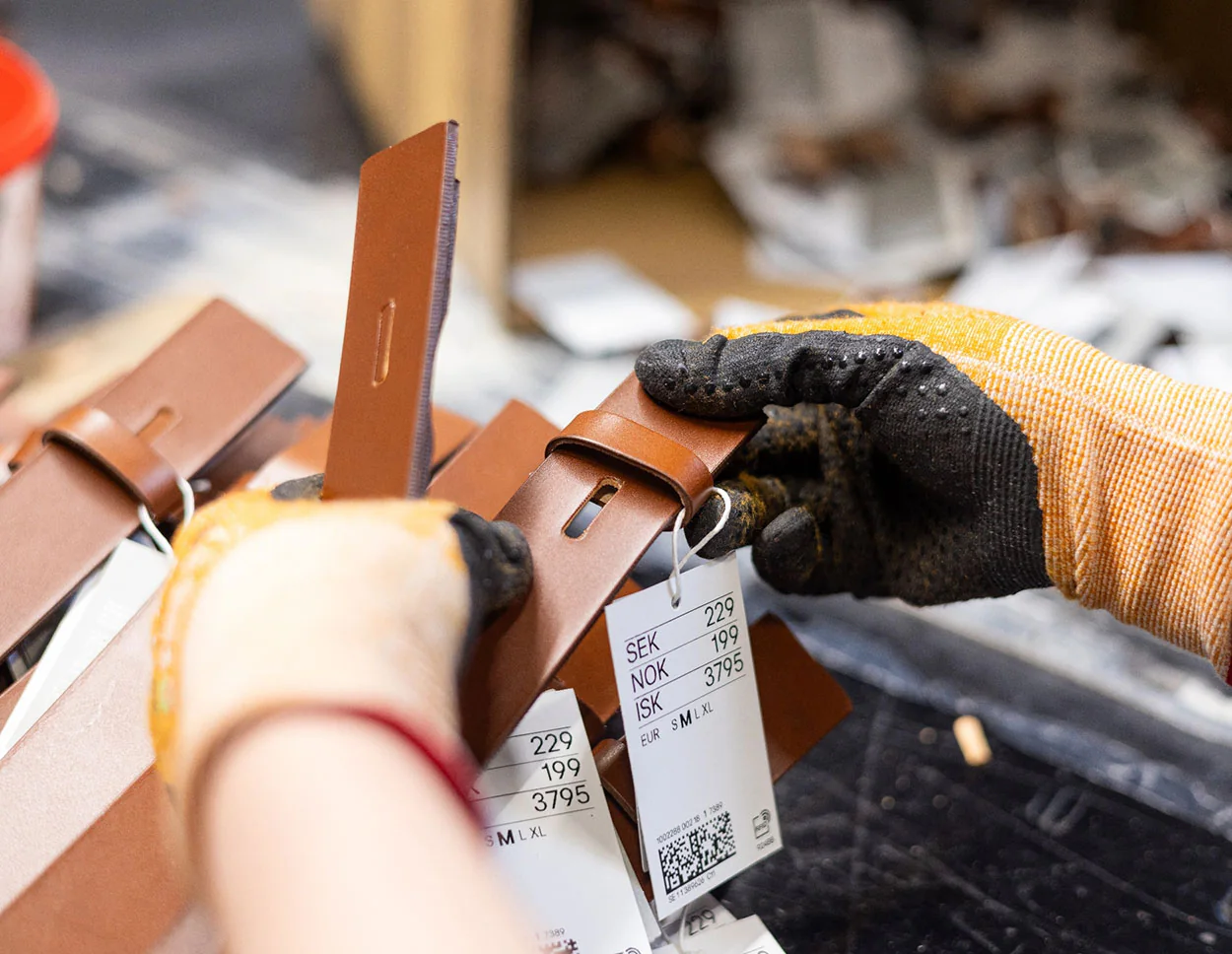
Compare logos, debossing, printed marks, labels, barcode data and placement against current artwork. Verify spelling, orientation, color and SKU mapping. A correct belt inside the wrong branded pack is still a nonconforming saleable unit.
Inspect unit protection and retail presentation separately. Confirm buckle protection, anti-transfer separation, bag or box, inserts, labels, hangtags and closure. Then check carton assortment, quantity, marks and destination instructions. Packaging should protect the finish without creating pressure marks, tangles or metal-to-metal contact.
Reconcile quantities by SKU, color and size, not only by shipment total. Record missing, excess, substituted or mixed units. If cartons are sampled for count, state the method and any extrapolation rather than presenting a partial count as a full inventory.
Separate Lab Evidence From Inspection
Final inspection observes selected production units at a defined time. A laboratory test evaluates named specimens under a defined method. A supplier declaration states what the supplier claims. An audit evaluates a site or system scope. These forms of evidence support different decisions and should not be collapsed into one “compliance passed” box.
For leather laboratory work, specimen identity matters. ISO 2418:2023 specifies the position, preparation and identification of specimens for chemical, physical, mechanical and fastness tests on applicable leather types. A report on an unidentified offcut does not establish which bulk article, color or production route it represents.
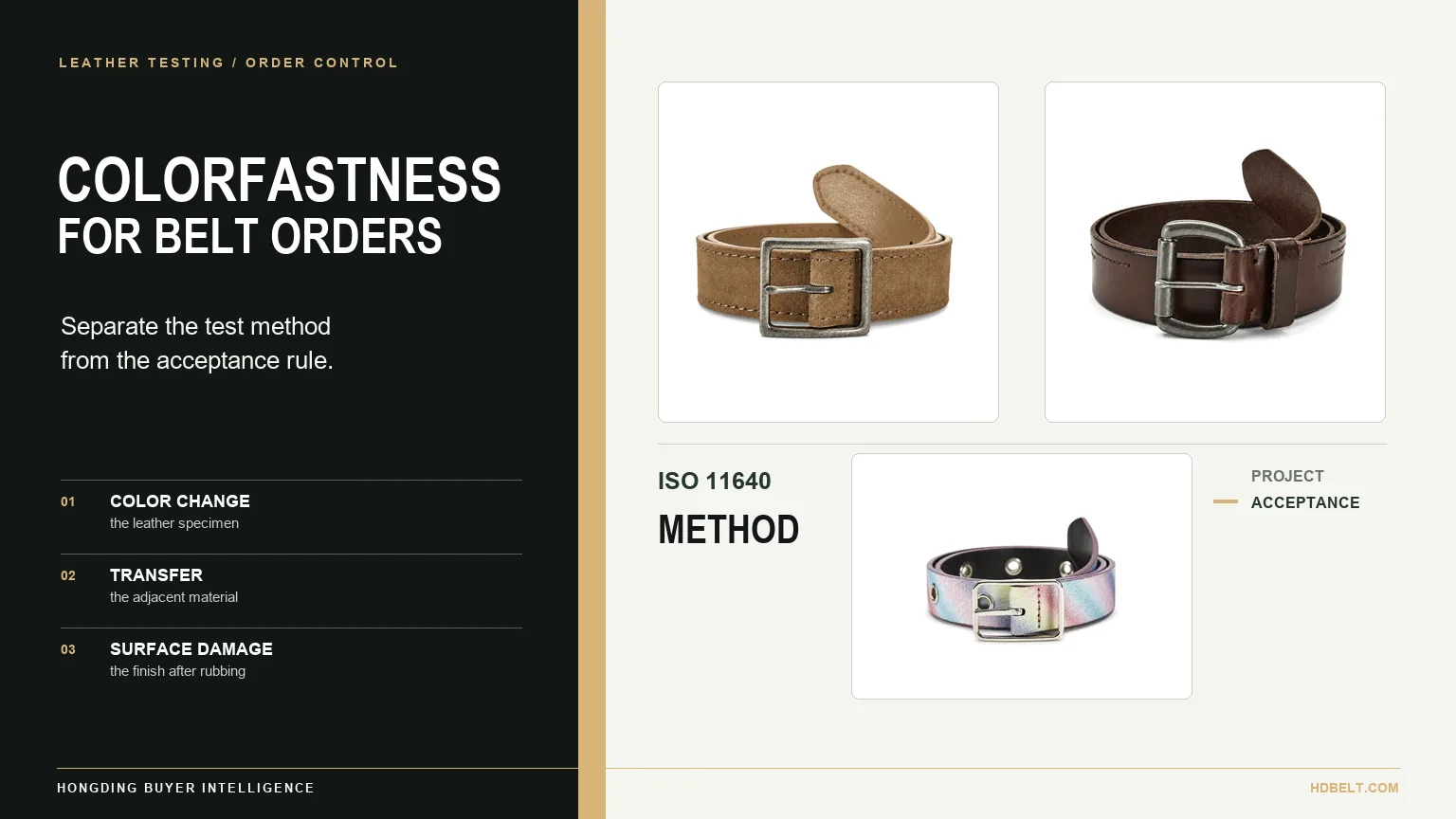
Link every required report to the relevant material, component, finish, color, lot or finished product. Record test method and edition, specimen stage, date, result and revalidation trigger. Rub-test scope and buckle adhesion or salt-spray evidence each need their own named method, specimen and acceptance rule; neither should be inferred from visual inspection.
Record Defects and Disposition
A defect record should identify the style, color, size, carton or unit, location, defect description, class, photograph and governing requirement. Avoid vague entries such as “bad finish.” Describe what was observed and where it exceeded the approved boundary.
Separate count from cause. The inspection can establish what appeared in the sample. Root-cause analysis determines why it happened and whether the uninspected population may be affected. A localized defect and a systematic process error can produce the same sampled count but require different containment.
End with an authorized disposition: accept, accept with a documented concession, rework and re-inspect, or reject/hold. State who approved the decision, which goods it covers and what evidence closes the hold. The HongDing belt quality-control page shows how requirements, prevention, inspection, testing and release records fit inside one project route.
| Disposition | Required Record | Do Not Do |
|---|---|---|
| Accept | Lot, sample plan, results and release authority | Extend acceptance to an unlisted lot |
| Concession | Exact deviation, quantity, owner and conditions | Treat a one-time waiver as a new standard |
| Rework | Affected scope, method, verification and re-inspection | Release reworked goods without new evidence |
| Reject or hold | Containment, ownership and next decision gate | Move goods while identity or scope is unclear |
Leather Belt Inspection FAQ
What should a belt inspection compare against?
Compare the lot against the current approved sample, specification, measurement schedule, component references, artwork and packaging files.
Does an AQL result prove material compliance?
No. AQL supports a sample-based lot decision for defined attributes, while material claims and laboratory requirements need separate evidence.
Which belt areas need functional checks?
Check buckle operation, prong or track engagement, keeper clearance, attachment security and any reversible or detachable mechanism named in the specification.
How should natural leather variation be judged?
Use the approved material article, grading boundary, color reference and defect examples. Do not rely on an inspector’s personal preference.
Can one approved sample cover every color and size?
Only when the approval record defines that coverage and the variants are controlled by linked files. One physical unit does not automatically approve unseen variants.
What should happen after a failed inspection?
Identify the defect scope, hold affected goods, authorize a disposition, correct the cause and define the evidence required for re-inspection.
Why HongDing Wrote This Checklist
HongDing supports belt development and manufacturing for brands, retailers, wholesalers and sourcing teams. Those programs can combine leather or alternative materials, multiple size systems, custom hardware, branding, retail packaging and market-specific evidence. A generic visual checklist cannot control all of those interfaces.
This article focuses on decision architecture: identify the lot, select the sample, inspect against controlled references, separate evidence types and record an authorized disposition. The exact defect classes, tolerances, tests and sampling values remain project-specific and must be confirmed in writing.