By Kevin · Reviewed by HongDing Sourcing and Quality Team · Published 2026-09-09 · Updated 2026-09-09
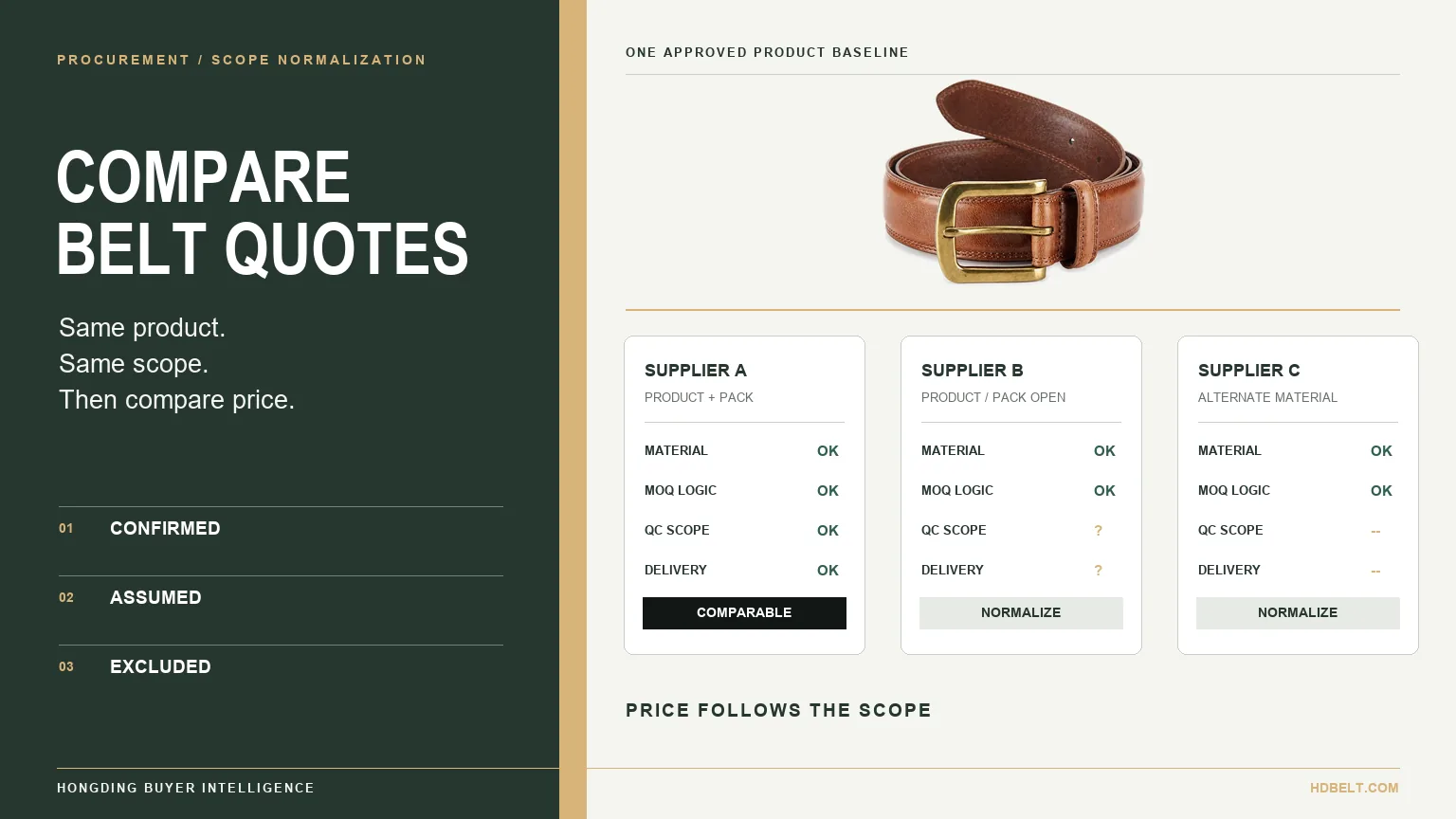
Deux devis de fournisseurs de ceintures ne sont comparables que lorsqu’ils chiffrent le même produit contrôlé et le même travail. Si un devis présuppose du cuir en stock, qu’un autre inclut une couleur personnalisée et qu’un troisième exclut l’emballage de détail, les trois prix unitaires répondent à des questions différentes.
La solution pratique n’est pas un score fournisseur plus élaboré. C’est une passe de normalisation avant le début de l’évaluation. Placez chaque réponse en regard d’une seule révision de produit, d’une répartition des quantités, d’une limite de service, d’un plan d’inspection et d’une base de livraison. Forcez ensuite chaque point non résolu dans l’un des trois états : confirmé, supposé ou exclu.
En bref : le meilleur devis est celui dont le périmètre peut survivre à l’échantillonnage, à l’examen du bon de commande et à la production répétée sans réinterprétation cachée. Le prix compte une fois que la cartographie du produit et des responsabilités correspond.
Figez une base de comparaison unique
Commencez par la demande que chaque fournisseur a réellement reçue. Une photographie, un lien produit ou un échantillon peut communiquer une orientation, mais il ne définit pas chaque couche, dimension, finition, logo, étiquette ou emballage. Si les fournisseurs invités ont comblé ces écarts différemment, leurs réponses ne peuvent pas être traitées comme un ensemble d’offres contrôlé.
Établissez une base de comparaison avec une révision visible. Elle doit identifier le parcours de la ceinture, le marché visé, le canal acheteur, la construction, le système de tailles, les quantités par SKU, l’image de marque, l’emballage, les besoins de preuve et la condition de livraison demandée. Marquez les champs ouverts plutôt que de les masquer. Le guide RFQ pour ceintures HongDing explique comment préparer cette donnée d’entrée commune ; cet article commence après l’arrivée des réponses.
Ne réécrivez pas rétroactivement la réponse d’un fournisseur. Conservez la réponse originale, puis créez une colonne normalisée à côté. Lorsqu’une clarification modifie le périmètre, demandez une mise à jour datée ou soumise à un contrôle de révision. Cela laisse une trace depuis l’hypothèse initiale jusqu’à l’offre comparable.
| État du champ | Signification | Action de l’acheteur |
|---|---|---|
| Confirmé | Le fournisseur accepte la donnée d’entrée nommée et l’inclut dans l’offre. | Vérifiez que le devis et le dossier technique utilisent la même révision. |
| Supposé | Le fournisseur a rempli un champ ouvert, provisoire ou conditionnel pour calculer la faisabilité ou le prix. | Enregistrez sa dépendance et son déclencheur de clôture, puis approuvez-le, révisez-le ou rejetez-le. |
| Exclu | Le travail, le composant, la preuve ou le coût sont en dehors de l’offre. | Ajoutez-le, approvisionnez-le ailleurs ou comparez explicitement l’exclusion. |
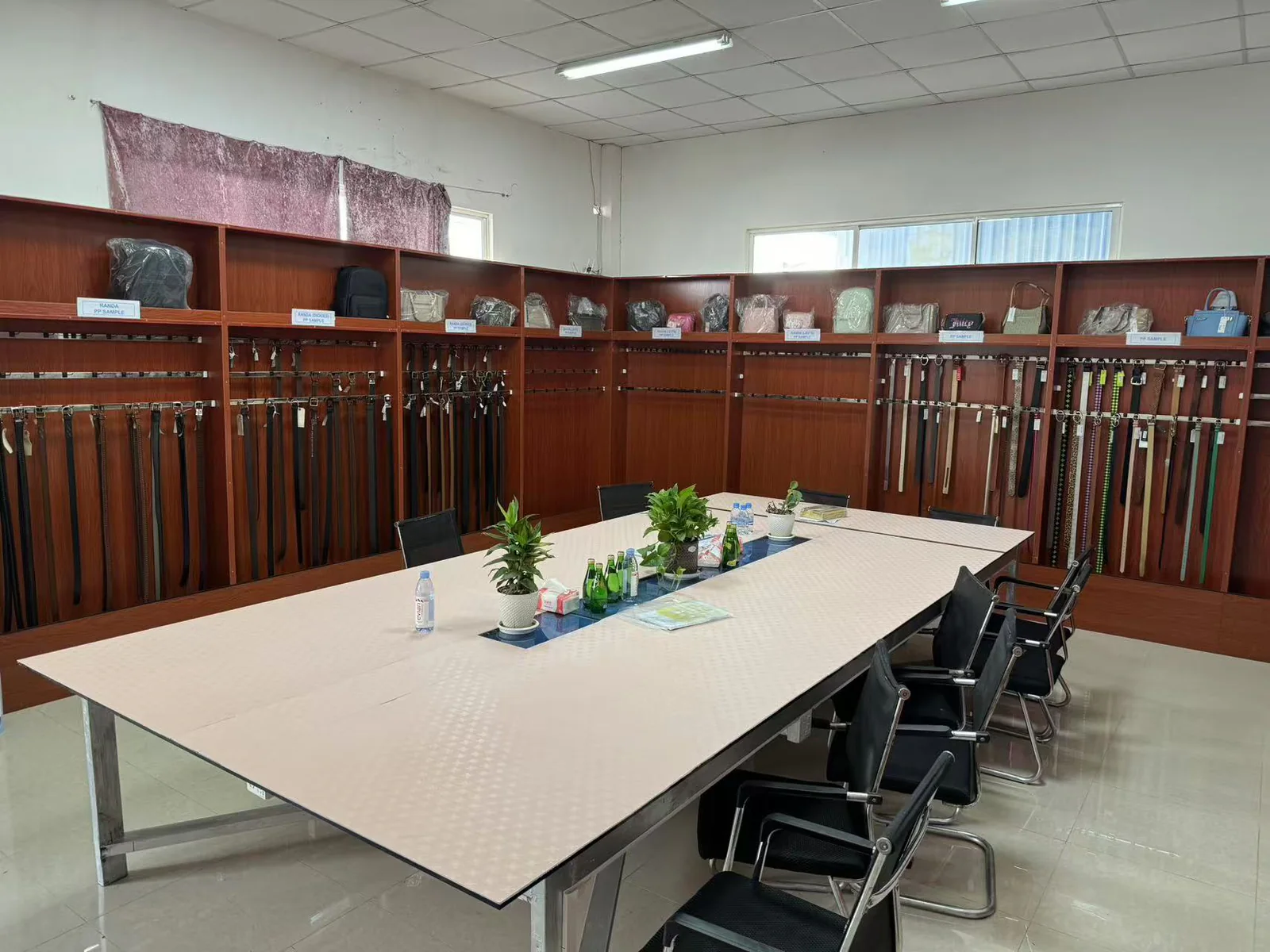
Normalisez la construction du produit
Une description de ceinture telle que “ cuir véritable, boucle argentée ” laisse la plupart des décisions génératrices de coûts en suspens. Le matériau de dessus, le support, le renfort, le système de bord, la doublure, le tracé d’adhésif ou de couture et le substrat de boucle peuvent différer alors que l’article fini ressemble encore à la même photographie de référence.
Comparez les codes d’article des matériaux ou les propositions des fournisseurs, pas seulement les libellés de familles. Si les fournisseurs proposent des alternatives, donnez à chaque voie sa propre ligne. Consignez ce qui change en apparence, construction, preuve et disponibilité. Un fournisseur qui chiffre honnêtement une alternative ne doit pas être pénalisé en plaçant sa proposition transparente à côté de la substitution non nommée d’un autre fournisseur.
Les dimensions nécessitent le même traitement. Alignez la largeur, l’épaisseur, la définition de la longueur totale, la géométrie des trous ou du rail, la position du passant et l’interface de boucle. Une tolérance dimensionnelle n’a de sens que si le repère de mesure et l’état du produit sont également nommés. La liste de contrôle de l’échantillon de pré-production indique quels champs produit doivent finalement être figés avant le lancement de la production en série.
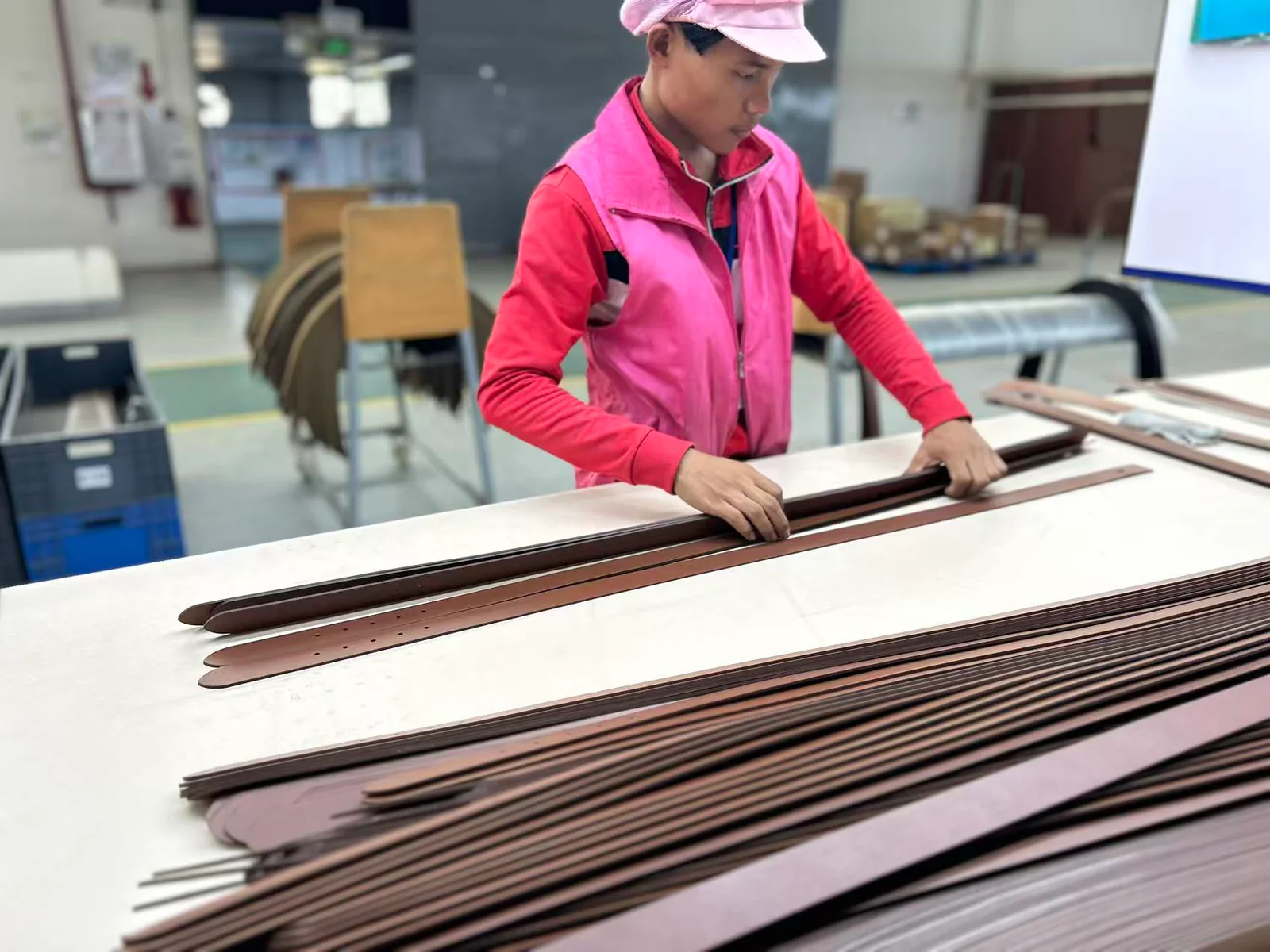
Rapprochez l’assortiment et les minimums
Une quantité totale peut masquer plusieurs minimums. Un programme à quatre couleurs peut partager une construction de sangle mais exiger des lots de cuir, des finitions de boucle, des étiquettes ou des boîtes de vente au détail distincts. Une plage de tailles peut ne pas modifier la configuration de fabrication, mais elle modifie l’attribution des SKU et l’emballage. Demandez à chaque fournisseur d’indiquer le niveau auquel son minimum s’applique.
Ne comparez pas “ MOQ 500 ” avec “ MOQ 1 000 ” avant de savoir si ces chiffres correspondent à une quantité par commande, par style, par couleur, par matière, par finition de quincaillerie ou par version de pack. HongDing ne publie pas un MOQ fixe unique, car le minimum applicable dépend de la construction, de la personnalisation et de l’assortiment. Le devis écrit doit indiquer la règle réelle pour le projet examiné.
La Aperçu du programme de ceintures en gros de HongDing montre la voie commerciale que cette comparaison soutient. Utilisez-la uniquement après avoir explicité la base produit et assortiment ; un libellé de programme ne peut pas rendre comparables des devis dissemblables.
Les paliers de prix nécessitent aussi la même combinaison de SKU. Une quantité totale plus élevée ne garantit pas la même efficacité lorsqu’elle est répartie sur de nombreuses variantes. Demandez aux fournisseurs de chiffrer le même scénario et de préciser quelles hypothèses rouvriraient le palier.
| Bloc de décision | Normaliser | Différence cachée commune |
|---|---|---|
| Style | Construction et révision | Base standard par rapport à un nouveau développement |
| Couleur | Quantité par matériau et finition | Couleur en stock par rapport à un parcours de couleur personnalisée |
| Quincaillerie | Composant, substrat et finition | Boucle de catalogue par rapport à un nouvel outillage ou placage |
| Taille | Unités par taille et code d’étiquetage | Un total en vrac avec un ratio de tailles non tarifé |
| Conditionnement | Étiquette, code-barres, conditionnement unitaire et version carton | Protection pour l’export par rapport à une présentation prête pour la vente au détail |
Séparez les inclusions et les exclusions
Un prix unitaire est un contenant, pas un périmètre complet. Demandez ce qu’il contient. L’approvisionnement en matières, le travail sur échantillons, la conversion des fichiers graphiques, l’outillage, la propriété des moules, l’application du logo, les éprouvettes d’essai, les frais de laboratoire, le soutien à l’inspection, les étiquettes, l’application des codes-barres, l’emballage de détail et l’emballage d’exportation peuvent être inclus, facturés séparément ou laissés sans indication.
Utilisez un zéro, une valeur ou “ exclu ” dans chaque ligne de coût ; ne laissez pas de blanc. Un blanc peut signifier inclus, non requis, inconnu ou oublié. Le fournisseur doit également indiquer si un montant est remboursable, amorti, ponctuel, récurrent ou conditionné à une quantité.
L’emballage mérite une attention particulière. Un devis peut inclure un sac polyéthylène de protection mais pas la carte imprimée, la boîte, l’autocollant, la vérification du code-barres ou l’assortiment de cartons de l’acheteur. Ces omissions affectent à la fois le coût et la préparation. Elles peuvent aussi faire basculer le projet vers un minimum ou un circuit d’approbation différent.
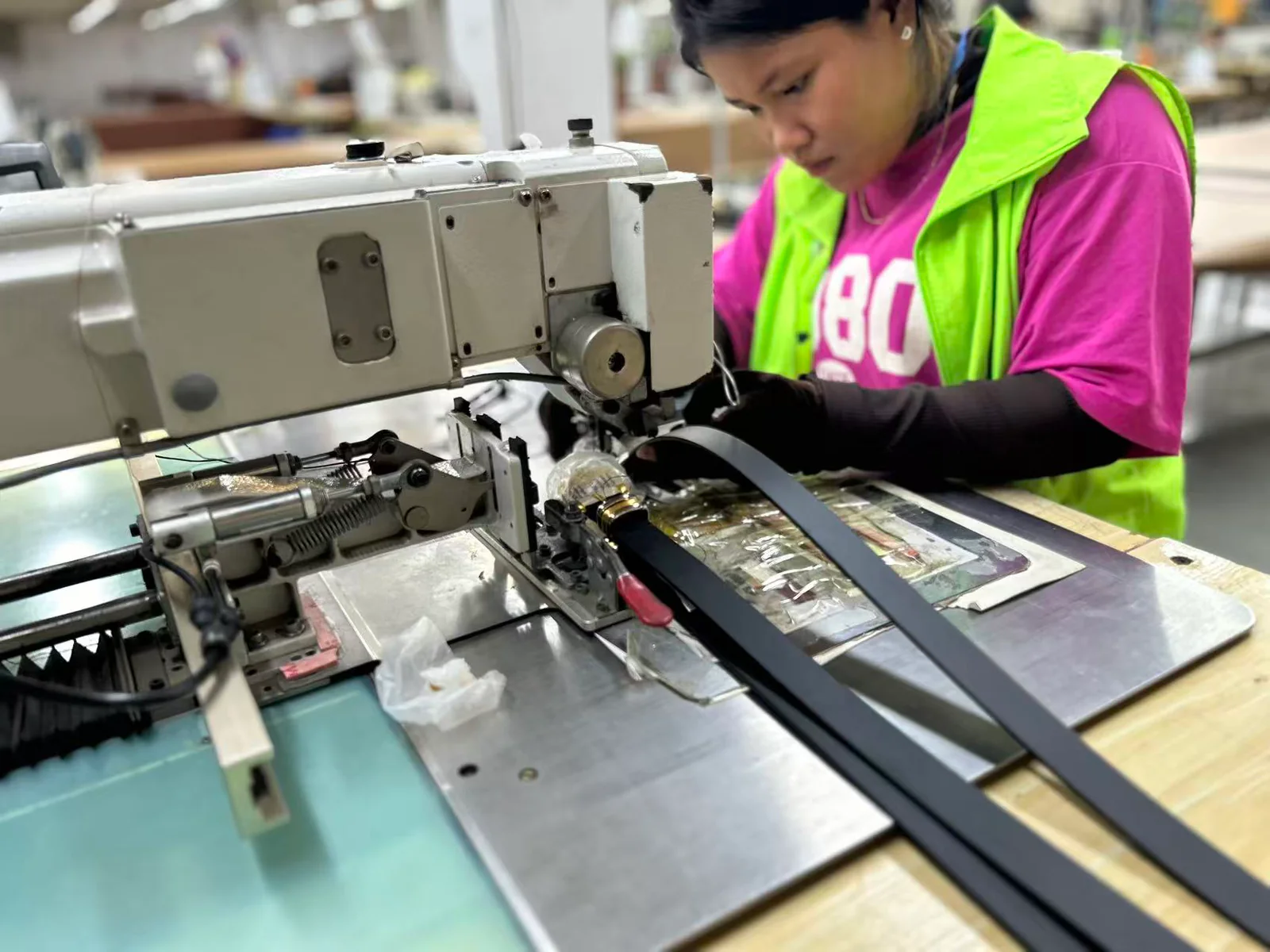
Comparez la qualité et le périmètre des preuves
“ QC inclus ” n’est pas un plan qualité. Comparez l’échantillon et la spécification de référence, les contrôles à réception, les contrôles en cours de fabrication, l’inspection finale, le périmètre des essais, le format du rapport, le traitement des non-conformités et l’autorité de libération des expéditions. Demandez quelles activités font partie du prix et lesquelles nécessitent un tiers distinct.
Si un échantillonnage d’acceptation est requis, nommez le schéma et les choix de projet plutôt que de supposer que “ AQL ” est une instruction complète. ISO 2859-1:2026 définit des schémas indexés par AQL pour l’inspection lot par lot par attributs. L’acheteur doit encore aligner la définition du lot, le niveau d’inspection, les classes de défauts et les valeurs d’acceptation avec la commande. de HongDing guide AQL des ceintures explique en détail cette couche de libération.
Les rapports d’essai ont eux aussi besoin d’un périmètre. Un document doit identifier l’éprouvette, la matière ou le composant, la méthode, l’édition, le laboratoire ou la partie responsable, la date et le résultat. Un audit fournisseur ne prouve pas la conformité du produit, et un rapport de matière ne couvre pas automatiquement chaque coloris fini.
Alignez les limites de livraison et les frontières commerciales
5. Le délai de livraison n'est pas un seul chiffre, sauf si les événements de début et de fin correspondent. Un fournisseur peut compter à partir de l'acompte ; un autre à partir de l'approbation de l'échantillon final ; un autre à partir de la disponibilité des matières. Demandez à chaque fournisseur de préciser le déclencheur, les dépendances, le transfert de production et les exclusions. HongDing discute normalement des échantillons en termes propres au projet et peut utiliser deux à trois semaines comme référence de planification, tandis que les programmes de production en volume sont souvent planifiés sur une fenêtre de soixante à quatre-vingt-dix jours après les matières et les approbations. Ce sont des références de planification conditionnelles, et non des engagements automatiques.
6. Les termes commerciaux exigent la même discipline. Les 7. règles Incoterms 2020 de la CCI 8. contiennent onze règles et les répartissent entre les règles pour tout mode de transport et les règles pour le transport maritime ou par voies navigables intérieures. Consigner la règle choisie, le lieu nommé et la version. Un “ prix FOB ” sans port ni périmètre ne permet pas de compléter la comparaison.
9. Tenir séparées l'analyse du prix départ usine et celle du coût à l'arrivée. L'importateur peut devoir ajouter le fret, l'assurance le cas éché Guide de l’importateur de l’U.S. Customs and Border Protection indique que le recours à un courtier en douane ne dégage pas l’importateur de sa responsabilité ultime de connaître et de respecter les exigences de la CBP. Les acheteurs sur d’autres marchés doivent s’adresser à l’autorité et au courtier de leur destination.

Évaluer le risque après normalisation
Ne notez les fournisseurs qu’une fois les différences de périmètre visibles. Séparez l’attrait commercial de la confiance dans la réponse sous-jacente. Un prix bas assorti de nombreuses hypothèses non résolues peut mériter une bonne note de coût et une mauvaise note de préparation. Combiner ces observations en une seule évaluation intuitive masque pourquoi le choix est risqué.
Utilisez des catégories fondées sur des preuves : exhaustivité de la correspondance produit, hypothèses déclarées, traçabilité des matériaux et composants, parcours de l’échantillon, clarté du plan qualité, préparation de l’emballage, faisabilité de la livraison, validité commerciale et responsabilité de la communication. La pondération doit refléter le programme. Une commande récurrente peut mettre l’accent sur la continuité ; un nouveau programme de mode peut mettre l’accent sur le développement et le contrôle des approbations.
Évitez la fausse précision. Une note de 82 contre 84 ne crée pas une connaissance que les documents sources ne possèdent pas. Consignez une brève note de décision à côté de chaque évaluation et identifiez chaque point d’arrêt susceptible de modifier la recommandation.
| Bloquer | Passer la question | Maintenir le signal |
|---|---|---|
| Identité du produit | Même révision, construction et dimensions ? | Le fournisseur a chiffré une alternative sans nom |
| Assortiment | Ventilation identique style-couleur-taille-pack ? | MOQ indiqué uniquement comme un total |
| Matériaux | Articles, couches et substituts explicites ? | Libellé de famille utilisé comme spécification complète |
| Quincaillerie | Composant, finition et gamme d'outillage alignés ? | Boucle similaire supposée sans approbation |
| Marque et emballage | Tous les éléments graphiques et travaux retail inclus ? | Pack export confondu avec pack retail |
| Preuves de qualité | Inspection, tests et rapports cadrés ? | “ QC inclus ” sans définition de libération |
| Base commerciale | Prix, minimum, validité et paiement clairs ? | Ligne vide ou frais conditionnel non expliqué |
| Passation de livraison | Déclencheur, lieu nommé et responsabilité alignés ? | Le délai de livraison et la condition commerciale manquent de points de terminaison |
Feuille de travail copiable de normalisation des devis
Copiez ces lignes dans le fichier de sourcing et conservez la révision du devis à côté de chaque réponse. Un champ vide n’est pas une décision ; utilisez confirmé, supposé ou exclu et consignez toute dépendance sous l’état supposé.
| Champ de référence | Fournisseur A | Fournisseur B | Fournisseur C | Décision normalisée |
|---|---|---|---|---|
| Produit / révision | Réponse + état | Réponse + état | Réponse + état | Valeur approuvée, responsable, date |
| Quantité SKU / niveau de MOQ | Réponse + dépendance | Réponse + dépendance | Réponse + dépendance | Assortiment comparable |
| Coût inclus / exclu | Unique ou récurrent | Unique ou récurrent | Unique ou récurrent | Limite de coût commune |
| Preuve qualité / point d'arrêt | Méthode + responsable du rapport | Méthode + responsable du rapport | Méthode + responsable du rapport | Preuve de libération |
| Livraison / validité | Déclencheur + lieu désigné | Déclencheur + lieu désigné | Déclencheur + lieu désigné | Transfert commun + date de revue |
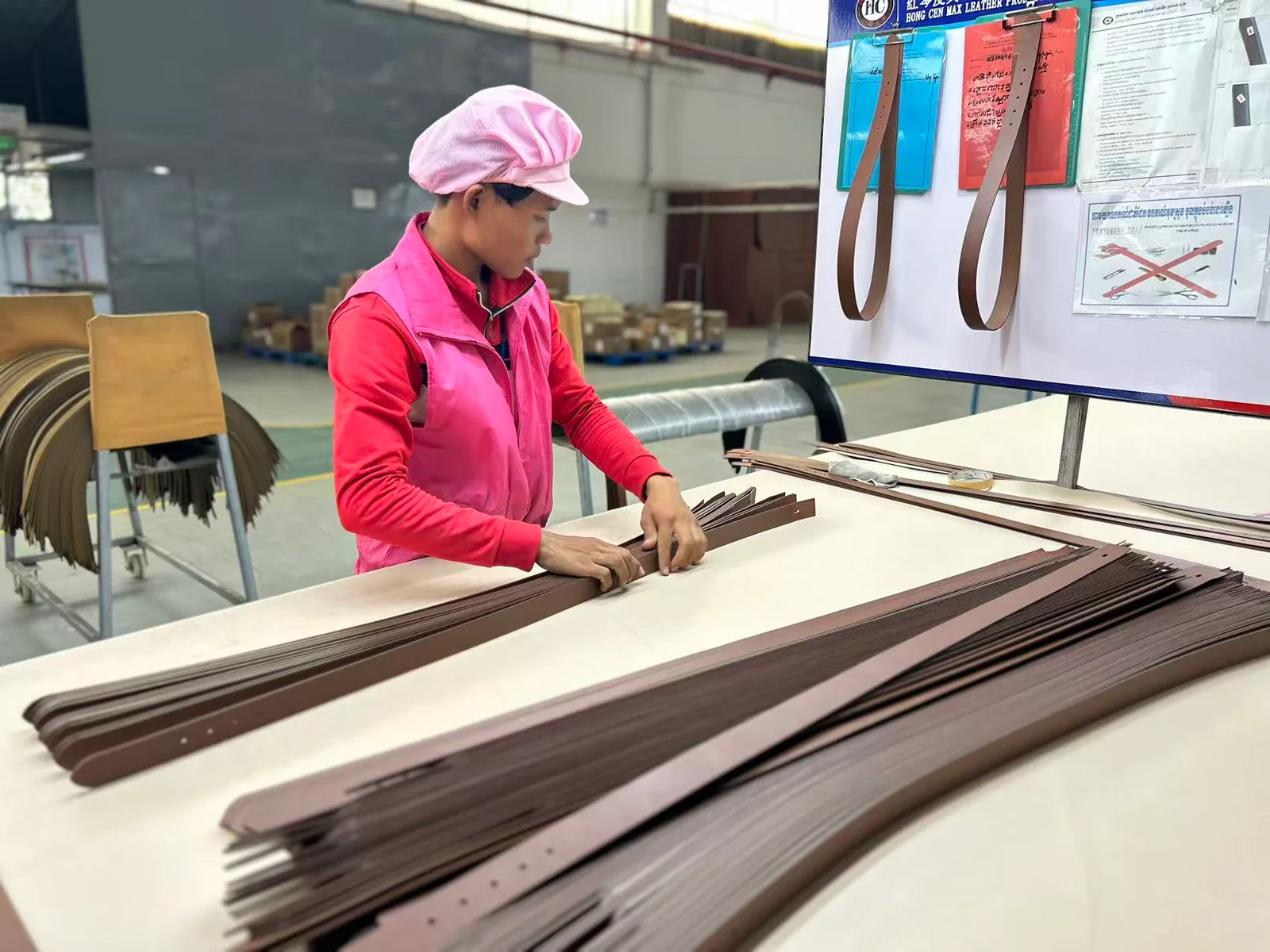
Convertir le devis en contrôles
Le devis sélectionné n'est pas la fin de la comparaison. Ses champs confirmés doivent être repris dans la demande d'échantillon, la spécification, la nomenclature, les approbations de maquette et d'emballage, la commande d'achat et le plan qualité. Les hypothèses doivent soit devenir des intrants approuvés, soit rester des points d'arrêt visibles. Les exclusions nécessitent un responsable.
Avant de payer un acompte ou de libérer les travaux en série, rapprochez le dossier commercial de la base de référence produit approuvée. Vérifiez que les modifications tardives des échantillons n'ont pas laissé le prix, le minimum ou le plan de livraison rattachés à une révision obsolète. Le parcours de contrôle qualité HongDing relie les spécifications approuvées, les contrôles en cours de fabrication, l'inspection finale et les enregistrements de libération pour les programmes de courroies spécifiques au projet.
Pour une commande répétée, rouvrez les lignes susceptibles de changer : disponibilité des matières, itinéraire de la boucle, finition, étiquettes, emballage, répartition des quantités, exigences en matière de preuves, validité du prix et affectation de la production. Un devis antérieur est un historique utile, et non la preuve que les intrants et les capacités actuels sont inchangés.
Comparer un programme de ceintures sur une base unique
Envoyez la référence produit, la construction, la répartition des SKU, l’image de marque, l’emballage, le marché cible, les besoins en matière de preuves et la condition de livraison demandée. HongDing peut renvoyer les hypothèses et les décisions en suspens qui doivent être résolues avant que l’offre ne soit considérée comme prête pour la production.
FAQ sur la comparaison des devis de ceintures
Que doivent comparer les acheteurs avant le prix unitaire ?
First align the product revision, quantity split, included work, quality evidence, packaging and delivery boundary. A price comparison made before that alignment is not like for like.
How should assumptions appear in a supplier quote?
Each assumption should be written beside the affected line and marked for confirmation, revision or rejection. It should never operate as silent approval.
Does the lowest FOB price mean the lowest landed cost?
No. Product scope, packing, inspection, freight, duty, tax, brokerage and destination costs must be normalized separately for the importer’s market.
How should MOQ be compared?
Identify whether the minimum applies by order, style, color, material, component, logo or pack version, then compare the same assortment scenario.
When is a belt quotation ready for approval?
It is ready when scope, assumptions, exclusions, validity, payment, delivery and unresolved conditions are explicit and reference the current product baseline.
Should buyers use one total supplier score?
Use separate cost, readiness and risk observations with short evidence notes. One total may support a decision, but it should not hide unresolved conditions.
Pourquoi HongDing a rédigé ce guide
HongDing works with brands, retailers, wholesalers and sourcing teams on finished-belt and private-label programs. Early requests often combine product direction, commercial targets and unresolved development decisions. This guide makes those boundaries visible so a buyer can compare written offers without treating every open field as equivalent.
HongDing does not use this framework to promise one universal price, minimum or lead time. The applicable offer depends on material, construction, hardware, customization, SKU mix, packaging, testing, delivery scope and current production planning. Final terms require a reviewed project and written confirmation.