
Points clés à retenir
- Une tendance n'est pas un produit tant qu'elle n'a pas été briefée. Chaque direction qui parvient à une usine passe par la même chaîne — tendance, décisions de construction, points d'approbation écrits, plan de canal — et c'est dans cette chaîne que les programmes de tendances se gagnent ou se perdent.
- Cinq directions ne cessent de revenir dans les briefs retail. Fermetures extensibles et confortables, surfaces de luxe discret, filières de matériaux recyclés, ceintures larges à fort impact, quincaillerie 3D personnalisée — chacune est produisible, et chacune modifie le brief de construction et d'approbation.
- Les allégations de durabilité sont une question de preuves. Une allégation de contenu recyclé exige que l'identité du matériau, le ratio et le titulaire du certificat soient documentés avant la production en volume ; une allégation végane ne découle pas d'un nom de matériau PU.
- La quincaillerie personnalisée est l'élément le plus lent d'un brief de tendance. Le développement de boucles 3D ajoute outillage, échantillons et cycles d'approbation — intégrez-le au brief en premier, pas en dernier.
- Nous faisons état de directions, pas de prévisions. Aucun chiffre de taille de marché ni prédiction de croissance n'apparaît ici — seulement les briefs retail que nous voyons et ce dont chaque direction a besoin pour devenir un produit approuvable.
Ce que couvre ce guide
- Ce que signifie réellement briefer une tendance
- Tendance 1 : Fermetures extensibles et confortables
- Tendance 2 : Finitions de surface de luxe discret
- Tendance 3 : Filières de matériaux recyclés et durables
- Tendance 4 : Les ceintures larges comme déclaration de mode
- Tendance 5 : Ferrures 3D personnalisées
- La matrice tendance-construction
- Adéquation au canal : où chaque tendance se vend
- Un scénario concret : une capsule saisonnière, trois directions
Demandez à dix présentations de tendances ce qui définira la prochaine saison de ceintures et vous obtiendrez dix mood boards. Ce que vous n'obtiendrez pas, c'est un tech pack. C'est dans cet écart que les programmes de ceintures guidés par les tendances soit se construisent correctement, soit meurent discrètement au stade de l'échantillonnage.
En bref : la liste des tendances importe moins que la chaîne de briefing. Chaque direction que nous voyons dans les briefs retail — stretch, surfaces quiet luxury, filières de matériaux durables, silhouettes larges, ferrures personnalisées — doit être convertie en décisions de construction, en points d'approbation écrits et en un plan de canaux avant de devenir un produit qu'une usine peut chiffrer et qu'un détaillant peut approuver.
HongDing développe et fabrique des ceintures personnalisées pour des marques, des détaillants, des grossistes et des équipes de sourcing, avec un développement coordonné à Dongguan et un support de production assuré par des installations au Cambodge et en Suède. Les cinq directions ci-dessous reviennent sans cesse dans les briefs que nous recevons ; ce guide couvre ce que chacune exige en termes de production, et comment la briefer pour que la réponse revienne sous forme de produit, pas de question.
Ce que signifie réellement briefer une tendance
Un brief de tendance n'est pas un dossier d'images de référence, même si ce dossier est un très bon point de départ. Les usines dans notre position acceptent plusieurs entrées — un tech pack, un échantillon de référence approuvé, des photos ou une direction de tendance, un concept, ou un échantillon existant à réviser. Un brief de tendance est la voie intermédiaire : vous connaissez la direction, pas encore la spécification.
Briefer signifie faire passer la direction par quatre étapes :
- Direction de tendance — quel est le signal de marché, en une ou deux phrases sur lesquelles un développeur peut agir.
- Décisions de construction — filière matière, largeur et épaisseur, fermeture, traitement des bords, ferrures. C'est ici que la tendance survit au contact de la production ou est optimisée en valeur jusqu'à devenir quelque chose de générique.
- Points de validation — ce qui est validé, sur quel échantillon, selon quel test. Chaque tendance a ses propres modes de défaillance, et chaque mode nécessite une limite écrite.
- Adéquation aux canaux — à quels canaux de vente au détail la construction finie convient. Une direction qui séduit en boutique peut être inadaptée pour un présentoir mural de ceintures en grande surface.
Une remarque avant les sections sur les tendances : nous sommes une usine, pas un institut d’études, et ce guide ne contient aucun chiffre de taille de marché, pourcentage de croissance ni prévision de ventes. Ce que nous rapportons est de première main — les demandes, images de référence et questions de développement qui arrivent dans les briefs retail. Notre page Solutions sectorielles montre comment nous organisons le développement selon le secteur dans lequel vous vendez.
Tendance 1 : Fermetures extensibles et confortables
Les briefs que nous voyons : le mot qui revient le plus souvent dans les briefs des canaux casual et familial est confort — des ceintures qui bougent avec celui qui les porte, s’ajustent sans nouveaux trous et conviennent à une plage de tailles plutôt qu’à une taille unique. Une logique athleisure, transposée dans une catégorie qui est restée figée pendant des décennies.
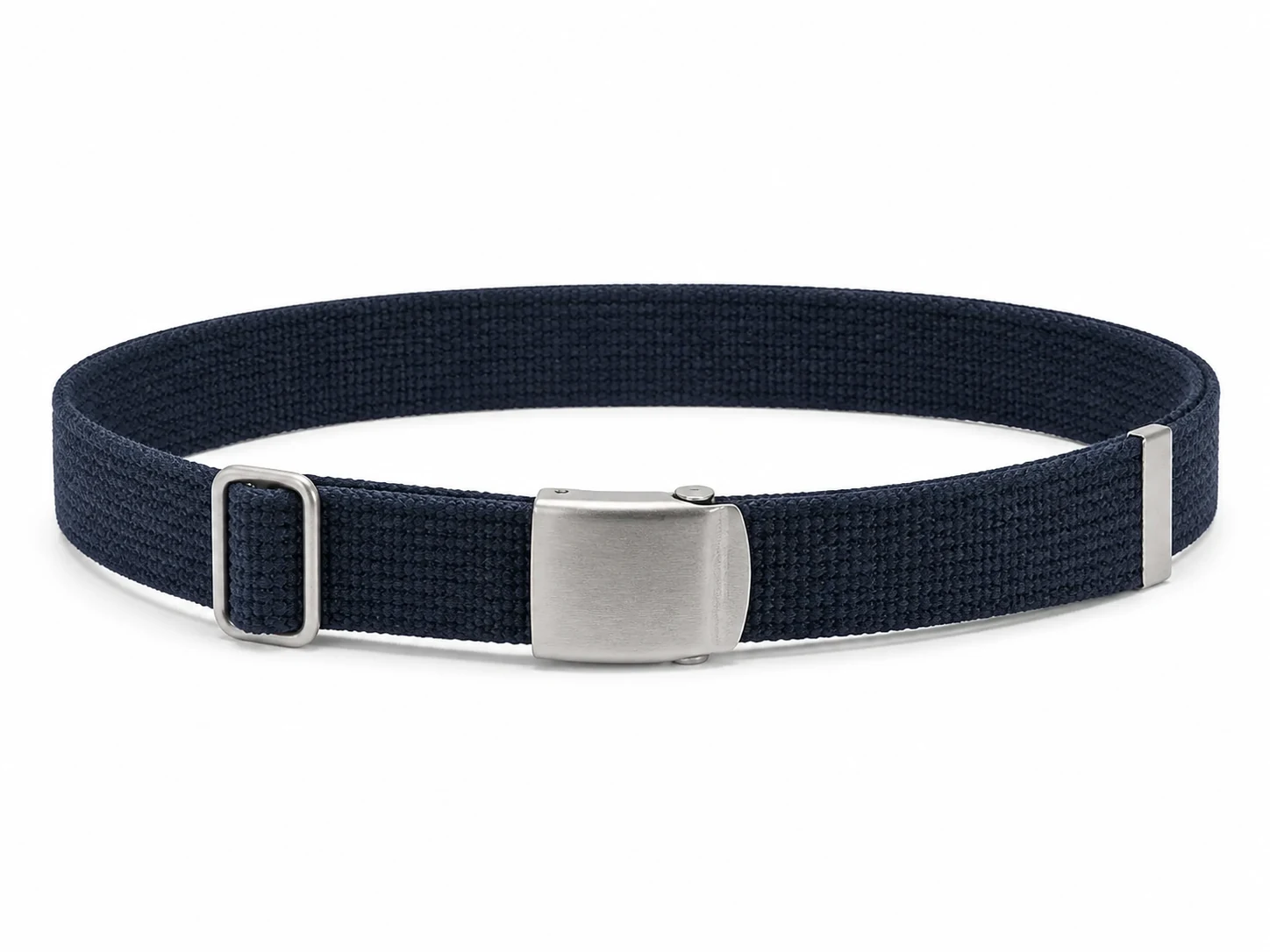
Décisions de construction. La direction confort se divise en trois constructions réalisables. L’élastique recouvert — une âme élastique enveloppée de tissu ou d’un parement aspect cuir — donne la silhouette extensible classique. Le stretch tissé met l’élasticité dans la sangle elle-même. Le confort côté fermeture désigne des mécanismes coulissants ou à cliquet qui s’ajustent en continu plutôt que par des trous perforés.
Chaque option se décline différemment en tailles : les produits extensibles sont briefés en plages de tailles (S/M/L ou plages en pouces), et non selon la logique de longueur par trou d’une ceinture traditionnelle. Notre page Ceintures élastiques montre les constructions de cette famille.
Points de validation. L’élasticité est la tendance la plus dépendante des tests de cette liste. Avant les échantillons de référence, convenez par écrit : les spécifications d’étirement et de récupération (jusqu’où la sangle s’étire, avec quelle précision elle reprend sa forme), le nombre de cycles que la fermeture doit supporter, la stabilité de la largeur après étirement répété, et la correspondance entre l’étiquette de taille et la plage d’ajustement. Une ceinture extensible qui se détend après une saison échoue dans vos données de retours, pas à l’usine — la spécification écrite est votre protection.
Adéquation au canal. Commerce de détail familial et grandes surfaces, golf et sports, école et uniforme, enfants et jeunes — partout où la tolérance d’ajustement et les achats répétés récompensent le confort ; les briefs mode le traitent comme une construction de soutien.
Tendance 2 : Finitions de surface de luxe discret
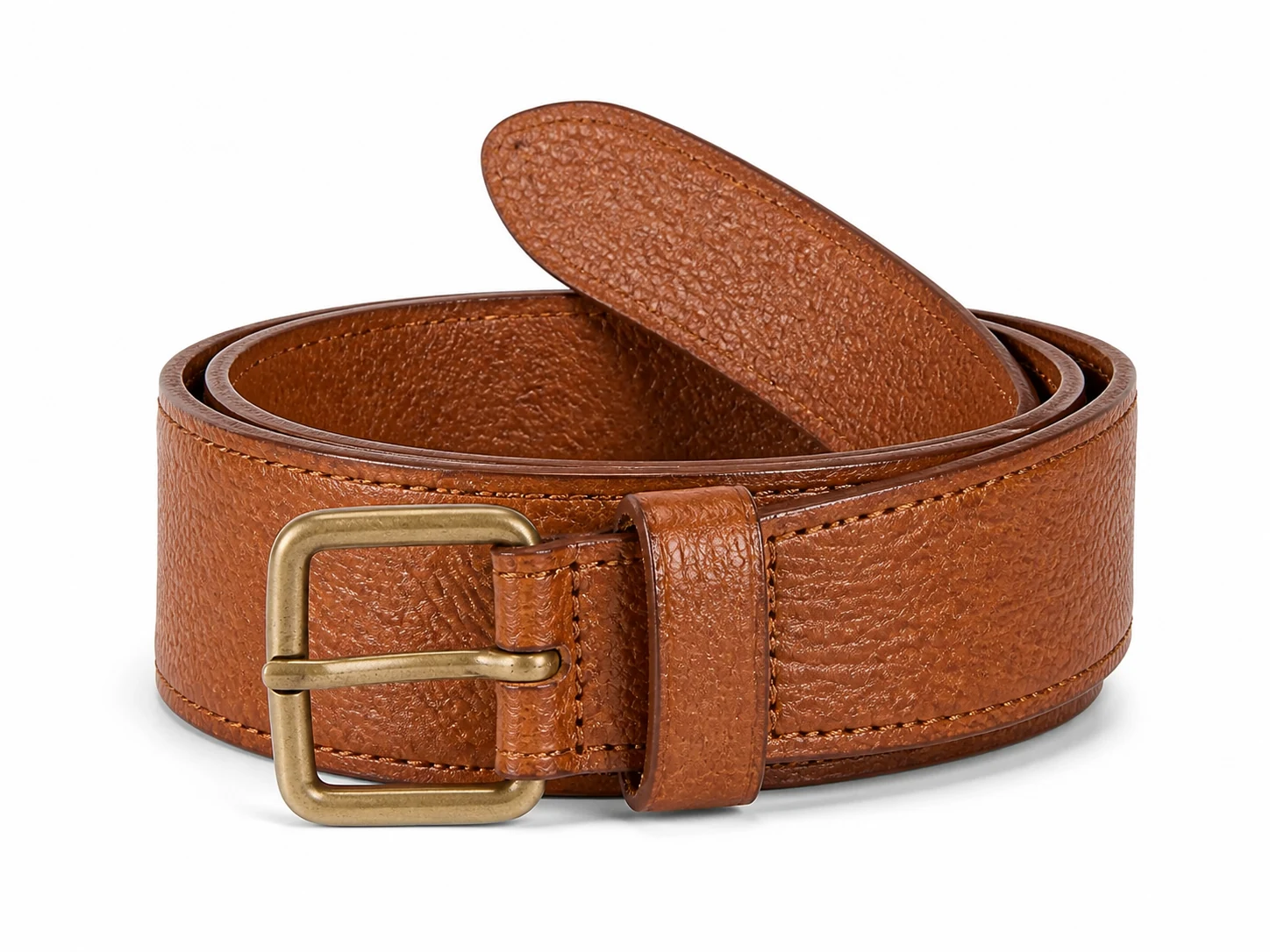
Les briefs que nous voyons : moins de logos, des palettes ton sur ton, des textures mates qui paraissent chères à deux mètres — grain de galet, gaufrage façon Saffiano, finitions glacées et pull-up, effets délavés qui semblent vécus. Les acheteurs demandent dans leurs briefs de la texture et de la retenue, et demandent à la quincaillerie de disparaître : mate, minimale, assortie à la sangle.
Décisions de construction. Surface is the product here. Embossed full-grain or top-grain leather is the premium answer; embossed split reaches a lower price tier with the same visual language. Finishing routes we run include smooth, glazed, oil-tanned, pull-up, vintage washed and crackle. One commercial boundary: exotic-effect embossing — crocodile, lizard, snake patterns — is a pressed effect on leather and must be presented as exactly that, never as skin from a protected species. Our embossed leather belts page covers the pattern families.
Points de validation. Approve surfaces physically, never on screen. Written limits should cover emboss depth and pattern registration across lots, colorfastness and surface rub, edge paint matched to the surface tone (gloss edges fail this brief by themselves), and plating color approved against the actual strap. Request the approval sample in the final finish — a sample approved on unfinished leather tells you nothing about the glazed bulk.
Adéquation au canal. Fashion brands, department-store dress floors, corporate gifts, wedding and formalwear — where the belt is bought as part of an outfit and the price point absorbs surface work; big-box takes the embossed-split version.
Trend 3: Recycled and Sustainable Material Routes
The briefs we see: retail buyers increasingly arrive with a sustainability line in the brief — recycled content, lower-impact materials, a material story their customers can read on a label. The requests are real and growing in seriousness; the evidence behind the claims is where programs stall.
Décisions de construction. The producible routes in our material set include recycled and sustainable options and woven textiles, alongside leather. Each changes labeling: a recycled-content belt carries claims on its tag that must be defensible where it is sold. Decide the claim before the material — the claim dictates the documentation, and the documentation dictates which suppliers can deliver.
Approval points — read this section twice. A recycled claim does not exist because a material has recycled in its name. Before bulk, the file should contain the material identity, the recycled ratio as it will appear on the label, and the certificate holder and scope of the supporting documentation. A vegan claim does not follow from a PU material name alone — polyurethane is a material, not an environmental credential.
Audit frameworks apply to specific facilities with specific scopes and validity dates, not to a catalog as a whole; ask for the document, check the holder, check the dates. A slogan instead of a document is your answer. Our sustainable belts page states the evidence standard we work to.
Adéquation au canal. Big-box programs with published CSR commitments, fashion brands with materials pages, uniform and corporate programs answering client questionnaires — where the claim is checked by someone downstream of you.

Need a trend capsule quoted before the season locks?
Bring your reference images or trend direction, the material and hardware leaning so far, your quantity and SKU mix, and the target market and channel. HongDing answers with per-style pricing, a sampling plan, and the documentation relevant to your claims — or an honest recommendation if a direction does not fit your price band.
Trend 4: Wide Belts as a Fashion Statement
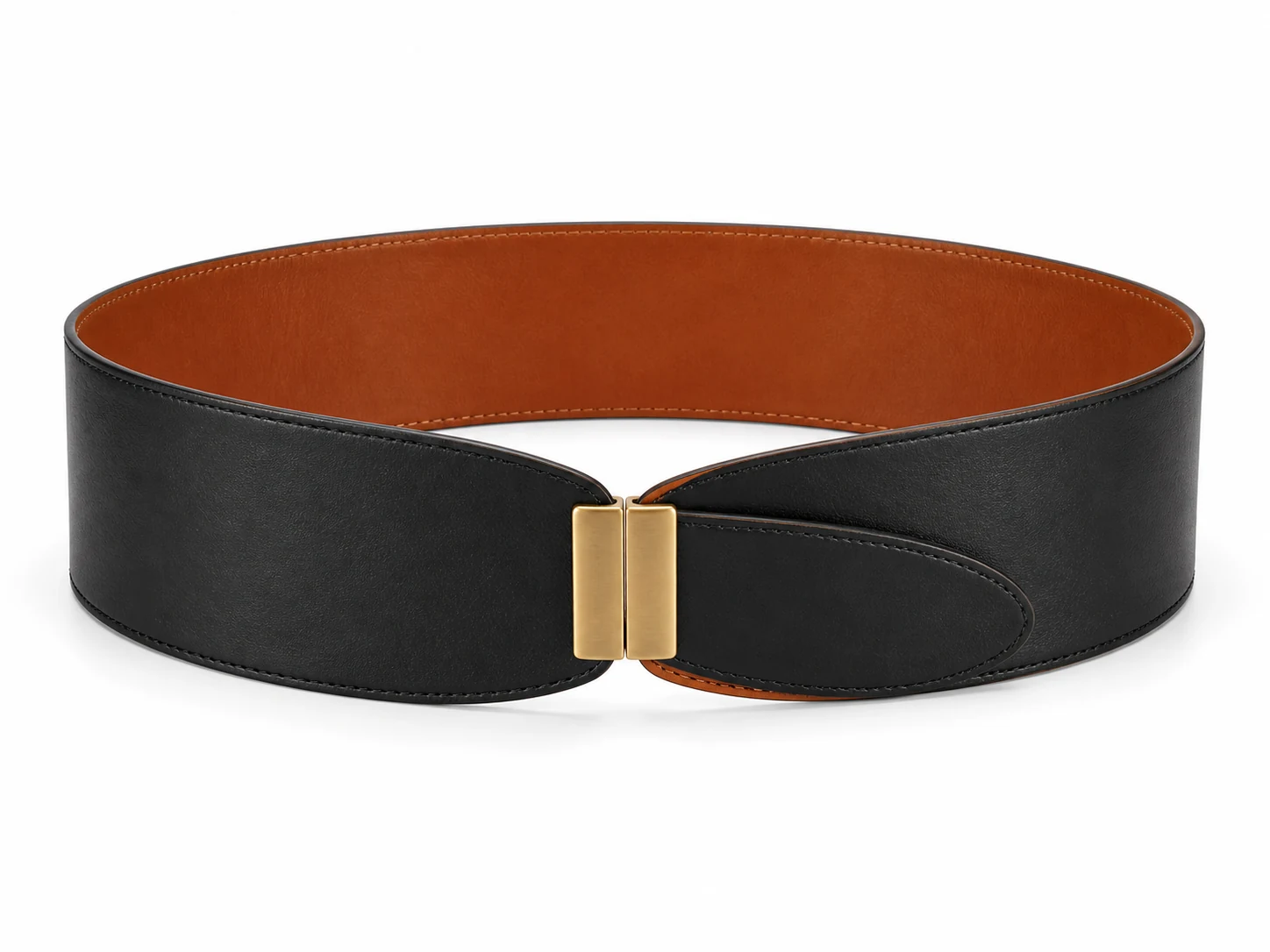
The briefs we see: width as the statement — wide straps worn visibly over dresses, knitwear and outerwear, sculptural silhouettes, prominent buckles, sometimes reversible so one SKU delivers two looks. An accessory-as-outfit direction, not a trouser-holding one.
Décisions de construction. Wide and corset-style belts change the engineering math. Wide straps cut differently from narrow ones — yield per hide drops and pattern placement matters more. Multi-layer constructions need reinforcement and lamination decisions so the strap holds its shape instead of folding at the waist. Reversible wide styles double the surface decisions and demand precise layer alignment. Our corset belts page montre les constructions de cette famille.
Points de validation. Sign off on hardware attachment pull strength (heavy buckles on wide straps carry real load), layer lamination and edge treatment on both faces for reversible styles, hole spacing recalculated for wide geometry, and shape retention of the finished strap. One positioning rule belongs in the brief itself: these are fashion accessories, and the copy stays on fashion territory — no shaping, contouring or figure-altering claims of any kind.
Adéquation au canal. Fashion brands and trend-led e-commerce first, with wedding and formalwear taking narrower interpretations — a look-driven direction for channels where looks are the purchase reason; forcing it into a workwear program fights the use case.
Trend 5: Personalized 3D Hardware
The briefs we see: hardware as the brand carrier — sculptural custom buckles, logo hardware in relief, signature shapes, finishes matched to a brand palette. In private-label and corporate-gift briefs this is often the entire product concept.
Décisions de construction. Custom 3D hardware means 3D/CAD development, mold making, plating and finish decisions, and a buckle-to-strap attachment engineered for the specific design — not a stock buckle with a badge. It has the longest lead influence of any piece in a trend brief: tooling exists outside the belt itself, and every revision touches it.
The economics are program-specific — material, construction, SKU mix and packaging — so a credible supplier discusses them after seeing the direction, not in the first email. Our design and development route is where this track lives.
Points de validation. The sequence runs: 3D render sign-off, then a physical metal sample (never approve a sculptural buckle from a render alone), then plating approved against the approved strap material, then function and wear checks — logo fidelity at production tolerance, plating adhesion, corrosion and cycle testing as the market requires. Each round is a real gate; skipping the metal sample is how logos end up reading differently at production tolerance than they did on screen.
Adéquation au canal. Fashion brands building a signature hardware code, private label, corporate gifts — where the hardware is the brand and the belt is the carrier; big-box volume typically takes stock-hardware versions of a similar silhouette.
The Trend-to-Construction Matrix
The table compresses the five sections into one view — direction, construction decisions, approval points. The table is the quick scan; the trade-offs live above it, so read both before you brief.
| Direction de tendance | Construction decisions it forces | Approval points to sign off |
|---|---|---|
| Stretch and comfort closures | Covered elastic vs woven stretch vs slide/ratchet closure; sizing by range, not per-hole length | Stretch-and-recovery spec; closure cycle count; width stability after extension; size-label-to-fit mapping |
| Quiet-luxury surfaces | Embossed full-grain vs embossed split; finishing route (glazed, pull-up, washed, crackle); matte matched hardware | Emboss depth and pattern registration across lots; colorfastness and rub; edge paint matched to surface tone; plating approved against strap |
| Recycled and sustainable routes | Material route chosen by the claim; label wording fixed before material is fixed | Material identity, recycled ratio and certificate holder documented; claim wording reviewed per market; no claim resting on a material name |
| Wide statement belts | Wide-cut yield and pattern placement; reinforcement and lamination; reversible two-face construction | Hardware pull strength; lamination and both-face edges; closure placement for wide geometry; fashion-only positioning in copy |
| Personalized 3D hardware | 3D/CAD development, mold and tooling, plating, engineered attachment | Render sign-off, then physical metal sample, then plating approval against strap; logo fidelity, adhesion and cycle testing |
Channel Fit: Where Each Trend Sells
The same direction produces different products in different channels — brief the construction for the destination, not the mood board. The table maps each direction to the channels where we see it succeed, and flags what happens when it is misrouted. If your channel is not in a row, brief a different construction or skip the direction.
| Direction de tendance | Strongest channel fit | Watch-out when misrouted |
|---|---|---|
| Stretch and comfort | Big-box and family retail; golf/sports; school and uniform; kids and youth | As a fashion statement it under-delivers — comfort does not photograph as a look |
| Quiet-luxury surfaces | Fashion brands; department-store dress floors; corporate gifts; wedding and formalwear | In utility channels the surface work is cost with no price return |
| Recycled and sustainable routes | Big-box with CSR commitments; fashion brands with materials pages; corporate and uniform programs | Wherever the claim is never checked, you are paying for evidence nobody reads |
| Wide statement belts | Fashion brands; trend-led e-commerce; wedding and formalwear | In workwear and utility programs the silhouette fights the use case |
| Personalized 3D hardware | Fashion brands with signature hardware codes; private label; corporate gifts | At big-box volume, custom tooling economics usually point back to stock hardware |
A Worked Scenario: One Seasonal Capsule, Three Directions
To make the chain concrete, take a typical case from our development queue: a mid-size fashion retailer briefing a seasonal capsule around three of the directions above — an embossed dress belt, a stretch casual belt, and a wide statement piece with a custom logo buckle.
The brief arrives as reference images and a two-page direction document — no tech pack. That is a valid entry point. The first development conversation converts direction into construction: embossed top-grain with glazed finishing for the dress belt; covered elastic with a slide closure and range sizing for the casual belt; and for the statement piece, a reversible wide construction with the custom buckle entering 3D/CAD development in parallel — the hardware track is the long pole from day one.
Each style then gets its own approval spine: emboss depth and plating approved against the strap for the dress belt; a written recovery spec and closure cycle count for the stretch belt; a physical metal sample and pull strength for the wide piece before any bulk commitment. Sampling references for this kind of program: physical samples usually take 2-3 weeks, and bulk is commonly planned at 60-90 days once materials and approvals are in place — planning references, not commitments; custom hardware and testing move dates.
Minimum quantities are set per style, after material, construction, SKU mix and packaging are known, never quoted as one number for the capsule.
Sequenced this way, the capsule moves from mood board to golden sample on three parallel tracks — which is the honest description of briefing a trend: choosing the construction and the evidence that let a look survive production, the shipment window and the returns counter.
Questions fréquentes
How do we brief a belt trend to a factory?
Start from whatever you actually have — reference images, a trend direction, a concept or an existing sample to revise — and walk it through the four stations: trend direction, construction decisions, written approval points, channel fit. State the target market and channel early, because they change both the construction and the documentation. The output of a good brief is a draft specification and a sampling plan, not a mood board response.
Do trend-driven belts require custom tooling?
Only some of them. Custom 3D buckles and signature hardware require mold and tooling development, which adds approval rounds and moves timing. Embossed and finished surfaces usually run on existing plates and finishing routes. Tooling economics are program-specific — they depend on material, construction, SKU mix and packaging — so a credible supplier answers the tooling question after seeing the design, not before.
Can we claim a belt is sustainable or recycled?
Only with evidence, and the evidence defines the claim. A recycled-content claim needs the material identity, the recycled ratio as stated on the label, and the certificate holder and scope of the supporting documentation — collected before bulk, not after launch. A vegan claim does not follow from a PU material name alone, and audit frameworks apply to specific facilities with specific scopes and validity dates, never to a catalog as a whole.
How long does a trend-driven development take?
Typical planning references: physical samples usually take 2-3 weeks, and bulk production is commonly planned at 60-90 days once materials and approvals are in place. Those are references, not commitments — custom tooling, testing and the current production schedule all move dates, and confirmed timing belongs in your order documents.
Why We Write This
We develop and manufacture custom belts for brands, retailers, wholesalers and sourcing teams; trend briefs are a daily input to that work. We publish no market forecasts or trend-score numbers here — a factory reporting first-hand briefs is a source you can check; a factory repeating research headlines is not. The directions above are the ones we can defend from our own development queue.
References and Sources
- HongDing design and development process — hdbelt.com/design-development
- Style families referenced in this guide — elastic, corset, embossed et sustainable belts
- Industry solutions by channel — hdbelt.com/solutions
- Company facts stated on this page follow the HongDing company knowledge base, version 1.0, 2026-09-01
Have a direction your range team believes in? Send us your trend brief — reference images, quantity thinking and target channel are enough. We will answer with per-style construction options, a sampling plan, and the documentation relevant to your claims and market, or tell you honestly if a direction does not fit your program.