Points clés à retenir
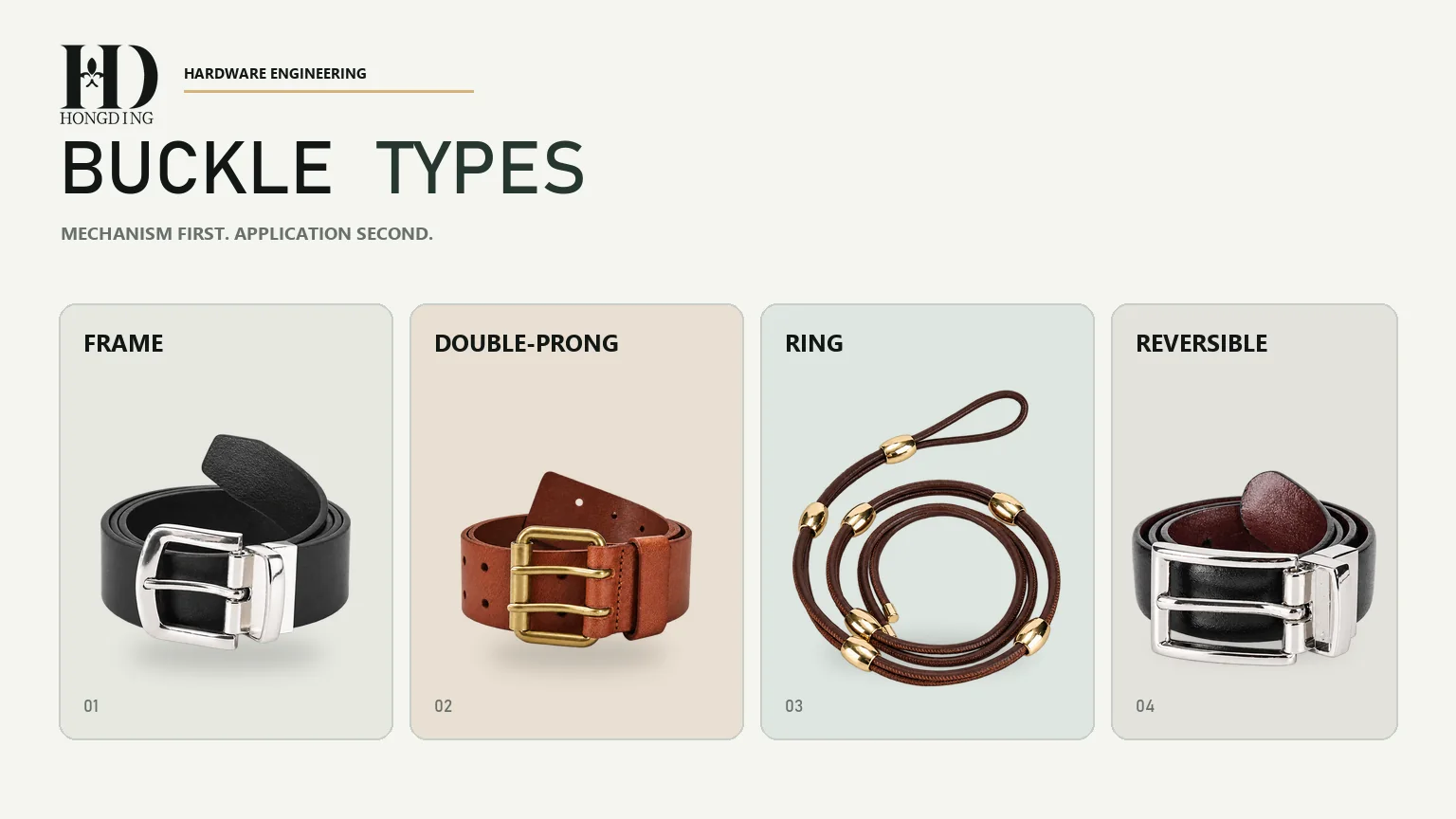
- Huit types de boucles fonctionnelles. Ardillon (simple ou double), rouleau, plaque, automatique/à cliquet, rotative réversible, anneau en D, décorative et clip — chacun est un système de fermeture avec ses propres exigences de sangle, et non un simple aspect de catalogue.
- La quincaillerie n'est jamais approuvée seule. L'aspect de la boucle, la surface, la rotation et l'action de verrouillage, la géométrie de l'ardillon et de la piste, l'épaisseur de la sangle, les trous, les passants, l'orientation du logo et le contact avec l'emballage interagissent tous — l'approbation appartient à la ceinture assemblée.
- La finition représente la moitié de l'approbation de la quincaillerie. Les finitions polies, brossées, antiques, revêtues et émaillées vieillissent différemment en magasin et en carton — les spécifications de placage et les limites de rayures doivent être consignées par écrit avant la production en série.
- Les boucles personnalisées reposent sur un fichier, pas sur un croquis. La séquence viable est : image d'inspiration, fichier technique 3D, pièce d'échantillon, commentaires, révision, échantillon final et moule — et la propriété du moule, le coût et le délai sont propres au projet, confirmés dans l'accord.
Ce que couvre ce guide
- Pourquoi aucune boucle n'est approuvée seule
- Les huit types de boucles en un coup d'œil
- Boucles à cadre classiques : ardillon, rouleau, plaque
- Boucles à mécanisme : à cliquet et réversible
- Simples et décoratives : anneau en D, clip, concho
- Finitions de surface et ce qu'il faut approuver
- Boucles personnalisées : de l'image au moule
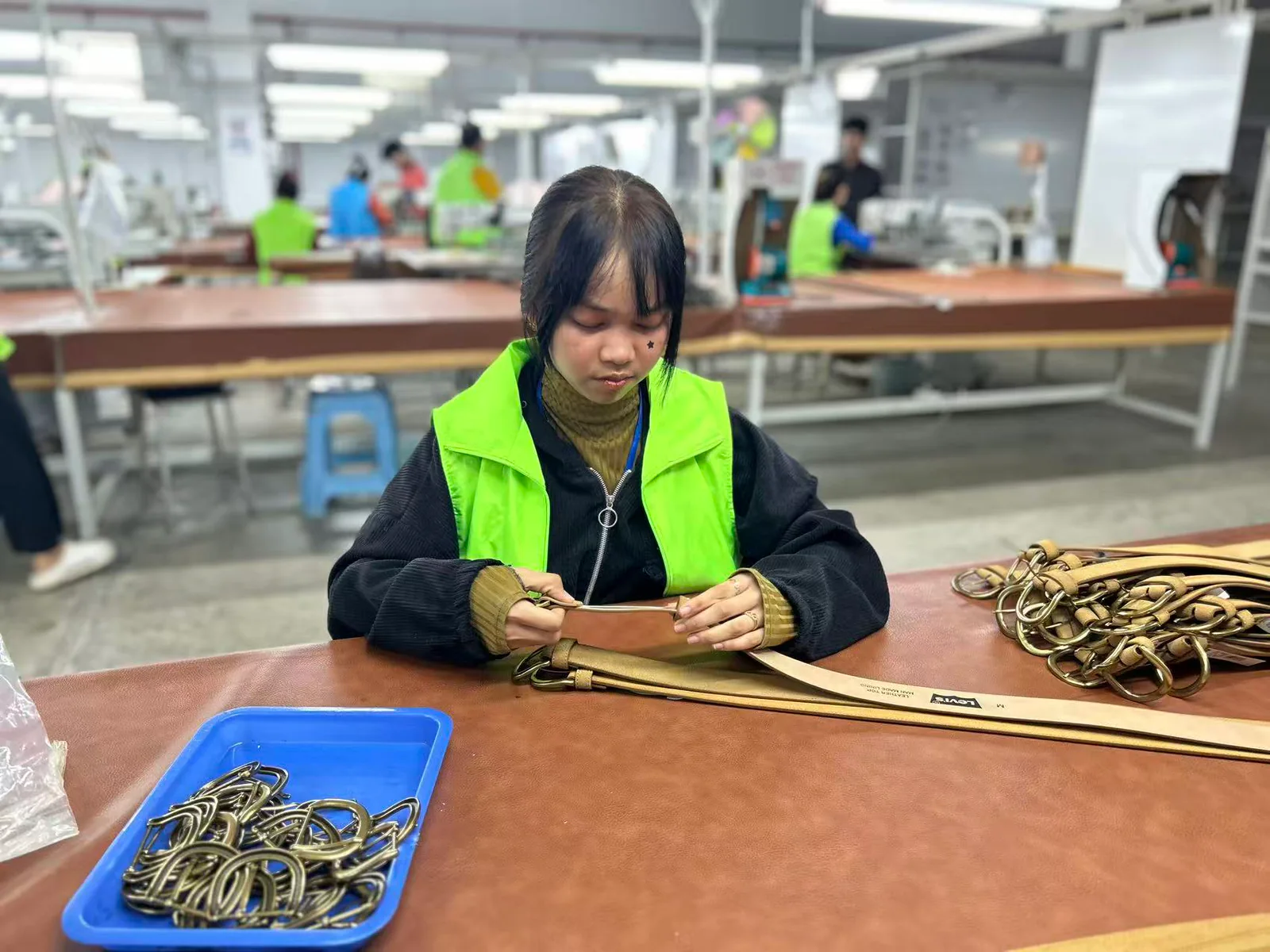
La boucle est la seule partie d’une ceinture comportant des pièces mobiles, et la partie de la spécification la plus souvent réduite à quatre mots : boucle argentée, comme sur l’image. Cette phrase entraîne plus de reprises que n’importe quel défaut du cuir, car une boucle constitue la moitié d’un système de fermeture — l’autre moitié est votre sangle : son épaisseur, ses trous ou sa crémaillère, son passant, même le sachet en plastique dans lequel elle est expédiée. La plupart des recherches sur les types de boucles de ceinture renvoient des conseils de port ; voici le point de vue construction et approvisionnement pour les acheteurs qui spécifient des ceintures par programme.
En bref : il existe huit types de boucles fonctionnelles — à ardillon, à rouleau, plaque, automatique/à crémaillère, rotative réversible, en D, décorative et à clip — et aucune d’entre elles ne peut être approuvée comme pièce isolée. L’aspect, la surface, la rotation ou l’action de verrouillage, l’ardillon, la griffe ou la tête de clip, l’épaisseur de la sangle, le motif de trous, le passant, l’orientation du logo et le contact avec l’emballage interagissent tous. L’approbation qui compte est celle donnée à la ceinture assemblée.
HongDing développe et fabrique des ceintures personnalisées pour les marques, les détaillants, les grossistes et les équipes d’approvisionnement, avec le développement de boucles en 3D/CAO dans le même programme — le point de vue construction avec lequel nous aimerions que chaque acheteur arrive : ce qu’est mécaniquement chaque type, quelles sangles il nécessite et ce qu’il faut vérifier avant validation.
Pourquoi aucune boucle n’est approuvée seule
Une boucle sur une planche d’échantillons ne vous dit presque rien. La boucle à ardillon qui fonctionne parfaitement sur une sangle fine de ceinture habillée peut se mettre de travers sur une sangle épaisse décontractée, flotter sur des trous surdimensionnés ou déchirer un passant cousu pour un cadre plus étroit. Chaque élément d’une ceinture est dimensionné par rapport à tous les autres, et la boucle est l’endroit où la plupart de ces tolérances se rencontrent. Les couplages à connaître par leur nom :
- Jeu du cadre et longueur de l’ardillon par rapport à l’épaisseur de la sangle. L’ardillon doit se loger sans buter au fond ni flotter ; le cadre doit permettre à une sangle rigide de se plier sans la pincer.
- Diamètre et espacement des trous par rapport au calibre de l’ardillon. Les trous sont poinçonnés en fonction de l’ardillon — changer de boucle revient à changer le réglage de poinçonnage.
- Largeur et rigidité du passant par rapport au cadre. Un couple mal assorti se manifeste par une extrémité qui flotte sur l’étagère.
- Crémaillère et griffe. Les dents font partie de la sangle, donc une boucle automatique ne peut pas être testée en fonctionnement sans la bonne sangle en main.
- Pivot réversible et anneau central. La boucle rotative ne fonctionne que sur une sangle construite autour d’un anneau qui porte le pivot et absorbe toute la traction de la ceinture.
- Orientation du logo. L'endroit où la marque apparaît dépend de l'enfilage et de la position de port — sur une boucle réversible, sur les deux faces.
- Contact entre le placage et l'emballage. Une finition miroir approuvée en salle d'échantillons peut arriver rayée si la disposition du polybag et du carton n'a jamais fait partie de l'approbation.
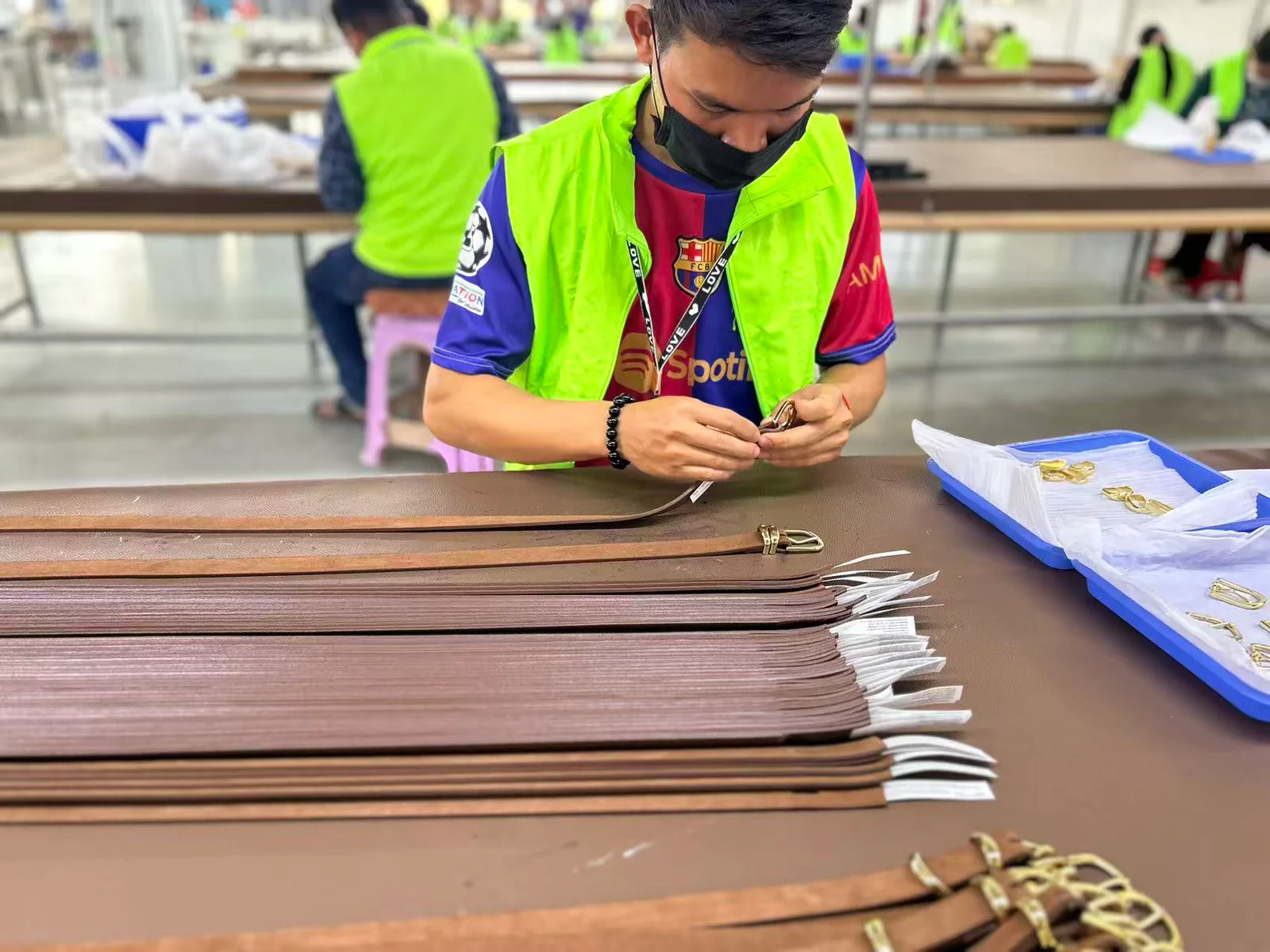
La règle autour de laquelle nous construisons nos programmes : la quincaillerie n'est jamais approuvée hors de la ceinture. L'échantillon de référence est la ceinture assemblée — boucle, sangle, trous ou rail, passant, coutures et spécification d'emballage réunis. Un fournisseur qui propose d'approuver d'abord la boucle scinde un système que la production réunira de toute façon, à vos frais.
Les huit types de boucles en un coup d'œil
Le tableau est la lecture rapide — comment chaque type se ferme, ce qu'il exige de la sangle, et où doit se porter votre attention pour l'approbation. Les tableaux condensent ; les compromis résident dans les sections qui suivent. Le tableau vous dit quel type ; les sections vous disent comment l'acheter.
| Type de boucle | Comment elle se ferme | Sangles compatibles | Points de validation |
|---|---|---|---|
| Ardillon (simple ou double) | Languette articulée — une ou deux — passant par des trous perforés dans un cadre | Cuirs habillés et décontractés ; sangles épaisses sur le double ardillon | Longueur de l'ardillon vs épaisseur de la sangle ; diamètre des trous ; alignement de l'ardillon ; bords du cadre après placage |
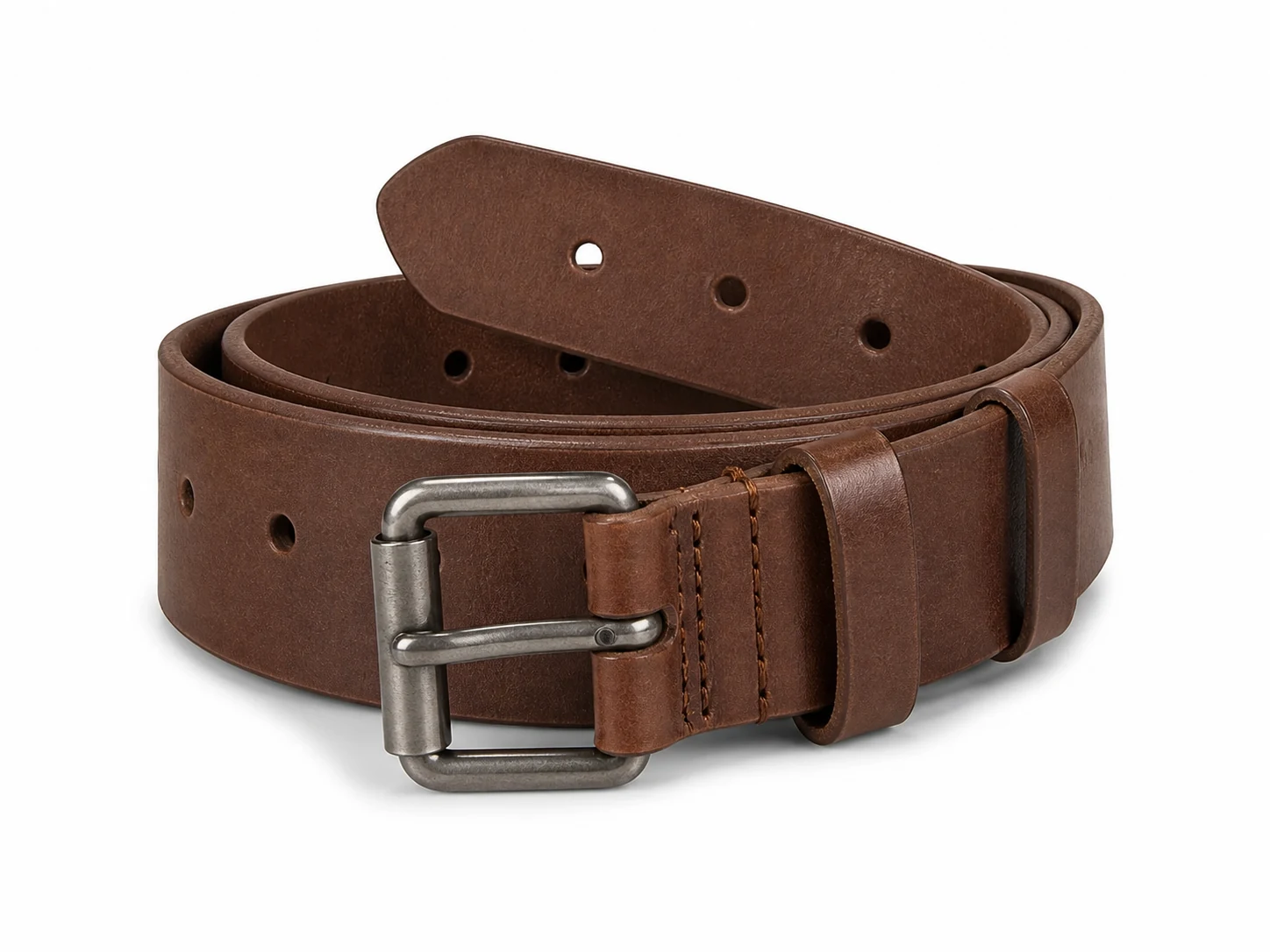
| Rouleau | La sangle passe sur une barre à rouleau rotative | Sangles de travail larges, épaisses et extra-robustes | Le rouleau tourne sans jeu, sans couture ni méplat ; finition sur une pièce mobile |
| Plaque | Plaque décorée avec un crochet ou une griffe caché derrière elle | Sangles de style western et mode, souvent larges, embossées | Résistance à l'arrachement de la fixation ; la platine affleure ; gravure et embossage par rapport à l'échantillon de référence |
| Automatique / à cliquet | La griffe s'engage dans une piste dentée de la sangle ; le levier libère | Sangles à couper à la dimension avec une piste moulée ou découpée | Régularité de la piste sur toute la longueur ; profondeur de la griffe ; action de libération après cycles |
| Rotatif réversible | La boucle pivote sur un passant central pour retourner la face de la sangle | Sangles à double finition construites autour du passant | Tension du pivot ; les quatre combinaisons de faces ; logo dans les deux sens ; construction du passant |
| Anneau en D | La sangle passe à travers les anneaux, bloquée par sa propre extrémité | Sangle tissée, toile, élastique, cuirs plus souples | Jauge de l'anneau vs épaisseur de la sangle ; cordon de soudure sous charge ; glissement sur le matériau réel |
| Décoratif (concho/western) | Conchos, glissières et passants décoratifs autour de la fermeture fonctionnelle | Programmes western et rodéo, brins repoussés | Résistance à l'arrachement des attaches ; sertissages de pierres ; placage sur surfaces surdimensionnées |
| Clip / pince | Tête à ressort ou à vis de pression qui agrippe l'extrémité du brin | Constructions en sangle tissée, élastique et décontractées | Préhension conservée après cycles ; la tête ne doit ni marquer ni écraser le brin |
Une ligne mérite une attention particulière : les dents du cliquet appartiennent au brin, donc la quincaillerie et le brin ne peuvent pas être approvisionnés ou approuvés selon des filières séparées. La carte complète des styles se trouve sur notre hub des styles de ceintures.
Boucles à cadre classiques : ardillon, rouleau, plaque
Boucles à ardillon : à une et à deux broches
La boucle à ardillon est un cadre avec une languette articulée. L'ardillon simple est la norme des ceintures habillées et décontractées, ainsi que de la plupart des tableaux de tailles et des configurations de perçage. Le double ardillon fait passer deux languettes dans deux trous d'un cadre plus lourd, répartissant la charge ; il appartient aux ceintures de travail, western et lourdes.
Valider au-delà de l'aspect : longueur de l'ardillon par rapport à l'épaisseur réelle du brin (un ardillon qui vient en butée ou qui flotte est un défaut de tableau de tailles), diamètre des trous poinçonnés au gabarit de l'ardillon, retour de la languette dans le cadre, et bords du cadre après placage — un bord intérieur tranchant est un défaut de confort qui n'apparaît que sur le client.
Boucles à rouleau
Une boucle à rouleau remplace la barre fixe d'un cadre à ardillon par un rouleau rotatif, de sorte que le brin passe dessus lorsque la ceinture se serre — moins de friction, moins d'abrasion, c'est pourquoi elle est le classique des ceintures de travail larges et lourdes. Les points de validation sont tous dans le mouvement : le rouleau doit tourner librement sans jeu latéral, ne présenter ni joint ni méplat qui marque le brin, et sa finition doit survivre au fait d'être une pièce mobile — une spécification de placage qui est validée sur une boucle statique peut s'user différemment là où le brin passe dessus.
Boucles à plaque
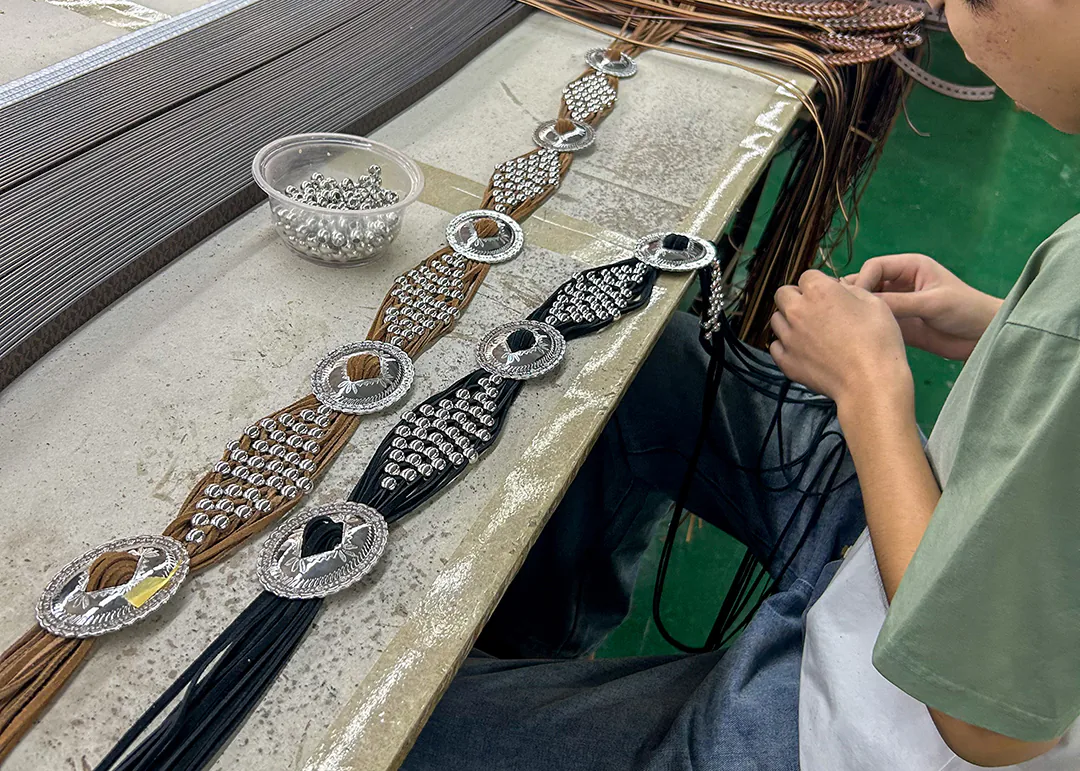
Une boucle à plaque place le design sur une plaque plate et décorée — gravée, gaufrée, portant un logo — avec le mécanisme de fermeture caché derrière. Dans les programmes western et mode, la plaque est le produit et la sangle est son support. La fixation derrière la plaque (ardillon caché, vis ou rivets) supporte toute la charge de la ceinture et nécessite un contrôle de résistance à la traction, pas seulement un contrôle visuel.
La plaque doit être suffisamment affleurante pour ne pas accrocher une ceinture de pantalon ou un sachet plastique. Et la décoration doit avoir des limites par rapport à l'échantillon de référence : profondeur de gravure, netteté du gaufrage, ton du relief — des détails qui dérivent entre l'échantillon et la production en série quand personne ne les a consignés.
Boucles à mécanisme : automatique/à cliquet et réversible
Boucles automatiques et à cliquet
Une boucle automatique supprime les trous : une griffe s'engage dans une piste dentée à l'intérieur de la sangle, et un levier la libère. Le réglage devient continu, et le client coupe la sangle à la longueur — un programme à cliquet est d'abord un programme d'ingénierie de sangle, et un programme de quincaillerie ensuite. Validez le mécanisme comme un système : régularité de la piste sur toute la sangle, pas seulement sur la section échantillonnée ; profondeur d'engagement de la griffe ; action et clic du levier après des cycles répétés ; et instruction de coupe si l'emballage de vente au détail prévoit que le client coupe.
Notre page des ceintures à cliquet couvre en détail le parcours de construction.
Boucles réversibles rotatives
Une ceinture réversible, ce sont deux ceintures qui partagent une même sangle : la boucle pivote sur un passant central pour basculer vers la seconde couleur ou finition. Le pivot est le mécanisme — il doit tenir suffisamment fermement pour être porté tout en basculant de façon délibérée, des milliers de fois. Validez les quatre combinaisons livrées : face de boucle A avec face de sangle A, A avec B, B avec A, B avec B. Vérifiez l'orientation du logo sur les deux faces ; une marque qui se lit correctement d'un côté peut arriver à l'envers de l'autre.
Et spécifiez le passant central — matériau, couture ou soudure — car c'est lui, et non la boucle, qui absorbe toute la traction. Le parcours est sur notre page des ceintures réversibles.
Spécifier la quincaillerie pour un programme de ceintures ?
Apportez votre référence de boucle ou une image d'inspiration, le matériau et l'épaisseur de sangle que vous prévoyez d'utiliser, ainsi que votre marché cible. HongDing répond avec les types de fermeture adaptés à votre construction, un plan d'échantillonnage pour la ceinture assemblée et les points de validation par écrit — ou une recommandation honnête si votre design correspond à un autre parcours.
Simple et décoratif : anneau en D, clip, concho
Boucles à anneau en D
L’anneau en D est la logique de fermeture la plus ancienne ici : enfilez la sangle dans un ou deux anneaux, et la queue de la sangle elle-même la bloque par friction. Pas de trous, pas de mécanisme — le partenaire naturel de la sangle tissée, de la toile, de l’élastique et des cuirs plus souples, et un mauvais partenaire pour les sangles rigides finies qui glissent au lieu d’adhérer. Cette dépendance au matériau est l’enjeu de l’homologation : le calibre de l’anneau par rapport à l’épaisseur de la sangle, le cordon de soudure sous charge, et un contrôle de glissement sur le matériau réel de la sangle. Les fermetures par friction échouent par dérive lente, et c’est la surface de la sangle, pas l’anneau, qui décide du moment.
Boucles à clip et à serrage
A clip head grips the strap end directly — a spring-loaded bite or a set-screw clamp — for one-handed, no-holes adjustment on webbing, elastic and casual programs. The approval questions are about time and pressure: does the grip still hold after a season of open-and-close cycles, does the head mark or crush the strap it bites, and does the spring’s corrosion resistance match the destination market? A clip that works on day one and lets go on day ninety is a warranty program, not a component.
Decorative Hardware: Concho and Western
On western and rodeo programs the working closure is often the least of the hardware: conchos, slides and decorated keepers sit along the strap as jewelry around the buckle, and each must survive a fitting room or a rodeo run. Approve attachment pull strength at every decoration position, the security of any stone or setting, plating on the oversized surfaces where wear shows fastest, and stamping definition against the golden sample.
A concho that lets go in a fitting room turns a premium tooled belt into a return, whatever the leather quality. Our western belts page covers the full route.
Surface Finishes: The Second Half of Hardware Approval
Finish is not decoration added after the engineering. The same buckle geometry ages differently in polished versus antique plate — in the store, on the waistband, inside the carton — and the finish decides which parts of the approval list matter most. The table is the menu; the notes under it are what make the menu safe to order from, so read the two together.
| Finish | Typical programs | What to approve |
|---|---|---|
| Polished / mirror | Habillé et formel | Micro-scratch visibility; scratch limits vs golden sample; protective packaging contact |
| Brushed / matte | Casual, workwear | Brushing consistency across the batch; grain direction |
| Antique / distressed | Western, vintage-inspired | The acceptable range — each piece differs by design intent, so approve a range, not one piece |
| Black / gunmetal coatings | Fashion and streetwear | Coating adhesion; edge wear where parts move against each other |
| Gold-tone / plated accents | Fashion, dress | Plating spec in writing; wear at prong tips, rollers and clip heads |
| Enamel / color infill | Logo plates, decorative | Adhesion at edges; chip limits; color match to artwork |
Three notes finish the picture. The plating spec belongs in the written specification — finish name, plus the substrate question behind it (brass, zinc alloy or steel changes weight, cost and wear), confirmed with the factory, not assumed from a photo. Finishes and markets interact: kids and youth lines fall under the target market’s children’s product requirements — CPSIA in the US — and EU chemical scope runs through REACH (EC) 1907/2006; a credible supplier names the framework and its scope, not a blanket claim.
And finish approval ends where packaging begins: a mirror or enameled surface needs its polybag or box specified in the same approval round.
Custom Buckles: From Image to Mold
When stock hardware cannot carry the brand, a custom buckle runs through a defined sequence, not a leap of faith. An inspiration image, reference piece or sketch becomes a 3D technical file that fixes the dimensions, wall thickness and attachment points; a physical sample part is produced for review; your comments return to the file; the design is revised; and once the final sample is approved, the mold tooling is cut for production. The file is the cheapest place to make changes — approve it before anything is sampled.
The commercial terms are project-specific and belong in the written agreement: mold ownership, tooling cost and lead time all depend on the design, the process and the program, and they should be confirmed before sampling starts, not after the mold exists. The design and development route shows where buckle development sits in the wider program, from tech pack to golden sample.
Questions fréquentes
Which buckle type is best for heavy-duty work belts?
Roller buckles and heavy double-prong pin buckles: the roller cuts friction and strap abrasion as the belt tightens, while the double prong spreads load across two holes in a heavy frame. What matters more than choosing between them is approving the pair on the actual strap — roller spin, prong seating and frame clearance all depend on strap thickness and stiffness, so the same buckle can perform or fail depending on the strap it ships with.
Can the same buckle be used across different strap materials?
Usually not without a re-approval. Hole behavior, prong seating, claw engagement, clip grip and D-ring friction all depend on the strap, not only the hardware, so a buckle approved on one strap needs re-checking when the material or thickness changes. A program running one buckle across several straps should treat each pairing as its own approval unit with its own golden sample.
How is a custom belt buckle developed?
The sequence runs from an inspiration image or reference to a 3D technical file that fixes dimensions, wall thickness and attachment points, then a physical sample part for review, comments, a revision, and finally the approved sample and the mold for production. Approving the 3D file before sampling keeps changes cheap, and the commercial terms — mold ownership, tooling cost and lead time — are project-specific and should be confirmed in the written agreement before sampling begins.
What should I check when approving a buckle sample?
Approve the buckle on the assembled belt, never alone. Check appearance and finish against the golden sample; work every moving part — rotation, locking, release lever, clip grip; verify engagement with the actual strap, meaning prong and holes, claw and track, or head and material; confirm keeper fit, logo orientation as worn, and the packaging contact that protects the finish in transit. A buckle that passes on the sample board and fails on the belt was never really approved.
Why We Write This
We develop and manufacture custom belts — hardware included — for brands, retailers, wholesalers and sourcing teams. We would rather a buyer arrive knowing which closure type fits their program and what to approve; it moves the first conversation from vocabulary to the program itself.
References and Sources
- HongDing belt styles and construction routes — hdbelt.com/belt-styles
- Buckle development and sampling workflow — hdbelt.com/design-development
- EU REACH Regulation (EC) No 1907/2006 on Registration, Evaluation, Authorisation and Restriction of Chemicals — EUR-Lex
- US Consumer Product Safety Improvement Act (CPSIA), 15 U.S.C. §2051 et seq. — CPSC
- Company facts stated on this page follow the HongDing company knowledge base, version 1.0, 2026-09-01
Have a buckle reference, a tech pack, or just a strap idea and a target market? Send us your hardware brief — we will answer with the closure types that fit your construction, a sampling plan for the assembled belt, and the approval points in writing, or tell you honestly if your design fits a different route.