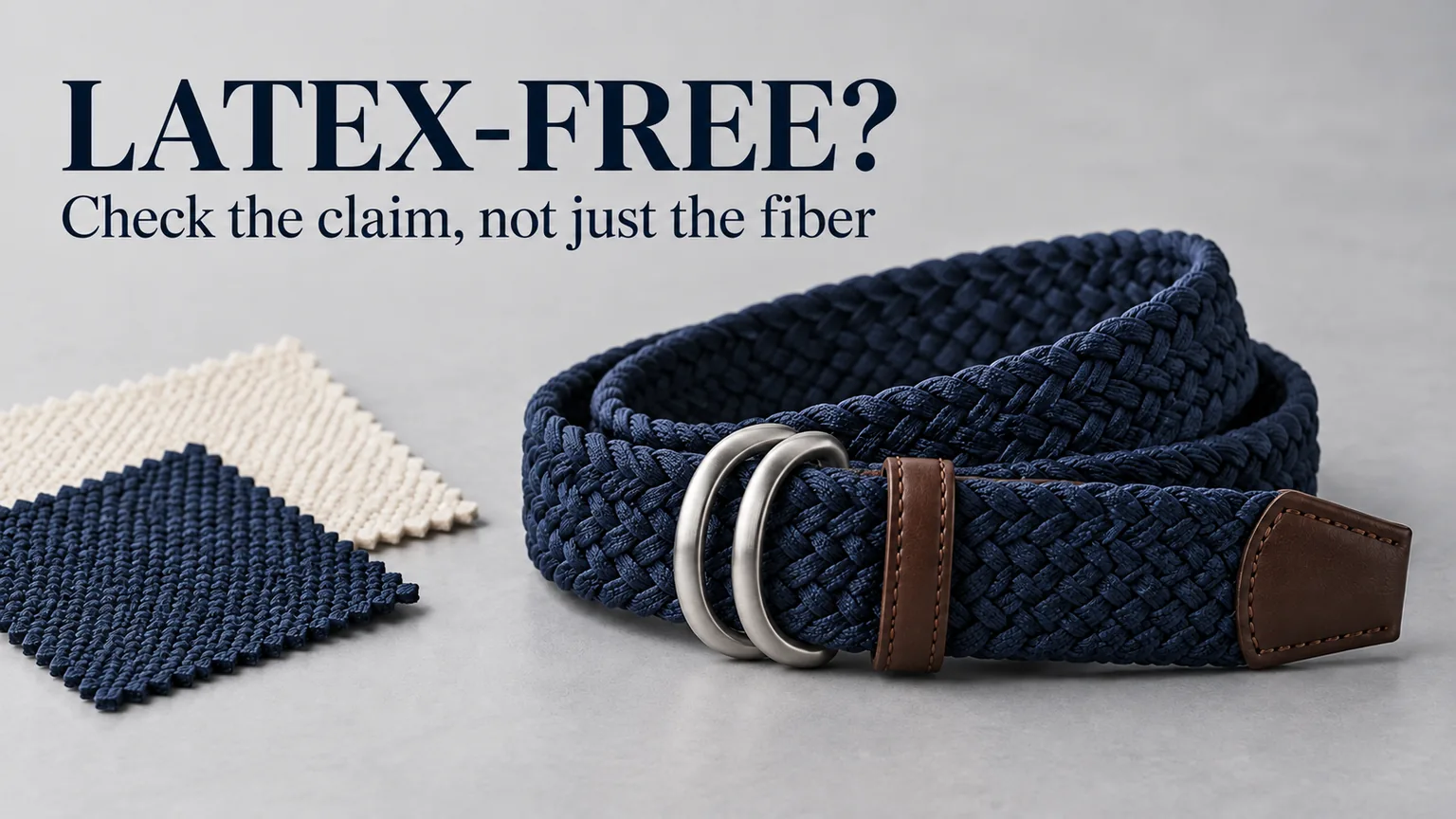
No—a fiber label or a supplier’s description of an “elastic belt” is not enough to support a finished-product latex-free claim. Identify the elastic material, check the other components covered by the proposed statement, and distinguish a manufacturing declaration from a test result. Neither automatically establishes that the belt is safe for every person with an allergy.
For a retailer or private-label team, the practical task is to match the wording to the evidence for a specific product version. This article concerns ordinary fashion belts. It is not medical advice or a legal determination for a particular sales market.
Start with the elastic core, then define the product scope
“Elastic” describes behavior, not one chemical composition. Spandex, also called elastane, is a synthetic elastic fiber; The LYCRA Company explains that terminology. Natural-rubber-based elastic is a different material route. A woven or braided appearance does not reveal which route is inside, and an outer yarn description may not identify the complete elastic construction.
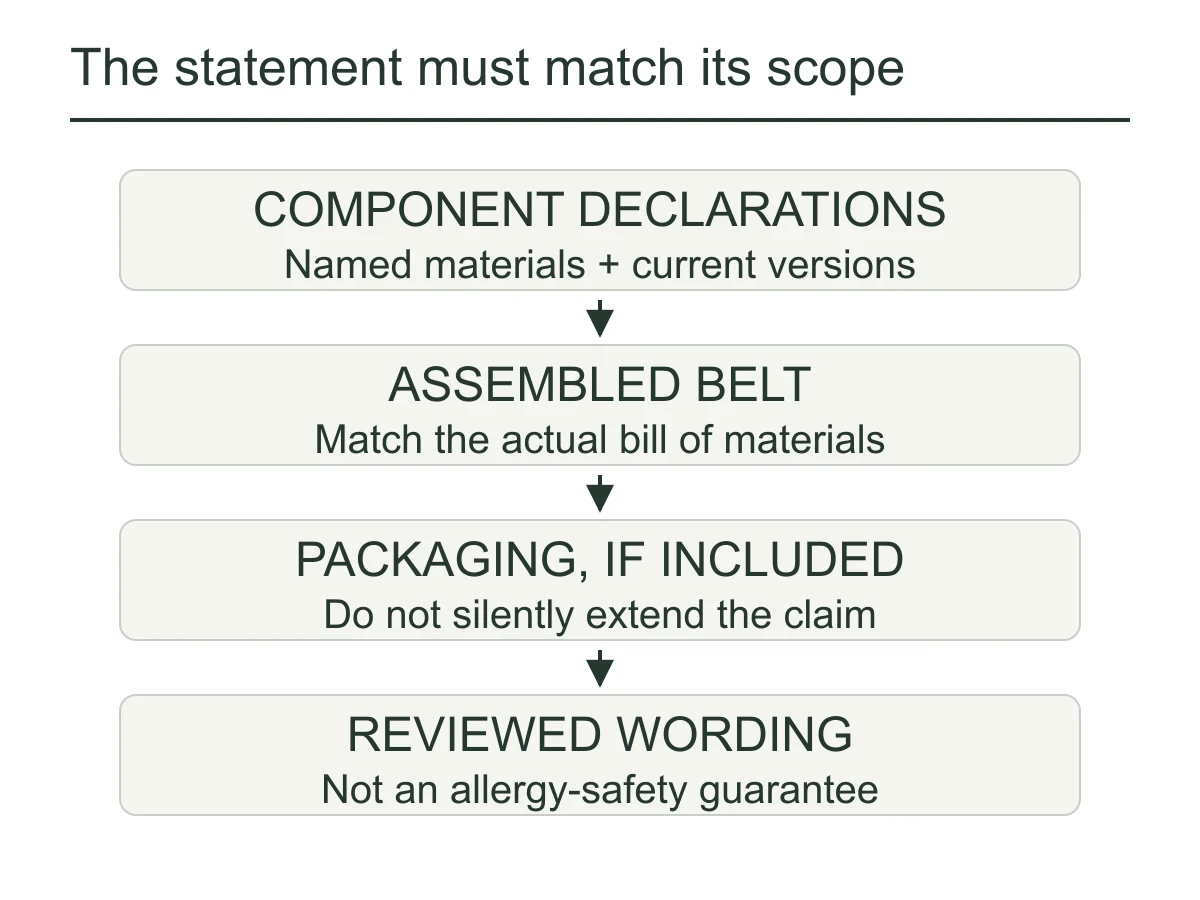
Even when the elastic section is documented, a claim about the whole belt needs a wider review. Depending on the design, examine adhesives, backing, elastic loops, coated components and other relevant materials. If packaging is included in the statement, include its relevant components too. Do not assume every belt contains these materials; map the actual bill of materials.
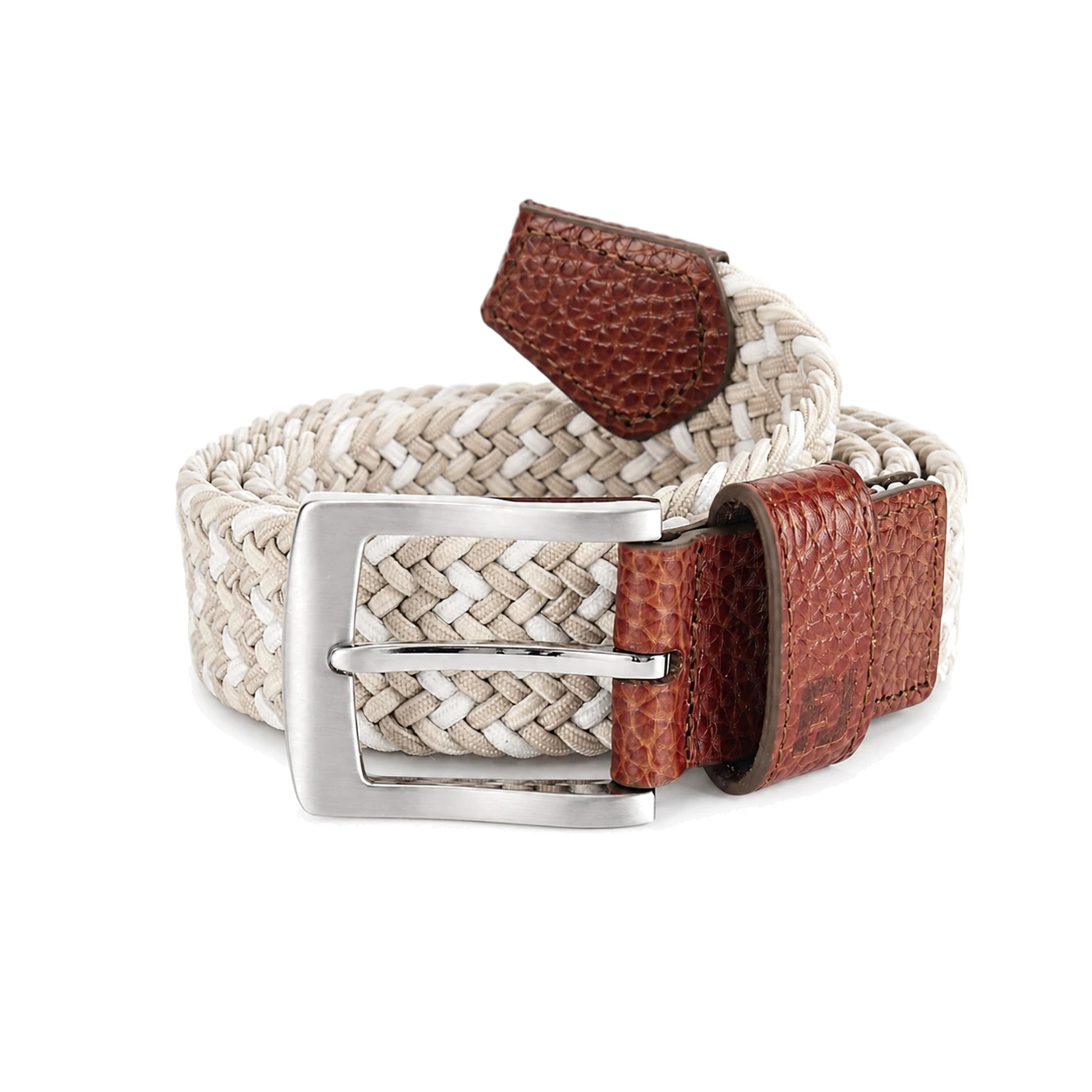
La FTC textile-labeling guide lists belts among products excluded from Textile Act labeling requirements unless a fiber-content representation is made. It also explains component exclusions for covered products. Review applicability to your actual product and claims; a fiber disclosure is not an exhaustive chemical inventory or product-wide allergen assessment.
Three documents answer different questions
| Preuves | Useful for | Important limit |
|---|---|---|
| Component declaration | Identifying what was intentionally used in the named material. | Does not cover unnamed components or establish zero contamination. |
| Finished-belt material review | Connecting declarations to the current assembly and claim scope. | Depends on complete, current supplier information. |
| Rapport de laboratoire | Reporting a defined measurement on identified samples. | Does not prove universal absence or individual allergy safety. |
Request declarations tied to a supplier, material code, revision and date. Ask whether natural rubber latex was used, what the answer covers, and how substitutions are communicated. A generic letter about “our products” is weaker than a statement linked to the elastic article actually purchased. Confidential formulation details need not be published, but the responsible reviewer needs enough information to assess the proposed claim.
If testing is warranted, let a qualified laboratory confirm the method’s suitability for the material and the question. For example, ASTM D6499-24 addresses antigenic proteins in Hevea natural rubber and its products. Its scope explicitly distinguishes that measurement from allergenic protein measurement. Do not turn a method number or a “not detected” result into a belt certification. Check the sample identity, extraction approach, reporting limit and stated limitations.
Use wording that does not promise more than you know
The FDA’s guidance on natural-rubber-latex labeling cautions against absolute latex-free language for medical products and recommends a manufacturing-based statement where supported. That guidance is not an apparel-labeling rule. It is a useful warning about the difference between a material-use statement and assurance that allergens are absent.
For a belt project, have the responsible compliance reviewer assess a narrowly scoped statement such as “The specified elastic component is not made with natural rubber latex,” if current evidence supports it. This is an example for review, not pre-approved consumer copy. If only one component has been assessed, do not place that statement where it implies the whole belt and packaging have been assessed.
Avoid adding “allergy-safe,” “hypoallergenic” or a medical suitability promise on the strength of a material declaration. Removing one material route does not establish the absence of every possible sensitizer. Where evidence is incomplete, omit the claim while completing the review; a small-print disclaimer does not repair an unsupported headline.
Keep the claim tied to the production version
Suppose an illustrative development sample uses a documented spandex-based elastic, but production changes the backing adhesive. The elastic declaration may remain valid while the finished-product review needs updating. Treat the substituted component as a new review input rather than reusing the old approval by product name.
Record the approved material codes and supplier versions with the claim decision. At reorder, check for substitutions affecting that scope. If the elastic itself changes, reassess fit and recovery separately: composition evidence does not demonstrate the mechanical behavior covered in our stretch-belt development guide.
A common purchasing question
Can we approve the claim from an SDS alone?
Not automatically. An SDS is a hazard-communication document, not necessarily a full composition declaration for every belt component; OSHA’s SDS requirements explain its disclosure scope. Ask for evidence addressing the specific material-use question and connect it to the current product configuration.
Review the material brief before approving the wording
HongDing can coordinate material information for a belt-development discussion. Share the proposed claim, sales market, product reference and available supplier documents. We can identify the component questions to resolve with the relevant suppliers and your compliance reviewer; this is not a promise of latex-free stock or allergy suitability.