
Rejected Belt Imports: US Drawback Documentation
Prepare a rejected-belt import file for US drawback review: connect entry records, defects, inventory and export or destruction steps before moving the goods.
Belt Manufacturing Knowledge for Buyers
Use practical guidance on supplier selection, product and material decisions, OEM development, manufacturing control, compliance, packaging and reorders.
Prepare a rejected-belt import file for US drawback review: connect entry records, defects, inventory and export or destruction steps before moving the goods.
Plan belt production lead time from confirmed inputs through materials, making, inspection and delivery, with realistic buffers and delay decisions.
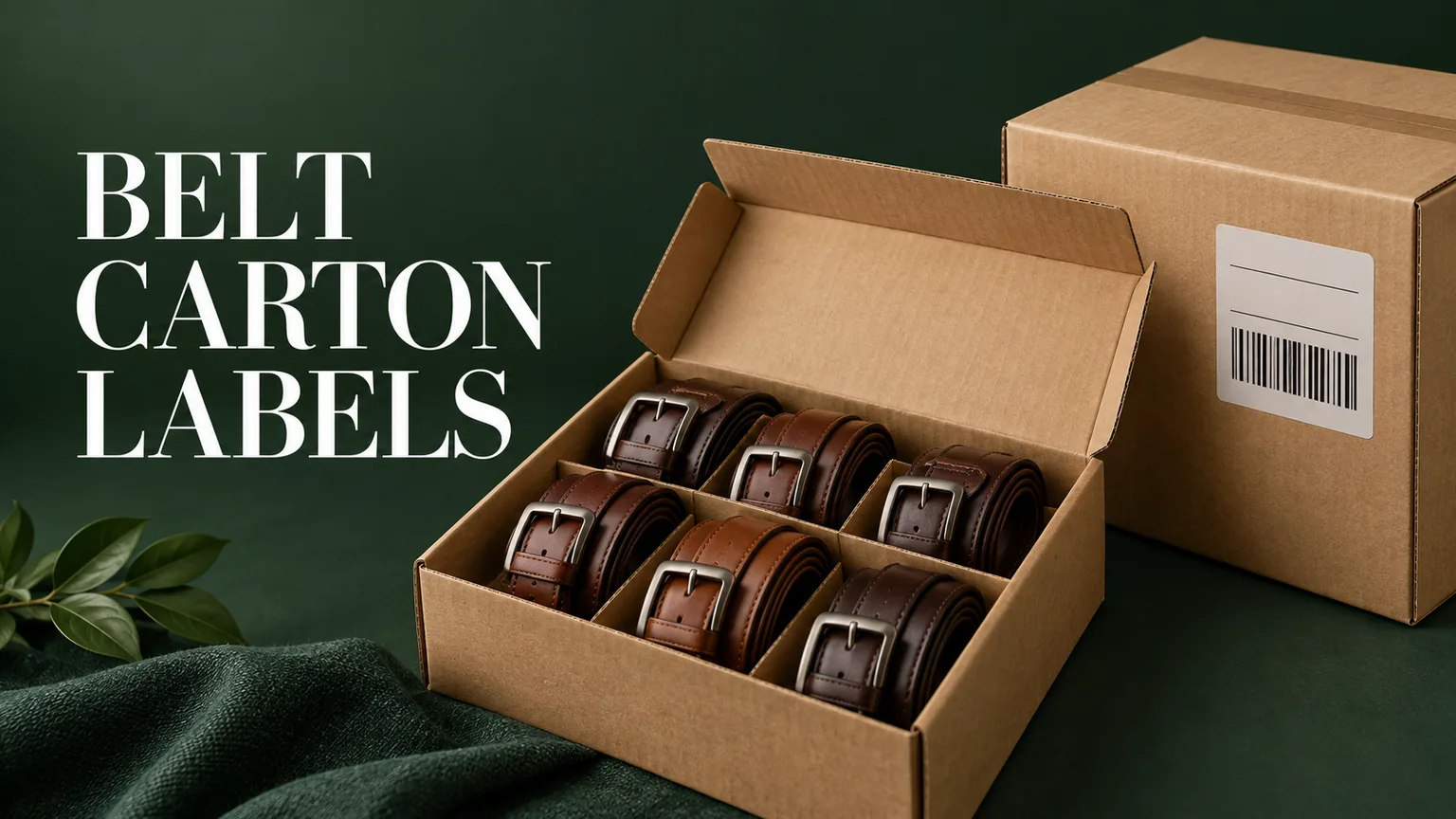
Map belt retail, case and logistics labels; separate GTIN from SSCC and check scanned carton data against the real pack before shipment.

Air vs ocean freight for leather goods: compare required dates, chargeable weight, route risk, packaging and split-shipment decisions.
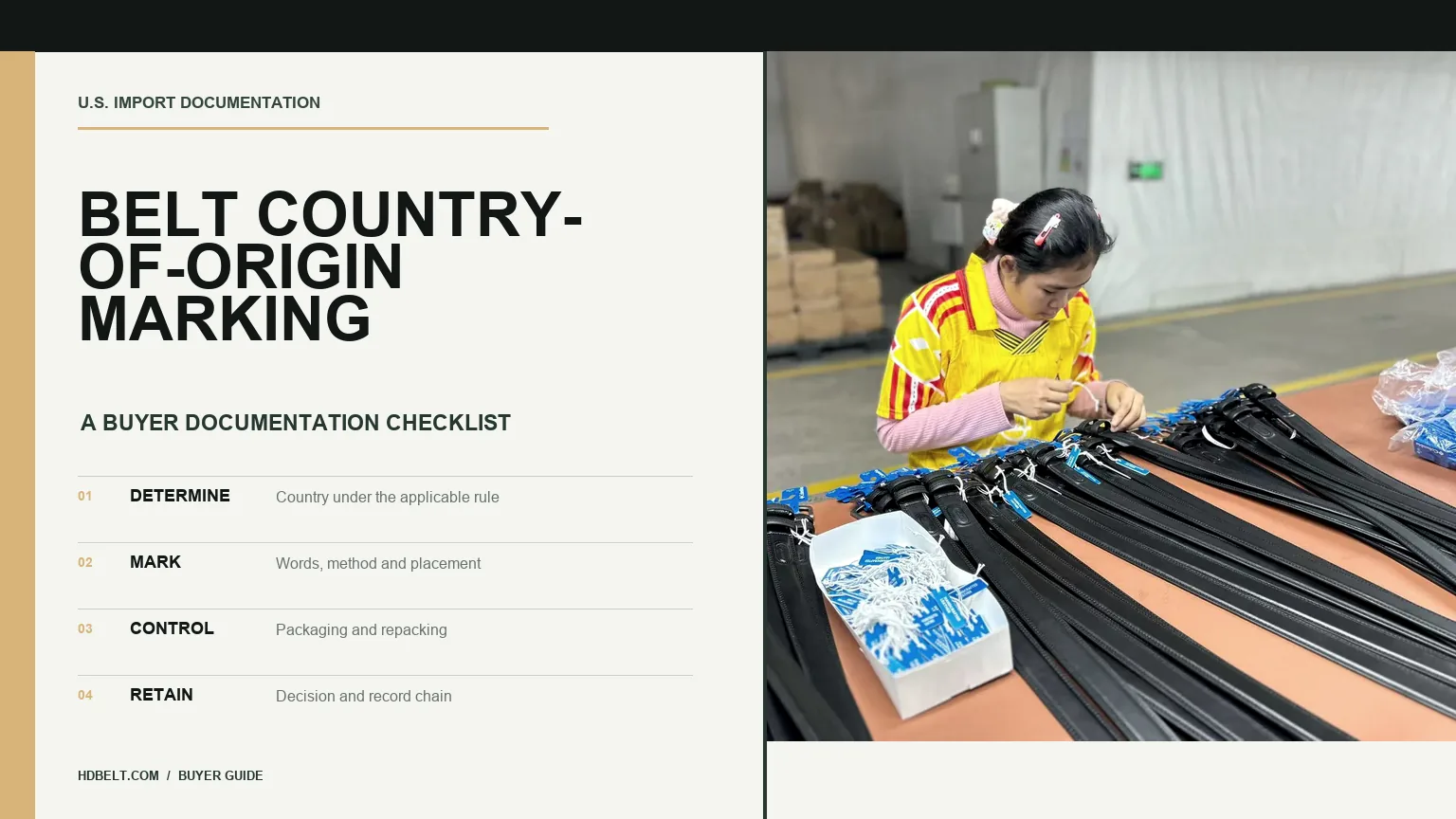
Country of origin marking for belts: decide origin, approve the physical mark, test retail packaging and preserve a reviewable U.S. importer record set.
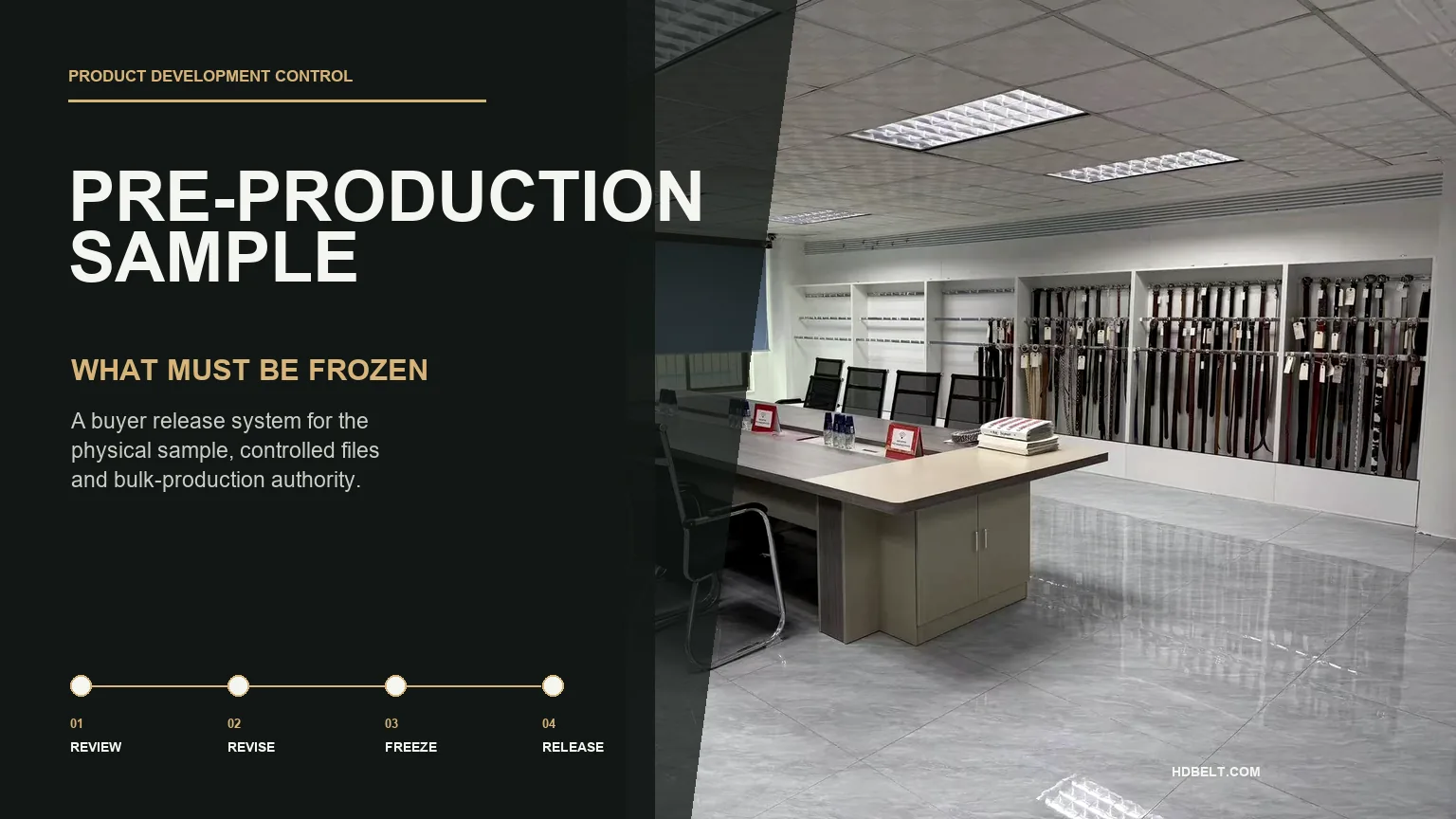
Pre-production sample approval for belts: freeze material, fit, hardware, construction, branding, packaging and release records before bulk starts.

Classify leather belts with a documented HS-code workflow. See which construction details matter and how US importers verify the final HTS code.
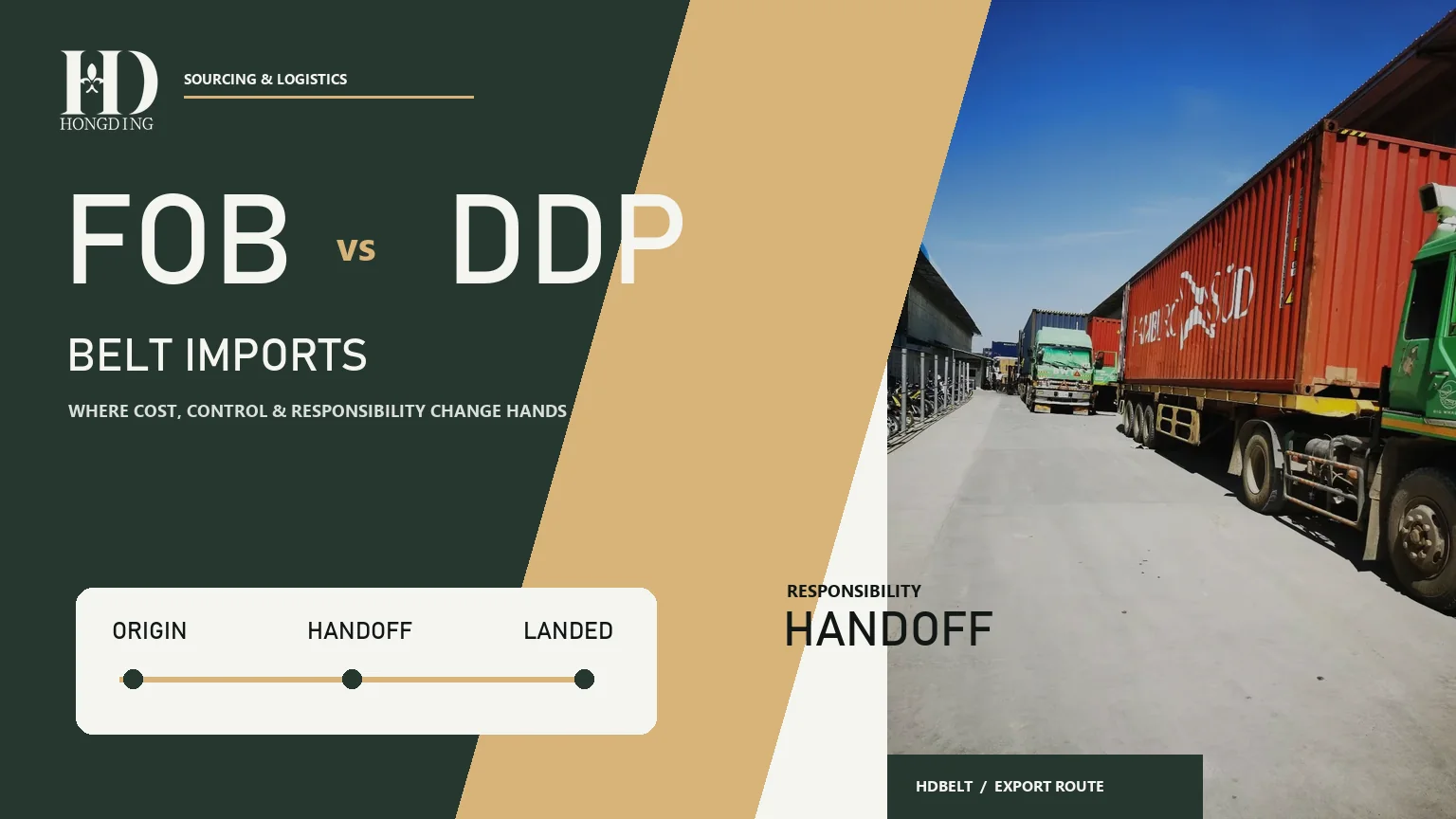
FOB vs DDP for belt imports: risk and cost boundaries, a worked quote comparison, and the failure modes that make a DDP number move.
Send what you have. A useful first review connects your design intent, commercial plan and evidence requirements before pricing or timing is treated as final.