By Kevin · Published 2026-09-09 · Updated 2026-09-09
Do not approve a “Made in” label for a belt before the manufacturing route is fixed. For U.S. imports, the mark is the output of a country-of-origin decision, not a supplier-address field. The buyer file should connect that decision to the exact wording, marking method, placement, retail presentation, inspection result and later changes.
The baseline rule in 19 U.S.C. 1304 is that a foreign-origin article, or an allowed container, must indicate the English country name to the ultimate purchaser unless an exception applies. The article and transaction facts control the answer. This guide is a production-planning aid, not legal advice; confirm the actual belt with a customs broker, counsel or U.S. Customs and Border Protection.
In short: decide origin, specify the mark, test the final presentation, preserve the evidence and reopen the decision whenever a relevant fact changes.
Decide Origin Before Approving the Mark
Start with a process map, not a country printed on an invoice. List where the face material is made, where any backing or core is added, where the strap is cut and constructed, where hardware is installed, and where the finished belt takes its commercial form. The relevant origin rule then has to be applied to those facts.
Under 19 CFR 134.1(b), country of origin generally means the country of manufacture, production or growth. Further work in another country must produce the origin change required by the applicable rule. Special rules can apply to covered goods, so “final assembly” is not a safe universal shortcut.
Route the analysis by the finished belt, not by the supplier’s generic product name. If the imported belt is a textile or apparel product covered by 19 CFR 102.21, apply that section’s rules in their stated sequence. A leather belt that is not covered by that textile rule needs the origin analysis applicable to its own article and facts. Do not transfer a textile-belt result to a leather belt—or the reverse—because both products are sold as “belts.”
A belt record should identify the face article, reinforcement or core, backing or lining, adhesive or stitching route, edge system, hardware and country sequence. A sample or photograph may show appearance. It does not, by itself, prove material identity, processing history or legal origin.

Keep Marking Separate From HS Classification
Classification answers what the imported article is under the tariff schedule. Origin answers which country the applicable law attributes to it. Marking answers how that origin is communicated to the ultimate purchaser. A correct decision in one column does not complete the other two.
| Decision | Working question | Evidence to review | Output |
|---|---|---|---|
| Classification | What is the imported article? | Finished condition, material and construction facts | Classification position and supporting rationale |
| Origin | Which country is attributed under the applicable rule? | Country-by-country materials and processing sequence | Origin conclusion or ruling request |
| Marking | How will the ultimate purchaser receive the origin information? | Wording, method, placement, packaging and sales path | Approved mark and inspection standard |
Use HongDing’s leather belt HS code guide for the separate classification workflow. This page does not provide tariff codes, duty rates or landed-cost calculations. Keeping that boundary visible prevents a classification note from being mistaken for an origin opinion.
Apply the Four Marking Tests
The statutory standard should be translated into physical approval questions. The mark normally needs the English name of the country, a conspicuous location, legible execution and sufficient permanence for the nature of the article. The reviewer also needs to identify the ultimate purchaser in the actual distribution path.
| Test | Belt-specific review | Evidence to retain |
|---|---|---|
| Country wording | Does the exact artwork state the English country name without an ambiguous abbreviation? | Controlled artwork and approved text |
| Conspicuous and legible | Can the intended purchaser find and read the mark without strain in the sold presentation? | Scale drawing, physical sample and retail-view photo |
| Indelible and permanent | Does the method remain attached and readable through normal handling as the belt permits? | Method specification and handling check |
| Ultimate purchaser | Who receives the belt in its imported or repacked condition? | Sales-channel and packaging description |
Do not turn these tests into one universal factory standard. A paper tag, heat transfer, stamp, woven label or direct impression interacts differently with leather, PU, webbing and elastic constructions. The approved method has to work on the specified belt and through its actual packaging path.
Read Two Belt Rulings Correctly
Two CBP rulings illustrate why buyers need the full fact pattern. In H85907, dated December 7, 2001, CBP accepted a “Made in China” paper tag affixed to the back of the submitted leather belts near the buckle. That ruling supports the stated mark on the submitted merchandise; it does not approve paper tags for every belt.
In N350592, dated July 16, 2025, CBP considered unfinished polyester and PU belts with operations across China, Cambodia and the United States. For that stated sequence, CBP attributed origin to Cambodia under 19 CFR 102.21(c)(5), based on where the last important assembly or manufacturing process occurred.
| Ruling | Question answered | Safe buyer lesson | What not to copy |
|---|---|---|---|
| H85907 | Acceptability of stated placement and paper-tag method on submitted leather belts | Show CBP the actual article and marking presentation | A blanket rule that any attached tag is acceptable |
| N350592 | Origin of specified unfinished textile belts under a stated country sequence | Document each meaningful process by country | A universal “last assembly country” formula |
Check Placement Wording and Other Places
Review the entire belt and container artwork for geographic language, not only the origin line. Under 19 CFR 134.46, the appearance of the name of a U.S. place—or another country or locality other than the actual country of origin—can trigger close-proximity, comparable-size and “Made in,” “Product of” or similar wording conditions. A flag, heritage graphic or distributor address should still receive a separate deception and presentation review, but it does not automatically fall within section 134.46 merely because it appears on the package.
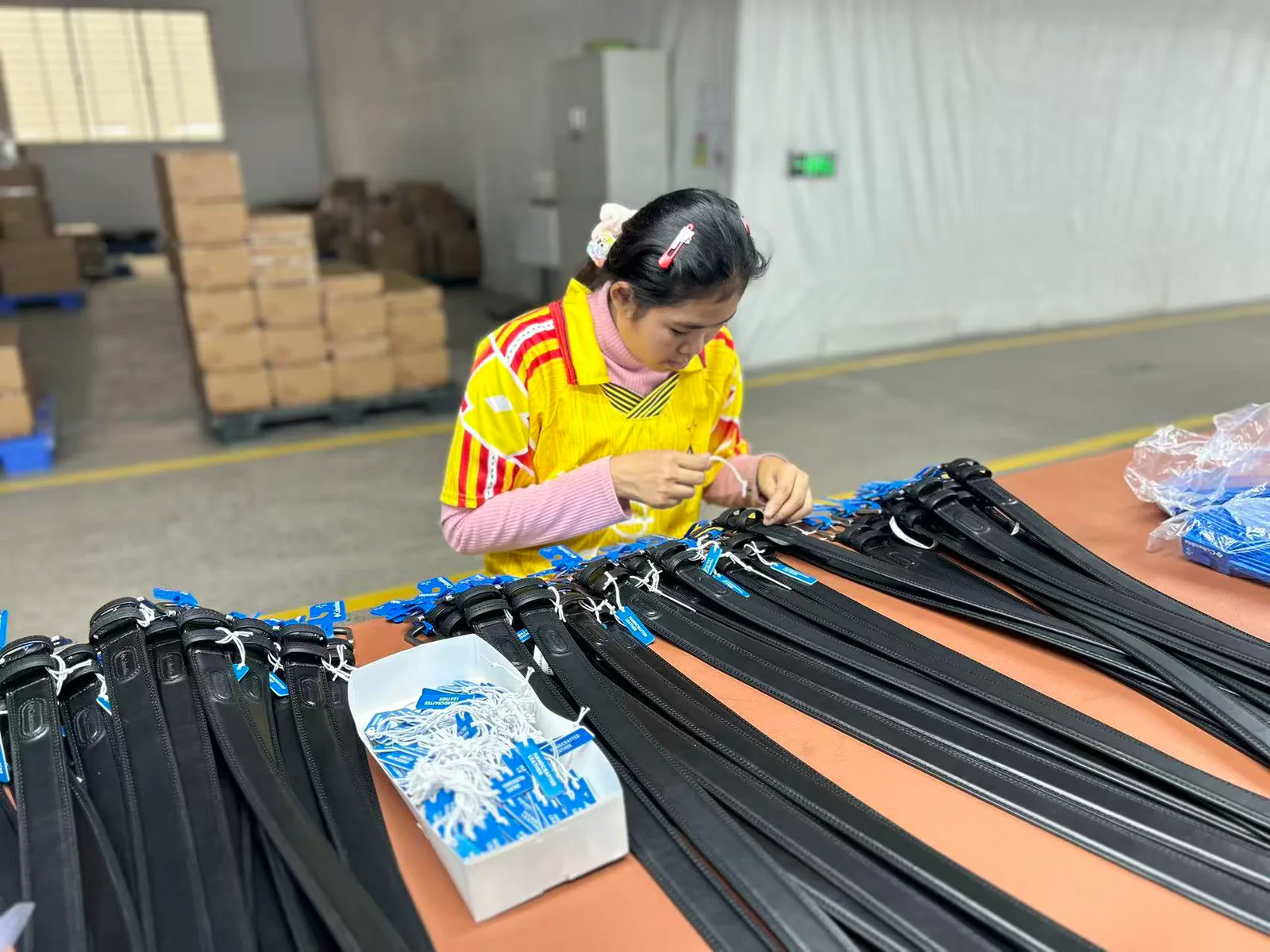
Approve placement with a datum that production can repeat: for example, a stated distance from the buckle attachment, a defined back-side area or a named packaging panel. “Put near buckle” may be useful in a ruling description but is too loose for a multi-SKU production file. Record orientation, size, contrast, attachment route and the approved visual result.
Also separate foreign-origin marking from U.S.-origin advertising. The FTC’s Made in USA guidance covers U.S.-origin marketing claims, while CBP administers foreign-origin marking for imports. This article does not attempt to replace a complete FTC claim review.
Test the Retail Packaging Path
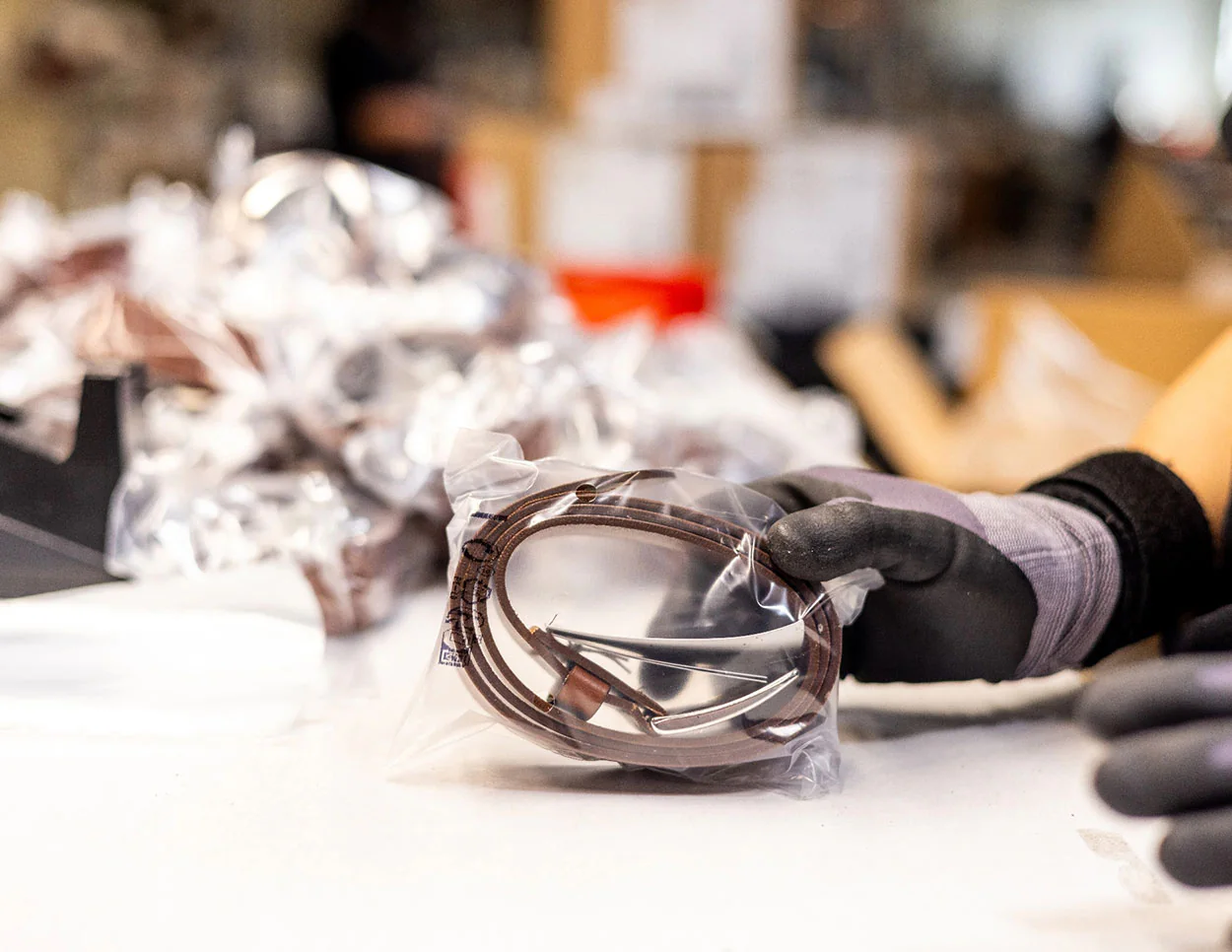
A compliant mark has to survive the way the belt is actually sold. Photograph the marked belt before packing, then again inside the final belly band, hanger, sleeve, gift box or shipping presentation. Ask whether the ultimate purchaser can find the country name without removing a permanent obstruction or encountering conflicting geography.
Container marking follows a rule path; it is not an automatic substitute for marking the belt. First identify a specific article-marking exception, such as the circumstance described in 19 CFR 134.32(d), where marking the container will reasonably indicate the article’s origin. Then apply 19 CFR 134.22 to the outermost container or holder that ordinarily reaches the ultimate purchaser. Document the exact exception, the marked container and the distribution facts that keep that container with the belt.
Repacking adds another control point. 19 CFR 134.26 addresses importer certification and notice duties designed to preserve or replace origin marking after release. If a warehouse, fulfillment partner or retailer repacks belts, give that party a controlled instruction and retain evidence that the mark remains correct and visible.
Build the Buyer Evidence Matrix
The useful file is not a loose collection of certificates. It connects the origin conclusion to production and retail evidence. HongDing’s private-label belt development route can carry these decisions through artwork, samples, labels and packaging, but the importer remains responsible for obtaining the appropriate compliance review.
| Controlled record | What it proves | What it does not prove alone | Owner |
|---|---|---|---|
| Manufacturing-route statement | Materials and meaningful processes by country | The final legal origin conclusion | Supplier and importer reviewer |
| Origin rationale or ruling | Why the stated rule was applied to the facts | That later process changes are covered | Importer, broker, counsel or CBP |
| Approved mark artwork | Exact wording, size and visual treatment | Correct placement on production goods | Buyer artwork controller |
| Sample and placement photo | Method, location, orientation and readability | That every unit matches | Supplier and buyer approver |
| Packaging-view record | Visibility and consistency in the sales presentation | Whether an exception legally applies | Packaging owner and importer |
| Inspection and change log | Lot verification and controlled deviations | Future compliance after an unreviewed change | Quality and project teams |
19 CFR 163.4(a) generally requires a record covered by section 163.2 or another Customs provision to be kept for five years from entry, when it relates to an entry, or five years from the activity that required its creation. Section 163.4(b) lists exceptions, and a more specific rule can control. Confirm the exact record and transaction instead of applying a five-year label to every internal document.
Release Marking Through Production Controls
Treat the mark as a controlled component, not finishing copy. Freeze the approved wording, method, size, color, placement datum and packaging view in the current project file. Connect each item to a revision and approved physical reference so the production team does not interpret an email screenshot.
- Brief: record destination market, importer, sales channel and proposed ultimate purchaser.
- Origin input: identify materials and meaningful manufacturing operations by country.
- Artwork release: approve exact country wording, other geography and translation-free English country name.
- Sample release: approve method, placement, legibility, attachment and retail visibility on the actual construction.
- Production checks: verify incoming labels, first-off placement, in-line consistency and final packed presentation.
- Change control: reopen review after a material, process, country, facility, label, package or sales-channel change.
The belt quality-control route should identify the sample and revision used at each gate. An approved sample is a comparison reference; it does not authorize a supplier to substitute a new material, location or method without review.

Know When to Request a Ruling
Escalate before bulk release when multiple countries perform potentially origin-conferring operations, when the applicable product rule is unclear, or when a proposed mark method or location is unusual. Escalation is also appropriate when the product carries prominent U.S. or other-country references that could confuse the retail message.
CBP’s Rulings Program guide says a marking request should describe how the article and container will be marked, include illustrations of labels and packaging, and explain how the goods will be used or sold after importation. For belts, add material identity, construction drawings, process steps by country, samples or clear images, proposed wording and the exact retail presentation.
A ruling request is not a place to hide unresolved sourcing choices. Freeze the facts that matter, state what remains uncertain and explain alternative routes separately. If production later moves or an important process changes, do not assume the earlier answer automatically follows the new route.

Frequently Asked Questions
Can a country-of-origin mark be placed on a paper tag attached to a belt?
Sometimes. CBP accepted that method for the submitted belts in H85907, but acceptance depends on the actual belt, tag, placement, visibility and permanence. Do not treat the ruling as universal approval.
Does marking the retail box replace marking the belt?
Not automatically. Packaging-only marking needs an applicable article-marking exception and a qualifying container path to the ultimate purchaser. Review the imported and repacked presentation before release.
Is a certificate of origin the same as a Made in label?
No. A certificate supports a transaction or origin claim. The physical mark communicates the English country name to the ultimate purchaser under the applicable marking rule.
Does the leather source determine the belt’s country of origin?
Not by itself. The applicable rule and the full manufacturing sequence control. Record the leather, other components and meaningful processing in each country before reaching a conclusion.
When should a buyer request a CBP ruling?
Consider a ruling when multi-country processing, product coverage, marking method, placement or geographic claims remain uncertain. Submit the actual construction, process sequence, proposed mark and retail packaging facts.
Why We Wrote This
Belt origin marking fails when legal review, artwork, production and packaging are treated as separate handoffs. A buyer may obtain a reasonable origin conclusion and still release the wrong wording, hide the mark under a belly band or lose the evidence after repacking.
HongDing works across leather, PU, woven, canvas, webbing and other project-specific belt routes. That operating reality makes the controlled record more useful than a generic label instruction. Give the importer-side reviewer the actual route, then translate the decision into files that sampling, production, inspection and packaging teams can repeat.
Before release, ask one final question: can another reviewer reconstruct why this country was selected, see exactly how it is marked, confirm how the purchaser receives it and identify what change would reopen the decision? If not, the marking file is not ready for bulk production.