By Kevin · Published 2026-09-08 · Updated 2026-09-22
Prepared for brands, retailers, wholesalers and sourcing teams approving custom belt programs.
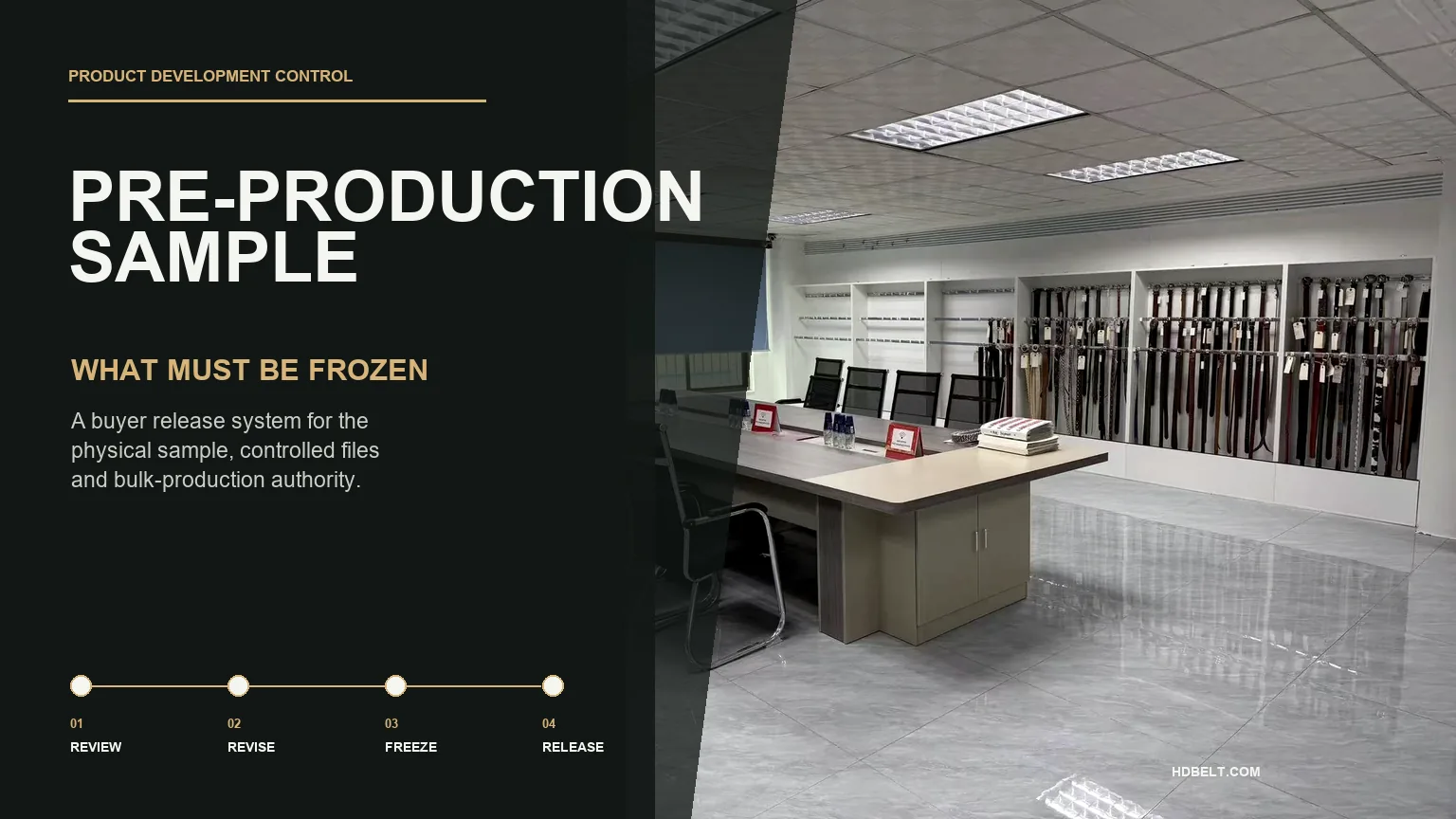
A pre-production sample should release a belt only when the buyer approves one identified version and its linked records. The physical belt confirms selected appearance, dimensions, construction and function. The specification, bill of materials, artwork, packaging files, test scope and inspection plan define everything the sample cannot prove alone.
- Approve a sample ID and revision, never an unnumbered photograph or a general impression.
- Freeze material and every belt layer in the bill of materials; surface appearance does not identify hidden construction.
- Record the finished-length datum, adjustment geometry and buckle allowance before approving fit.
- Check the buckle on the approved strap because a component and its interface create different risks.
- Keep branding, labels, barcodes and pack-out inside the approval record when they affect retail release.
- Move open points into a written disposition with an owner, evidence requirement and release authority.
In short: approval is a controlled handoff, not a compliment. A buyer should be able to give the sample package to production and quality teams without explaining missing decisions from memory.
What a Belt PP Sample Must Decide
The buyer is not deciding whether the belt looks good. The buyer is deciding whether a named product baseline is complete enough to reproduce. That distinction stops a sample-room success from becoming an ambiguous bulk instruction.
A physical sample can show the result of one build. It can reveal proportion, visible color, edge execution, stitching, buckle operation and packed presentation when those features are present. It cannot automatically prove material origin, composition, current bulk availability, production-lot consistency or performance under an unperformed test.
The HongDing custom belt route treats the sample and written file set as paired evidence. HongDing’s belt sampling route covers how a project moves through development and sample review; this checklist begins once a production-intent unit exists and the buyer must decide what can be frozen for bulk. The sample shows what one identified unit became. The record explains which inputs, limits and approvals govern the order.
Separate Sample Types Before Approval
Teams use “sample” for several decisions. A development sample can test proportion while its material remains provisional. A PP sample should represent the intended production route. A top-of-production unit comes from the running line and checks whether production followed the released baseline.
The term “golden sample” creates its own trap. Some teams apply it to the best sample on hand. A stronger record reserves the term for the exact physical version accepted as the governing reference. Define the term inside the order rather than assuming every buyer uses it the same way.
| Reference | Decision | May Remain Open | Next Gate |
|---|---|---|---|
| Development sample | Design and construction direction | Production material or pack | Revision or PP build |
| PP sample | Production-intent product | Only named exceptions | Buyer release decision |
| Golden reference | Accepted physical baseline | Nothing hidden by assumption | Production controls |
| Top-of-production unit | Line output correlation | Separate shipment release | In-line and final checks |
J.Crew’s April 2023 vendor guide illustrates a formal buyer rule. It requires two PP samples, keeps one with the vendor and sends one to J.Crew QA. Treat that as J.Crew’s system, not a universal sample count.

Freeze Product Identity Before Detail Review
Start with the label on the sample, not the buckle. Record the program, style or SKU, sample ID, revision, colorway, size, date, production site and intended order. If the object cannot be identified without an email search, it cannot control a production line.
Next, name the governing files. Link the sample to the current tech pack, bill of materials, measurement schedule, component references, artwork, packaging revision and approval log. Mark replaced files as superseded so both teams know which version lost authority.
Picture a four-color assortment with one approved brown belt on the table. That sample may approve construction. It does not approve the other three colors unless the record says how those colors will be controlled. One style code cannot hide four different approval states.
- Sample identity matches the order and current colorway.
- Every governing file carries a visible revision.
- Provisional inputs appear in one open-point register.
- Superseded samples and files cannot return to the line.
| Control domain | Freeze in the physical reference | Freeze in the linked record | Release question |
|---|---|---|---|
| Product identity | Exact style, size, colorway and revision | Order, sample ID and production site | Can the line identify the governing unit without searching email? |
| Material system | Visible face, backing, edge and finish | Article codes, layer build and approved substitutes | Are hidden layers and claims supported beyond appearance? |
| Color and surface | Accepted visual direction | Master reference and viewing condition | What controls each colorway not represented by this unit? |
| Dimensions and fit | Physical proportion and operating range | Measurement datums, tolerances and grading rules | Will buyer and factory measure from the same points? |
| Hardware interface | Buckle, keeper and strap interaction | Component revision, finish and functional checks | Does the approved hardware work on this exact strap build? |
| Construction and finish | Stitching, folds, edges and attachments | Sequence, workmanship limits and defect references | Can production repeat the accepted detail consistently? |
| Branding | Logo result and placement | Artwork revision, method, size and color | Is every branded element tied to controlled artwork? |
| Packaging | Finished retail presentation where available | Label, barcode, protection and pack specification | Can the correct SKU reach its channel without repacking ambiguity? |
Freeze Material Color and Layer Construction
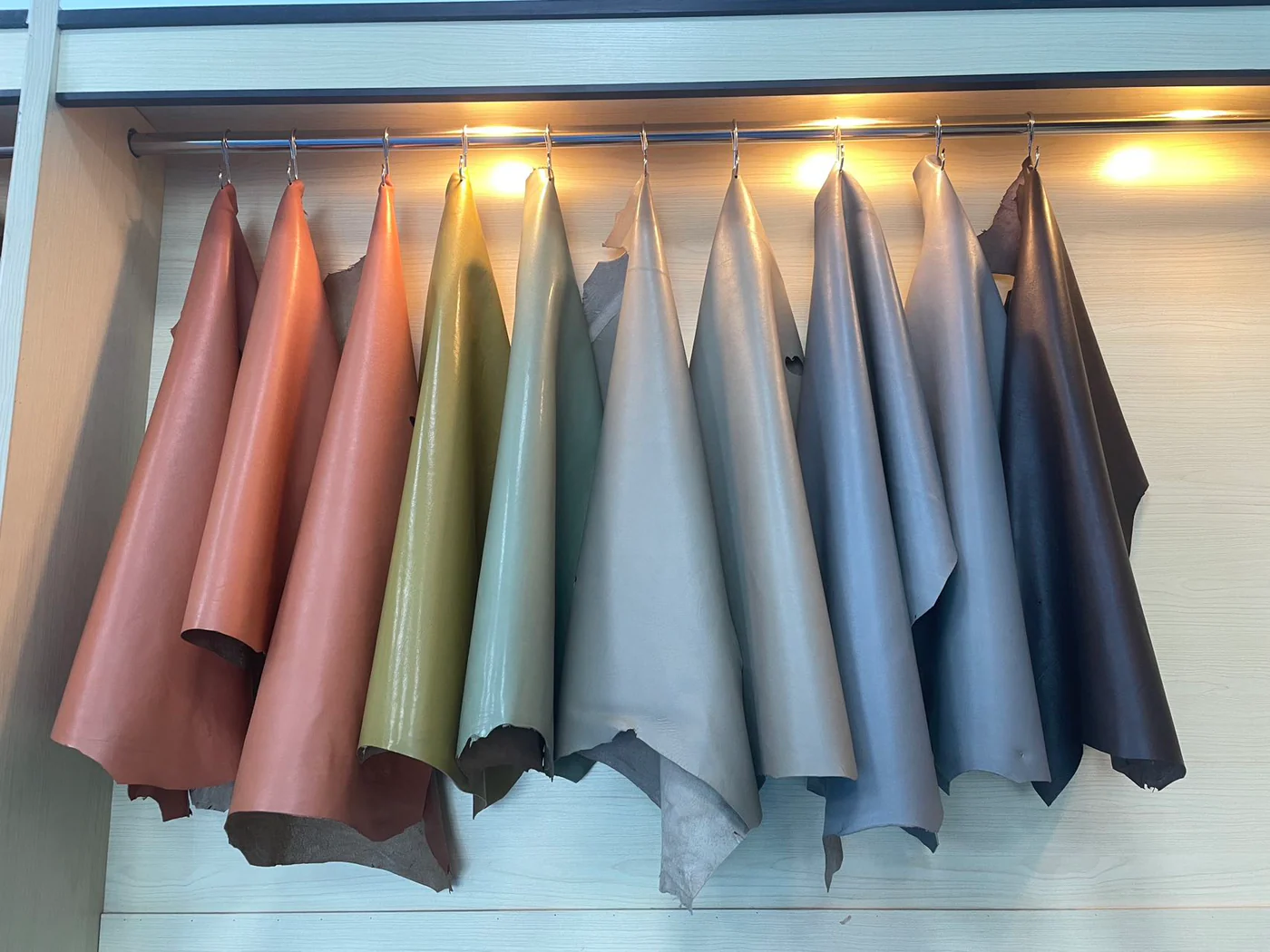
A leather name or “PU belt” does not define the strap. Freeze the face article, reinforcement or core, backing or lining, adhesive or stitch route and edge system. The buyer should know which layer creates appearance, which carries load and which remains hidden.
Record actual and provisional inputs separately. A stock lining may help a development sample answer a shape question. It cannot quietly become the production lining because the outer surface looked correct. Every substitute needs a named status and closure route.
Color needs a reference and a viewing rule. A photograph helps teams communicate placement and overall direction. Screen settings cannot govern a color-critical approval. Use the physical master, swatch or other project-approved reference named in the file set.
The belt material guide explains why buyers should freeze composition, construction, finish and claim language together. If a label claim depends on hidden material identity, the sample appearance is not enough evidence.
Freeze Belt Dimensions and Fit Datums
“Length” is not a complete measurement. One team may measure the strap only. Another may measure from buckle reference to the middle hole. Ratchet and reversible constructions create different endpoints. Name the datum before comparing any number.
For a prong belt, review width, finished-length datum, hole positions, spacing logic, tail length, keeper position and buckle allowance. Connect the approved base size to the current size schedule. A correct sample in one size does not validate an unexplained grade across the range.
For an automatic belt, record usable adjustment range, track start and end, trim direction and the minimum track that must remain after customer cutting. Do not copy a tolerance from another style. Geometry, material and mechanism determine the project limit.
Freeze Buckle Hardware and Functional Interfaces
A buckle approval needs two records: the component and its behavior on the strap. Confirm the buckle revision, finish, geometry, attachment method and logo status. Then operate the assembled belt and check the interface that carries the function.
Prong and Hole Alignment
The prong should enter the approved holes without forcing the strap off line. Review frame clearance, tongue length, hole geometry and strap thickness as one system. A polished buckle can still create a poor fit when the assembly dimensions disagree.
Ratchet Track and Claw Engagement
For ratchet belt programs, check track geometry, claw engagement, release action, clamp fit and retained adjustment after trimming. A mechanism from one track family may look compatible while engaging too shallowly.
Reversible Rotation and Retention
Rotate the approved reversible buckle through its full intended movement. Check that the joint clears both strap faces and returns securely. Record which surface and buckle orientation the retail instructions show.
Write down the functional checks actually completed. If the buyer requires a durability or chemical result, name the specimen, method and acceptance limit separately. Never let “works on the sample” stand in for an undefined test.

Review the Belt Sampling Route
If your team has a development sample but the release baseline remains incomplete, map each open decision before asking the factory to start bulk. HongDing can review the sample purpose, input status and approval record for a project-specific route.
Sample identity | Open-point register | Bulk-release evidence
Freeze Construction Branding and Retail Presentation
Inspect the visible result in the sequence production will repeat it, then connect each symptom to the evidence needed for release. Cutting, skiving, folding, layering, stitching, edge treatment, punching, keeper construction, buckle attachment and decoration fixing can leave different signatures on the finished belt. Tie every accepted detail to the named sample, but do not claim that the surface alone proves a hidden operation.
For edge cracking, lifting or coverage loss, record the exact location and bend direction. Ask whether the variable sits in the strap material, skiving or fold thickness, edge preparation, coating build, drying or handling. Close a local execution issue with a corrected sample or controlled first-off only when the released material and edge system remain unchanged; a new material, layer build, fold geometry or edge route requires a revised physical reference.
For stitch puckering, run-off or inconsistent margins, compare both faces and mark the affected path. Review seam location, layer thickness, skiving, thread and needle selection, feeding and tension with the factory. The closing evidence may include a corrected stitched panel plus a complete belt, because a flat panel can show stitch formation while the assembled belt reveals distortion around the buckle fold, tip and keeper.
Delamination, excessive fold bulk, keeper distortion and attachment movement point to interfaces that appearance photographs cannot close. Request the relevant cut section, work-in-process reference, component record or project-specific flex/pull evidence, then state the disposition. If correction changes a load path, visible proportion, material claim or fit interface, reopen the PP sample instead of approving the repair by email.
Workmanship language also needs boundaries. “Clean edges” leaves the inspector to invent a standard. A controlled record points to the approved edge shape, color, coverage and visible defects, plus the evidence and authority that close each failure. The physical master classifies appearance; the written rule controls measurement and disposition.
Branding approval should identify the artwork revision, method, position, scale and visible color reference. A corrected logo file after sample approval changes the baseline. The buyer must decide whether a proof, revised sample or first-off check closes that change.
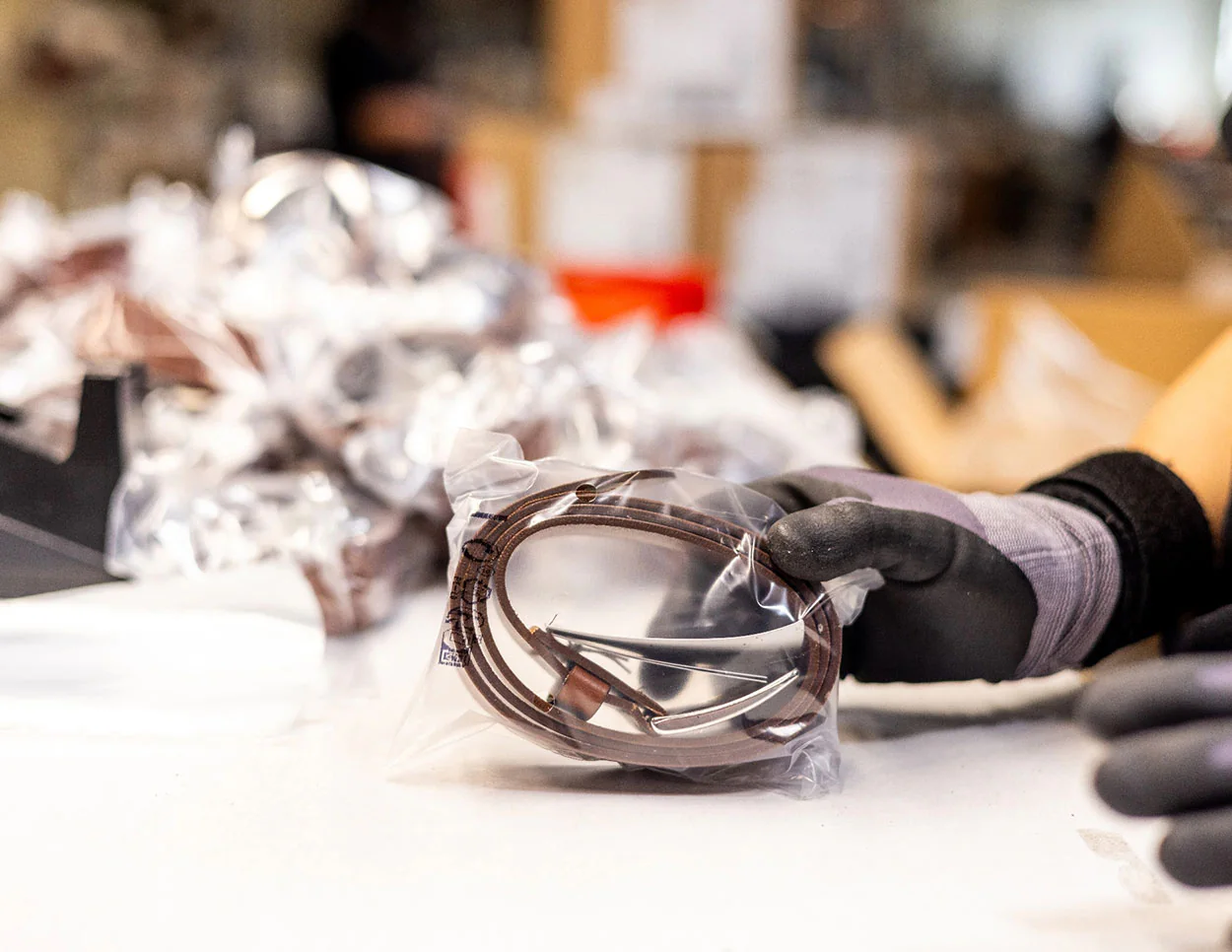
Bring retail presentation into the same review when it affects release. Confirm label copy, size mark, barcode position, hangtag, bag or box, pack ratio and carton mark. A correct belt in the wrong SKU pack is still a receiving failure.
Turn Comments Into a Release Decision
Comments do not release production. A release record pairs every numbered issue with the factory response, affected file, evidence required and decision owner. The status must tell production what it may do next.
CanadaBuys clothing clause B7011C shows a formal example. It names conditional acceptance, acceptance and rejection, and it requires written notice before production under that contract route. Private programs should define their own authority in writing.
| Decision | Meaning | Required Record | Production Status |
|---|---|---|---|
| Approve | Named baseline is complete | Signed version and file index | Release under agreed controls |
| Revise | Product needs another review | Numbered comments and response | Do not release affected work |
| Conditional release | Exact open point is bounded | Owner, evidence and authority | Only stated work may proceed |
| Reject | Baseline cannot govern bulk | Reason and resubmission route | Stop and correct |
Use conditional release sparingly. It should never hide a material, fit, mechanism or legal claim that can change the product. If the open point affects bulk identity or function, revise the sample or close the evidence first.
A message saying “looks fine” lacks the sample version, approval scope and release authority. Replace it with a decision that a new team member can reconstruct months later.
Build the Sample to Bulk Release Pack
The release pack is the bridge between product development and production control. It should identify the approved sample and gather the current files that define the same belt. If two records disagree, the team must resolve the conflict before release.
- Approved sample ID, revision, date and physical location
- Current tech pack, BOM and measurement schedule
- Material, color and hardware masters or references
- Artwork, labeling and packaging files
- Named tests, specimen identity and acceptance criteria
- Inspection plan, defect examples and release authority
- Closed comment log and approved change history
Keep final PP sign-off separate from material approval, production testing, first-off or top-of-production review, final inspection and shipping release. Those controls answer different questions. One approved sample establishes the baseline; it does not erase the later checks on production inputs, process stability or the finished lot.
Hand the same baseline to the factory meeting, first-off review, in-line inspection and final release. HongDing’s belt quality-control route links the golden sample to controlled specifications and project-specific checkpoints. The inspector needs both.
If a leather article, buckle finish, logo file or packaging instruction changes, reopen the affected part of the pack. A risk-appropriate proof may close a small change. A changed interface or product claim may require a new physical reference.

Frequently Asked Questions
What if the buyer and factory hold different golden samples?
Stop release and reconcile the sample IDs, revisions and linked files. Do not blend details from two references. One named baseline must regain authority, or the buyer must approve a revised reference.
When may a photograph close a sample correction?
Use a photograph only when the buyer authorized that evidence route in writing for one bounded, non-structural visible correction. The image should identify the same sample ID and revision, show a scale or position datum, and use the agreed view. A material, critical colour, fit, buckle-interface, layer-build, workmanship or pack-contact change still needs the physical evidence named in the approval plan.
How should damage found after sample approval be handled?
Identify affected stock, link the symptom to the approved reference and record the suspected material, process or handling variable. The disposition must name containment, correction evidence and whether a revised sample or first-off approval is required.
What if the approved physical sample is lost?
Use a controlled duplicate only when its identity and custody show that it matches the governing version. Reconstructing a belt from files may create a new reference, but it should pass the required approval route before replacing the lost sample.
Can one PP sample release several sizes or colourways?
Only when the approval matrix states which fields are common, which vary, and which representative samples or records cover each variation. Grading, strap length, hole or track range, colour, finish, thread, hardware and packaging must not be inferred from one sample when those fields change. An unrepresented variant remains open until its named evidence is approved.
Why We Wrote This
A good PP sample can still produce a weak order when its identity, files or exceptions remain unclear. The expensive failure is not always poor workmanship. It is two teams using different versions while each believes the product was approved.
This checklist makes the handoff visible. Freeze the belt, name what the physical unit proves, preserve the records it cannot replace and assign every open point. Then connect the approved baseline to the belt manufacturing route that must repeat it.
- Release one identified version.
- Freeze all eight product and retail control domains.
- Keep sample approval separate from later production checks.
- Reopen the affected record whenever the baseline changes.
If your sample package still depends on memory, stop before bulk. Send the current sample identity, files and open decisions to HongDing. A useful first response will identify the gaps that must close before a production commitment.