By Kevin · Updated September 5, 2026
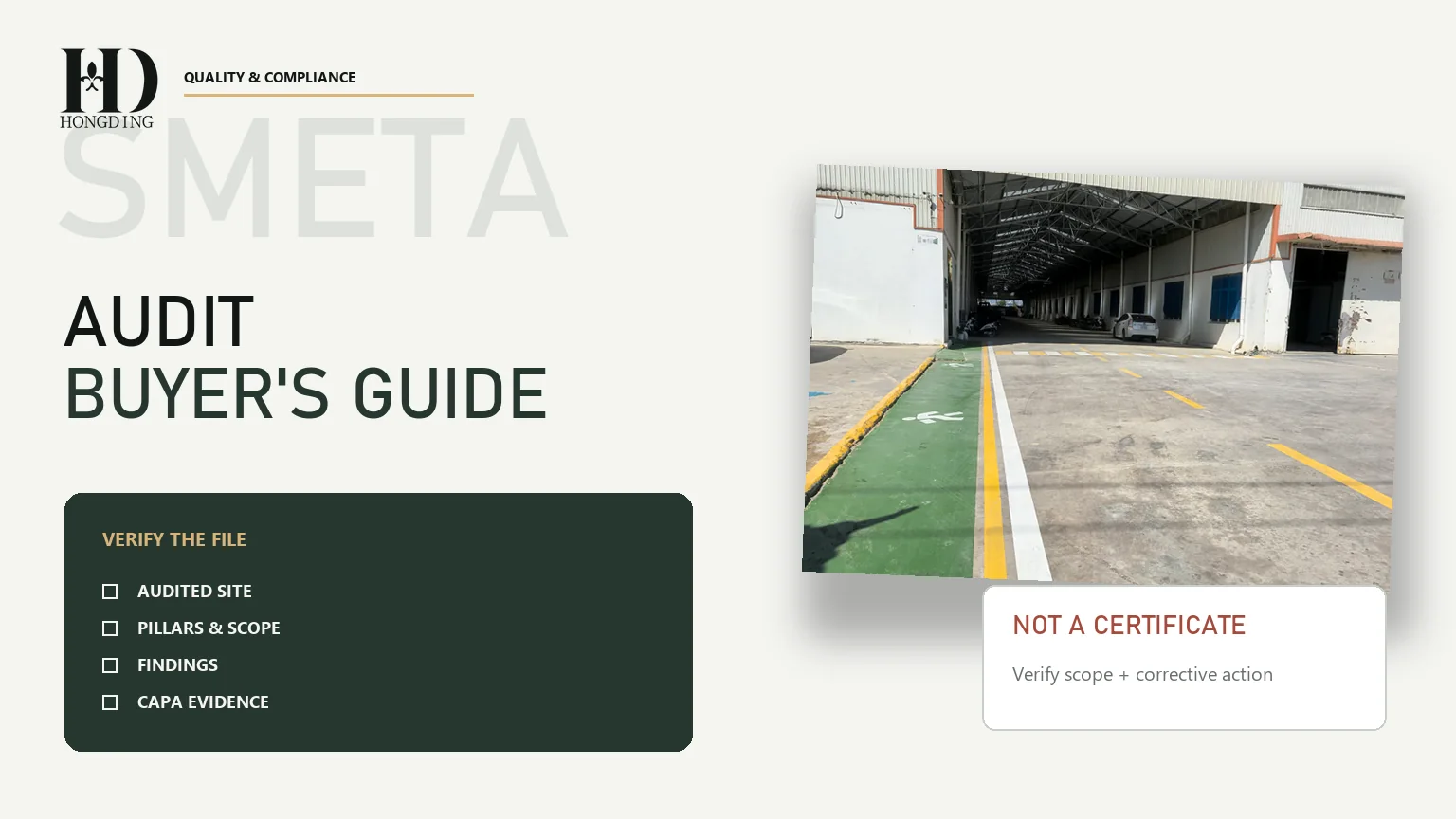
A SMETA audit can be useful evidence when qualifying a belt supplier, but it is not a universal certificate and it does not prove that every factory, production line or corrective action is covered. The purchasing question is narrower: does the report match the legal site that will make your order, is its scope appropriate, and are open findings being controlled?
- Treat SMETA as a site-specific assessment record, not a supplier-wide badge.
- Verify the audited legal entity, address, date, auditor, scope and scheduling type before relying on the report.
- Read the corrective action status, not only the audit completion date.
- Keep ethical-trade evidence separate from product specifications, testing and AQL inspection.
SMETA Is Not a Certificate
SMETA stands for Sedex Members Ethical Trade Audit. Sedex defines it as an audit methodology built around the ETI Base Code, International Labour Organization conventions and applicable local law. The current methodology is SMETA 7. An approved Affiliate Audit Company conducts the assessment; Sedex provides the methodology and platform rather than auditing the site itself. These roles and reference frameworks are stated in Sedex’s official SMETA overview.
That distinction matters in sourcing. A certificate suggests a simple valid-or-expired status. A SMETA report is a dated body of evidence about a particular workplace. It records scope, observations, findings and corrective actions. It can support due diligence, but it cannot replace the buyer’s own approval criteria or create a blanket guarantee for a supplier group.
Primary reference: Sedex — SMETA Audit.
Two Pillars or Four Pillars?
Both versions examine labour standards and health and safety. The four-pillar route adds extended environmental assessment and business ethics. “More pillars” is not automatically the right answer; the buyer’s responsible-sourcing policy, customer commitments and risk profile should set the required scope. The useful comparison is not price alone, but whether the selected scope answers the questions your approval committee must sign off.
| Area | 2-pillar | 4-pillar | Buyer question |
|---|---|---|---|
| Labour standards | Included | Included | Do worker records and interviews cover the intended site? |
| Health and safety | Included | Included | Are observed risks, actions and dates visible? |
| Environment | Limited environmental requirements within the base scope | Extended environmental assessment | Does your policy require the extended module? |
| Business ethics | Not a separate pillar | Included | Does the program require a formal ethics review? |
Sedex’s official SMETA 7 one-page overview distinguishes announced, semi-announced and unannounced audits and describes the 2- and 4-pillar routes. A scheduling label is not a quality score. It describes how much advance notice the site received, so retain it as part of the evidence record instead of stripping it from a supplier summary.
Verify the Audit Identity Before Reading the Scorecard
Begin with the cover information. Match the legal entity and address against the factory declared in the quotation, purchase order and shipping documents. A supplier may coordinate several operating locations, and an audit from one location should not silently travel with work placed at another.
Next, validate the audit date, methodology version, audit company, report reference and scope. Ask for authorized access through Sedex when your organization uses the platform. Screenshots, logos and a one-page declaration may be convenient for initial screening, but they are weak evidence because they remove the findings and audit trail from context.
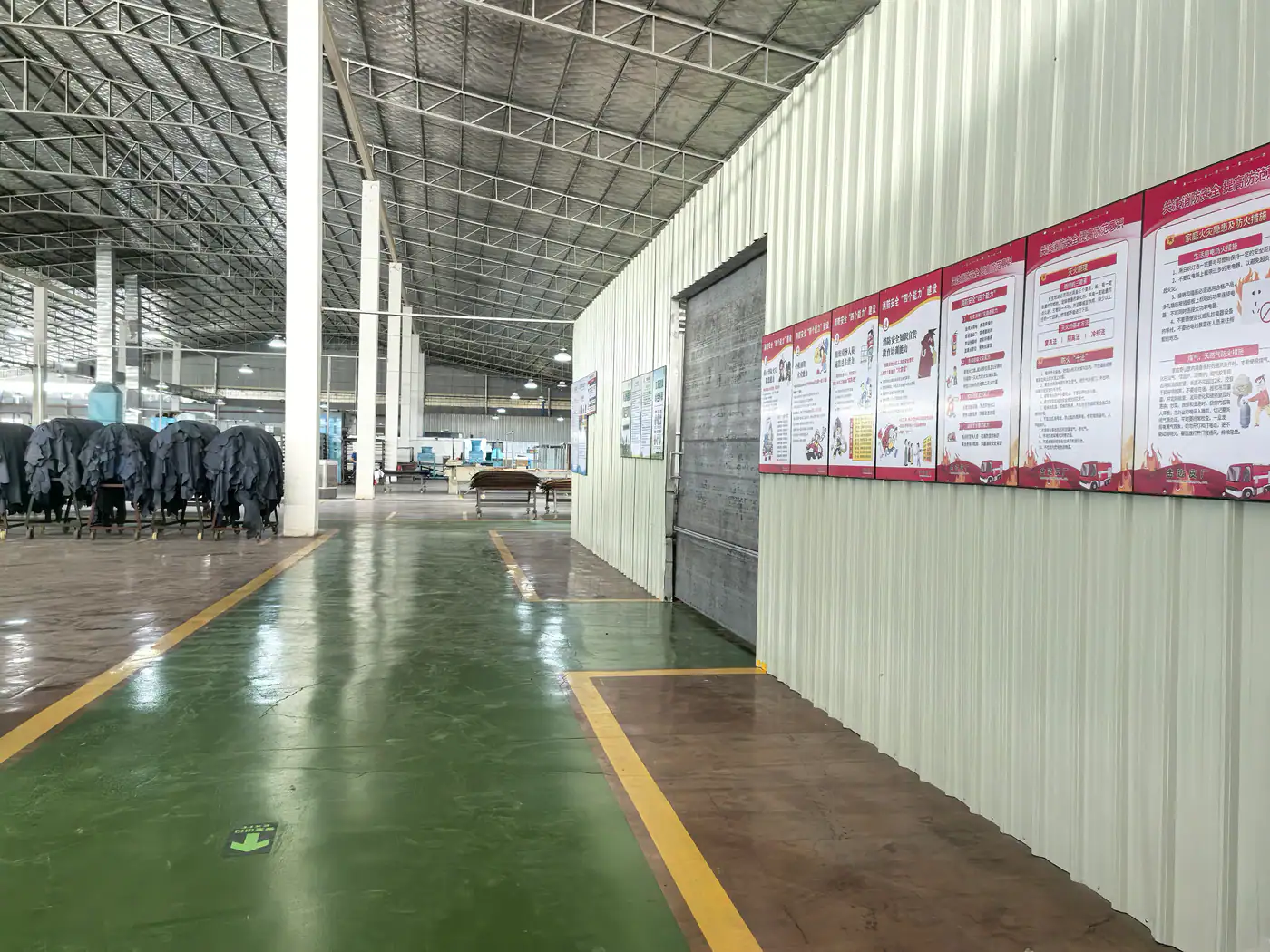
For a multi-site manufacturing partner such as HongDing, the responsible question is not “Does the group have an audit?” It is “Which site and processes will serve this belt program, and what evidence applies to that site?” Our manufacturing overview helps buyers identify the production stages that should be mapped during qualification.
Read Findings and Corrective Actions as Two Different Records
An audit finding identifies a gap observed at the time of assessment. A corrective action plan assigns remediation; it does not prove remediation has been verified. Build your review around four states: finding recorded, action proposed, evidence submitted and closure verified. If the report uses different terminology, map it into those states so commercial and compliance teams share one interpretation.
Severity labels deserve attention, but so do ownership and dates. A lower-severity item with no owner can persist indefinitely, while a serious finding with an immediate containment action and independently verified closure may be better controlled. Buyers should define which findings block onboarding, which permit conditional approval and which can be monitored after launch.
Build an Importer Evidence Pack That Can Survive Handover
A reliable evidence pack is compact enough to maintain but complete enough for another buyer to reconstruct the decision. Save the original report or controlled link, not just a PDF excerpt. Record the site mapping and the buyer’s review date in a cover sheet. This avoids the common failure in which the employee who qualified the supplier leaves and the next team cannot tell why an approval was granted.
| Field | What to capture | Why it changes the decision |
|---|---|---|
| Legal entity and address | Exact name, full address and any site identifier | Prevents one facility’s report being used for another facility. |
| Audit record | Date, announced/semi-announced/unannounced status and methodology version | Shows when and under what visit conditions the evidence was gathered. |
| Audit provider | Affiliate Audit Company and report reference | Lets the buyer validate provenance. |
| Scope | 2-pillar or 4-pillar, plus exclusions | Confirms whether the buyer’s required modules were assessed. |
| Findings and CAP | Issue, owner, due date, evidence and verification status | Separates a completed visit from a controlled issue. |
| Order mapping | Factory named on PO, production step and subcontractors | Ties compliance evidence to the actual supply route. |
Version control is essential. Keep the original document name and date, and issue your own short review record rather than overwriting the source file. When new evidence arrives, append the change and identify which decision it altered. This approach works equally well for a new vendor, a factory transfer or a repeat program reviewed after a policy update.
Keep Ethical-Trade Evidence Separate From Product Quality
SMETA does not approve leather grade, buckle performance, restricted substances, workmanship or carton labelling. Those belong in the product specification, compliance test plan and inspection standard. A socially audited site can still ship the wrong leather or an off-shade edge; a technically capable factory can still have labour or safety findings. Conflating the two creates a blind spot.
For belt programs, pair the supplier review with a signed specification, approved sample, testing matrix and an attributes inspection plan. The HongDing quality-control process explains the production controls a buyer can map separately. If you need a sampling framework, the companion AQL inspection guide for belts shows how to define defect classes and acceptance rules without pretending AQL is a product standard.
Apply the Check to a Hypothetical Belt Program
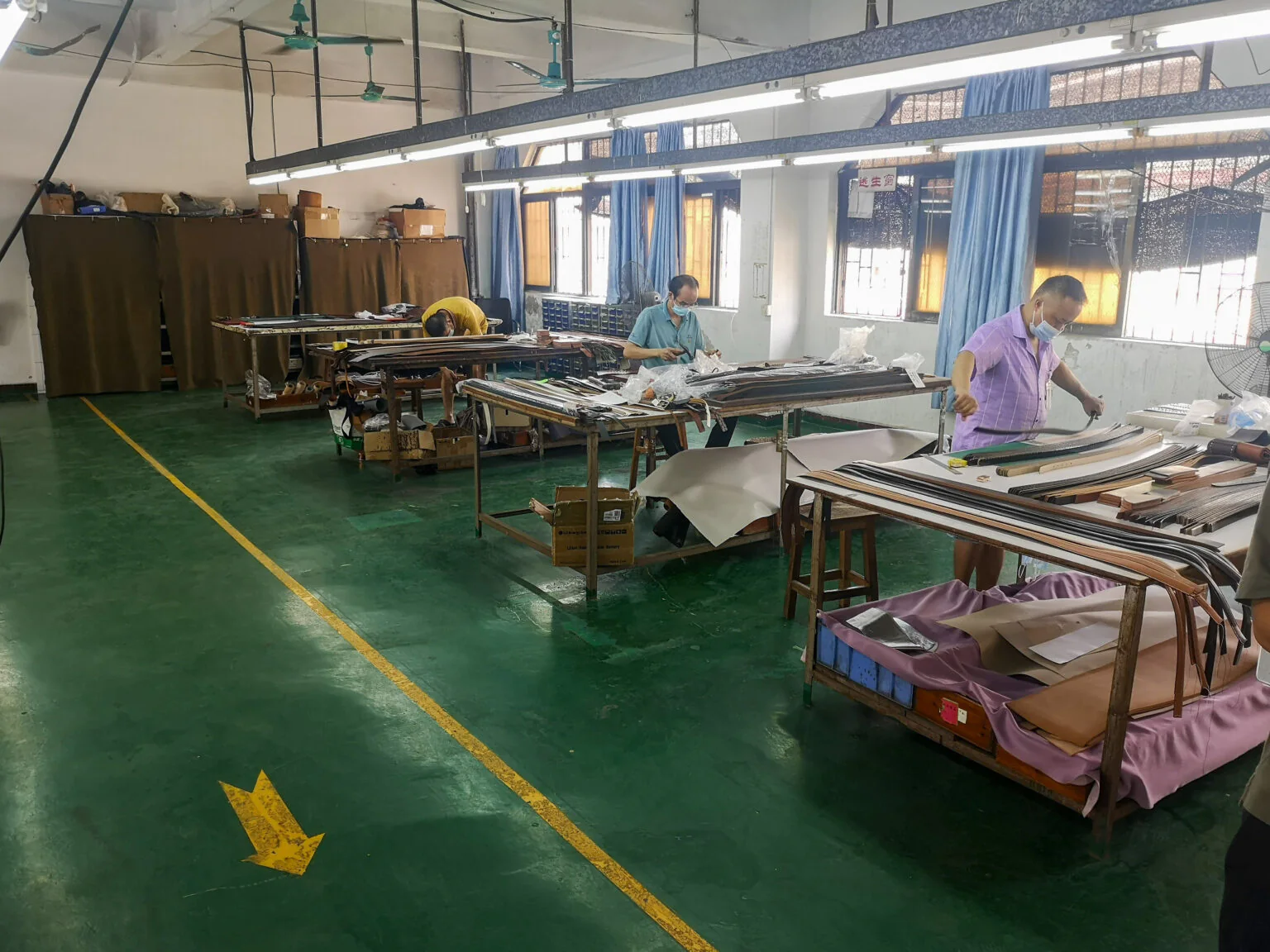
Start the RFQ with the target market, product construction, intended manufacturing site and required social-compliance evidence. If leather cutting, assembly, finishing or packing may move between sites, document the proposed flow. Then ask which locations are included in each audit and whether any material operation is subcontracted.
HongDing coordinates custom belt programs across operating locations with distinct roles. The correct evidence depends on the project-specific production route. This is a method for evaluating a proposed program, not a claim that any HongDing location holds a particular SMETA record. Buyers should confirm the location before relying on an audit presented during quotation.
Separate social, product and legal-market gates
Record three decisions independently: social-compliance approval for the production site; product-quality approval against the sealed sample and inspection plan; and legal-market approval for materials, claims and test evidence. A green result in one column cannot override a red result in another. Name the owner and evidence link for every gate.
Need to map compliance evidence to a belt program?
Send the target market, intended production location and evidence requirements. Use the response to build a site-to-order request list covering report identity, scope, findings and closure evidence.
SMETA Supplier Review Checklist
Use this as a pre-approval record, then add your organization’s thresholds. The purpose is not to produce a universal pass/fail formula. It is to make assumptions visible and prevent an incomplete audit statement from becoming a purchasing fact.
| Decision point | Acceptable evidence | Red flag |
|---|---|---|
| Identity | Site name and address match the production plan | Report belongs to a trading company or another factory |
| Currency | Date and version fit the buyer’s policy | Undated badge or cropped first page |
| Scope | Required pillars and activities are visible | Scope is described only as “passed” |
| Corrective action | Open and closed items are distinguishable | All findings are claimed closed without verification evidence |
| Product controls | Separate specification, test and inspection plan exists | SMETA is offered as proof of product conformity |
Set decision thresholds before the report arrives
Approve when identity and scope match, required evidence is current and no buyer-defined blocking finding remains. Conditionally approve only when the buyer has named the limitation, owner, due date and release controls. Escalate when evidence is incomplete or interpretation is disputed. Reject or pause onboarding when the site is mismatched, evidence cannot be authenticated or a buyer-defined zero-tolerance condition is open. These are governance categories; each company must define its own thresholds.
Finally, set both an owner and a review trigger. A new production site, material subcontractor, serious finding, expired buyer-policy window or material change in the order should prompt reassessment. Log the reviewer, decision date, next review date and event triggers. A calendar reminder alone is not enough when the supply route changes first.
Frequently Asked Questions
Is SMETA a certification?
No. Sedex describes SMETA as an audit methodology. Buyers should assess the report, its scope and the status of findings rather than asking only whether a supplier is “SMETA certified.”
What is the difference between Sedex and SMETA?
Sedex provides the responsible-sourcing platform and owns the SMETA methodology. A SMETA audit is conducted by an approved Affiliate Audit Company; Sedex itself does not conduct the factory audit.
What does a four-pillar SMETA audit cover?
It includes the labour standards and health-and-safety pillars plus environmental assessment and business ethics. Exact evidence and findings remain specific to the audited site and audit record.
Does a completed audit mean every finding is closed?
No. Completion records that an audit occurred. Review the corrective action plan and the current verification status of each finding.
Does Sedex membership prove a supplier has passed SMETA?
No. Sedex membership and a SMETA audit are related but different. Verify the specific site audit, scope, date, findings and corrective-action status rather than treating platform membership as a pass mark.
What should an importer request?
Request the report or authorized platform access, site identity, scope, date, audit company, findings, corrective action evidence and confirmation that the audited site is the intended production site.