By Kevin · Published 2026-09-06 · Updated 2026-09-06
Prepared for brands, retailers, wholesalers and sourcing teams evaluating apparel belt suppliers.
A polished sample does not prove that a belt manufacturer can control your bulk order. It proves that one sample was made. Supplier qualification starts when you connect that sample to the legal entity, production site, bill of materials, approved dimensions, process records, inspection plan and change history that will govern production.
- Define the exact belt program before comparing factories; broad catalog capability is not project capability.
- Match every claim to an entity, site, process, product revision and dated record.
- Follow one real SKU through materials, hardware, sampling, production, inspection and release.
- Treat management certificates, social audits, material-facility ratings and product test reports as different evidence types.
- Challenge capacity and timing only after the construction, SKU mix, input readiness and approval route are known.
- Use a controlled trial order to test repeatability, change control and record quality before scaling.
In short: evaluate evidence, not presentation. The right belt factory is not the one with the longest machine list or the lowest opening quote. It is the one that can show how your exact product moves from an approved requirement to a repeatable, inspectable and releasable order.
Define the Exact Supply Program
“Can you make belts?” is too broad to qualify a supplier. A dress belt with a wrapped edge, a hand-braided style, a reversible mechanism and a work belt with accessory interfaces do not use the same route. The buyer should define the product family, intended wearer, target market, sales channel, material direction, hardware function, branding, packaging and SKU structure before asking for proof.
Turn that brief into a qualification statement. Name the construction you expect, the decisions still open and the evidence you need before sampling or production. If a proposed supplier answers with a catalog instead of a route, you still do not know whether it can make the product under review.
The same rule applies to a custom belt manufacturer that offers OEM, ODM and private-label services. These labels describe responsibility at a high level; they do not define the material, buckle, approval rights or production site. First separate an available wholesale belt route from true product development, then use the OEM and ODM route to decide who controls the specification.
Separate Identity from Manufacturing Scope
A registered company, invoicing entity, sales office and production site may be different organizations. Record each one. Ask who signs the contract, receives payment, owns the material and hardware relationships, performs each operation and releases the shipment.
Then separate direct work from subcontracted work. Subcontracting is not automatically a failure. The risk appears when the supplier cannot name the operation, control the subcontractor, preserve revision identity or provide records from the actual site.
| Evidence | What It Can Support | What It Cannot Prove Alone | Buyer Check |
|---|---|---|---|
| Business record | Legal name and registered scope | Actual belt capability | Match contract, invoice and address |
| Site evidence | Visible operations at a location | Control of your product | Trace the proposed process route |
| Approved sample | One accepted physical result | Bulk repeatability | Link it to BOM and revision |
| Management certificate | Defined management-system scope | Finished-belt conformity | Verify holder, site and status |
| Test report | Result for named specimens | Untested styles or later lots | Check method, sample and date |
Keep this entity map beside the quotation. If the quotation changes legal entity, site or production route, reopen qualification rather than assuming the previous review still applies. That discipline prevents a strong sample-room presentation from hiding an unreviewed execution path.

Map Capability to Belt Construction
Machine ownership is not the same as process capability. Start with the product stack and follow every critical interface: face material to backing, strap to lining, buckle to fold, prong to hole, track to ratchet mechanism, tab to woven body, logo to surface and belt to retail pack. Ask how the factory sets, measures and approves each interface.
For a leather belt manufacturer, the review should cover material identification, cutting, splitting or skiving where applicable, lamination, edge treatment, stitching, punching, branding, hardware attachment and final conditioning. A woven or elastic belt adds working stretch, end anchorage and recovery. A reversible or ratchet style adds a mechanism whose function must be checked on the finished assembly.
The useful response is a process map tied to your SKU, not a generic tour. HongDing’s manufacturing framework uses product definition, operations, control points and records as a connected chain. Apply the same logic to any supplier: every operation should have an approved input, an observable output and a decision owner.
Review Material and Hardware Control
Material names are weak identifiers. “Full-grain,” “genuine leather,” “vegan” or “antique brass finish” does not identify a supplier article, layer structure, thickness method, backing, coating, color master or component revision. Require a coded bill of materials that connects each visible and hidden layer to an approved source or reference.
Hardware needs the same discipline. Record the buckle or mechanism revision, base-material declaration where relevant, finish, dimensions, attachment method, logo or tooling status and strap interface. A visually similar buckle can change weight, fit, surface behavior or assembly geometry.
Ask how incoming lots are accepted and how substitutions are proposed. A valid change request names the old requirement, proposed replacement, reason, affected appearance or function, evidence needed and buyer approver. Silence is not approval. The belt material guide provides a useful starting structure for separating marketing labels from controlled material identity.
| Control Area | Request | Compare Against | Reject When |
|---|---|---|---|
| Face material | Article, construction and finish | BOM and approved swatch | Only a marketing name is supplied |
| Hidden layers | Backing, lining and reinforcement | Cross-section and specification | The sample cannot be explained |
| Color | Physical master and viewing rule | Incoming lot and first-off unit | Screen images govern approval |
| Hardware | Revision, finish and interface | Drawing or sealed component | Similar stock is substituted |
| Change | Impact and approval record | Last released baseline | Change appears after production |

Test Sample and Change Control
Ask what each sample is meant to decide. A concept sample can settle proportion. A material trial can settle surface and hand. A fit sample can settle finished length and adjustment. A packed sample can settle labels, protection and retail presentation. Combining these decisions informally makes approval ambiguous.
The final production reference should identify its version and link to the current BOM, dimensions, construction, material and buckle references, artwork, packaging and accepted deviations. Store photographs for communication, but do not treat photographs as the governing physical evidence when color, texture, edge or mechanism feel matters.
Change control matters most after approval. Ask the supplier to show how a changed material lot, unavailable buckle, revised logo file or corrected measurement returns to the buyer. A factory that can make an excellent first sample but cannot protect the approved baseline is a development shop, not yet a reliable production partner.
The HongDing sampling process treats physical samples and written files as paired evidence. Use that pairing in your audit: the sample shows the result, while the record explains exactly what was approved.
Audit Quality with Production Records
Do not audit the quality system only through procedures. Select a completed or in-process SKU and request the records that connect incoming material, first-off approval, in-line checks, final inspection, nonconformance and release. The names may differ by factory; the chain should remain visible.
Look for actual decision quality. Are checks tied to a dimension, approved sample, defect boundary or test method? Does a failed result identify affected work and trigger containment? Can the factory show who approved correction, rework, concession or rejection?
ISO 9001 defines requirements for a quality management system, while ISO 19011:2026 provides management-system audit guidance built around evidence and risk. Neither replaces product-specific inspection. Use a certificate to inform the audit, then inspect the real product-control records.
| Stage | Record to Review | Question It Must Answer | Risk if Missing |
|---|---|---|---|
| Incoming | Material and component status | Did the released input arrive? | Unknown substitution or lot |
| First-off | Initial unit approval | Is the process set correctly? | Bulk repeats an early error |
| In-line | Work-in-progress checks | Did the route stay controlled? | Late discovery and broad rework |
| Final | Inspection and pack reconciliation | Does finished stock meet release rules? | Wrong product or pack ships |
| Deviation | Containment and disposition | Who accepted the final action? | Unapproved product enters supply |
For belt-specific checkpoints, compare the supplier’s evidence against the belt quality-control framework. The point is not to copy another company’s form. It is to make sure your inspection plan covers the failure paths created by your own construction.
Verify Certificates by Exact Scope
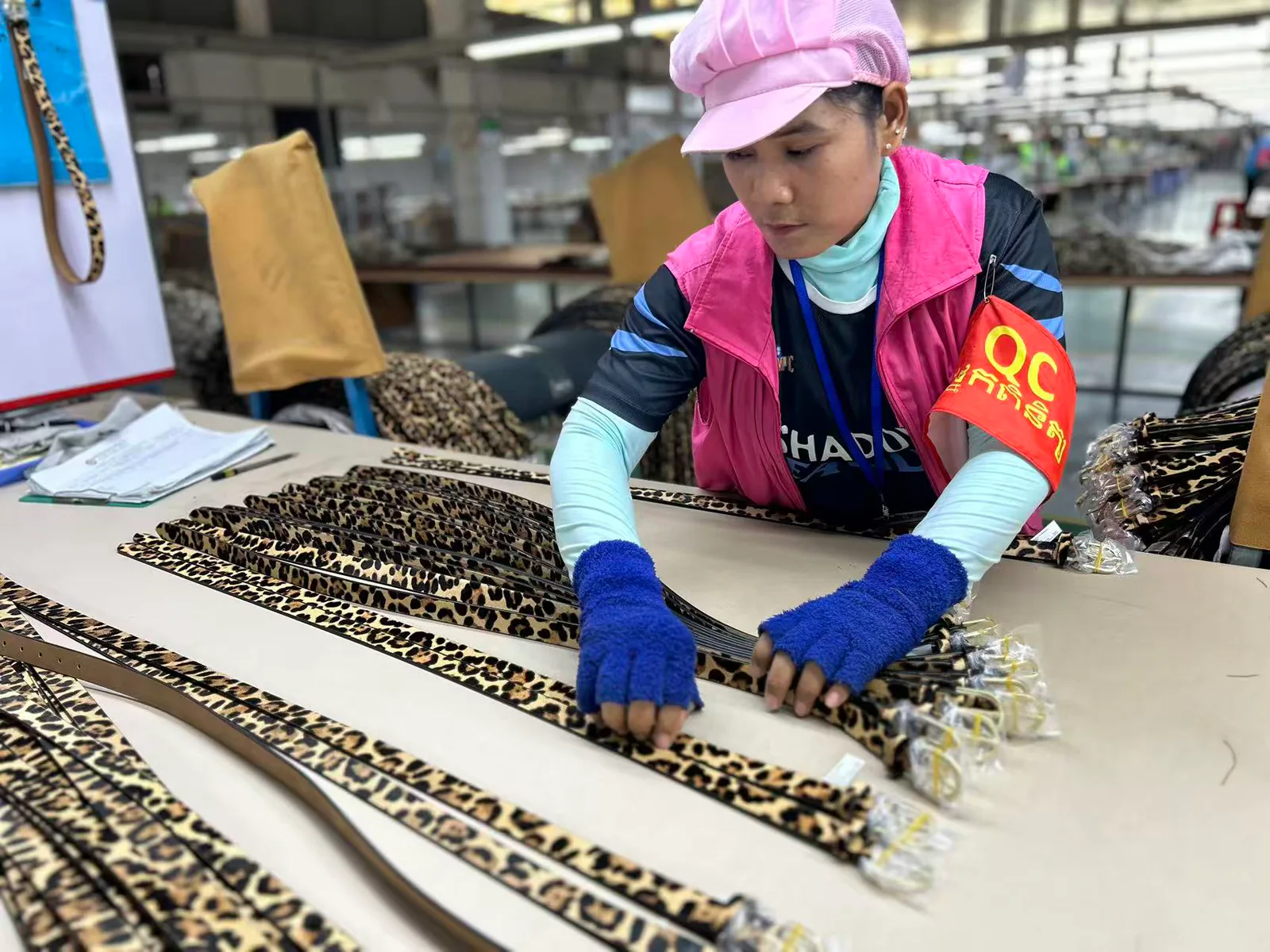
Certificate logos answer almost nothing by themselves. Record the document type, holder, operating site, issuing or audit body, applicable standard or methodology, scope, issue date, expiry or status, and the product decision it is supposed to support. If one field is missing, ask before using the document in a supplier score.
A management-system certificate speaks to the stated system and scope. IAF CertSearch explains how buyers can verify accredited management-system certificates using available organization or certificate identifiers. A verified certificate still does not prove that the exact belt meets a drawing or test requirement.
Social and material-facility evidence also needs boundaries. Sedex says that SMETA audits are conducted by approved independent Affiliate Audit Companies and that the selected pillar scope changes what is reviewed. The SMETA methodology is a site-audit route, not a finished-product certificate.
The Leather Working Group manufacturer standard applies to defined leather-manufacturing facilities and activities. Check whether the named facility and process actually supplied the leather article in your belt. Do not stretch a facility rating into an unsupported claim that every leather, supplier or finished belt shares the same status.
Review Your Belt Supplier Brief
Send the belt type, target market, SKU mix, material and hardware direction, packaging scope and evidence requirements. This gives HongDing the project inputs needed to discuss a route-specific development and sampling scope.
Product route | Approval gaps | Evidence scope
Challenge Capacity and Commercial Assumptions
Headline output, floor area and employee counts do not tell you whether a factory has capacity for your order. Available capacity depends on the current product mix, shared operations, material readiness, hardware availability, craft load, inspection burden, packing route and production schedule. Request a dated response for the relevant site and period.
Apply the same discipline to MOQ, sample timing, production timing and price. Ask which assumptions sit behind the quote: quantity by SKU, color minimums, material or component commitments, tooling, testing, artwork, packaging, inspection, Incoterm and approval deadlines. A low opening price is not comparable when another supplier has included a different scope.
Ask what happens if an input is late or fails review. The useful answer names the affected milestone and decision owner. A supplier that protects the promised date by compressing unapproved downstream work is transferring schedule risk into the product.
| Commercial Claim | Required Context | Evidence | Decision |
|---|---|---|---|
| Available capacity | SKU mix, route, site and period | Dated loading response | Reserve only after readiness review |
| MOQ | Style, color, size, finish and pack | Accepted quotation terms | Compare like-for-like scope |
| Sampling time | Input availability and sample purpose | Critical path with approvals | Restart when inputs change |
| Production time | Released baseline and test plan | Current schedule confirmation | Do not treat as timeless |
| Unit price | BOM, tooling, tests, pack and Incoterm | Assumption and exclusion list | Normalize before comparison |
Score Communication and Corrective Action
Fast replies can still be poor evidence. Score whether the supplier answers the exact question, marks unresolved items, controls file versions and identifies who owns the next decision. A credible “not confirmed yet” is safer than an immediate promise that has no site or record behind it.
Test the response to a defect scenario before the first order. Ask how the factory identifies affected material or work, stops further processing, separates product, investigates cause, approves correction and prevents recurrence. You are evaluating the system’s behavior under pressure, not collecting a polished corrective-action template.
Reorder control deserves equal attention. Ask whether the previous material article and buckle revision remain available, what changed since the last order and how former approvals are carried forward. The most expensive supplier gap often appears after a successful first run, when everyone assumes “same as before” is a complete specification.

Run a Controlled Trial Order
A trial order is useful only when the baseline is fixed. Define the product revision, materials, hardware, dimensions, artwork, pack, inspection scope, test responsibilities and release authority before production begins. Otherwise, the trial measures the buyer’s tolerance for ambiguity instead of the supplier’s repeatability.
During execution, collect the evidence you expect at scale. Review input status, first-off results, approved changes, in-line findings, final inspection, pack reconciliation and shipment release. Compare the records with the physical product rather than reviewing them as separate folders.
After receipt, record any fit, surface, mechanism, packaging or assortment issue and connect it back to the controlling requirement. The supplier’s response matters as much as the defect. Good corrective action identifies scope, cause, containment, correction and the file that must change before reorder.
Do not scale because the delivery “looked fine.” Scale when the supplier can explain why the accepted result was produced and can protect that same baseline on the next release. This is the point where a candidate belt factory becomes an approved manufacturing route.
Reject These Supplier Red Flags
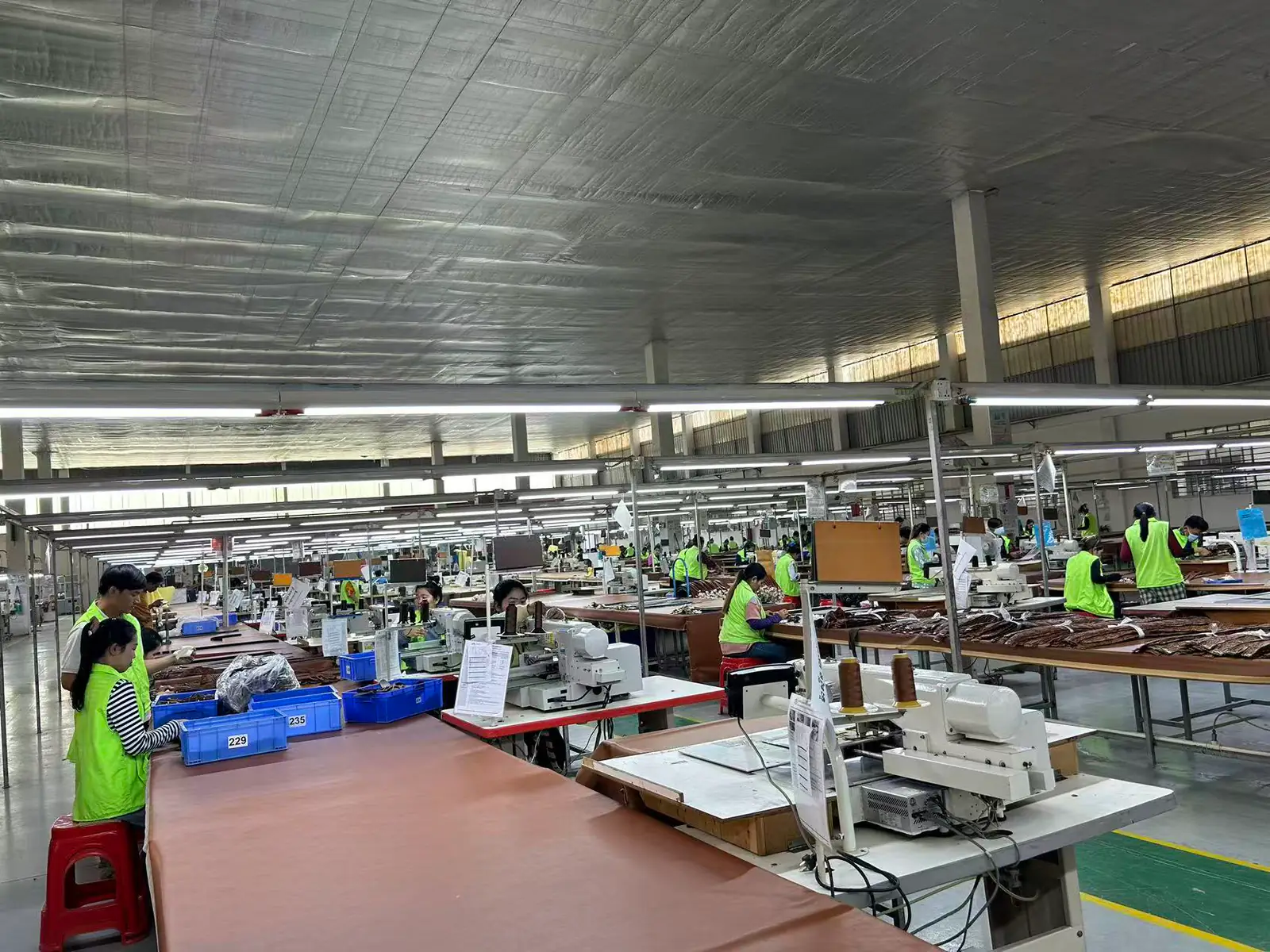
Reject capability claims that remain detached from your product. A supplier should not receive credit for broad material lists, unrelated machines or customer logos when it cannot show the proposed construction route. Presentation is not evidence.
- The legal, invoicing and operating entities cannot be reconciled.
- The supplier will not name direct and subcontracted operations.
- A certificate is supplied without holder, site, scope or current status.
- The sample lacks a linked BOM, drawing, material and hardware reference.
- MOQ, timing or capacity is quoted without SKU and input assumptions.
- Substitutions appear after approval without a written change request.
- Inspection records cannot be connected to the product or lot reviewed.
- A failed check leads to explanation, but no containment or disposition record.
- The supplier pressures shipment while tests, packaging or deviations remain open.
One gap may be correctable. A pattern of resistance is a qualification failure. The safest supplier is not the one that says yes to every request; it is the one that shows where the boundary sits and what must happen before the answer becomes yes.
Frequently Asked Questions
How can I verify that a belt supplier is a real manufacturer?
Match the legal and invoicing entities to operating addresses, then trace one proposed belt through the actual sites, processes and records. A business license or factory photo alone does not establish the complete manufacturing scope.
Is an approved sample enough to qualify a belt factory?
No. The sample proves one physical result. Qualification also requires the linked BOM, dimensions, material and buckle references, change history, quality plan and evidence that production can repeat the same approved revision.
Which certificates should a leather belt manufacturer provide?
Request only documents relevant to the target market and product. Verify the holder, site, issuing body, standard or methodology, scope, date, status and whether the document applies to the material, facility or finished belt.
Should I place a trial order before scaling?
Yes, when commercial conditions allow. Freeze the product and pack baseline first, define inspection and release evidence, then use the trial to test execution and change control rather than treating it as an informal sample run.
How should I evaluate a manufacturer with several factories?
Map each operation to a named site and legal entity. Confirm where development, material finishing, assembly, inspection and packing occur, then check that approvals and records remain connected across every handoff.
Choose Evidence Before Scale
A defensible shortlist compares the same program across every candidate. Start with the exact belt construction and commercial brief. Verify entity and site scope, follow the process route, inspect material and hardware control, connect the sample to its records, and test the quality system on production evidence.
Then review certificates for the claim they actually support, challenge capacity against current readiness and use a controlled trial to test repeatability. These steps expose risk before it becomes inventory. They also give a capable supplier a clear way to demonstrate value without relying on slogans.
- Send one controlled brief to every candidate.
- Request scope-matched evidence before comparing price.
- Record gaps, owners and closure conditions.
- Release scale only after the trial evidence matches the approved baseline.
If you are preparing a new belt program, send HongDing the product type, intended market, material and hardware direction, SKU mix, packaging scope and required evidence. The first useful response may be a gap list rather than a final quote. That is a sign that qualification has started.