A sticky synthetic belt is a symptom, not a diagnosis. Identify the actual surface and construction before deciding between hydrolysis, plasticizer migration, an applied residue or a problem at a bonded interface. Preserve an untouched example, map where the tack occurs and compare the relevant material and contact conditions. Replacing the finish before doing this can remove useful evidence without removing the cause.
For a brand developing or replenishing a belt range, the practical question is which part of the product or handling route needs to change. This guide organizes that investigation. Our PU hydrolysis report guide covers accelerated-aging evidence in more detail; the decision here starts earlier, with several competing explanations for the same complaint.
Start with the surface the wearer actually touches
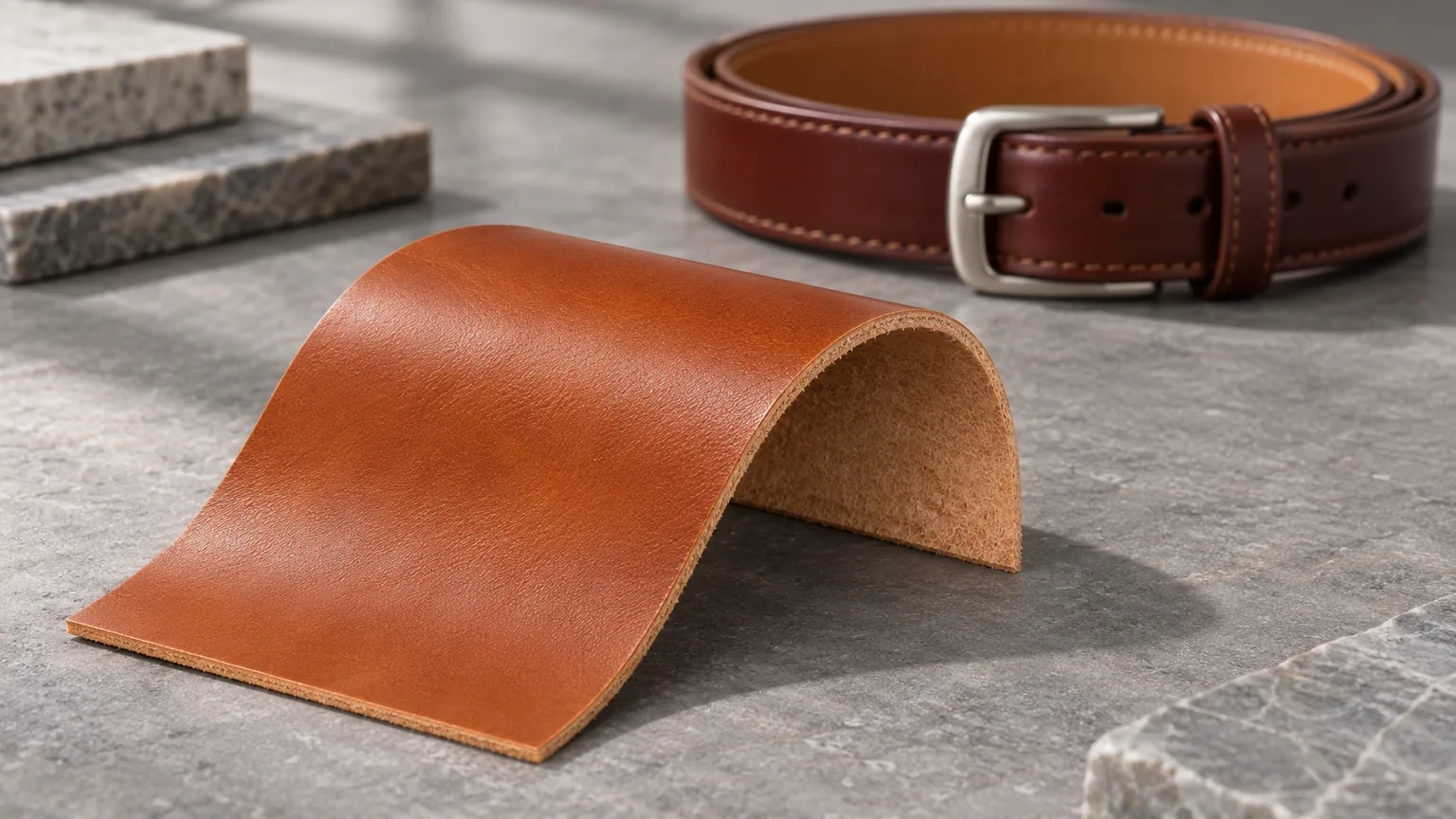
“Faux leather” describes a broad commercial category. It does not identify the polymer at the exposed surface, the coating beneath it, the backing or an added lining. Request the supplier article and finish revision for the affected belt. A purchase description that says PVC may still need a separate description of its top finish; a PU-facing material may be bonded to another material during belt assembly.
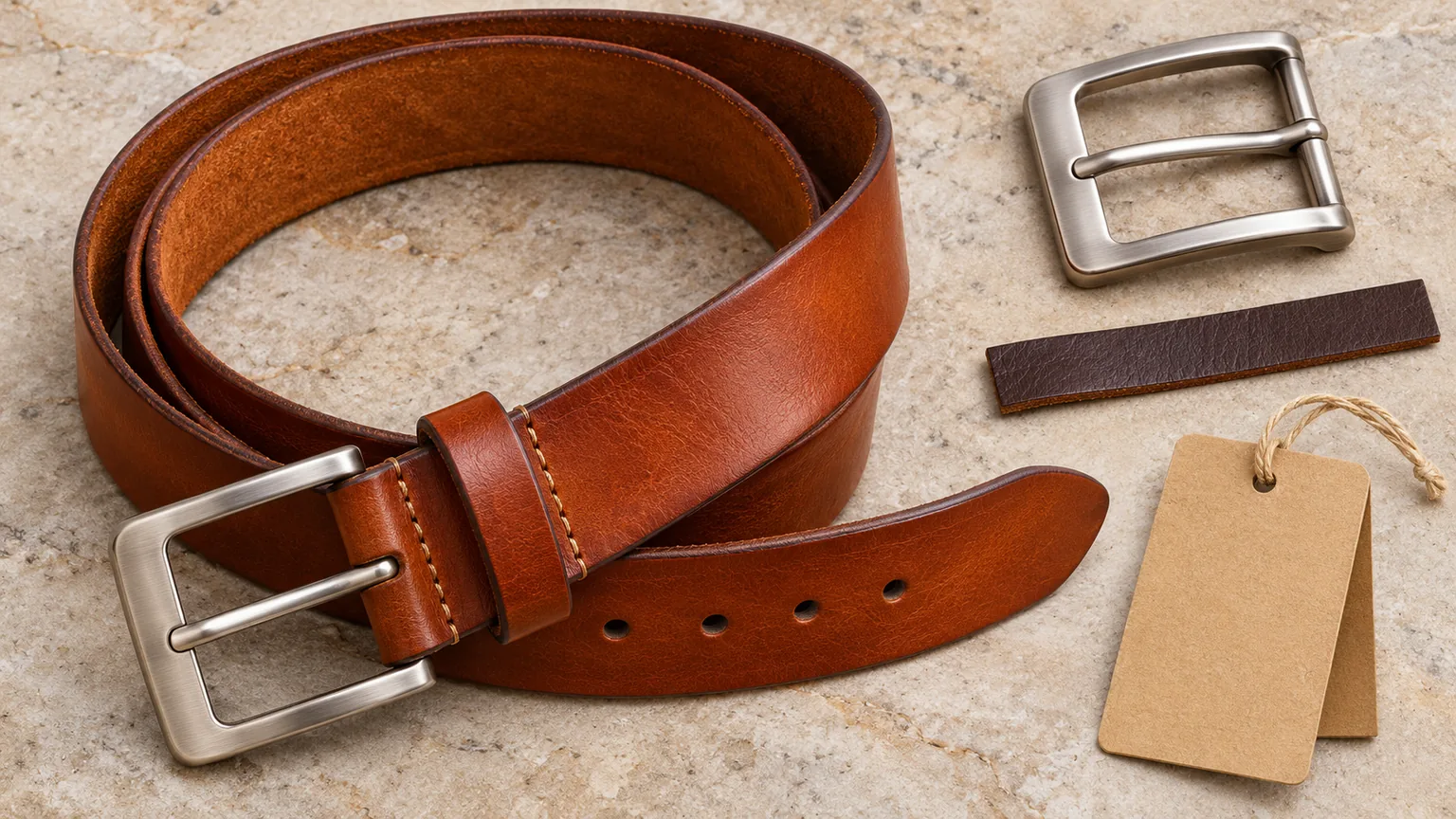
Make a simple construction map using the actual product. Name the face finish, coated material, carrier, any added adhesive or reinforcement, lining and edge finish where present. These are possible components, not a universal belt stack. The sticky face and a sticky edge are different investigation locations, even when they belong to the same finished belt.
Also separate supplied-material identity from manufacturing history. A material supplier can identify its delivered article, while the belt maker can identify subsequent bonding, edge finishing, cleaning and packing steps. Neither record alone describes everything the finished product encountered. HongDing can coordinate material, sample and manufacturing information within an agreed project scope, helping the team connect those stages without assuming that a trade name explains the failure.
Retain the original labels and purchase references when possible. If a return has no reliable batch identity, record that uncertainty rather than assigning it to the newest purchase order because the color looks similar. Color and grain appearance are useful sorting clues, but they do not demonstrate that two finishes have the same formulation.

Distinguish material breakdown from material arriving at the surface
Hydrolysis is chemical degradation. The Association for Contract Textiles explains that polyurethane coated fabrics can deteriorate through heat and humidity exposure, and that chemical cleaning exposure can produce similar-looking damage. This is upholstery guidance, so its recommended test durations are not belt acceptance limits. Its useful warning here is that appearance alone cannot separate those explanations.
Migration concerns movement of substances. The Canadian Conservation Institute describes plasticizer migration to the surface of flexible PVC, with stickiness and possible transfer of colorants to contacting objects. That establishes a plausible mechanism for an identified material; it does not diagnose a particular returned belt or prove that every flexible synthetic contains the same plasticizer.
Residue starts with what contacted the product. A care product, handling material or packaging adhesive may leave something on the face. The investigation must distinguish an external deposit from a constituent moving out of the belt. A shiny patch on the photograph cannot make that distinction. Compare the affected location, contact history and an untouched reference before deciding what analysis or controlled comparison is useful.
These routes are not necessarily exclusive. A surface may have an external residue while another part of the material has also changed. Likewise, damage to a top finish does not establish the condition of every layer beneath it. The aim is to narrow the explanation enough to choose an effective revision, rather than forcing every complaint into the first familiar chemical term.
Let the location determine the first comparison
Describe tack in observable terms: where the surface catches, whether adjacent belts stick together, whether a contacted sheet has a mark, and whether the face also cracks, flakes or separates. Record how the observation was made. “Very sticky” from one person and “slightly tacky” from another are difficult to compare without the same handling conditions and reference.
Photograph the entire belt, then the affected location with a visible scale. Include the corresponding reverse side and the object that touched the area. A close-up is useful for detail but can conceal the fact that every mark follows the same wrap band or fold. Keep the original files and label the photographs so the reviewer can relate them to retained specimens.
Choose a comparison from the observed pattern
Scroll horizontally on a narrow screen to compare the investigation routes.
| Observation | First useful comparison | Conclusion to avoid |
|---|---|---|
| Mark follows a wrap or label | Same belt article with and without the identified contact material. | The packaging is proven defective from shape alone. |
| Broad face tack across several units | Matched retained material and finished belts with known histories. | Every unit in the shipment has the same cause. |
| Tack near an edge or joint | Compare the affected interface and adjacent unaffected face. | The main face polymer must be responsible. |
| Complaint follows cleaning or treatment | Identify the product and exposure, retaining an untreated control. | A familiar cleaner is compatible with every finish. |
A pattern supplies a direction for investigation, not proof of causation. For example, the wrap location may also be where pressure was concentrated or where moisture was retained. Removing the wrap changes several conditions at once. Record those conditions so that a later comparison can distinguish them rather than simply confirming that the original configuration behaves differently.
Preserve evidence before attempting a cleanup
Separate affected units from saleable stock while the responsible team evaluates their condition and disposition. Label them by source and observation, and preserve some specimens in the condition received. Keep the original contact materials separately identified. Choose handling and separation materials with the material supplier or testing provider so the investigation does not introduce an additional incompatible contact.
Do not use the only available specimen to try a succession of cleaners. The first application changes the surface seen by the next investigator, and repeated rubbing changes it further. If a cleaning trial is relevant, agree it as a separate comparison using matched pieces and retain an untouched specimen. Record the product identity, application, timing and subsequent appearance instead of writing only “cleaned.”
A temporarily dry-feeling surface is not enough to close the complaint. Ask whether the original symptom recurs under the relevant conditions, whether the treatment changed color or gloss, and whether the remaining finish still meets the intended performance requirements. A remedy that removes tack but damages appearance may be unacceptable for the range even if it makes handling easier.
Keep containment separate from a commercial liability decision. Holding or sorting material can protect the next production step without establishing who caused the issue. Quantify inspected and affected units separately; several returned samples do not establish a defect rate for an entire order. That distinction helps the technical investigation remain useful while the buyer and supplier discuss disposition.
Design the comparison around one decision
Before commissioning tests, state what result would change the next action. If the concern is a packaging interaction, the question is whether the identified belt and proposed contact arrangement behave differently under relevant, agreed conditions. If the supplied coating itself appears unstable, the material comparison needs to address that coating. A generic “quality test” request leaves both parties guessing which result will be decisive.
- Match the starting material. Compare the same article, finish and known lot where possible. Record substitutions rather than presenting them as identical.
- Keep a reference. Preserve the original or untreated condition alongside the proposed change.
- Control the intended variable. Change the contact material, treatment or other chosen factor while keeping relevant remaining conditions comparable.
- Assess more than immediate feel. Review the symptom together with the appearance and functions that the proposed remedy could affect.
Temperature, moisture, contact duration, pressure and the direction of contact may all matter to the comparison design. Their values should come from the investigation question and an appropriate method, not from an arbitrary oven setting copied from another product. A laboratory can help select the exposure and assessment route; the buyer still needs to explain the actual product history and the decision to be made.
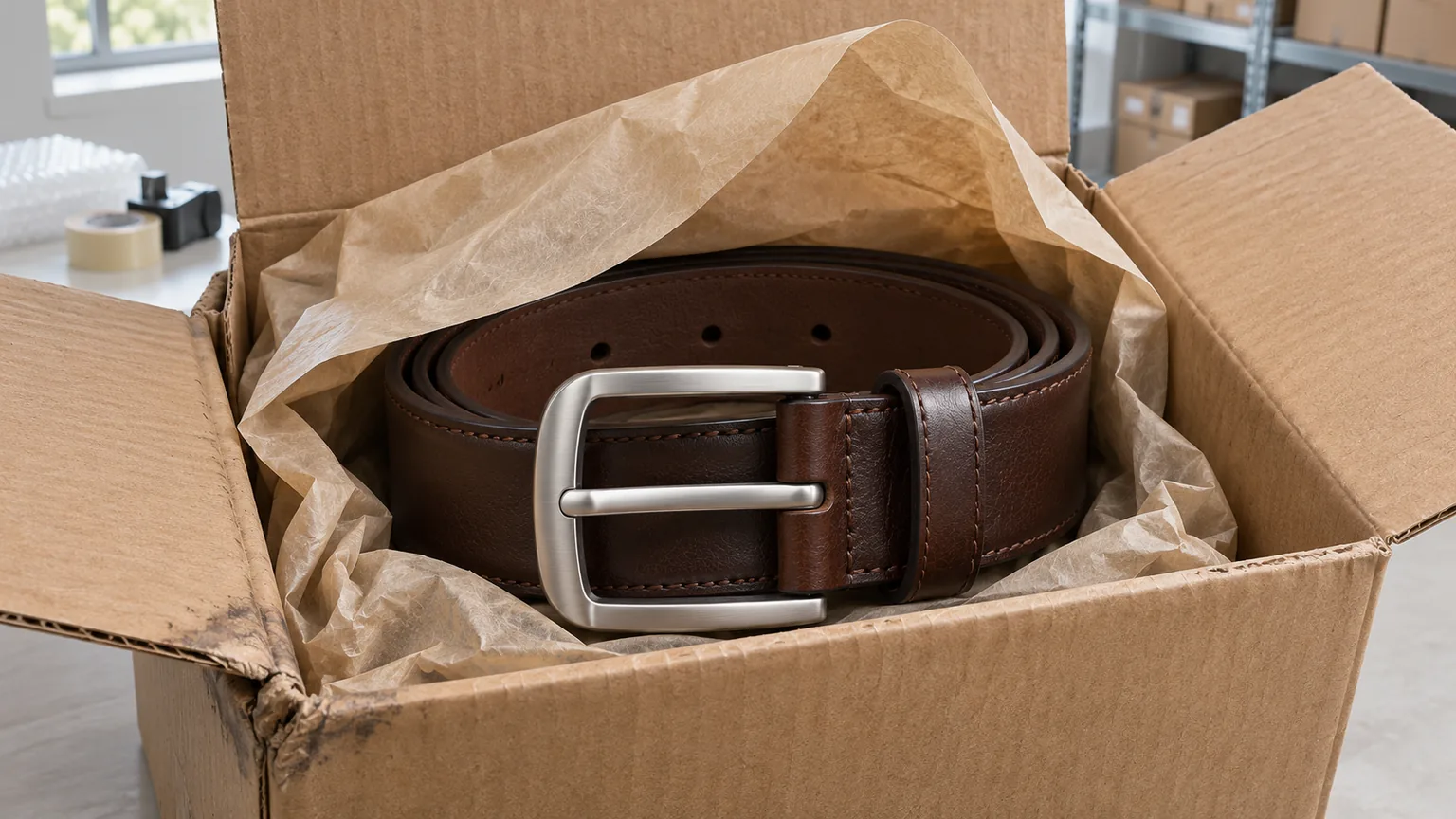
For contact comparisons, identify which surface touches which. Face-to-face rolled belts, a face against a lining, and a face against a printed wrap are different arrangements. Preserve the relevant geometry when it matters. Testing flat pieces far apart may provide a useful material baseline while missing the contact arrangement associated with the complaint.
Interpret a difference cautiously when several variables changed. If the replacement uses a different coating, backing and packaging, an improvement does not identify which change mattered. The combined revision may still be commercially acceptable, but it supports a different conclusion from a controlled explanation of the original cause. Preserve that distinction in the development record.
Illustrative investigation: tack beneath a wrap band
Suppose a retailer reports tack primarily beneath the narrow bands used to hold rolled synthetic belts. This is a hypothetical investigation, not a HongDing customer case. The first proposed response is to add a different surface finish. That response may be premature because the reported location is connected to a particular contact arrangement.
The team first identifies the affected belt article and band stock, separates inspected units from uninspected inventory, and retains unopened examples. It compares the marked region with adjacent face material, noting any band print, residue, gloss change or visible coating damage. It also asks whether the same material without that band has comparable observations. These steps narrow the question without assigning fault.
The next comparison might retain the current belt article and compare the current band with a proposed alternative under an agreed arrangement. If changing the band also changes tightness, contact area or storage conditions, those differences need to be recorded. Otherwise, the result cannot be attributed confidently to the band chemistry alone.
If the alternative performs better in the agreed comparison, the team still needs to review retail presentation, barcode handling, protection and the approved finish. The decision could be a packaging revision, further material investigation or a broader construction change depending on the evidence. It is not automatically permission to release all existing stock after removing the old bands.
Ask the supplier and laboratory questions they can answer
Send a concise specimen history with the material identification, photographs, affected locations, contact materials and observed sequence. Separate what is known from what is inferred. A useful statement is “tack was recorded after unpacking, at the wrap contact,” rather than “the plasticizer leaked during shipment” when neither the substance nor the time of onset has been established.
Ask the material supplier which layers and formulation revisions the supplied article includes, which care and contact restrictions apply, and whether relevant changes occurred between the approved sample and affected lot. Ask the testing provider what examination can distinguish the plausible explanations and what matched references are needed. Do not demand a single named chemical test before explaining the question it must resolve.
A laboratory identification of a surface substance may narrow the possibilities without establishing when or why it arrived there. Match analytical findings to the construction and contact history. Conversely, a successful functional test does not identify the chemical origin of tack. Chemistry, product performance and commercial acceptance answer related but different questions.
Carry the supported change back into production
Once the team selects a revision, identify exactly what changed: the face article, finish, bonding route, edge material, cleaning instruction, packing contact or another controlled element. Keep the approved appearance, dimensions and buckle function visible in the revision brief. A substitution that resolves one observation but changes the belt’s hand, profile or retail presentation needs a new product decision.
Review the revised assembled belt and its intended packing together. A face-material result alone may not cover the edge finish, lining or added joint; a packaging-only comparison does not qualify a different face material introduced later. Retain approved samples and the relevant component identities so repeat orders use the same accepted basis.
HongDing’s project-specific quality planning connects material and manufacturing checks with agreed acceptance requirements. For this type of issue, the useful contribution is coordinating the sample, component and packaging information needed for a controlled revision. That is different from promising an immediate diagnosis from a photograph or a fixed lifetime for every synthetic material.
Bring the belt and its contact history into the discussion
Share photographs, the material or order reference if available, where tack appears, what contacted the belt and any existing reports. An affected sample and a reference sample can help define the next comparison. Early information is enough to start a discussion; the exact investigation and revised sample scope can then be agreed with your team.