Key takeaways
- Specify the leather article and layer, not only the word nubuck or suede.
- Approve nap direction and shade under fixed viewing conditions.
- Test the finished belt because edge, adhesive and hardware contact can change the surface.
- Neither material has one universal care or wear result; the actual article and finish decide the outcome.
Begin with a defensible material identity
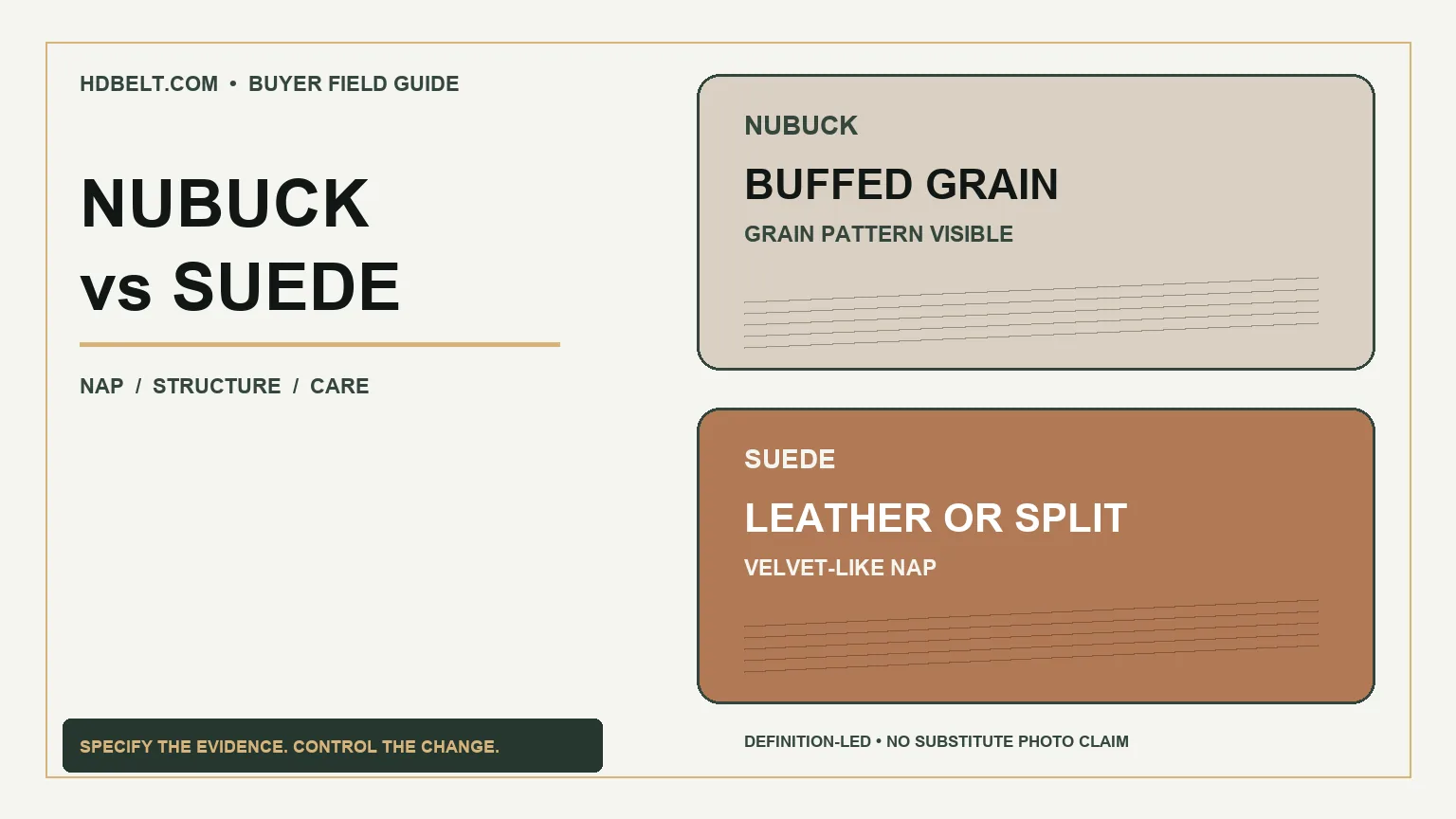
ISO 15115:2019 defines nubuck as leather snuffed or buffed to create a velvety effect while the original grain pattern remains visible. The same vocabulary defines suede, also called velour, as leather or split leather whose wearing surface is mechanically finished to create a velvet-like nap. These definitions block a common procurement error: approving a surface word without identifying the leather layer.
The standard was confirmed in 2025 and remains the current published edition while revision work is listed. Record the supplier’s article code, animal source where relevant, grain or split identity, tanning route, dye and surface treatment. A hand-feel sample without that record cannot control a reorder.
| Field | Nubuck | Suede |
|---|---|---|
| ISO identity | Buffed leather with grain pattern visible | Leather or split leather with mechanical nap |
| Buyer must verify | Original grain remains identifiable | Whether article is grain or split |
| Shared feature | Velvety nap | Velvet-like nap |
Treat nap as a measurable visual condition
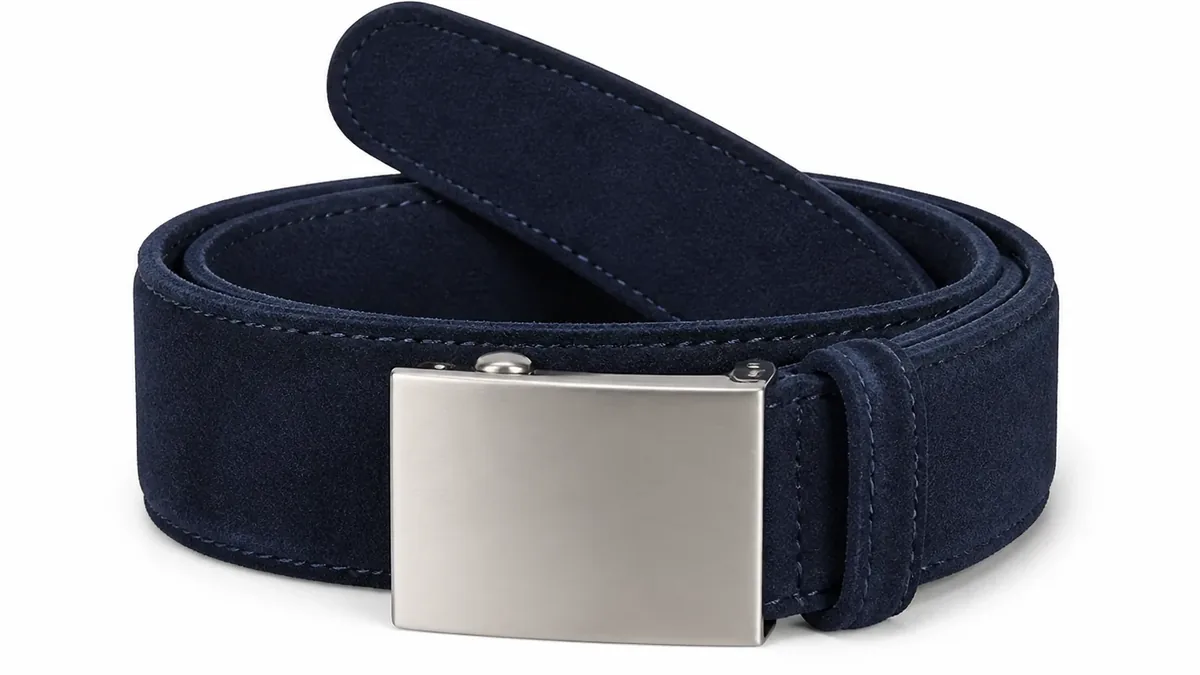
ISO defines nap as fine fibers that create a two-tone effect when stroked in opposite directions. That shift is part of the material, not automatically a defect. The buyer still needs an approved direction, shade range and inspection lighting so production is not judged by changing hand strokes.
Cut all straps in the agreed nap direction when directional shade matters. Mark the direction on the retained leather reference and cutting instruction. Mixed direction can make a single colorway appear to contain two shades when belts lie beside each other at retail.
Compare structure on the actual article
Nubuck retains the original grain pattern under its buffed surface, while suede may come from a split. That distinction can influence body and surface behavior, but the name alone does not establish thickness, tear behavior or firmness. Ask for the finished article values and approve them against the belt construction.
A lined dress belt, an unlined casual belt and a soft tie belt place different demands on the leather. Judge bend, return, hole shape and edge profile on the full strap stack. Do not transfer a footwear or bag assumption to a belt without testing the belt geometry.

Design edges and hardware around the nap
A raw, folded, stitched, painted or bonded edge creates a different border against a napped face. Edge paint can create a crisp contrast, while a raw edge can expose split layers or shed fibers. Approve the edge on both sides and inspect it after bending.
Buckle bars, keepers and packaging ties can flatten or polish the nap. A metal finish that looks clean on smooth leather may leave visible tracking on nubuck or suede. Place the actual hardware on the production-intent strap and define acceptable contact marks before bulk.
Control color and transfer separately
Shade, nap direction and surface transfer are separate questions. Approve a physical color range, then define dry and wet rubbing checks relevant to the product and market. Record the method, specimen condition and acceptance grade in the program; this article does not invent a universal pass value.
ISO 11640 specifies a method for determining colour-fastness behavior under to-and-fro rubbing. Referencing the method does not set a pass grade. The buyer’s test record should identify the leather face and nap direction, conditioning declaration, dry or wet condition, number of cycles, transfer or surface-change rating, and buyer-set acceptance value.
| Record field | Why it matters | Release evidence |
|---|---|---|
| Specimen identity | Nubuck or suede label is not enough | Article code, face/layer and color |
| Conditioning declaration | Moisture and compression can change appearance | Declared state before comparison |
| Rub condition | Dry and wet exposure answer different questions | Method condition and cycles |
| Nap orientation | Opposite strokes alter the two-tone view | Marked direction and fixed lighting |
| Result | Transfer and surface change are distinct | Rating, photo and buyer-set limit |
Inspect light-colored linings, labels and packaging after contact with the finished belt. A clean loose swatch cannot reveal transfer at a folded keeper or under shipping pressure. Use the packed product for the packaging-contact check.
Write care language for the approved finish
Leather Naturally notes that nubuck’s sanded grain-side nap can absorb water or liquids and that suede often comes from the reverse or split side. That guidance supports caution, not a universal care recipe. Surface treatments, oils and waxes can change the response.
Ask the material supplier for the care route tied to the exact article. Validate any brush, cleaner or protector claim before putting it on packaging. Avoid telling consumers to use a generic smooth-leather cream on a napped surface unless the supplier has approved it.
Condition samples before comparing shade and nap, then record the conditions used by the approval team. A belt moved directly from compressed transit packaging may show temporary nap tracks that differ from settled appearance. The inspection instruction should distinguish a recoverable surface track from permanent polish, transfer or fiber damage.
Use one approval matrix for material and belt
| Approval object | Record | Reject when |
|---|---|---|
| Leather article | Supplier code and layer identity | Identity changes without approval |
| Nap and shade | Direction, lighting, physical range | Mixed direction or out-of-range shade |
| Strap build | Thickness, lining, bonding, edge | Bend or edge differs from sample |
| Hardware contact | Approved marks after use | Unexpected polish, crush or transfer |
| Care claim | Validated method for article | Generic unverified instruction |
Keep the approved leather reference with the finished belt sample. If the supplier changes the split source, buffing, dye, oil, wax or finish, reopen the visual and performance checks affected by that change.
Define natural variation separately from workmanship defects. The buyer may accept controlled nap or grain variation while rejecting bald patches, hard polished zones, loose fibers, stains, adhesive marks or inconsistent direction. Use paired photographs and physical limits where words such as ‘even’ or ‘soft’ leave too much room.
Inspect across the size range. Longer straps may expose a larger hide area and create more opportunity for shade or nap variation. Short samples can understate that risk. The production approval should include the most demanding length and the edge construction intended for bulk. Retain that sample beside the material reference so inspectors can judge the complete product, not an isolated swatch. Record the viewing direction, lighting, conditioning state and accepted nap orientation with the reference for every approved colorway and size.
Use a wear-review sequence instead of a vague promise that one material ages better. Photograph the baseline, then record bend zones, buckle-bar contact, keeper passage, packaging contact and any approved cleaning trial. Recondition and photograph from the same direction after each stage. Judge nap recovery, permanent polish, color transfer, edge response and fiber damage against buyer-set limits; do not turn a single article result into a universal nubuck-versus-suede claim.
Choose by product architecture
Choose nubuck when the specification requires a buffed grain-side identity with the original grain pattern still visible and the approved article delivers the required body. Choose suede when an approved leather or split-leather article delivers the intended velvet-like nap, hand and construction. Neither name proves durability, firmness or quality by itself; the article record and finished-belt evidence make the decision.
| Decision field | Nubuck route | Suede route | Evidence to freeze |
|---|---|---|---|
| Material identity | Buffed grain pattern remains visible | Leather or split leather with mechanical nap | Supplier article and layer declaration |
| Product architecture | Use only when article body suits strap stack | Use only when article hand suits strap stack | Finished thickness, lining and bend sample |
| Edge / hardware | Check grain-side nap beside edge and bar | Check nap, split exposure and contact tracking | Production-intent belt photos |
| Retail care | Article-specific napped-leather instruction | Article-specific napped-leather instruction | Supplier-approved care wording |
| Release | Physical reference plus complete belt | Physical reference plus complete belt | Signed sample identity and test record |
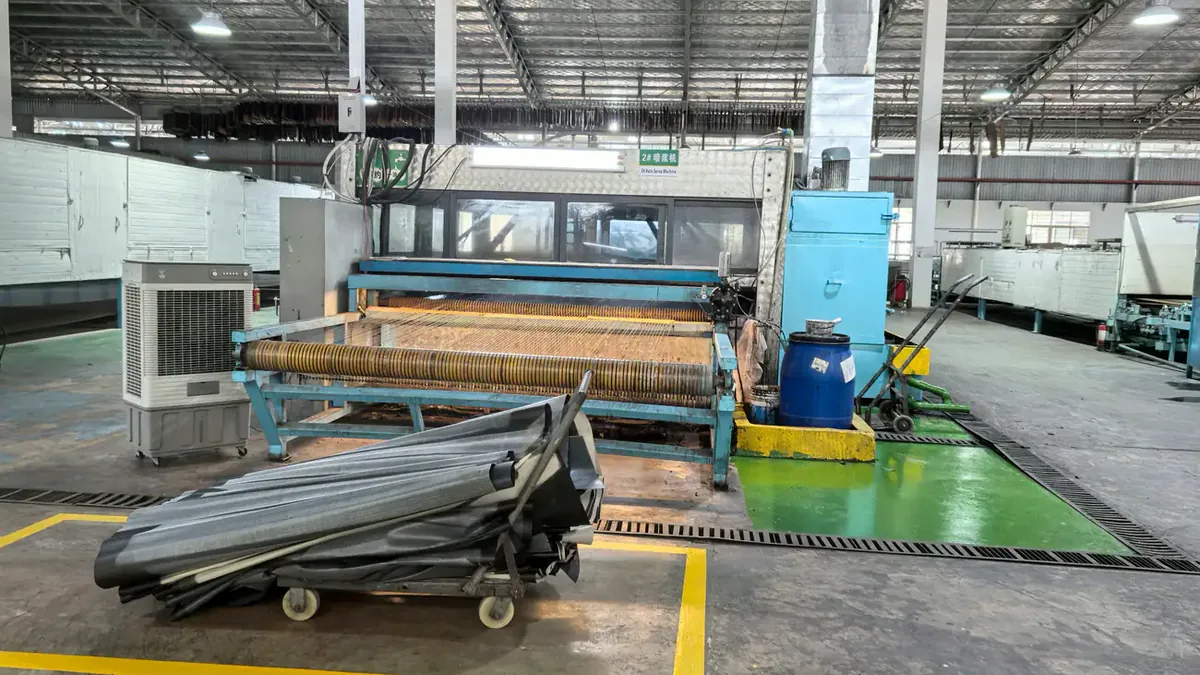
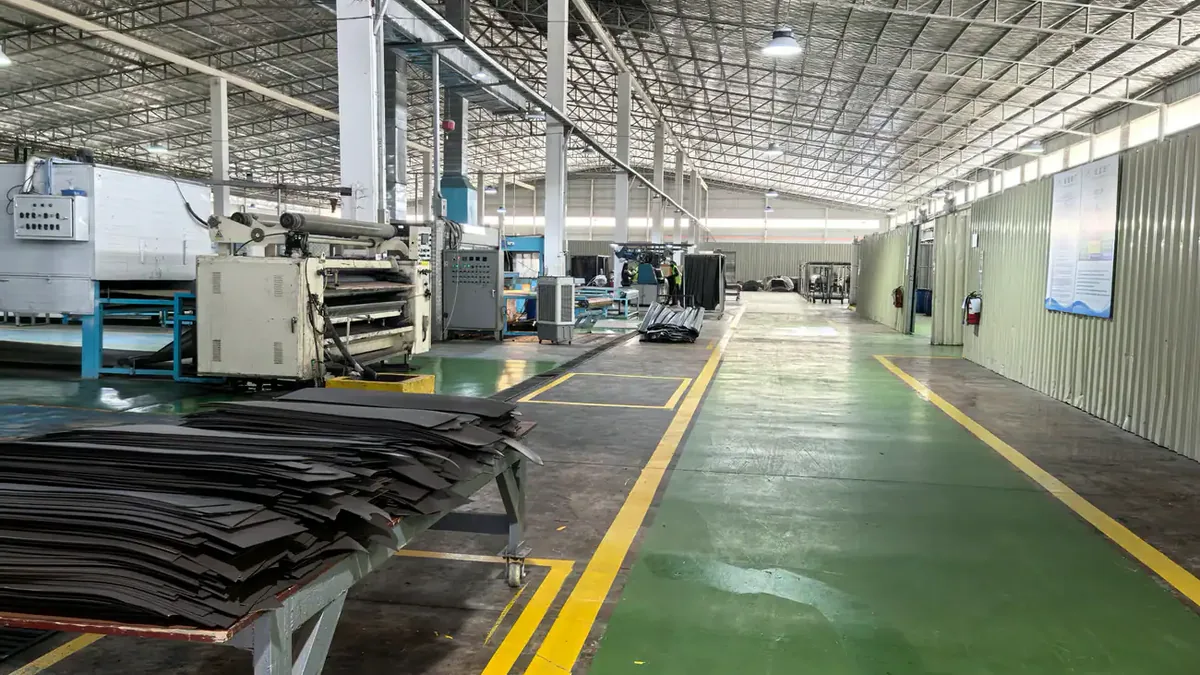
Media disclosure: the photographs in this guide are verified HDBelt production and suede assets. HDBelt’s current media library contains no photograph verified and labeled as nubuck, so the factory images are not presented as nubuck samples. Material identity remains a supplier-document and physical-approval question.
Review HongDing’s suede belt manufacturing options for the commercial route. Pair that review with the tanning-route comparison, leather colorfastness guide and pre-shipment inspection checklist.
Verified source notes
- ISO 15115 leather vocabulary
- ISO 11640 colour fastness to rubbing
- Leather Naturally modern leather processing guide
- Leather Naturally care guide
Frequently asked questions
Is nubuck the same as suede?
No. ISO defines nubuck as buffed leather with the original grain pattern still visible; suede may be leather or split leather finished to create a velvet-like nap.
Is nubuck always stronger than suede?
No universal result follows from the name. Strength and firmness depend on the actual leather article, layer, thickness, finish and belt construction.
Why does the color change when brushed?
The nap fibers lie in different directions and reflect light differently, creating the two-tone effect described in ISO leather vocabulary.
Can nubuck or suede belts use edge paint?
Yes, when the edge system is compatible with the leather and passes bend, appearance and adhesion checks on the finished belt.