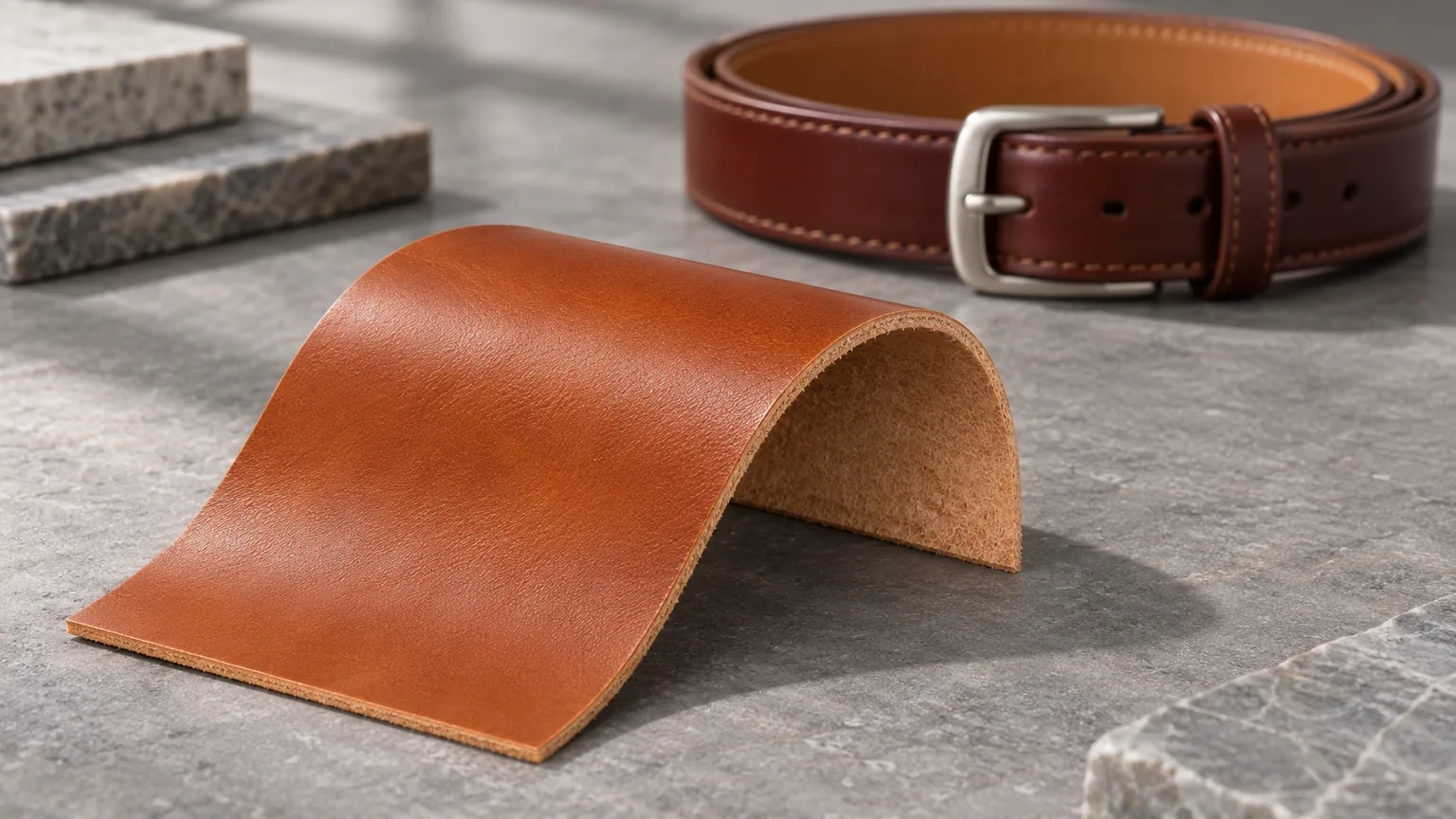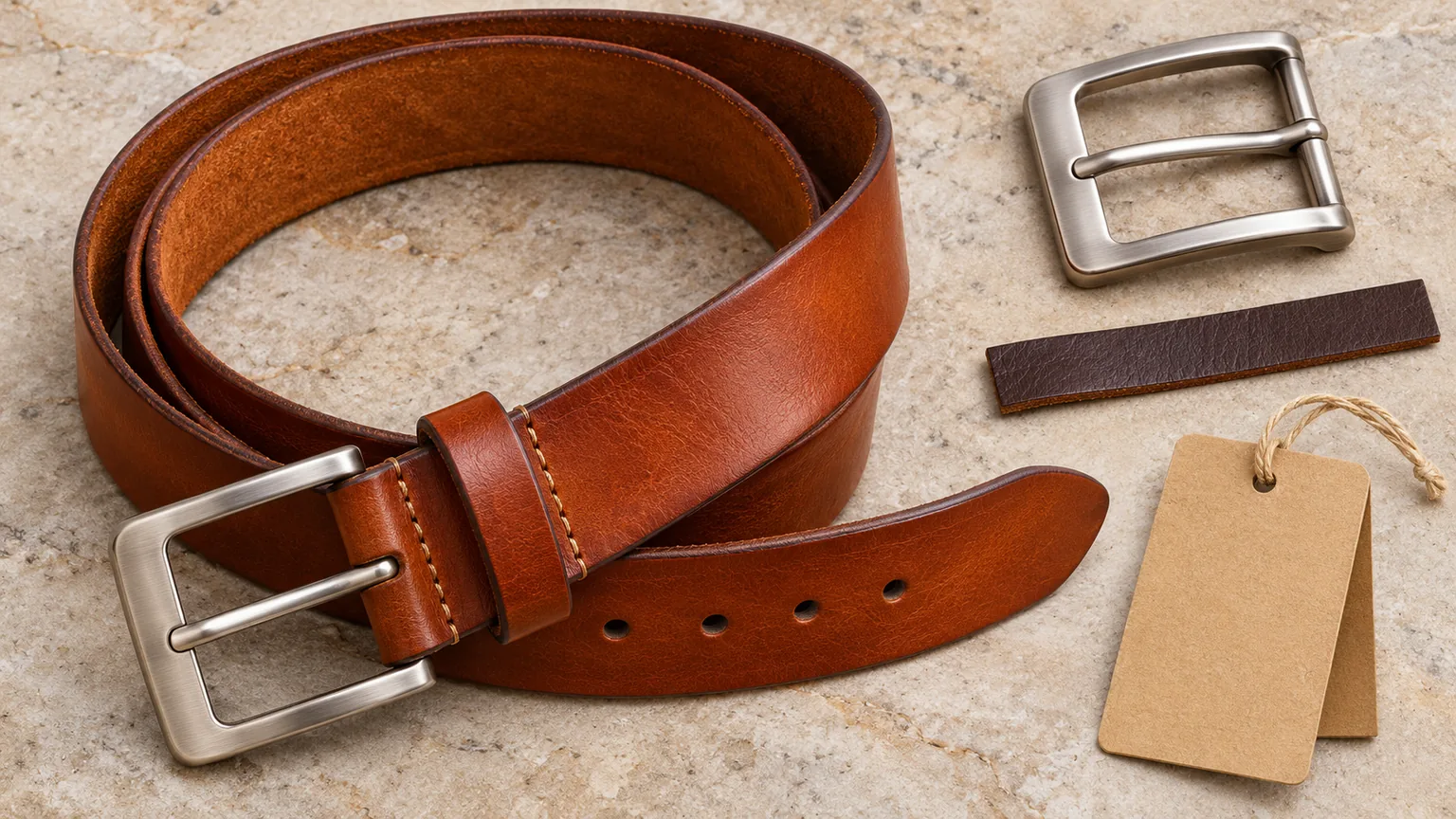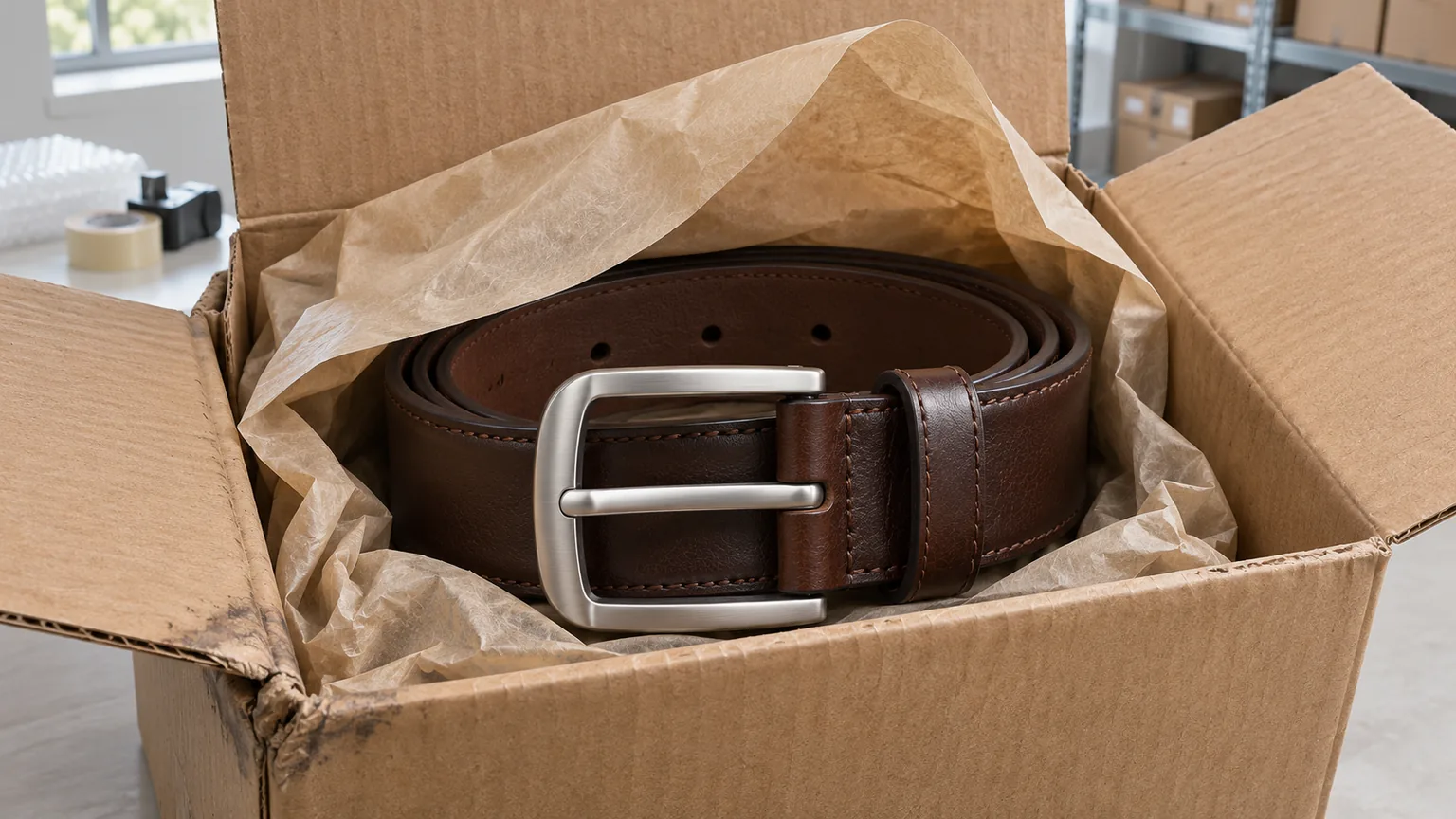

A brand buying a new fashion belt for sale in California should review the finished accessory and its components for regulated PFAS. California expressly includes leather in its textile definition. A tannery declaration for the face material leaves an open question if another supplier finishes the lining, coats the webbing or adds a repellent after assembly. Before approving the order, identify who chose each treatment, which materials the evidence covers and when the belt will be offered for sale.
Which belts belong in a California textile review?
California Health and Safety Code sections 108970 and 108971 cover textile accessories of a kind ordinarily used in homes or businesses. Since January 1, 2025, the restriction has applied to making, distributing, selling or offering new, previously unused covered articles for sale in the state. The definition reaches items made wholly or partly from the specified classes of fiber, yarn or fabric and expressly includes leather. That gives a buyer a sound basis to include an everyday leather dress belt, a woven casual belt and a combination of the two in the review. The state’s summary of the chaptered textile law identifies the activities covered.
Use the selling description to establish the purpose, then check the physical construction. A metal chain worn at the waist presents a different scope question from a chain threaded with leather. A belt described as vegan may have a textile backing beneath a polyurethane face. Inspect the back of the strap, the folded end at the buckle and a section of the stock before deciding which materials to ask about. An unresolved classification goes to the brand’s compliance adviser with the drawing and material descriptions. An accessory buyer should avoid deciding scope from a category name on a supplier’s price list.
The severe-wet-conditions provision has a narrow purpose. It concerns specialized outdoor apparel for experts, intended to protect health and safety during extreme, extended exposure and outside general consumer marketing. The delayed prohibition for qualifying apparel runs to January 1, 2028, with disclosure requirements for affected items in the interim, including online listings. A webbing belt merchandised for weekend hiking has no evident basis for that treatment simply because it gets wet. For professional protective equipment, establish the actual protective use, product specification and statutory category before relying on an exclusion.
Two separate questions determine whether PFAS are regulated
California addresses perfluoroalkyl and polyfluoroalkyl substances as a class. Section 108970(g) has two routes into the restriction. One concerns deliberately added PFAS that serve a functional or technical purpose. It also addresses qualifying PFAS constituents of added chemicals and intentional breakdown products with such an effect. The other concerns the presence of PFAS in the article or a component at specified levels, measured as total organic fluorine. A person purchasing finished belts usually needs input from both the people specifying the finishes and the laboratory interpreting any measurements.
California textile decisions for a new belt, reviewed November 13, 2026
Scroll horizontally on a small screen to see the purchase decision.
| Question | Date and scope | Purchase decision |
|---|---|---|
| Was a functional PFAS intentionally added? | Covered new articles from January 1, 2025 | If confirmed, resolve the formula before releasing the style. A low analytical result cannot cancel this finding. |
| Does the numerical criterion apply? | From January 1, 2025, at or above 100 ppm measured as total organic fluorine in the product or a component | Match the result to the specimen and its component identity. Ask the lab to resolve unclear units or scope. |
| Will sales or offers continue in 2027? | From January 1, 2027, the threshold falls to 50 ppm, including exactly 50 ppm | Review carryover inventory and replenishment against the date of the covered activity. |
The California Department of Toxic Substances Control report on AB 1817, pages 10–11 sets out both thresholds and the material definition. Consider a hypothetical component with a lab-confirmed result of 75 ppm attributable to PFAS on the required measurement basis. It is below the 2026 numerical threshold and above the 2027 threshold. The result alone cannot settle intentional use in either year. Buying stock in December and keeping the online offer active in January crosses a meaningful boundary. Give the merchandising team a dated decision about those units before it renews the listing.
Follow the finish from the sample room to the packed belt
Start with the feature the merchant actually wants. A request for a brown belt that cleans up with a damp cloth leaves room for a simpler finish than a promise that oil will bead on the surface. If the team asks for stain resistance, find out whether the tannery supplies that property with the leather, the webbing mill delivers a treated roll, or the assembler sprays the completed strap. Each route puts the relevant formulation knowledge in a different place. The assembler can describe its own operations while obtaining a material-specific statement from the upstream source.

On a lined dress belt, record the item code and finish revision of the face leather. Turn the sample over and record the lining separately. If the two were bonded, ask what adhesive system was specified. Ask which edge preparation, color and topcoat will be used after trimming, and whether any final wipe or spray stays on the finished belt. This is a map of where information could be missing. An adhesive or edge coat appearing on the map does not establish that it contains PFAS.
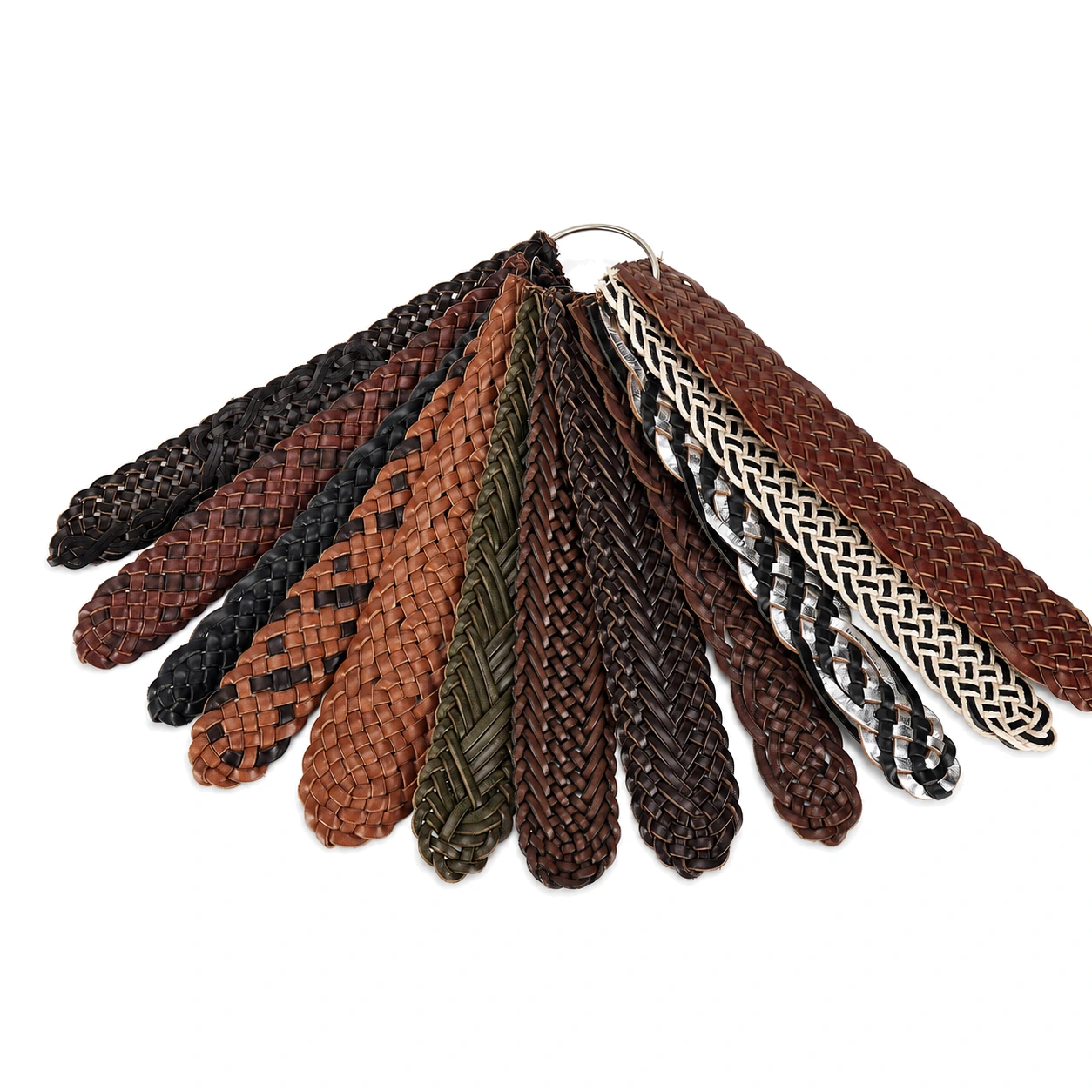
On a braided belt, follow the individual strands before they disappear into the pattern. The dark and light strands may come from different suppliers or may reach the braider with different surface treatments. The leather tip or buckle tab may arrive as a finished component. A statement from the braiding workshop about substances it applies cannot by itself answer what was applied before the strands arrived. Record a short reference against each group of strands that actually shares a supplier, material article and finish. This makes a later color substitution much easier to assess.
For an all-webbing style, investigate the finish rather than assuming a fiber name answers the question. Two polyester tapes can share a weave and color yet be ordered to different repellency specifications. Ask the mill to identify the tape code after dyeing and finishing. If a leather end tab is added, retain the tab supplier and finish references too. A photograph of a drop of water on the tape can illustrate a performance demonstration. It cannot establish what substance produced the effect.
Read the material declaration before accepting the certificate
The manufacturer must supply the people offering a covered product for sale or distribution in California with a certificate of compliance under section 108971(c). An authorized official of the manufacturer signs it, and electronic delivery is permitted. It states that the textile article complies with the chapter and contains no regulated PFAS. For private labels, section 108970(b) adopts the manufacturer definition in section 108952(l). Check the actual label with the compliance lead. The definition covers a maker whose name appears on the label and can also cover the party identified under federal labeling law as the one for whom the product was made or by whom it was distributed. Resolve which entity will sign before asking the factory for a certificate in its own name. A mill’s email about the yarn helps build the evidence, but it leaves the finished product and the other makers’ operations unaddressed.
In a private-label program, a useful document handoff connects the certificate to style numbers, covered variants and the construction revision. Ask the signer which versions the statement covers and retain the answer together with the order. Those identifiers are practical ways to avoid misapplying the certificate. A statement for one leather item code can be technically accurate and still irrelevant to the new belt if the factory substituted another tannery’s stock. Avoid treating an unsigned sales presentation covering an entire factory as the signed manufacturer document for the merchandise.
A short request often works better than asking for everything in the mill’s files. Give the supplier the material reference, color or finish family, application and intended California selling period. Request a dated response covering relevant intentionally added substances in the specified formulation, including treatments supplied by a subcontract finisher. Ask the supplier to describe which stages it controls and to identify missing upstream information. It can provide a scoped declaration or arrange a confidential exchange with the responsible technical party where full recipes cannot be shared. Leaving a field unanswered is an open question, rather than evidence of absence.
Read commercial claims literally. A declaration limited to PFOA and PFOS addresses named substances. An answer referring only to a water-based carrier describes how a coating is delivered. Neither answers a class-wide functional-use question about all ingredients. A safety data sheet can help identify a product code and manufacturer for follow-up. Ask whether the information supplied actually covers the finished formulation and its application to the ordered material. Keep the resulting correspondence with the approved sample record so the next order can be checked against the same facts.
Ask the laboratory what its result can support
Before sending samples, tell the laboratory which statutory criterion you need to evaluate. A targeted test reports on a specified list of compounds. A total fluorine measurement can include inorganic fluorine. A result expressed as total organic fluorine has a different analytical scope and still does not identify every chemical or establish the reason it is present. Have the lab explain its sample preparation, how it addresses inorganic contributions, its reporting limit, and whether the result is suitable for interpreting the California textile criterion for the submitted material.
Identify the part the lab will receive. If a face layer is thin and firmly bonded to a backing, ask whether the lab can isolate a representative specimen or needs material retained before bonding. Grinding a finished belt together with its heavy metal buckle could mask a localized issue. Conversely, an uncoated offcut taken before the final application cannot answer a question about the finished surface. Agree on the specimen with the laboratory before the workshop sends whatever is easiest to cut. Attach a picture showing the sampled area and record whether it came from development stock or the production lot.
Check reporting limits against the decision date. For example, a report saying the result is below 80 ppm on the relevant measurement basis leaves room for a value above 50 ppm. That report cannot distinguish the two sides of the 2027 threshold. Near a decision limit, ask the laboratory how uncertainty affects interpretation and whether another specimen or method is justified. When a result raises a question about fluorine sources, keep the affected material identifiable while the lab and supplier investigate. A purchase decision made on an unexplained number is difficult to defend or reproduce.
A November sample with two possible production routes
Consider a hypothetical run of navy woven belts with brown leather tips planned for California spring sales. The mill identifies the navy tape and declares the specified finish. The converter can match the leather tip to a named material, but its declaration describes the leather as delivered to its premises. At the last sample review, the design team asked for a cleaner, darker edge. The converter now applies a clear coat over the color. The previous paperwork has a precise gap: it stops one step before the operation the buyer approved.
One practical route is to keep the appearance and ask for information specific to the clear coat, then agree with the laboratory and compliance lead on the evidence needed for the finished tip. Another is to remove or replace that finishing step. California requires manufacturers removing regulated PFAS to use the least toxic alternative, including considering an alternative design. A replacement finish also changes the belt the buyer is purchasing. Compare the revised tip with the signed sample at the edge, flex it at the return around the buckle and check for color transfer where the tip rubs against light-colored webbing. Record the observed differences before signing off the new construction.
The right commercial choice depends on when the finish can be identified, how visible the revised edge is and whether there is time for another sample. Ask the supplier to quote the paths separately, including any new sampling and the point after which treated material has been committed. If the factory has already cut some tips, separate those units by batch. A change approved for future production has no bearing on tips already finished under the earlier formula. Keep them identifiable until the responsible buyer decides which stock the available evidence supports.
What should reopen the file on a repeat order?
Make the repeat-order comparison at the level where a change can actually happen. A different strap width cut from the same finished roll may use the same material evidence. A finish applied by a new mill under the same retail color name needs a fresh comparison. Ask the factory to flag substitutions of finish, material source, lining or post-assembly treatment before production. When nothing relevant has changed, link the new purchase order to the existing dated evidence and evaluate whether the intended sales period introduces a new threshold.
Keep claim wording aligned with what was established. A signed certificate addressing regulated PFAS under a California chapter is narrower than an absolute consumer claim that a belt contains no fluorinated substances. Similarly, DTSC’s separate listing for aftermarket textile and leather treatments concerns treatment products. If a retailer plans to bundle a spray with the belt, identify that separate product and its supplier for review. Separating these records lets the retailer change a care accessory without losing the history of the belt itself.
Bring the sales window and a sample to the first discussion
When discussing material and sourcing documentation with HongDing, share the California selling period, a belt photograph or existing sample, and any performance wording proposed for the product page. Mark the face, lining, edge or webbing treatment you want to retain. That gives the development team enough detail to identify the materials involved, coordinate available supplier records and propose an alternative sample where a finish remains unresolved.