
A useful belt quality claim connects an identified product and agreed requirement to an observed problem, a defensible quantity and a separately documented commercial request. Start with what can be examined together. A close-up photograph can establish that one specimen has a visible condition; it cannot, by itself, establish the cause, the number of affected belts or the amount another party owes.
For a brand or retailer, the immediate task is to protect stock and preserve the information needed for a joint investigation. This guide explains how to build that working record. It addresses the evidence behind a particular claim, while our supplier scorecard guide addresses performance across orders. Neither a score nor a claim spreadsheet determines contractual liability.
Identify the belt before describing the failure
Use the purchase-order line, SKU, size, color, production or shipment reference and carton identity to establish which goods are involved. Include the applicable specification revision and approved sample reference. If several revisions were supplied, keep their records separate until the investigation establishes whether they share the same problem. A generic style name is rarely enough to connect a returned belt to a particular buckle finish, lining or packing instruction.
The requirement matters because the same observation can lead to different decisions. A decorative edge that differs from an approved sample is an appearance question; an edge separating during the agreed flex assessment is a performance question. A buyer’s preferred appearance, first introduced after delivery, is different from a missed requirement already accepted for the order. Record the distinction without assuming that it resolves every commercial discussion.
Where the requirement is ambiguous, preserve the ambiguity in the file. Attach the original approval, relevant annotated drawing and any accepted deviation, with dates and revision identifiers. Do not silently replace the original tolerance with a tighter receiving preference. Ask the parties to establish the comparison basis before continuing a large inspection, otherwise the inspection may produce a precise count of a condition that has not yet been consistently defined.
Describe an observation that another person can reproduce
Write the observation before proposing its cause. “The lining lifts at the buckle fold after the stated movement” identifies a location and condition. “The factory used bad glue” jumps to an explanation that the photograph does not prove. An interface problem may require examination of the surfaces, construction and exposure history before deciding which process or material change is appropriate.
For each issue, assign a short defect code and specimen identifier. Photograph the complete belt, the relevant region and a close view with a suitable scale where dimensions matter. Keep the original image files, then add marked copies for discussion. Marking arrows over an image is useful; overwriting the original or applying filters that change color removes information another reviewer may need.
A short video can clarify an intermittent buckle problem, but show the starting configuration and how the belt is operated. Include strap orientation, relevant adjustment position and the action that produces the behavior. Describe any load or movement actually used. An uncontrolled hand demonstration can help locate a question; it should not be labeled as a formal strength test or compared directly with a laboratory result obtained under different conditions.
For appearance complaints, use comparable lighting, camera position and approved references. A phone image of a dark buckle under warm store lighting is not a reliable numerical color comparison with a supplier’s studio photograph. If the decision requires measured color or a specific test, agree on the method and specimen identity rather than trying to settle it through progressively enlarged screenshots.
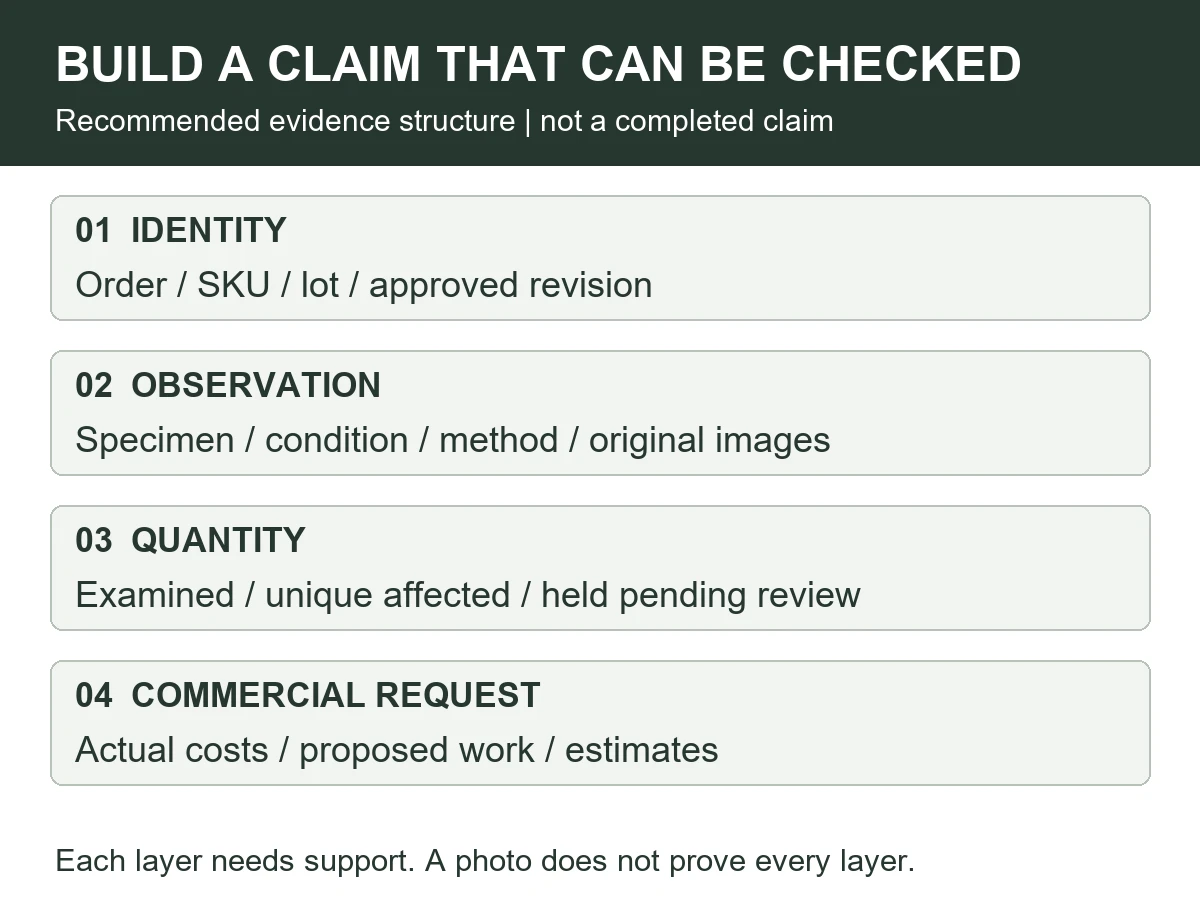
Separate confirmed findings from stock placed on hold
Keep at least three quantities distinct: units actually examined, unique units meeting the agreed defect definition and units held pending further investigation. Held stock can be much larger than the confirmed defective quantity. A hold is an operating decision under uncertainty, not a completed count of defective goods.
Count belts and observations separately. One belt with a scratched buckle and lifting edge is one affected unit with two recorded conditions. If each defect team reports its own total and those totals are added, the claim can count the same belt twice. A specimen-level identifier allows the quantity summary to retain both problems without overstating unique affected pieces.
Also preserve how the examined units were selected. Customer returns, cartons with visible transit damage and randomly selected unopened cartons are different populations. A count from a deliberately selected problem group describes that group. It should not be presented as a measured defect rate for every unit in the shipment.
NIST explains acceptance sampling as a means of deciding lot disposition, rather than primarily estimating lot quality. Accordingly, keep an acceptance decision separate from a claim’s quantity calculation. A failed sample does not automatically mean every belt in the lot is defective, and a passed sample does not prove that no defective belt exists. The appropriate next investigation depends on the sampling basis, defect and decision required.
Agree whether further examination should establish a count, distinguish lots or test a suspected mechanism. A controlled sort may quantify an observable condition. A destructive laboratory assessment may answer a performance question while consuming specimens. These are different uses of inventory, so record the agreed scope, handling instructions and how units will be classified afterward.
Preserve stock and samples before changing their condition
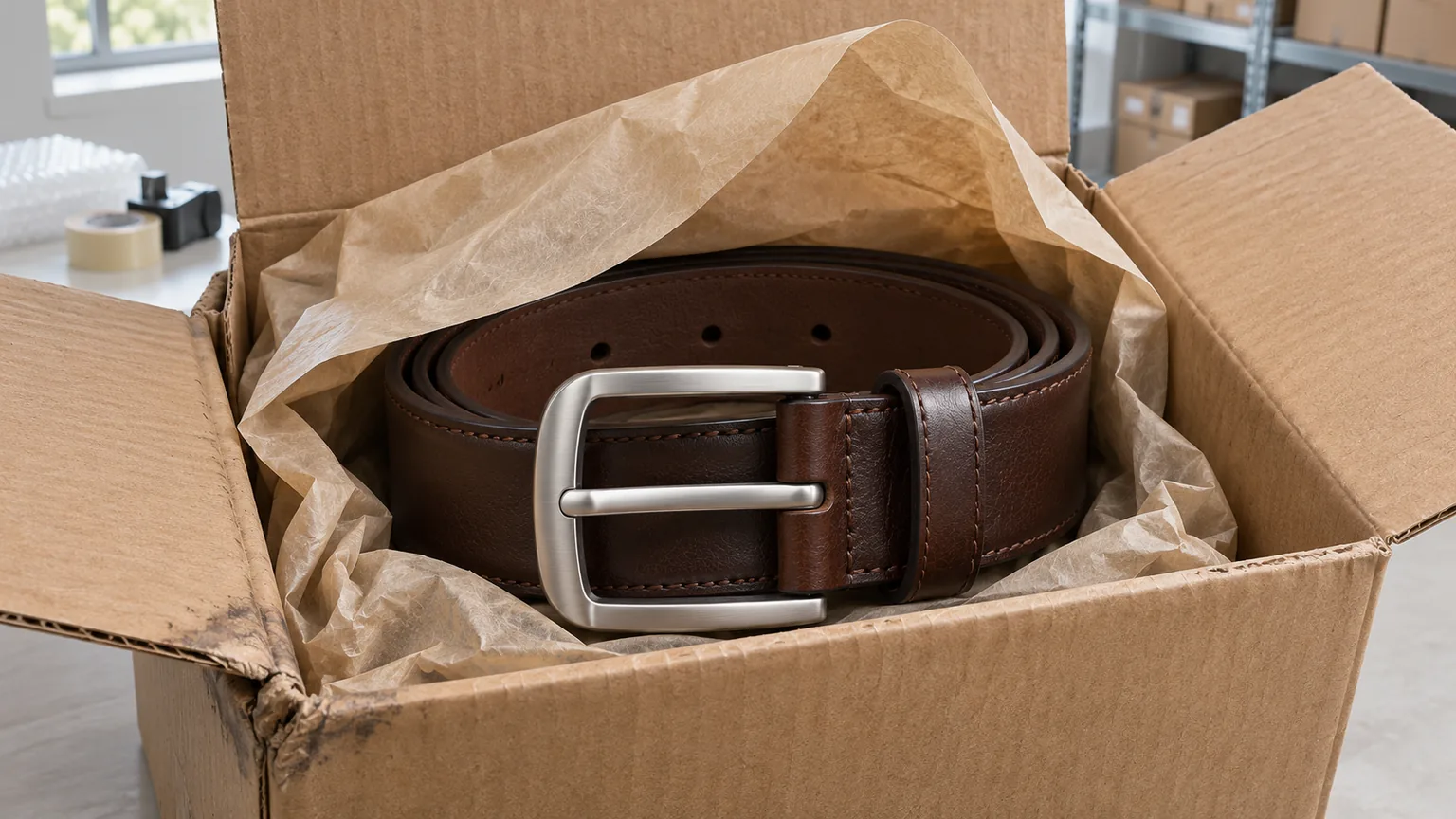
Separate suspect stock physically or through a reliable inventory status, and record who controls release. Keep the carton, protective wrap, retail packaging and labels when they may help explain identity or exposure. If the problem appears only where two surfaces touched, the original packing arrangement can be more informative than a cleaned belt presented alone.
Retain representative affected specimens and relevant comparison specimens. Identify whether a comparison came from the same carton, another production lot, an approved sample or an unused retained piece. “Good sample” is not a sufficient description: the comparison must answer a defined question. A pristine development sample and a returned worn belt differ in more than the suspected production variable.
Record custody in a practical way: specimen ID, holder, transfer date, work performed and resulting condition. Before cleaning, reworking, returning or disposing of goods, agree on necessary examination and documentation. Some urgent protective actions cannot wait for a complete investigation; record what was done and why, and preserve the remaining evidence. Do not imply that preserving a claim file replaces any applicable product-safety response.
This separation helps both parties. The buyer can manage exposure while the supplier examines a specific construction and production route. HongDing’s project-specific quality planning connects approved requirements, inspections and release information. For an actual issue, the useful starting point is the relevant order and specimens, not a promise that every symptom has the same cause or remedy.
Build a cost schedule that can be checked line by line
Separate costs already incurred from proposed work and estimated future effects. Attach source records for actual amounts: invoices, time logs, carrier documents or a retailer’s itemized charge. A supplier can investigate a documented sorting invoice differently from a forecast of possible lost sales. Combining both into one unexplained “loss” figure hides the distinction and makes settlement harder to discuss.
For labor, state the activity, quantity handled, recorded time, rate and currency. Distinguish inspection from repair, repacking and administration. If the same technician performs several activities, allocate the time once using a clear basis. A nominal cost per belt is useful only when the number of belts and included work are defined. Do not add a second general labor allowance for work already included in a contractor’s invoice.
For materials and freight, connect each amount to the relevant disposition. Replacement buckles used in an approved rework, unused replacement inventory and return freight are different entries. Keep taxes, credits, recoverable amounts and currency conversions visible where they affect the calculation. The commercial review should determine treatment; the evidence schedule should make that review possible.
A retailer debit note is evidence of a charge raised by that retailer. It is not, on its own, proof that the manufacturer caused the condition or accepted the same chargeback terms. Similarly, issuing an invoice or deducting money from a payment does not resolve a disputed quality finding. Review the governing agreement and applicable requirements separately from the technical investigation; this guide does not prescribe a universal notification deadline or entitlement to deduct.
Scroll horizontally on narrow screens to compare all columns.
| Category | Supporting record | Decision still needed |
|---|---|---|
| Incurred sorting cost | Identified stock, work log and invoice | Scope, necessity and agreed allocation |
| Proposed rework | Method, trial result and itemized quotation | Technical suitability and authorization |
| Retailer charge | Original debit note and its calculation basis | Contractual treatment and causation |
| Projected lost sales | Explicit assumptions and forecast basis | Uncertainty and applicable commercial treatment |
Illustrative example: one shipment, several different totals
Suppose a buyer receives 1,200 belts and places the shipment on hold after finding scratches on several buckle faces. This is a hypothetical arithmetic example, not a HongDing shipment or an acceptance-sampling plan. The buyer and supplier agree to examine an identified group of 200 belts using a shared appearance reference.
The examination records 18 belts with the agreed scratch condition. Five of those same belts also have an unrelated label issue. The file therefore contains 23 defect observations but 18 unique affected belts in the examined group. It must not describe 23 defective belts, 18 defective belts across the entire shipment, or 1,200 confirmed defective belts. The remaining 1,000 have not yet been classified by this examination.
Assume the actual inspection contractor records four hours at an agreed illustrative rate of $25 per hour. The incurred inspection amount is $100. A separate proposal to replace hardware on the 18 identified belts is not yet an incurred repair cost. If the proposed rate includes replacement hardware and fitting labor, those items should not be added again as separate amounts.
The next useful decision is whether the scratch pattern tracks a particular carton, packing contact or handling stage, and whether the identified condition can be reliably screened. The parties might agree to a larger examination or a controlled sort. Its resulting quantities should update the record with a new revision, while preserving the original 200-unit examination as part of the history.
If a repair is proposed, compare a trial repaired belt with the required finish and original assembly. Replacing a buckle can affect attachment, keeper position or strap appearance. A visually improved face does not by itself establish acceptable attachment performance. Agree on the relevant post-rework checks before scaling the repair and deciding which units can return to saleable inventory.

Send a working investigation pack, then resolve the open decisions
Organize the pack so that someone who did not discover the problem can follow it. A short opening summary should identify the order, current stock status, observed condition, known quantity and action requested. Link supporting files by specimen and document reference. A folder containing hundreds of unlabeled photographs transfers the interpretation problem to the recipient instead of helping resolve it.
- State the common comparison basis. Attach the applicable specification, approved reference and any accepted deviation.
- Explain the observation and selection. Include original images, specimen identities, examination method and how the examined goods were chosen.
- Reconcile inventory. Show examined, affected, held, reworked, released, returned and disposed quantities without overlapping counts.
- Separate the commercial schedule. Identify actual costs, proposals and estimates, each with its own supporting record.
- Ask for specific next decisions. Define the requested joint review, additional specimens, disposition approval or technical trial and nominate the responsible contacts.
Maintain an open-issues list rather than editing disputed statements into apparent agreements. For example, the parties may agree that the buckle has a scratch while disagreeing about when it occurred. They may agree on the affected count while the proposed repair remains unapproved. Recording these distinctions lets technical work proceed without suggesting that an acknowledgment has settled responsibility.
When two inspection results conflict, first reconcile identity, condition, reference and method. Did both teams inspect the same finish revision? Were the belts examined before or after unpacking, cleaning or rework? Was the same visible region assessed? A second report can be internally accurate yet answer a different question. Agree on a comparable reassessment before averaging incompatible numbers or selecting the more convenient result.
Close the goods decision and the commercial decision separately
The goods decision states what happens to each identified group: release, rework, replacement, return or another agreed disposition. Keep evidence that the agreed work was completed and that the resulting belts meet the relevant acceptance basis. Reconcile the final quantity against movements during the investigation, especially where some stock was already sold, returned or transferred between warehouses.
The commercial decision records agreed amounts, currency, treatment of credits and any unresolved items. Link it to the final cost revision rather than leaving an old estimate attached to a new settlement summary. Neither a credit note nor a replacement shipment automatically demonstrates that a recurring production issue has been corrected.
For recurrence prevention, a separate corrective-action record may be needed. ASQ’s 8D framework distinguishes containment, verified root causes and validated corrective action. A claim file supplies observations and consequences to that work; it should not pretend that agreeing a payment proves the technical cause. Keep the corrective-action reference and effectiveness review connected to the order while leaving commercial closure clearly identified.
Start with the order and the observed problem
For a HongDing belt project, share the order or product reference, a clear description of the issue, representative images and the current stock status. Available specifications and quantity records help define the next review; gaps can be identified together. HongDing can discuss the relevant construction, inspection and packing information within the project scope, without assuming a cause or settlement before the facts are understood.