
No: passing a nickel-release test does not prove that a belt buckle contains no nickel, and it does not establish that nobody will react to wearing it. Composition, release under test conditions and a consumer health promise are different claims. Match the wording to the exact finished parts, method, condition and conclusion covered by the evidence.
This is a guide to reviewing belt copy and supplier descriptions. For the wider regulatory file, see our REACH evidence guide. A description such as “nickel-free finish” should prompt a scope question before it becomes a hangtag claim for the entire belt.
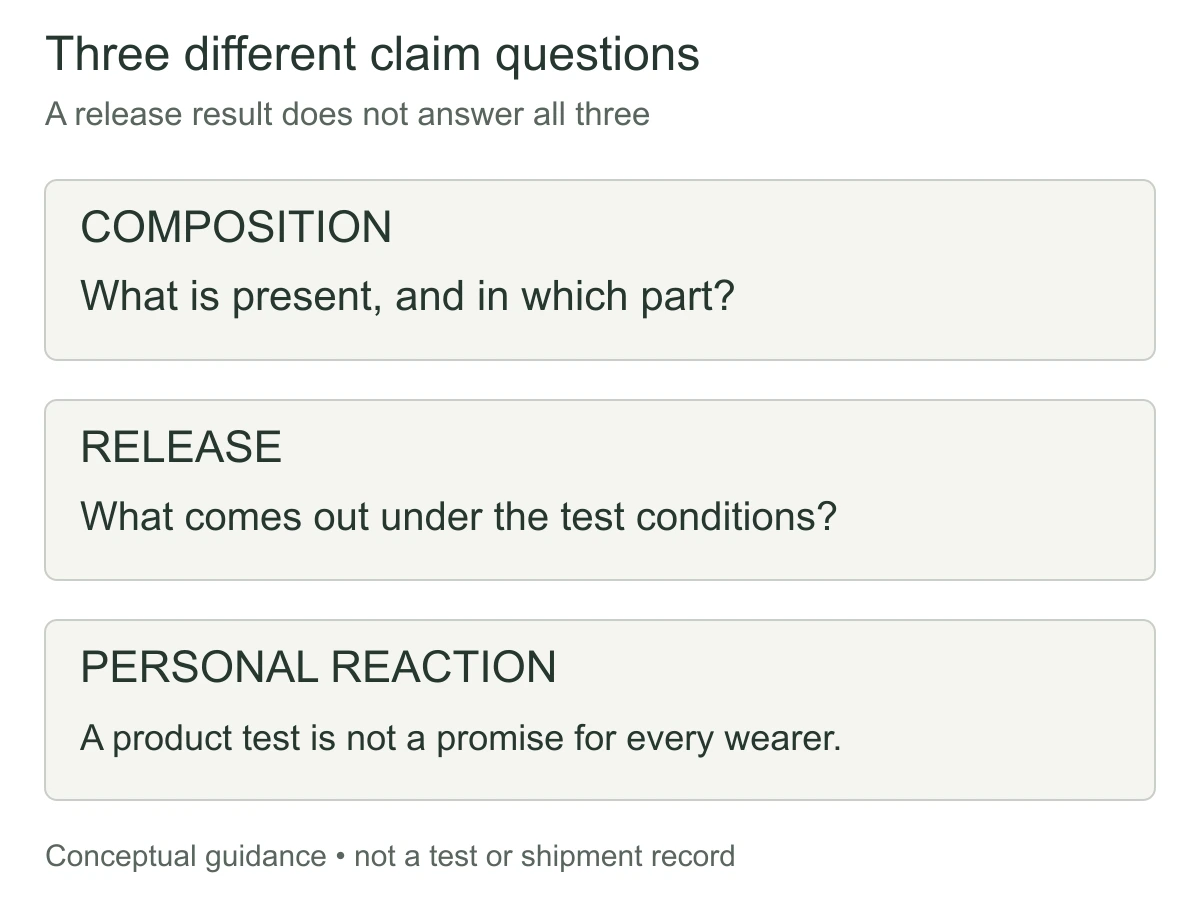
Separate three questions before writing one claim
Composition asks what is present. Is the statement about the base alloy, one plating layer, the complete coating system or every metal component? Evidence for a nickel-free top finish does not establish the composition of the material beneath it. A supplier declaration needs an identified subject and a defined claim; vague “free” language can hide different interpretations.
Release asks what comes out under a stated assessment. EN 1811:2023 is a reference method for nickel release from relevant skin-contact articles. Its result addresses release, not a complete chemical inventory. Consequently, a low-release result can support a scoped release statement without supporting an absolute zero-content statement.
A health promise asks something broader. “Will not cause allergies” predicts an individual outcome. A release report does not test every wearer or every possible cause of a reaction. Do not turn a product-test conclusion into that promise, or treat “hypoallergenic” as a harmless synonym for the actual laboratory wording.
Match the evidence to the contact parts
The EU nickel restriction concerns relevant parts intended for direct and prolonged skin contact, rather than treating every metal item identically. ECHA’s contact guidance explains that contact question. For a belt, review the intended wearing arrangement and identify the surfaces that may contact skin; do not assume that the decorative front of the buckle is the only relevant part.
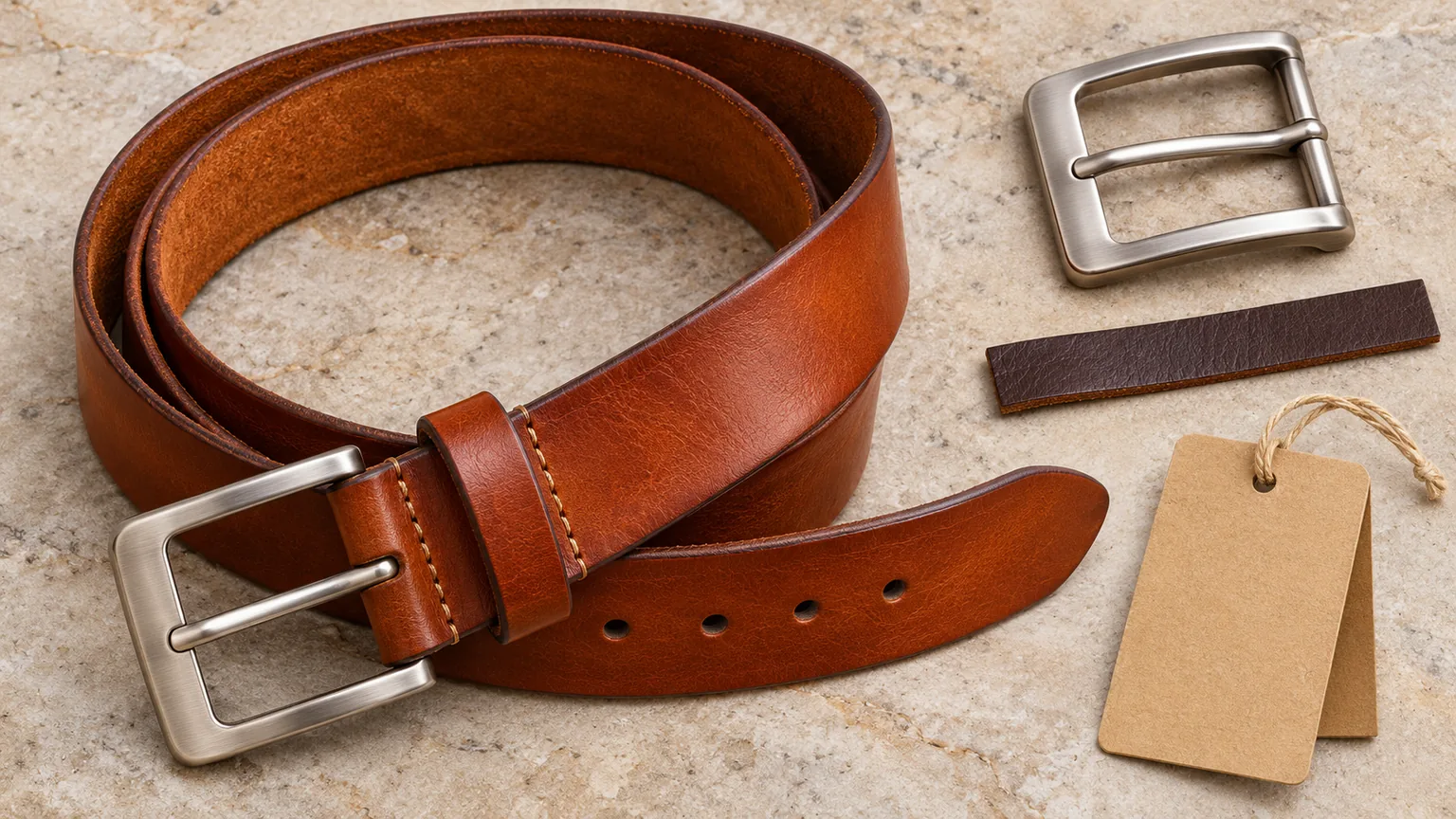
Inspect the assembled belt when making that map. A buckle back, metal keeper or exposed fastener may have a different finish or source from the main buckle body. Equally, a component should not be declared in scope merely because it is metal. Have the intended contact arrangement and applicable market requirements assessed, then align the laboratory brief with those parts.
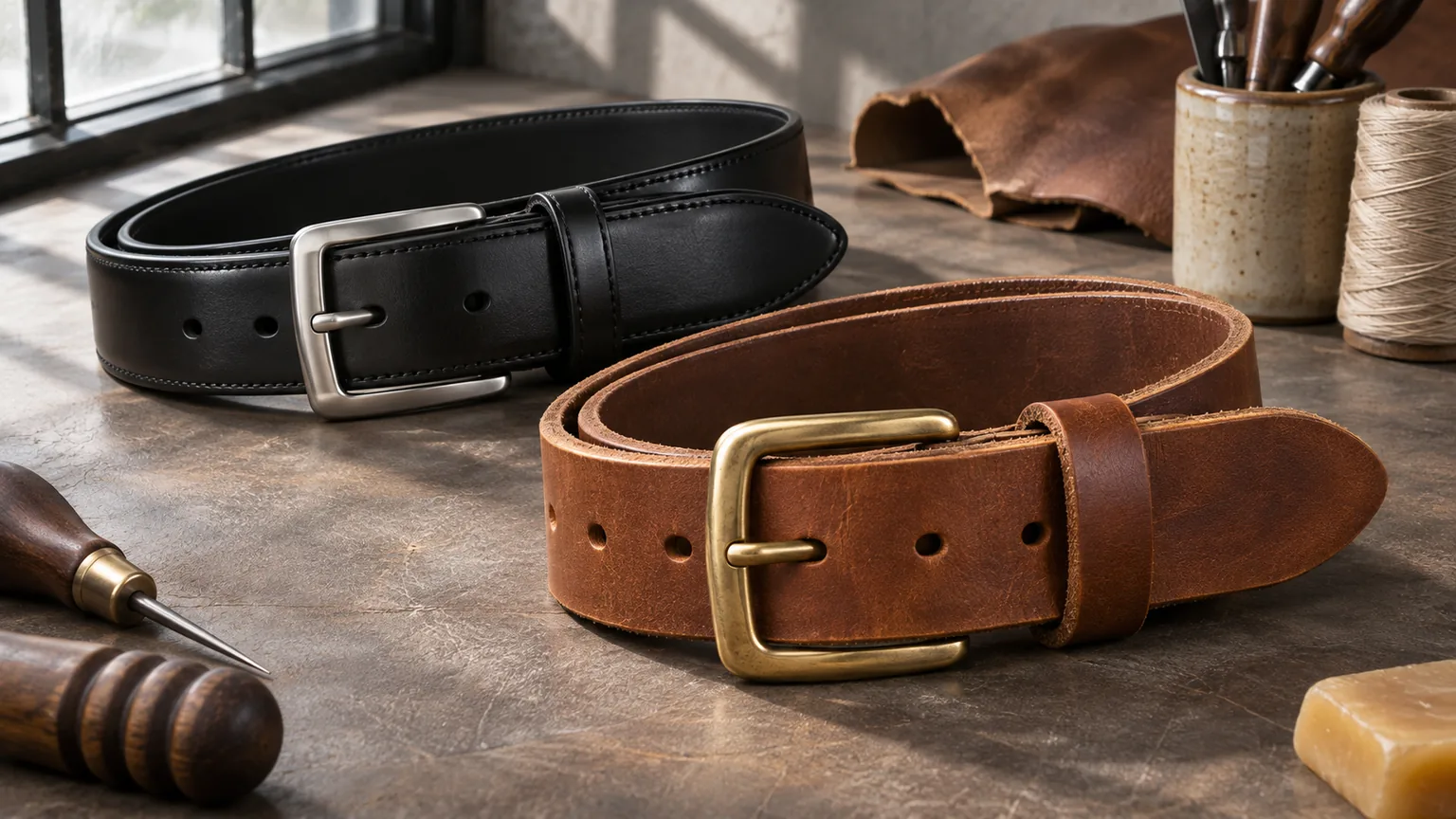
Ask which sampled finish and component revision the report covers. A result for a silver-tone frame does not automatically cover a later dark finish, a changed underlayer or a replacement fastener. Appearance is useful for identifying variants, but matching color does not demonstrate matching composition or release behavior.
A coated part needs the right preparation route
A new coated surface and the surface after wear may present different conditions. EN 12472:2020 describes accelerated wear and corrosion simulation before nickel-release assessment for coated articles within its scope. Its scope excludes articles with an outer coating containing nickel. The laboratory should select the applicable preparation and release route from the actual coating system, not simply apply the same sequence to every buckle.
Read the preparation and release results together. A decorative finish inspection, salt-spray result or coating-adhesion result answers a different question and cannot substitute for the relevant nickel-release assessment. The report should identify what was tested and how it supports the specific claim being considered.
Review the sentence, not just the supplier’s certificate folder
The following are illustrative editorial decisions, not approved claims for a particular HongDing product. Final wording depends on the actual evidence and market requirements.
Scroll horizontally on a narrow screen to read the claim and its correction.
| Proposed wording | Problem | Better next step |
|---|---|---|
| “100% nickel-free belt” | A buckle release result does not establish every component’s composition. | Define the composition claim and obtain evidence for its complete scope, or remove it. |
| “Allergy-proof buckle” | The wording promises a wearer outcome beyond a release test. | Remove the guarantee; state only the supported product-test conclusion. |
| “Tested for nickel release” | Testing alone says neither what passed nor which version was covered. | Identify the tested part, method, condition and supported outcome. |
For example, a business-to-business specification might identify a particular buckle and finish revision, then state that the sampled parts met the applicable nickel-release requirement under the named method and preparation, with the report reference. Use that wording only when those facts are established. It should not be shortened in retail copy into “contains no nickel.”
Once wording is approved, link it to the component specification. If hardware sourcing, plating or a relevant part changes, review whether the evidence and claim still apply before reusing the hangtag. This connects purchasing, product development and marketing around the same version instead of allowing each team to inherit a different shorthand.
Review hardware and intended wording together
Share the intended sales market, belt or buckle reference, proposed claim and any existing material or test documents. HongDing can discuss hardware coordination and the project-specific evidence questions with your team. Early references are sufficient to start; an unverified claim should remain open while the relevant scope is resolved.