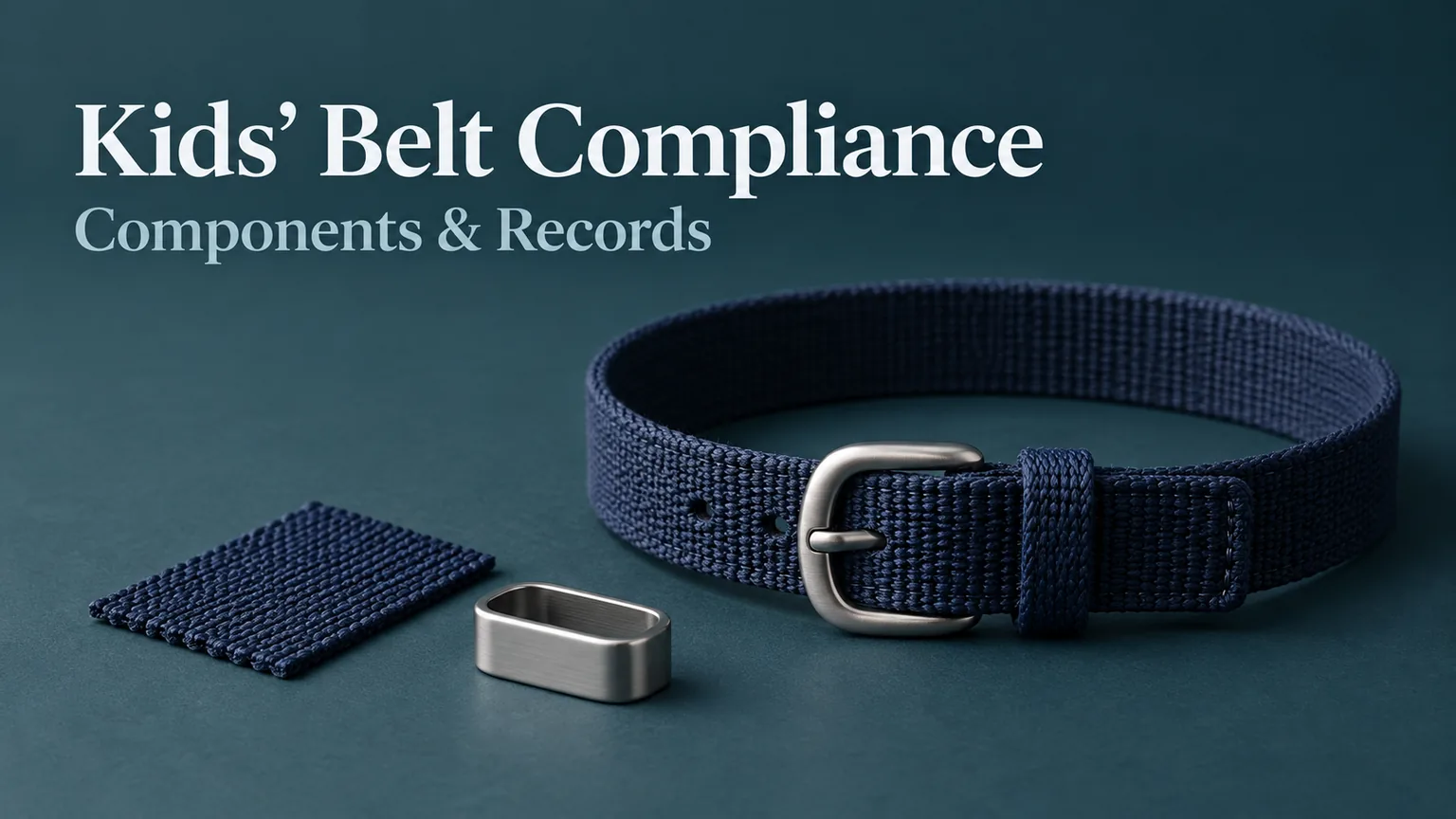
CPSIA compliance for kids’ belts starts with product classification and a component-level test plan, not a generic “CPSIA certificate” from a factory. For a belt intended primarily for children 12 or younger, buyers need to identify the applicable children’s product rules, substantiate compliance, arrange the responsible firm’s Children’s Product Certificate, and keep the product, materials, and shipment records connected. An ordinary clothing belt is not automatically a toy or child care article.
This guide addresses U.S. federal children’s product requirements relevant to belt development and sourcing, checked against CPSC guidance on October 3, 2026. It is a purchasing and documentation framework, not a legal opinion or a complete assessment of every state law, retailer requirement, or unusual product feature. Use the final design and intended market when agreeing scope with a qualified laboratory and your compliance adviser.
Classify intended use before requesting a test package
CPSC defines a children’s product as one designed or intended primarily for children 12 years old or younger. Its assessment considers the manufacturer’s reasonable intended-use statement, product presentation and marketing, how consumers commonly recognize the product, and the agency’s age-determination guidance. A small size is relevant, but it is not the entire classification. A “13+” label cannot override an inconsistent design and marketing context. See CPSC’s children’s product guidance.
For a school-uniform belt, document the intended age group and ordinary clothing function. For a costume belt with detachable play accessories, explain the play features instead of submitting it as a plain apparel accessory. The testing request should include photographs, packaging, product-page wording, and the proposed age range. A laboratory seeing only a strap sample cannot evaluate the whole product story.
Separate the U.S. classification from a retailer’s purchasing specification. A buyer may require additional chemical or attachment testing for commercial reasons. Those requirements can be legitimate contractual conditions, but they should be labeled as such. Otherwise, future buyers may mistake a particular retailer’s test package for a federal rule applying to every children’s belt.
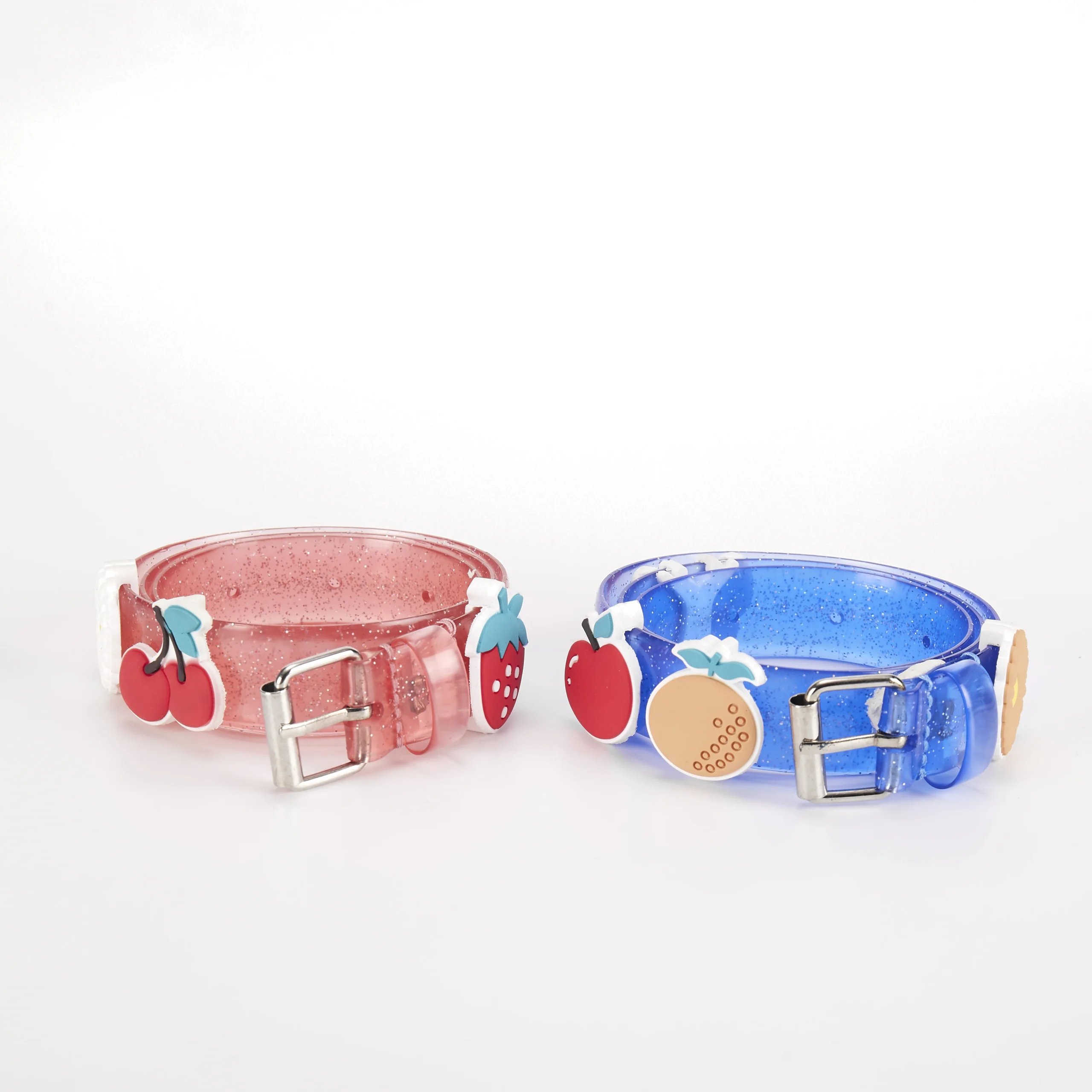
Treat substrate lead and surface-coating lead as different questions
The federal total-lead limit for accessible components of children’s products is 100 parts per million. A passing leather strap result does not establish that a metal buckle, rivet, keeper, or decorative fitting complies. Build the assessment around the actual accessible components and their identities. CPSC’s total-lead guidance also distinguishes a testing exemption from exemption from the underlying requirement: those are not the same thing.
Paint and similar surface coatings are subject to a separate 90 ppm lead limit under 16 CFR part 1303. The coating and the material beneath it therefore require separate scope decisions. CPSC explains that a separable film can be a surface coating, while electroplating and some inks incorporated into a substrate are treated differently. Have the laboratory classify the actual finish; “gold color” or “printed leather” is not enough to determine the method. See CPSC’s lead-in-paint explanation.
These distinctions have practical consequences for belt development. A painted decorative buckle can introduce a coating question in addition to the underlying component question. Changing only the visible color may change the coating formulation. A strap edge treatment or printed motif may also need review rather than being silently covered by an earlier report on the base material.
Do not assume a coating makes the substrate inaccessible. CPSC specifically distinguishes protective inaccessibility from covering a component with paint, coatings, or electroplating. A plated buckle is not automatically exempt from substrate lead requirements. Likewise, “natural leather” is not a complete basis for claiming a testing determination: the exact material, treatment, and conditions matter. The total-lead FAQs discuss these boundaries.
| Component | What to identify | Why it changes the review |
|---|---|---|
| Strap and lining | Material article, layers, treatments, colors, and supplier | One material name can cover different formulations and finishes. |
| Buckle and fittings | Base material, plating, paint, and component revision | Substrate and surface finish may require different evidence. |
| Prints and edge finishes | Formulation or article identity and application location | A finish may not be covered by the base strap report. |
| Decorations and added features | Material, attachment, intended function, and age appeal | They can affect both test scope and product classification. |
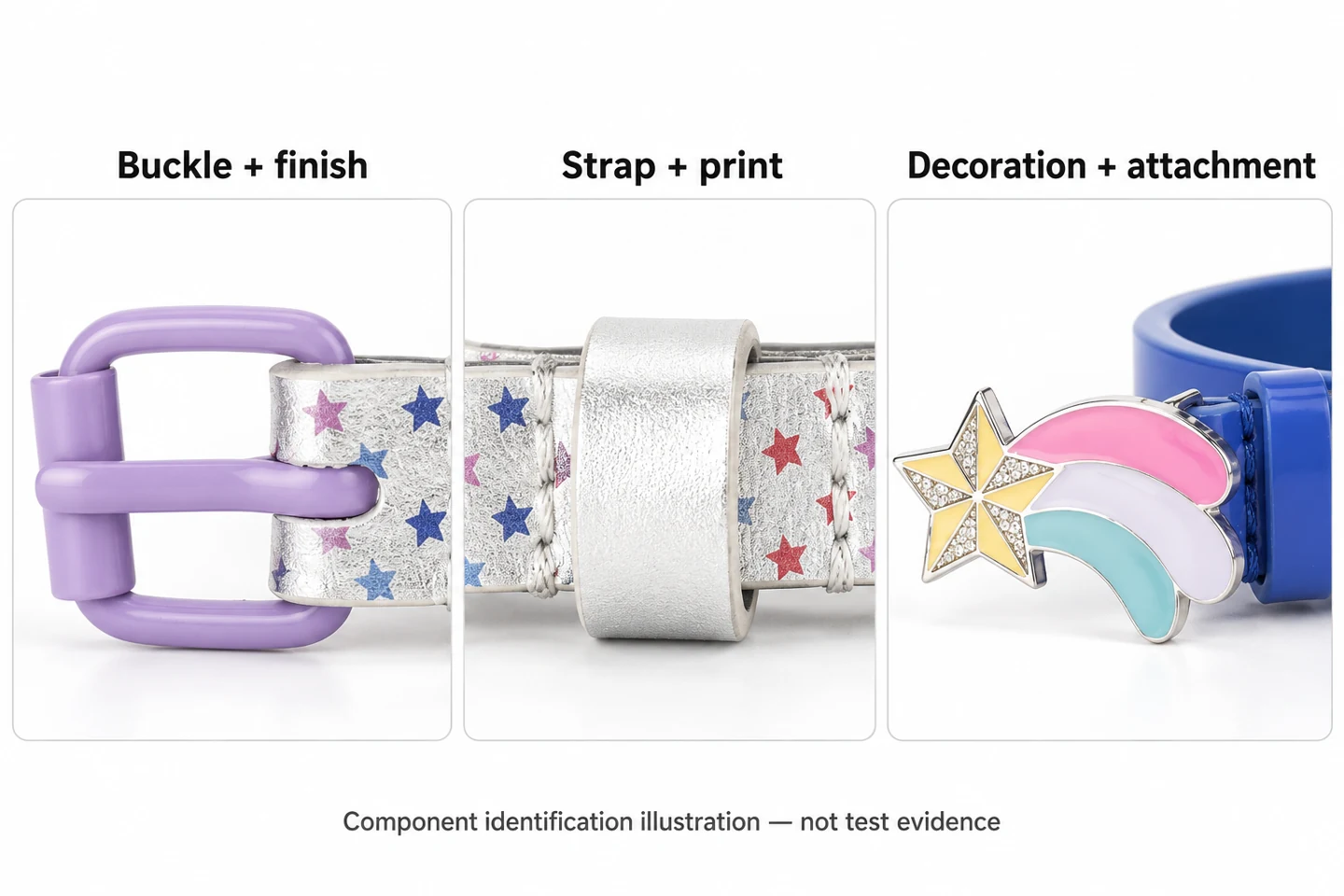
The table is a development map, not a laboratory instruction to test every row in the same way. The responsible firm should document applicable rules, any valid determinations, and the evidence route. That lets the team distinguish an unnecessary duplicate test from a genuinely untested component.
Do not apply every toy requirement to an ordinary clothing belt
Phthalates depend on the product category
The federal phthalates restriction discussed in CPSIA section 108 and 16 CFR part 1307 applies to defined children’s toys and child care articles, not indiscriminately to every children’s product. It restricts each of eight listed phthalates above 0.1% in the relevant accessible components. CPSC defines child care articles around sleep, feeding, sucking, or teething uses for children age three and younger. Its phthalates guidance provides the current substances and scope.
An ordinary clothing belt does not become a toy merely because a child wears it, nor does a plastic component alone establish that this federal restriction applies. A play-oriented costume accessory may raise a different classification question. Separately, a retailer can request phthalate testing under its restricted-substances policy even where that particular federal rule is not applicable. Keep the legal and contractual reasons distinct in the test matrix.
Small parts need an accurate applicability decision
CPSC lists children’s clothing and accessories among exclusions from the small-parts ban in 16 CFR part 1501. It would therefore be misleading to say that every ordinary kids’ belt must pass the small-parts cylinder test as a universal federal belt requirement. The agency’s small-parts guidance explains the exclusion and covered categories.
That exclusion is not a product-design endorsement of loose decorations or unreliable hardware. A buyer should still review detachable features, sharp or rough contact areas, prong behavior, and attachment durability for the intended age and use. Define any agreed mechanical evaluations separately from chemical compliance. A lead test does not tell you whether a rivet stays attached, and a pull check does not establish chemical compliance.
For unusual features, pause the generic apparel test request and resolve classification first. A belt sold with play equipment, electronics, or another functional accessory needs a product-specific assessment. Expanding the design can change the relevant rules even if the original strap and buckle remain unchanged.
Make the test plan match the product that will actually ship
Children’s products subject to applicable safety rules generally require testing by a CPSC-accepted third-party laboratory, subject to valid exceptions and determinations. Acceptance is tied to the relevant testing scope; a familiar laboratory name is not enough. Confirm the laboratory’s current acceptance for the rules in the agreed plan. CPSC’s third-party testing guidance distinguishes initial, material-change, periodic, and component testing.
Send a controlled bill of materials with the sample submission. Give each component a code that can be matched to the report description and photograph. For a belt, “silver buckle” is weaker identification than a component article, base-material description, finish reference, and supplier identity. If two visually similar buckles come from different sources, explain that difference before assuming one result represents both.
Do the same for colorways. A brown and black belt can share a construction but differ in finish formulations. Ask the laboratory how to group the product family and which evidence supports that grouping. Do not select a single attractive sample and retrospectively describe it as representative of every color, layer, and hardware option.
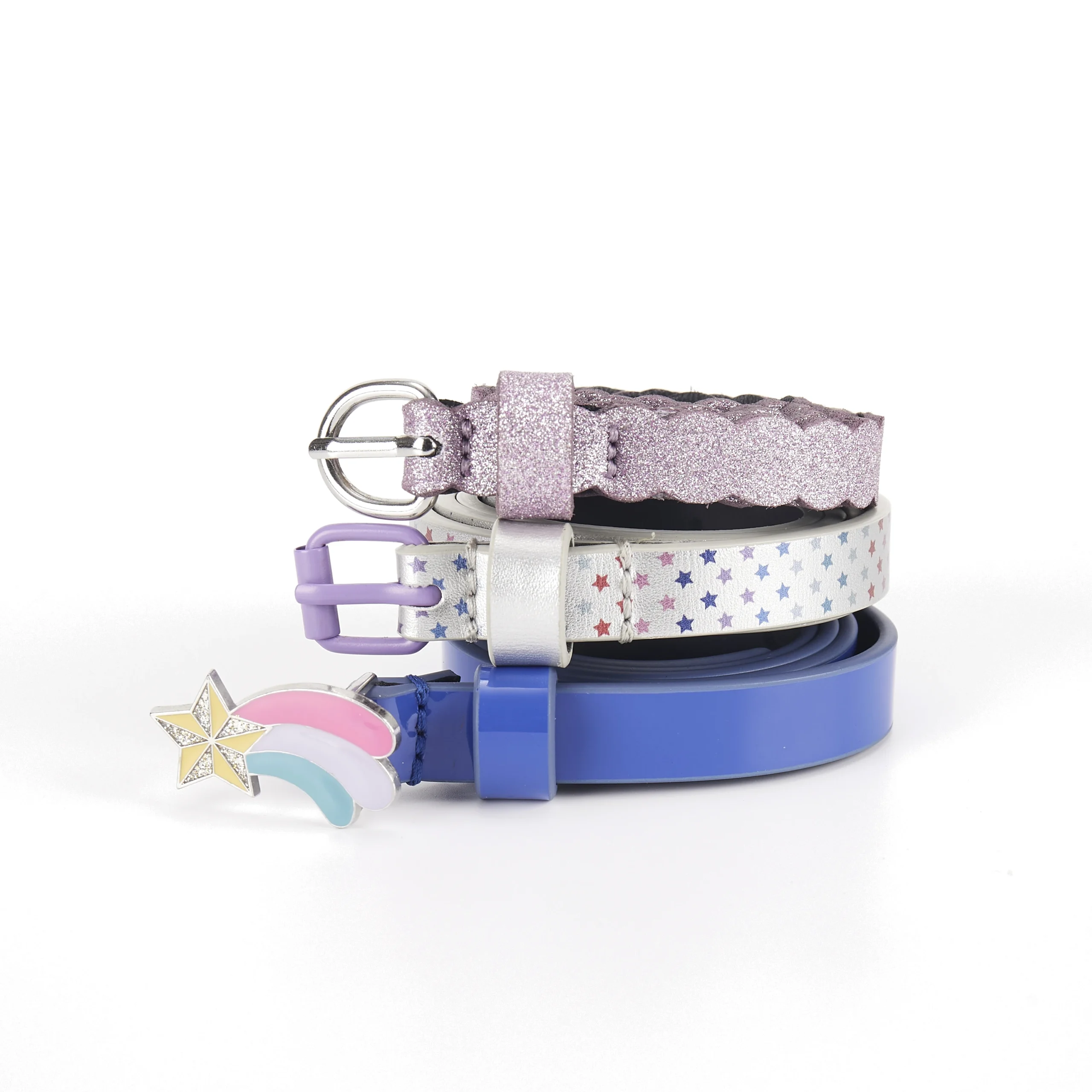
Component reports can be useful when reliance meets the applicable component-part testing requirements and the responsible firm exercises due care. The important purchasing question is not simply “Does the supplier have a report?” It is whether the documented component is the one purchased and used, whether the report addresses the relevant rule, and whether subsequent handling or assembly affects the basis for reliance.
- Match identity: compare the report specimen with the approved component and product revision.
- Match scope: check the cited rule, test method, measured item, result, and laboratory acceptance where required.
- Match coverage: record which variants and production inputs the evidence supports and why.
- Close gaps: obtain missing testing or a documented, applicable determination before certification.
Do not casually average components or colors to dilute a result. If composite testing is proposed, let the laboratory and responsible firm establish whether the applicable rules permit the approach and how the result will support each relevant component. A cheaper test plan that cannot substantiate the certificate is not a saving.
Separate the CPC, laboratory report, and tracking marks
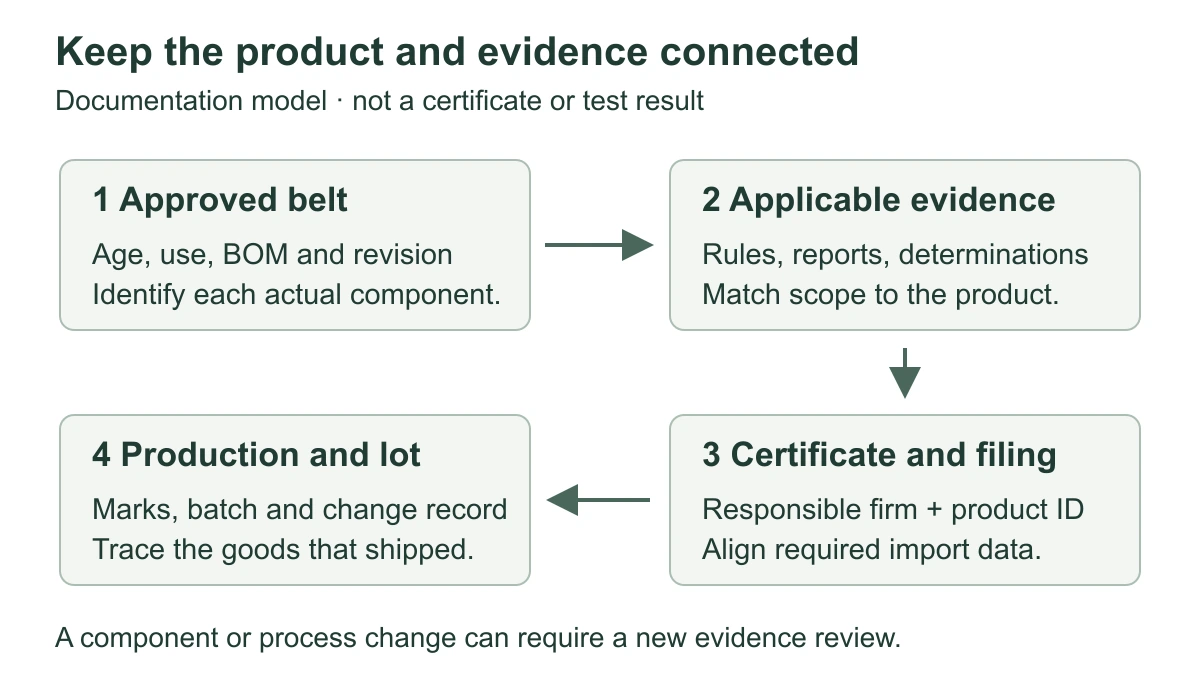
A Children’s Product Certificate, or CPC, is the responsible firm’s certification of compliance; it is not the laboratory report itself. For products manufactured overseas and imported into the United States, the importer has certification responsibility. A supplier’s supporting reports may be usable under the relevant conditions, but simply forwarding a foreign manufacturer’s certificate is not the same as issuing the importer’s CPC. CPSC explains this distinction in its CPC FAQs.
The certificate needs enough product identification to match the actual goods, the applicable safety-rule citations, the responsible firm’s details, the test-record contact, manufacturing information, and the relevant testing and laboratory information. Use the current CPSC certificate guidance when assembling it. Do not copy a sample certificate for another product and leave unrelated rules in place.
Keep the certificate’s product description tied to your SKU and revision system. A commercial style name can remain unchanged while a buckle or finish changes. If the record refers only to that style name, it becomes difficult to establish which construction the evidence covers. Add controlled identifiers rather than relying on filenames such as “latest test final.”
Tracking information must survive beyond the purchase order
Children’s products require permanent, visible and legible distinguishing marks on the product and its packaging to the extent practicable. They must make it possible to ascertain the responsible business, manufacturing location and date, and batch or other production-identifying information. Codes can be used when the required information is recoverable. A retail SKU alone may identify a style but not its production lot. See CPSC’s tracking-label guidance.
For a belt, review the marking location while developing the product, not after the finished goods are packed. Check whether the proposed mark remains readable with the actual backing, print, embossing, or label construction. Keep the package marking consistent with the product and the batch record. Tracking-label requirements are distinct from the rules certified in a CPC; they do not require a separate laboratory-issued “tracking certificate.”
Include the current eFiling handoff for U.S. imports
As of this article’s October 2026 review, CPSC’s certificate eFiling requirement for most regulated imported consumer products has taken effect from July 8, 2026. The importer and customs-broker workflow must address the applicable electronic certificate information; a PDF stored in a purchasing folder is not, by itself, that handoff. Check the current CPSC eFiling guidance, including entry-specific exceptions and the separate timing for foreign-trade-zone entries.
Agree who maintains the certificate data, who supplies manufacturing and test information, and who submits the entry-related information. Include any relied-upon testing exclusions as required by the current rules. Keep the identifiers consistent across the certificate, shipment, and filing route. This is especially important when a buyer consolidates several belt styles into one commercial shipment.
A repeat order needs change control, not only an old passing report
A material change is one that could affect compliance, not merely a change that alters the belt’s appearance. Substituting a component source, changing a finish formulation, or altering a relevant manufacturing process can require review. Where a material change affects compliance, the affected product or component must be retested as applicable; unchanged, unaffected components do not automatically require the entire test package again. CPSC’s material-change guidance explains the relationship to a new CPC.
Consider an illustrative reorder in which the approved buckle shape is retained but the supplier proposes another painted finish source. The commercial buyer may see no design change. The compliance owner still needs the new component identity, formulation or finish information available for review, and a decision about affected evidence. Freeze the substitution until that decision is recorded; visual approval alone cannot resolve it.
For continuous manufacture, periodic testing obligations also need a documented plan where applicable. Do not describe a report as valid forever simply because the belt looks unchanged, and do not invent a universal annual expiry for every report. The applicable testing program, material changes, and actual evidence determine what needs renewal or supplementation.
Retain the required certification and testing records for at least the applicable period. CPSC’s initial-testing guidance identifies a minimum five-year recordkeeping requirement under 16 CFR 1107.26. A buyer’s operational file should connect the classification rationale, BOM, reports, certificate versions, marking specification, change decisions, and shipped lots so that a question can be traced to the affected goods.
HongDing supports kids and youth belt development through material and hardware coordination, samples, manufacturing, and labeling or packaging coordination. The useful starting point is the intended age group, U.S. sales context, and proposed construction. Our quality-control scope does not mean every belt automatically meets every regulation; the specific product and evidence requirements must be agreed.
Review the design before locking the compliance sample
Share the target age group and market, a reference image or sample, and any retailer requirements already known. Discuss the children’s belt project with HongDing to identify the material, hardware, marking, and sample questions that should be resolved with your compliance team before production.