By Kevin · Technical review by HongDing Sourcing and Quality Team · Published September 12, 2026 · Reviewed September 14, 2026 · Publisher profile · Review scope
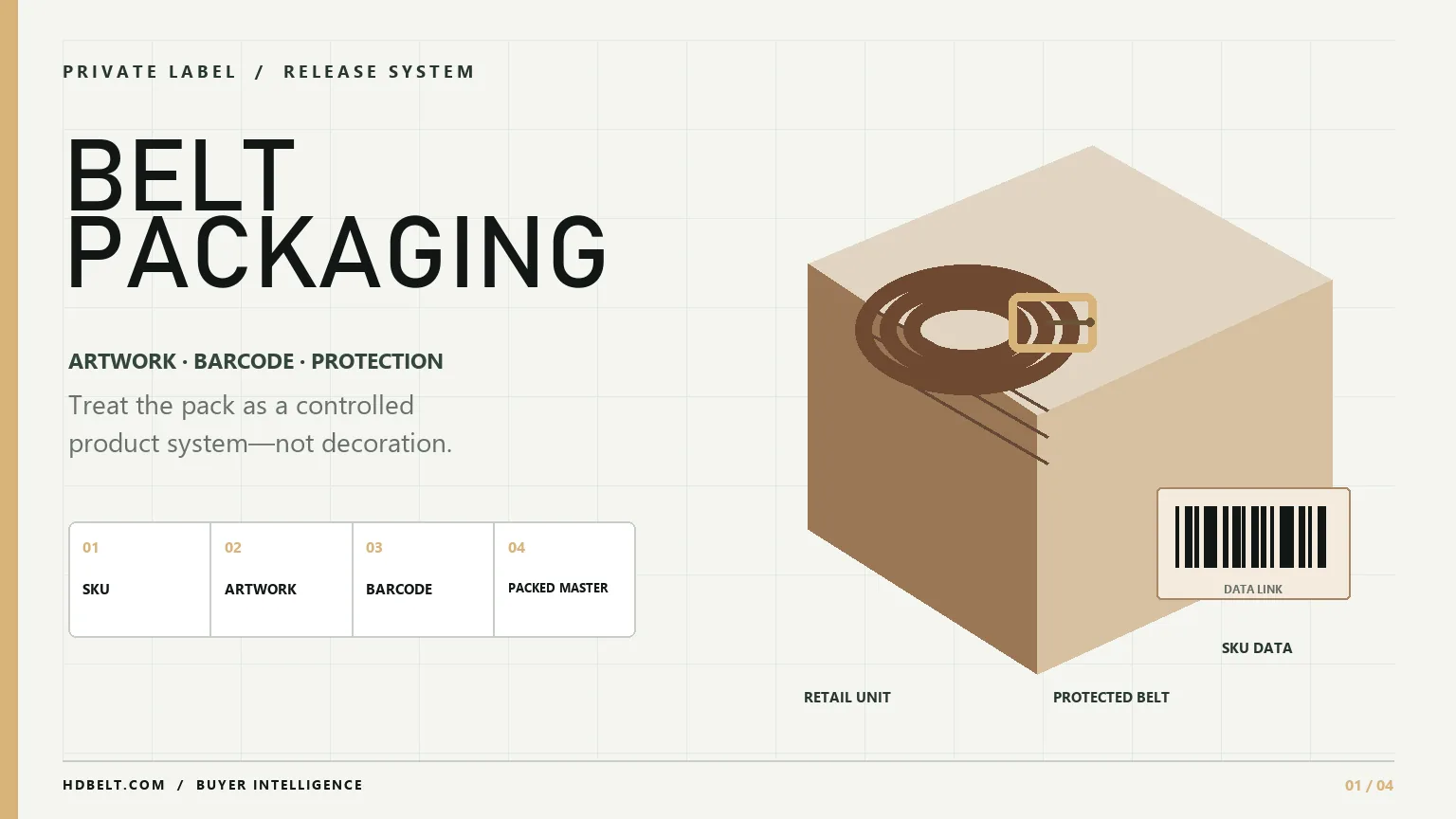
Private label belt packaging fails at the interfaces, not at the logo. A correct box can still carry the wrong size code, trap the buckle against the strap, or use artwork that nobody formally released. Treat the pack as a controlled product system.
For a fashion waist-belt order, the release should connect the named belt SKU, brand files, barcode data, physical presentation, protection method and inspection record. This guide shows what the buyer must own, what the factory can prepare, and what evidence closes each decision. It does not cover tool belts, belt bags, automotive belts or conveyor belts.
Define the Packaging System
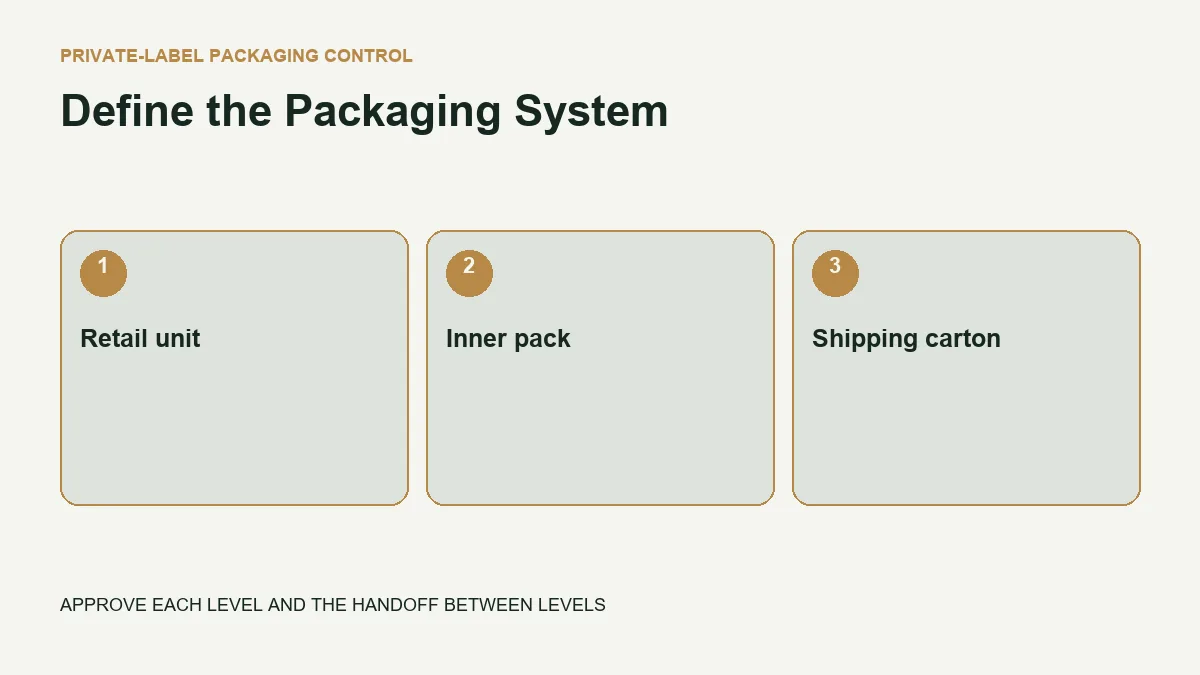
Start by naming what the packaging must do at each level. The retail unit may be a hangtag, sleeve, polybag, pouch or box presented to the shopper. An inner pack groups retail units for handling. The outer shipping carton protects and identifies the packed quantity through distribution.
Those levels can share product data, but they do not have the same job. A retail barcode may support point-of-sale scanning, while an outer-carton identifier serves receiving or warehouse operations. This article controls the retail unit and its protective arrangement; a full shipping-mark specification belongs in the separate carton-label workflow.
Record the sales channel, display orientation, fulfillment route and named approver before choosing a structure. A hanging leather belt and a boxed gift belt expose different surfaces and hardware. The pack must follow the approved product, not force every belt into one template.
Use the Belt Packaging Release Matrix
The matrix below is the control spine. It separates buyer-owned decisions from factory preparation and release evidence. If a row has no owner or current file, the package is not ready for bulk, even when a sample looks finished.
| Control | Buyer Input | Factory Review | Release Evidence | Reopen When |
|---|---|---|---|---|
| Product identity | Style, size, color, finish | Match current belt revision | Approved SKU map | Product or assortment changes |
| Pack level | Retail, inner or outer | Confirm handling scope | Pack hierarchy record | Channel or case pack changes |
| Artwork and copy | Authorized files and claims | Check version and placement | Signed artwork proof | Copy, color or layout changes |
| Dieline | Approved structure direction | Check fit and print panels | Current dieline proof | Dimensions or board changes |
| Barcode data | GTIN and SKU mapping | Place supplied symbol file | Approved code list | Variant or pack changes |
| Barcode quality | Required scan environment | Coordinate print evidence | Agreed verification record | Printer, stock or artwork changes |
| Belt protection | Appearance and damage limits | Set coil, restraint, separator | Physical packed master | Belt, buckle or insert changes |
| Bulk inspection | Defects and sampling plan | Inspect against approved files | Pack inspection record | Deviation or repeat-order change |
| Case pack | Quantity, destination, rules | Confirm count and marks | Packing instruction | Route or retailer changes |
Use the matrix in the request for quotation, then update it through sampling. HongDing’s private-label belt program can coordinate approved logos, labels, packaging and retail data within the confirmed scope. The buyer still owns the brand authority, product identifiers and final channel rules.
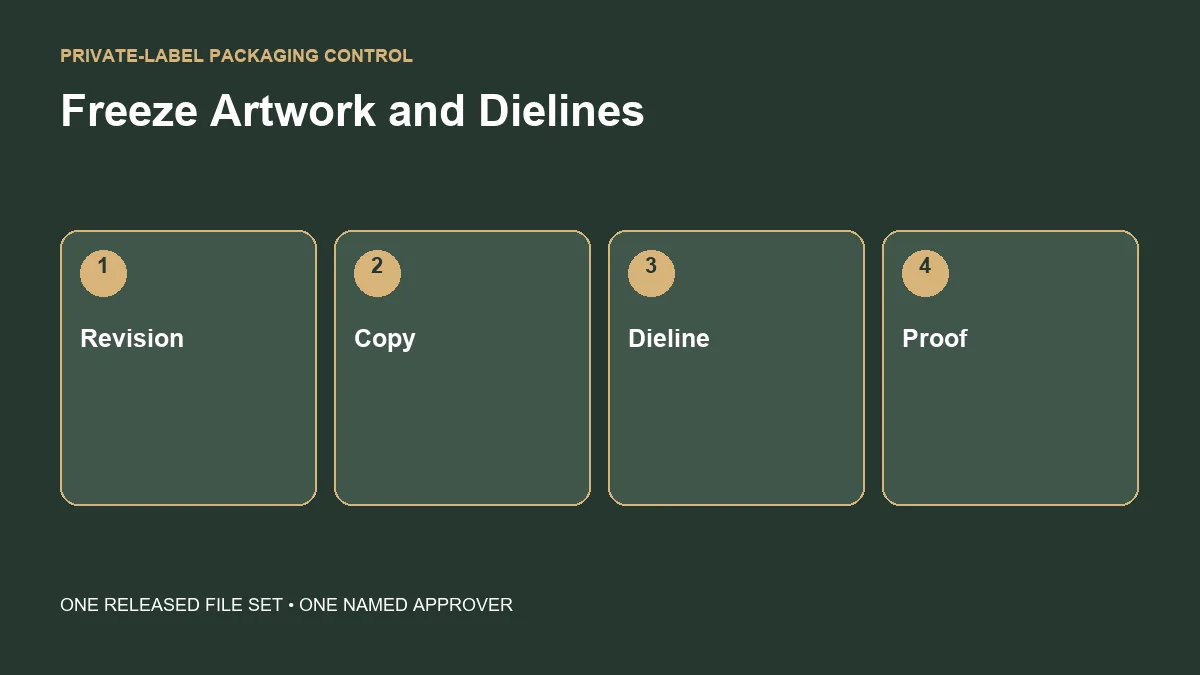
Freeze Artwork Copy and Dielines
Send production-ready brand files from an authorized owner. The pack record should identify the artwork revision, color reference, intended panel, scale and permitted use. A screenshot in an email can explain direction, but it should not become the only production master.
Packaging copy needs the same discipline. Material wording, origin statements, care instructions, certifications and environmental claims should match the actual product and available evidence. A designer should not fill an empty panel with a claim that the product file cannot support.
Approve Structure and Graphics Together
A dieline is the flat cutting and folding layout used to position graphics on a package. Approve it with the actual belt dimensions, buckle profile and chosen coil or fold. Moving a seam, flap or window after artwork approval can shift copy or place a barcode over an unsuitable feature.
Give every proof a status: draft, revised, approved or superseded. Retire old files from the working folder and name the person who can release changes. This small control prevents yesterday’s logo or size panel from returning during a reorder.
Map SKUs to Retail Barcodes
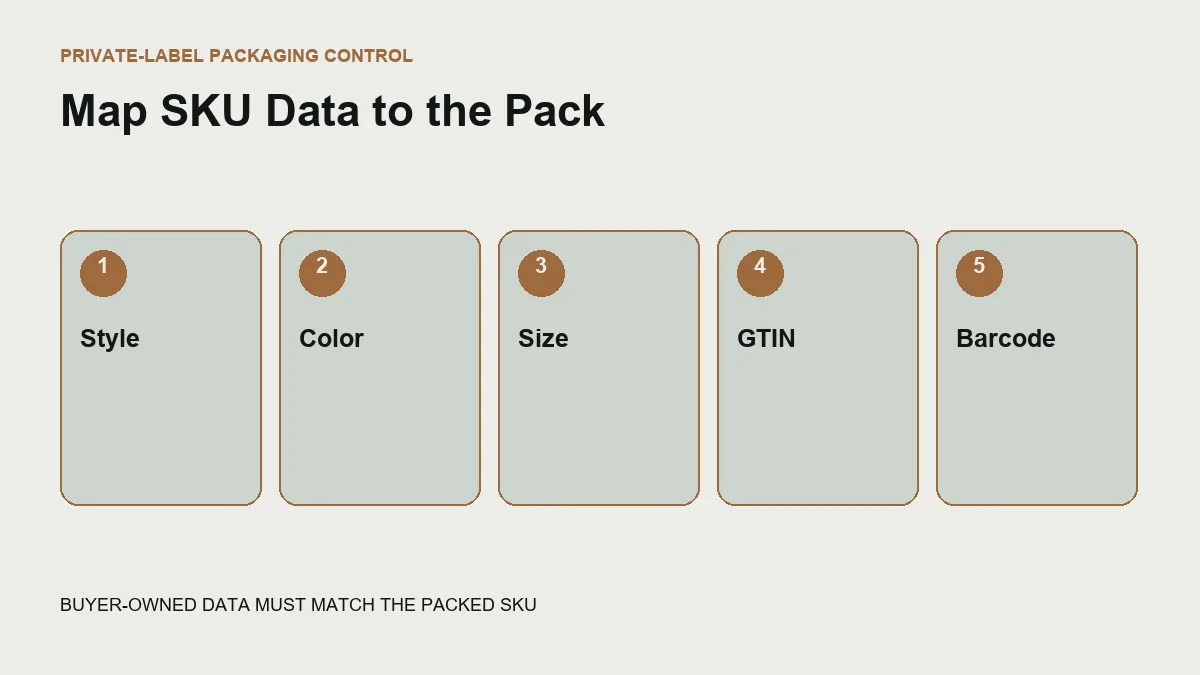
Build the SKU map before generating final labels. GS1 US apparel guidance explains that color, size and pack-size variants can receive distinct Global Trade Item Numbers, or GTINs. Its four-color by four-size example produces 16 identifiers, but that example is not a universal belt rule.
The brand owner or buyer should decide the GTIN structure with current GS1 and trading-partner requirements. Send the factory a controlled map that links belt style, size, color, buckle finish, retail description, SKU and approved code. For a retail-chain belt program, include any buyer-specific label fields and approval route.
Design for the Intended Scan Point
Barcode choice and placement depend on where the item will be scanned. The current GS1 General Specifications warn against folds, seams, edges, flaps, overlaps and graphics that obstruct a symbol or its clear area. Check the final hangtag, sleeve or box, not an isolated barcode image.
Where should a barcode go on a belt hangtag? Put it on a flat, unobstructed face where the complete symbol and quiet zones remain clear when the tag is attached to the belt. Keep it away from folds, punched holes, seams, edges, fasteners and overlapping graphics. Confirm the final position on the assembled retail unit against the intended scan environment and the trading partner’s current placement rules; there is no single universal hangtag coordinate for every program.
A phone scan proves only that one device read one sample under those conditions. GS1’s retail 2D guideline separates practical scanning from print-quality verification against defined specifications. Ask what evidence the retailer requires, who performs it, and which printed revision it covers.
Protect the Belt Inside the Pack
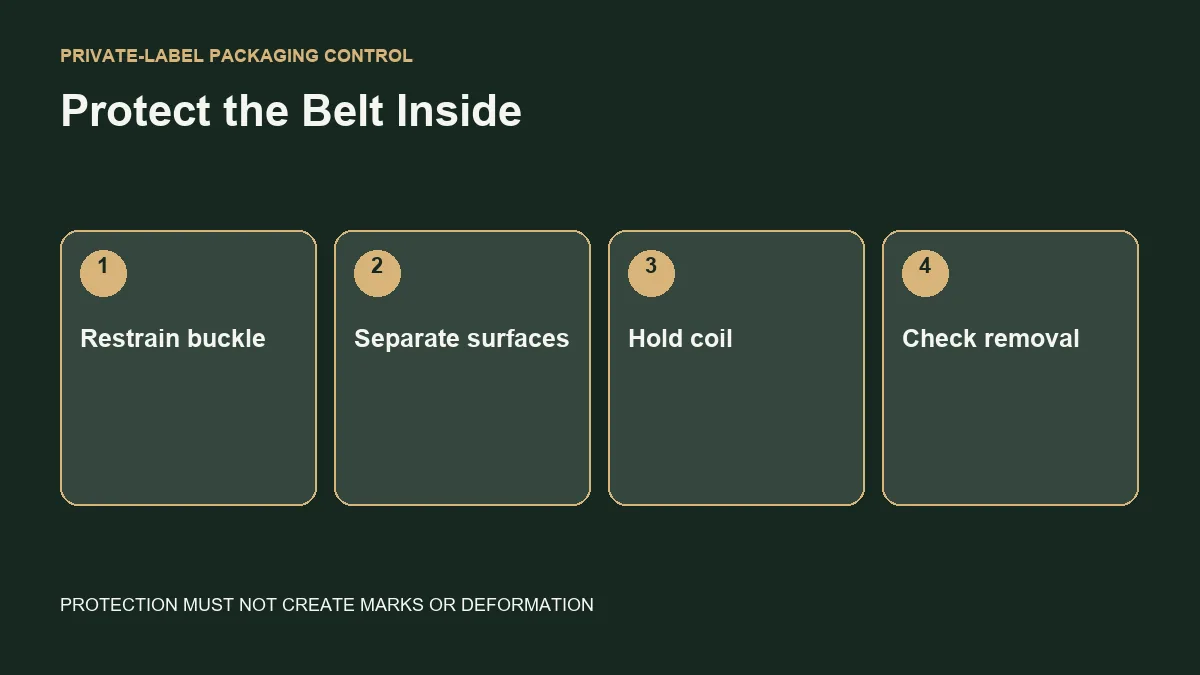
A belt creates an awkward contact problem. The strap is long and flexible, while the buckle is compact, hard and often heavier. If the buckle can move against the strap, the packaging itself can become the source of a visible mark.
Review the real belt in its final coiled, folded or hanging position. Check buckle restraint, tail position, keeper pressure, surface contact, insert fit and movement when the pack changes orientation. Use a separator or wrap only after confirming that it does not transfer color, leave residue or distort the presentation.
A retail box and a shipping container are different decisions. A presentation box may still need an outer protective system for parcel or pallet distribution. The stronger choice is the smallest structure that preserves the approved presentation through the stated route, not the most elaborate gift box.
Turn Your Packaging Brief into a Controlled Sample
Send the belt reference, SKU map, authorized artwork, packaging direction, target market and distribution route. HongDing can review the supplier-side proof and packed-master scope before bulk packing.
Artwork control | SKU mapping | Packed-belt review
Approve the Physical Packed Master
Do not compress four decisions into one approval message. Artwork proof checks content and position. A printed proof checks the actual substrate, color and finishing result. Barcode evidence addresses the released symbol and scan environment. The physical packed master checks how the approved belt sits and moves inside the package.
| Evidence | Decides | Does Not Decide | Record |
|---|---|---|---|
| Artwork proof | Copy, version, layout | Print or physical fit | Signed PDF or portal approval |
| Printed proof | Stock, color, finish | Packed-belt movement | Identified physical proof |
| Barcode evidence | Released symbol quality | SKU-map correctness alone | Agreed scan or verification record |
| Packed master | Fit, contact, restraint | Every distribution hazard | Sealed sample and pack file |
Link the packed master to the same revision set as the belt. HongDing’s golden-sample approval workflow can retain packaging artwork, physical references and written comments with the product record. A photograph remains useful evidence, but it should identify the exact sample and never replace tactile or functional checks.
Match Transit Tests to the Route
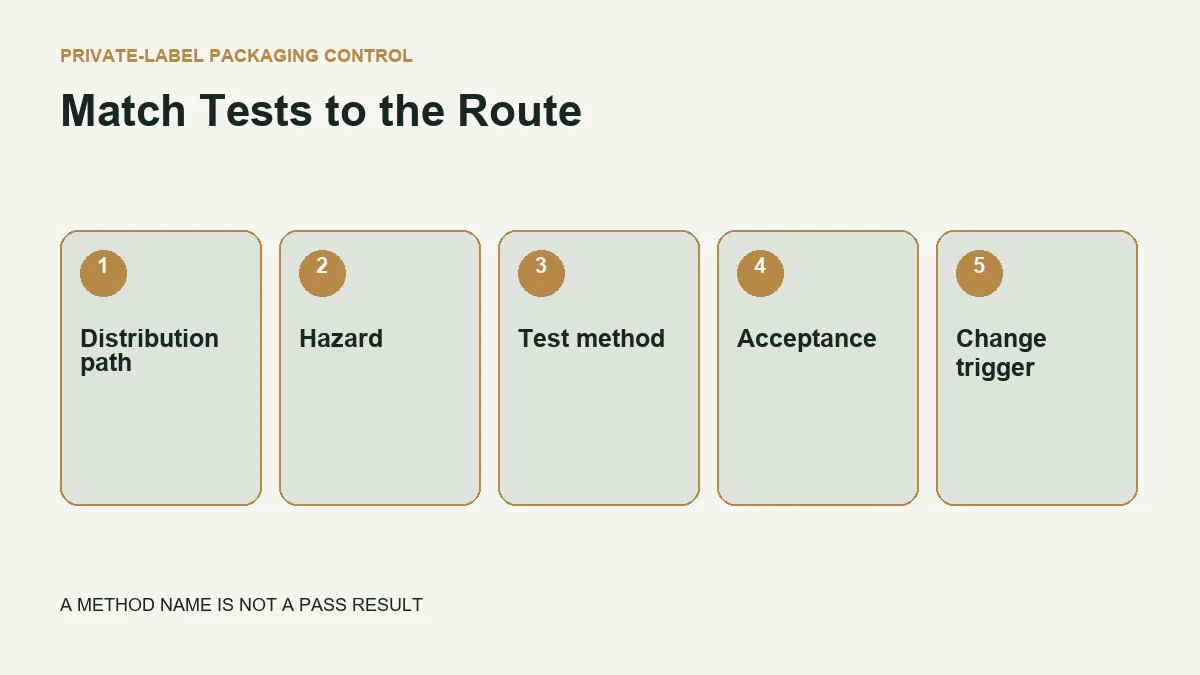
Start with the distribution route, not a famous test name. Parcel delivery, palletized freight, retail replenishment and gift fulfillment expose packages to different handling. ISTA’s test-selection guidance asks users to understand the actual distribution environment before choosing and interpreting a procedure.
Test the packaged product, not a material claim. ISTA’s certification guidance states that its procedures evaluate the complete product-and-package system rather than an individual packaging material. A board grade or foam insert cannot carry a valid “transit tested” conclusion by itself.
ASTM D4169 provides another laboratory practice for evaluating shipping units against anticipated distribution hazards. The buyer or qualified packaging specialist should choose the applicable route, levels, sample condition and acceptance criteria. Do not convert the standard’s existence into a HongDing test claim.
Reopen Evidence after Material Changes
A prior result may stop representing the current pack after a meaningful change. ISTA’s retest guidance points to changes in the product, package, process and distribution system. A new buckle, tighter coil, different insert, revised carton or new fulfillment route should trigger a documented risk review.
Release Bulk Packing and Reorders
Put the approved references where the packing line and inspector can use them. The current file should identify the belt revision, SKU map, artwork, label position, pack method, packed master, case pack and defect rules. Mark any approved deviation with its owner and affected quantity.
Bulk inspection should compare the actual pack with the approved files. HongDing’s belt quality-control process can include packaging accuracy, carton marks and agreed inspection checkpoints. The buyer must still define the sampling plan, defect classes and any retailer-specific evidence.
For reorders, verify what changed before reusing the previous pack. Check belt material, buckle, dimensions, artwork, barcode map, printer, packaging stock, internal protection, packing location and route. Reuse is efficient only when the retained approval still describes the current order.
Private Label Packaging FAQ
Who should supply the GTIN for private label belts?
The brand owner or buyer should control GTIN allocation and give the factory an approved SKU-to-code map. The factory can place and inspect supplied data within the agreed packaging scope.
Does every belt size need a different barcode?
Often, size, color or pack-size variants need distinct identification, but the brand owner must confirm the final rule with GS1 guidance and each trading partner.
Can a packaging photo replace a physical packed sample?
No. A photo can record visible layout, but it cannot prove barcode quality, buckle restraint, surface contact, fit inside the pack or performance through distribution.
Is a successful phone scan enough barcode proof?
No. A phone scan is a useful check, while formal verification measures barcode quality against defined specifications for the intended scanning environment.
When should belt packaging be retested?
Review testing when the belt, package, internal protection, packing process or distribution route changes. The required evidence depends on the buyer and actual route.
Conclusion
A strong private-label belt pack closes four gates before bulk: the product and packaging level are identified, the artwork and retail data are released, the physical belt is protected in an approved pack, and the required inspection or route evidence is attached. Miss one gate and the factory must fill a gap with an assumption. That is where wrong labels, obsolete artwork and surface damage begin.
- Keep one current matrix for the belt SKU, pack level, artwork, barcode and physical protection.
- Return missing GTIN or trading-partner decisions to the buyer rather than guessing.
- Approve the printed package and packed belt as linked evidence, not isolated photos.
- Review meaningful product, package, process and route changes before repeat production.
HongDing can help brands and wholesalers turn that control file into a reviewable packaging sample within the confirmed belt program. Bring the current belt reference, authorized artwork, SKU map, target channel and route; those inputs make the next decision concrete.