Key takeaways
- Choose OEM when the buyer owns a mature specification and needs controlled execution.
- Choose ODM when speed from a supplier design base matters and permitted changes can be documented.
- Treat ownership of drawings, tooling and approved materials as contract fields, not assumptions.
- A hybrid route is valid when every deliverable has a named owner and approval gate.
Use operational definitions, not labels
WIPO describes OEM as producing to a customer’s specifications and ODM as adding product design as well as production. That distinction is useful, but a belt program still needs a deliverable map. “ODM” does not tell the buyer who owns a buckle drawing, who may reuse a strap pattern or whether a selected leather may change.
Write the route as a list of controlled outputs: concept, sketch, construction drawing, bill of materials, color standard, buckle CAD, sample, packaging artwork and test plan. Assign one creator and one approver to each output. The acronym then becomes a summary of an actual workflow. OEM usually starts from the buyer specification and risks an incomplete transfer; ODM starts from a supplier design base and risks unclear ownership or substitutions. The buyer remains the approval authority for the released product in either route.
Match the route to input readiness
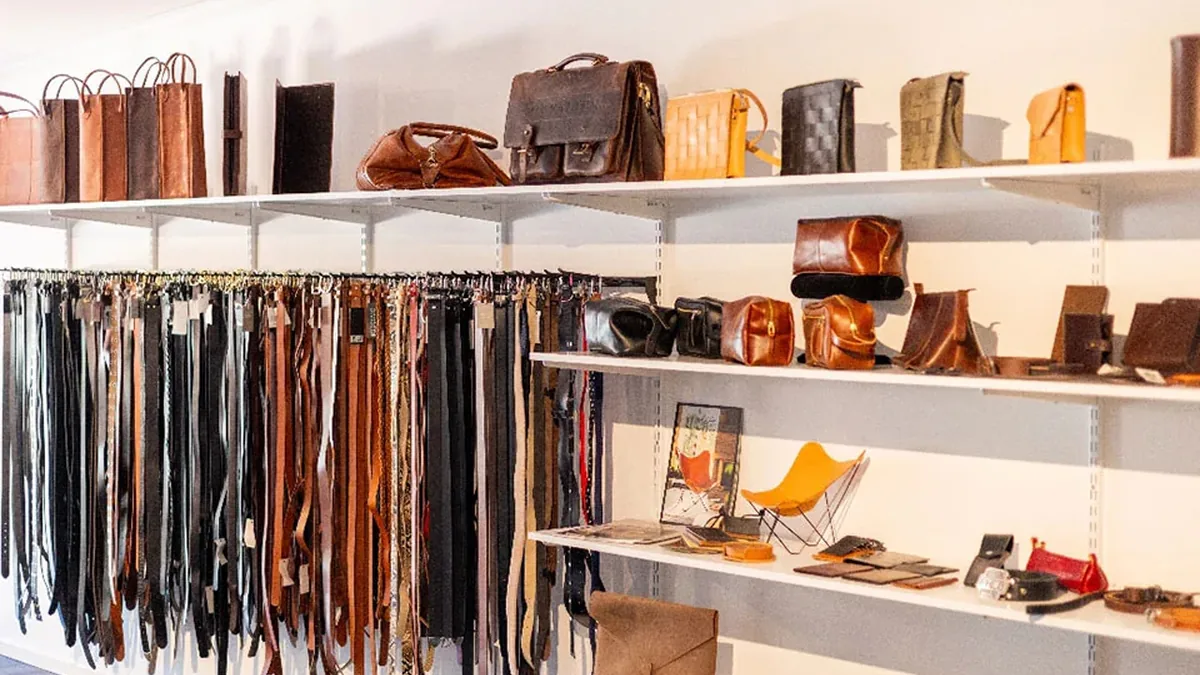
An OEM route needs a usable specification. A mood board and target price are not a specification. The factory needs construction, dimensions, materials, hardware, finish, labeling, packaging and acceptance criteria. Missing fields become supplier assumptions, and those assumptions can diverge across quotes.
An ODM route can start earlier, but the buyer must narrow the design space. Define customer, channel, price architecture, material boundaries, brand cues, prohibited elements and target launch window. A broad request for “new fashion belts” transfers too much judgment and makes revisions expensive to compare.
Separate design contribution from ownership
List every design asset and state who created it, who paid for it, who owns it, who may modify it and whether the supplier may reuse it. Cover buckle CAD, molds, dies, artwork, packaging files, material developments and photography. Payment for a sample does not answer those questions by itself.
If exclusivity matters, define its scope by product, territory, channel and period in the commercial agreement. This article does not supply legal terms. It supplies the asset register the commercial and legal teams need before drafting them.
Plan samples around decisions
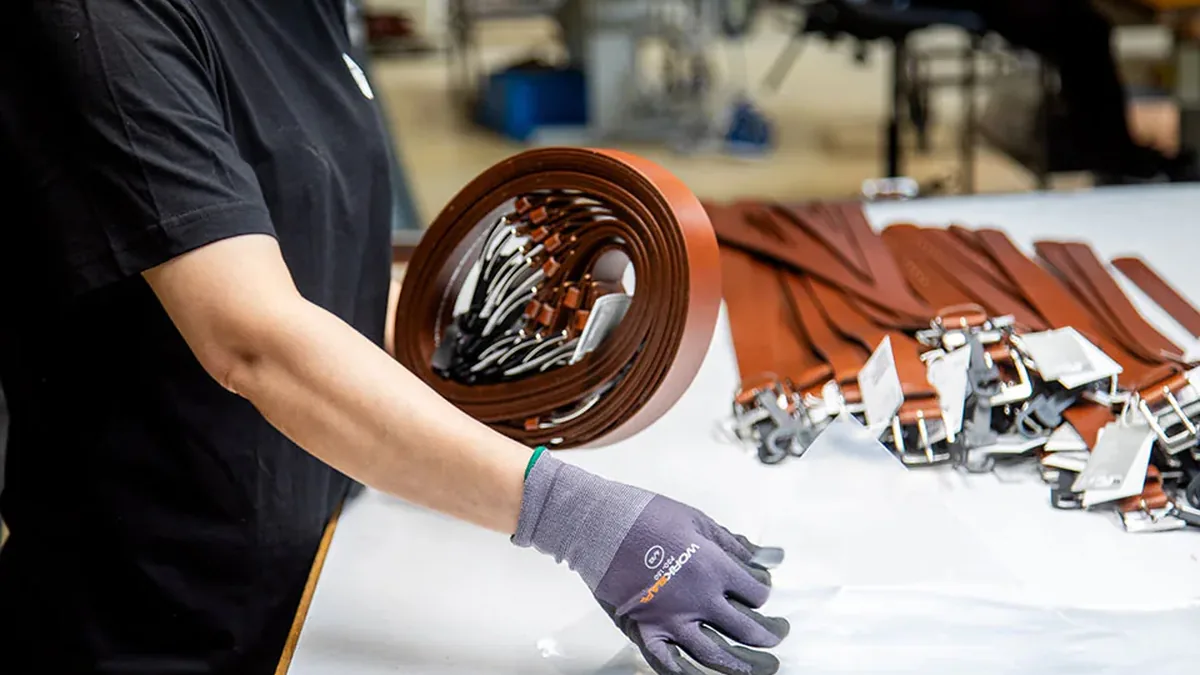
OEM sampling verifies translation: did the factory reproduce the buyer’s specification? ODM sampling verifies selection and refinement: which proposed route becomes the controlled design? The review form should state the open question for every sample round. Otherwise, teams comment on color while construction remains unsettled.
HongDing accepts project inputs ranging from a tech pack or reference sample to an image, trend direction or concept. Its documented route includes design support, material and hardware sourcing, physical sampling, manufacturing and QC. That breadth supports both models, but the approved record must show which inputs became binding.
- Concept/construction gate — OEM checks buildability; ODM selects one proposal. Record the route and open issues.
- Material/hardware gate — OEM checks the BOM; ODM freezes selected components. Record supplier codes and physical references.
- Pre-production gate — both routes verify the released complete belt. Record the signed sample identity and revision.
Consider a buyer who sends a reference belt but no buckle drawing. Calling the job OEM does not make the hardware reproducible. The controlled route is hybrid: the buyer freezes the silhouette and brand requirements, the supplier creates a buckle drawing from the approved reference, and the buyer signs that drawing before the pre-production sample. The approval record closes the missing input instead of hiding it inside an acronym.
Put tooling behind a release gate
Custom buckle tooling, dies and other dedicated fixtures should begin only after geometry and ownership are clear. Record the released revision, payer, storage responsibility, permitted use, maintenance responsibility and end-of-program treatment. Do not let a tooling invoice substitute for those fields.
ODM programs often begin with existing components, which can reduce new development work. The trade-off is differentiation and availability control. If a stock buckle is central to the design, record its supplier reference and an approved alternative policy before bulk.
| Tooling field | Required record | Decision consequence |
|---|---|---|
| Released geometry | Drawing number and revision | Wrong revision does not enter toolmaking |
| Commercial owner | Named payer and owner | Rights are not inferred from an invoice |
| Permitted use | Product, brand and territory scope | Reuse is controlled explicitly |
| Custody / maintenance | Location and responsible party | Wear or damage has an owner |
| Program exit | Return, retention or disposal rule | End-of-program action is not improvised |
If the supplier proposes an existing buckle under an ODM route, treat the hardware reference as a controlled source rather than buyer-owned tooling. If later exclusivity requires a new tool, reopen geometry, ownership, sample and cost approvals. The route has changed, so the evidence must change with it.
Normalize quotes to the same development route
Separate product unit cost from development, sample, tooling, testing and packaging charges. Ask suppliers to mark inclusions and exclusions against the same deliverable list. A lower unit price may simply omit design work or use a different material route. For each quote, record the included drawings and revisions, the decision closed by each sample, tooling ownership and use, the costed BOM revision, and the named test method and specimen.
A practical normalization scenario uses three columns rather than forcing one early total. Supplier A quotes an OEM unit against the buyer’s complete pack. Supplier B quotes an ODM base design but excludes custom buckle development. Supplier C quotes a hybrid route that includes drawing work and a sample gate. The buyer first aligns deliverables and ownership, then compares commercial totals. Until that alignment, the lowest unit figure answers a different question.
Control changes after approval
Freeze the bill of materials, drawings, color references, hardware and packaging after the pre-production sample. Any proposed change should state reason, affected fields, comparison evidence and approval owner. This matters in both OEM and ODM programs; the only difference is who usually initiates the proposal.
A supplier should not treat an ODM base design as permission to substitute silently. A buyer should not treat an OEM drawing as complete when its material and test fields are blank. Change control exposes both failures.
Carry the same revision identity into purchase orders, inspection records and reorder files. If the commercial team approves a cost change against one revision while quality inspects another, the route label offers no protection. The released pack should make the current drawing, bill of materials, sample and packaging artwork unambiguous.
Use a hybrid route deliberately
Many belt programs are hybrid: the buyer owns the brand direction and silhouette, while the supplier proposes leather articles, hardware options and construction details. That route is sound when the responsibility matrix is explicit. It is unstable when “joint development” means no one owns the decision record.
Use three questions to choose the route. Which product decisions are already frozen? Which decisions require supplier knowledge or available components? Which assets must remain exclusive? An OEM route fits when the first list is long. An ODM route fits when the second list is long and the third can be contracted clearly.
Plan the launch handoff before approving the sample. The final pack should include current drawings, the BOM, color references, hardware reference, packaging files, test plan, approved sample identity and change history. Reorder teams should be able to reconstruct the approved product without relying on the original developer’s memory.
A route can change during development. A buyer may begin with an ODM concept, then freeze it into an OEM-style production pack after approval. Record that transition date and revision. Without the handoff, the supplier may continue treating approved details as flexible proposal fields. The purchase order should reference the released pack, not the earlier concept board. Quality reports should repeat the same revision identity.
| Decision field | OEM best fit | ODM best fit | Hybrid control |
|---|---|---|---|
| Input readiness | Mature product pack | Commercial brief and design space | Freeze buyer inputs; assign supplier gaps |
| Design authority | Buyer-led | Supplier proposes; buyer selects | Named owner for each deliverable |
| Asset ownership | Buyer assets already defined | Must be negotiated | Asset-by-asset register |
| Sample objective | Verify translation | Select and refine route | Close one named gap per gate |
| Change initiator | Buyer or approved factory proposal | Supplier proposal under buyer approval | Revision record controls both |
| Best-fit situation | Repeatable custom execution | Speed from a supplier design base | Buyer direction plus supplier engineering |
Start with HongDing’s OEM and ODM belt development services. Use the OEM belt briefing guide, design and development service and pre-production sample checklist to turn the chosen model into controlled inputs.
Verified source notes
Frequently asked questions
What is the main difference between OEM and ODM belts?
OEM starts from a buyer-defined product specification. ODM adds more supplier design and development contribution before the buyer approves the final product.
Is ODM the same as private label?
Not always. Private label describes the branding route; ODM describes design contribution. A private-label program may use an existing supplier design or a custom-developed one.
Who owns buckle tooling?
Ownership depends on the agreement. Record who pays, who may use it, where it is stored and what happens when the program ends.
Can one program combine OEM and ODM?
Yes. Use a responsibility matrix so every drawing, material choice, sample and approval has a named creator and approver.